Harmonia Myth Meaning & Symbolism
A goddess born of strife and love, whose cursed necklace reveals that true harmony is forged in the crucible of suffering and acceptance.
The Tale of Harmonia
Listen, and hear the tale spun from the loom of the Fates themselves, a story not of simple peace, but of harmony born from the most discordant of unions.
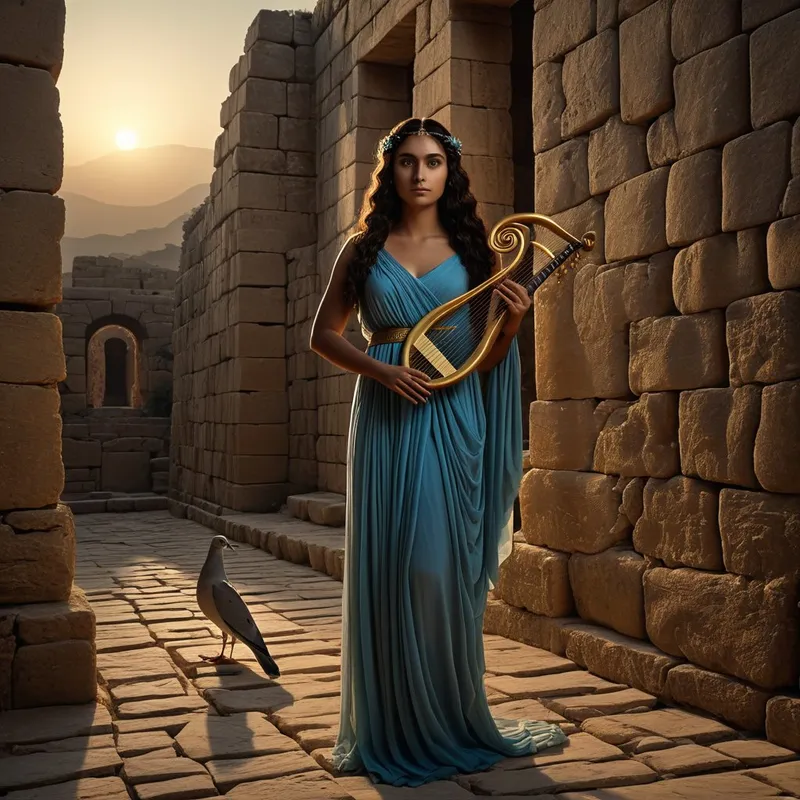
In the age when gods walked closer to the earth, a child was born of a secret and terrible love. Her mother was Aphrodite, born from the seafoam and the severed flesh of the sky. Her father was Ares, whose breath was the clash of bronze and the screams of dying men. From this paradoxical embrace—the tender and the terrible, desire and destruction—came a daughter. They named her Harmonia</abonia. Her very essence was the impossible resolution of opposites, a living chord struck between love and strife.
She grew in the Olympian halls, a quiet counterpoint to the divine dramas. Her destiny, however, was woven with mortal threads. It led her to Cadmus, a hero whose own hands were stained from sowing the dragon’s teeth, from which a race of armed men sprang and slew each other. A founder whose city was built on a foundation of fratricide. To this man, marked by conflict, the gods gave Harmonia.
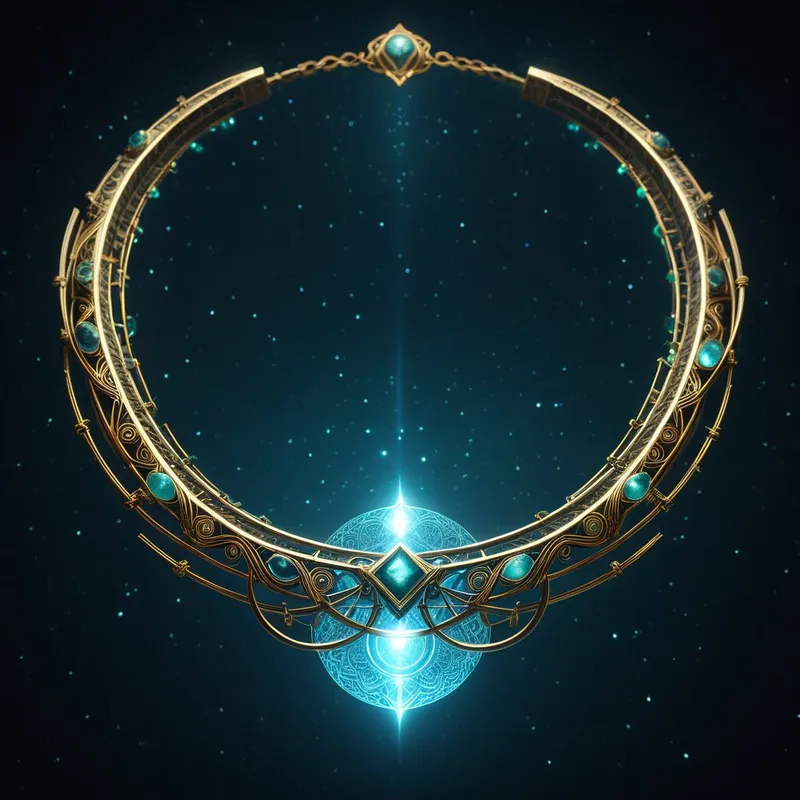
The wedding was a spectacle of divine ambivalence. All Olympians attended, feasting in the newly raised citadel of Thebes. The air smelled of roasting meat, incense, and the cold stone of new walls. Gifts were presented: a robe woven by Athena, and a necklace, wrought by Hephaestus. This was no simple ornament. It was a masterpiece of gold and gemstones, but crafted with a secret fire, imbued with the divine grudge of its maker. As it was clasped around Harmonia’s graceful neck, a shiver passed through the gathering, a silent recognition. This glittering gift was a dowry of doom.
For a time, the harmony held. Cadmus and Harmonia ruled, and Thebes prospered. But the necklace, that beautiful burden, worked its slow poison. Misfortune seeped into their lineage like damp into stone. Their children’s lives were touched by tragedy, madness, and war. The founding violence of Thebes and the strife-born nature of Harmonia’s own origin could not be placated by rule alone. The curse manifested.
In their old age, weary of the throne and the relentless unfolding of fate, Cadmus and Harmonia were transformed. The gods, in a final act of paradoxical mercy, changed them into serpents—creatures of the earth, silent and wise. Together, they slithered into the deep forests, leaving the cursed city behind. In this final shape, the warrior and the harmonizer found a peace that eluded them in human form, united in a primal, silent coil.

Cultural Origins & Context
The myth of Harmonia is primarily preserved in the epic tradition and later mythological compilations, most notably in the works of poets like Hesiod and in the narratives collected by later writers such as Apollodorus. It functioned as a powerful aetiological myth for the city-state of Thebes, explaining its legendary wealth and its equally legendary suffering. Thebes was a rival to Athens and Sparta, and its myths often carried a darker, more fatalistic tone.
Harmonia’s story was not a popular cult myth with widespread public worship; instead, it was a philosopher’s and poet’s myth. It served as a narrative cornerstone, a foundational parable about the nature of civilization itself. It asked: Can a city, or a soul, built from violent beginnings ever achieve true peace? The myth was told to illustrate that harmony is not a pristine, initial state, but a complex and costly achievement, always intertwined with the potential for chaos from which it was born. It was a cautionary tale about the gifts of the gods, which are never without their hidden costs, and about inheritance—the legacies, both glorious and cursed, that parents pass to their children.
Symbolic Architecture
Harmonia is not the goddess of a bland, conflict-free peace. She is the deity of concordia discors—harmony in discord. Her symbolism is profoundly alchemical from its inception.
True harmony is not the absence of tension, but the creative and enduring resolution of opposing forces.
Her parentage is the first and greatest symbol. She is the child of Ares and Aphrodite, forces often depicted as antagonists. This makes her a living embodiment of the union of Mars and Venus, the archetypal masculine principle of action, aggression, and boundary-setting, and the feminine principle of relationship, beauty, and attraction. Psychologically, she represents the point where the will to power meets the will to relate, where aggression is tempered and given meaningful form by love.
The cursed Necklace of Harmonia is the central object of transformation. A gift that is also a curse, it symbolizes the inevitable shadow that accompanies any great blessing or union. In a psychological sense, it is the “price of admission” to a new level of being—the unconscious complexes, familial traumas, or hidden costs that come with any significant life commitment, such as marriage, founding a family, or achieving a position of power. The necklace is the beautiful, burdensome weight of fate and consequence.
The final metamorphosis into serpents is deeply significant. The serpent is a universal symbol of transformation, wisdom, and the cyclical nature of life. By becoming serpents, Cadmus and Harmonia shed their human identities and their cursed royal legacy. They return to a primal, pre-civilized state, but together. This suggests that the ultimate harmony may transcend human social forms altogether, becoming an instinctual, embodied unity with the natural world.
The Dreamer's Resonance
When the pattern of Harmonia’s myth stirs in the modern dreamer, it often speaks to a process of integration at a relational or creative crossroads. To dream of a beautiful but ominous piece of jewelry, especially a necklace or torc, may point to the dreamer’s engagement with a commitment that feels both right and strangely burdensome—a marriage, a creative project, a business partnership, or the founding of a family.
The somatic feeling accompanying such dreams can be a tightness around the neck or chest, a literal feeling of being “yoked” to something. The dream may present a union of opposites: a wedding between two seemingly incompatible figures, or a scene where conflict suddenly resolves into a beautiful but eerie calm. This is the psyche working on the problem of holding tension. The dreamer is likely in a situation where they are attempting to forge harmony from disparate elements—perhaps within themselves (integrating a shadow aspect) or in their external life (mediating a conflict, blending families, or merging career paths).
The appearance of serpents at the dream’s conclusion, particularly if they are paired or intertwined, signals a deep, instinctual resolution is underway. It suggests the conscious ego is being invited to surrender its current form to achieve a more profound, albeit less “civilized,” state of unity. The process is one of accepting the cursed gift—the hidden cost—as part of the totality of the beautiful commitment.
Alchemical Translation
The myth of Harmonia is a precise map of the individuation process, specifically the conjunctio or sacred marriage that occurs not as a fleeting experience, but as an enduring state of being.
The first stage is the acknowledgement of the opposites (Ares and Aphrodite within). One must recognize the warring elements in one’s own psyche: the aggressive drives and the loving, connective urges. To deny either is to prevent the birth of the harmonizing function. The “child” of this inner union is a new, more complex attitude—the capacity to act with passion that is tempered by compassion, to set boundaries with love.
The alchemical work begins when we stop trying to eliminate our inner strife and instead seek to marry its constituent forces.
The second, critical stage is the acceptance of the cursed gift. In life, every step forward, every commitment to growth, brings a new set of challenges—the “necklace.” This could be the anxiety that comes with success, the familial patterns activated by marriage, or the shadow material unearthed by therapy. The alchemical error is to reject the gift because of its curse, or to be blinded by its beauty and ignore the curse. The work is to willingly wear it, to integrate its weight into one’s being. This is the nigredo of the relational journey, the darkening that contains the seed of value.
The final transmutation is the serpentine resolution. This is not a regression, but a progression to an instinctual level of wisdom. The ego-identity (“king and queen of Thebes”) must ultimately be shed. The conscious personality, with its plans and titles, dissolves into a more primal, unified state of awareness. The warring self and the relating self become one coiled, silent presence. In practical terms, this translates as a state of being where one’s actions and relationships flow from a deep, non-verbal, embodied wisdom, free from the burdens of persona and the compulsive repetitions of familial fate. The struggle for harmony ends because one becomes harmony, in its most ancient and earthy form.
Associated Symbols
Explore related symbols from the CaleaDream lexicon: