
Hanan the Morning Goddess Myth Meaning & Symbolism
The myth of Hanan, goddess of the morning, tells of light's daily victory over darkness, symbolizing hope, renewal, and the promise of a new beginning.
The Tale of Hanan the Morning Goddess
Before the world knew time, there was only the deep, velvet dark of Magwayen’s realm. It was a silence so complete it had weight, a blanket over the sleeping earth. The great Bathala had shaped the mountains and filled the seas, but his children, the first people, stumbled and wept in the perpetual twilight, their hearts heavy with shadows.
But in the celestial court, a daughter watched. Her name was Hanan, and her spirit was not made for stillness. While her siblings governed the sun at its zenith or the coolness of the afternoon, Hanan felt a pull in her very soul—a longing for the moment of turning. She would stand at the eastern edge of the sky, her fingers brushing the impenetrable curtain of night, and feel a profound sorrow for the creatures below who had never seen a true beginning.
One night, the darkness grew arrogant. It whispered that it was eternal, that light was but a fleeting dream. The people’s hope began to fade. Hanan knew she could not wield the full fury of the sun; that was her brother’s domain. Her power was subtler, more fragile: the first breath, the first hint, the gentle persuasion.
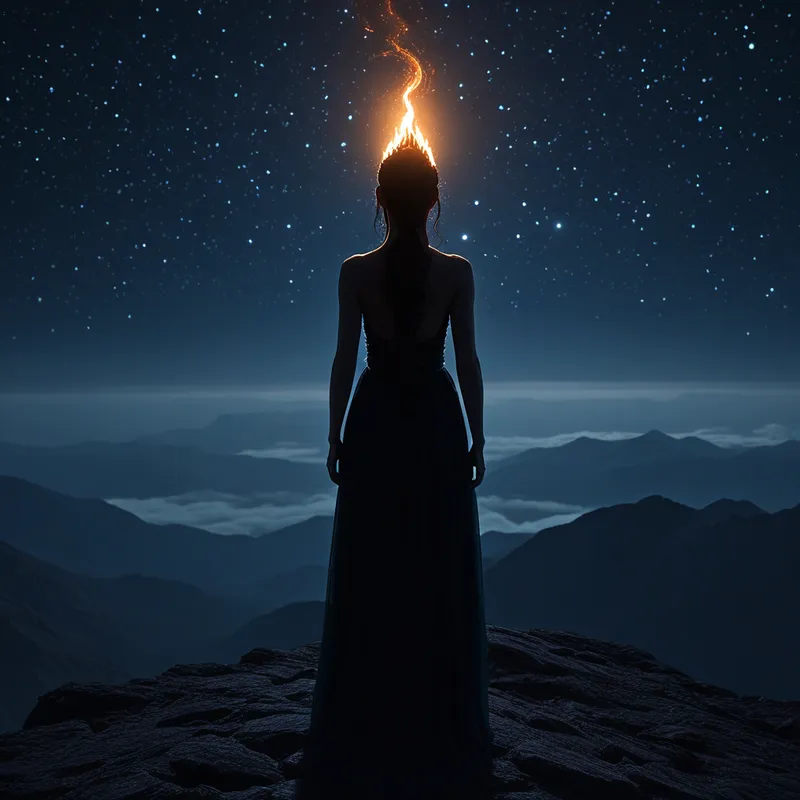
She descended to the highest peak, Mount Mayon, its perfect cone a silent sentinel in the gloom. There, she began to sing. Not a loud song, but a hum that vibrated in the stones, a lullaby to the night itself. She gathered the last, defiant sparks of the evening stars and cupped them in her hands, breathing upon them until they glowed with a soft, pearlescent light. She collected the sighs of the ocean and the whispers of the wind, weaving them into a luminous veil.
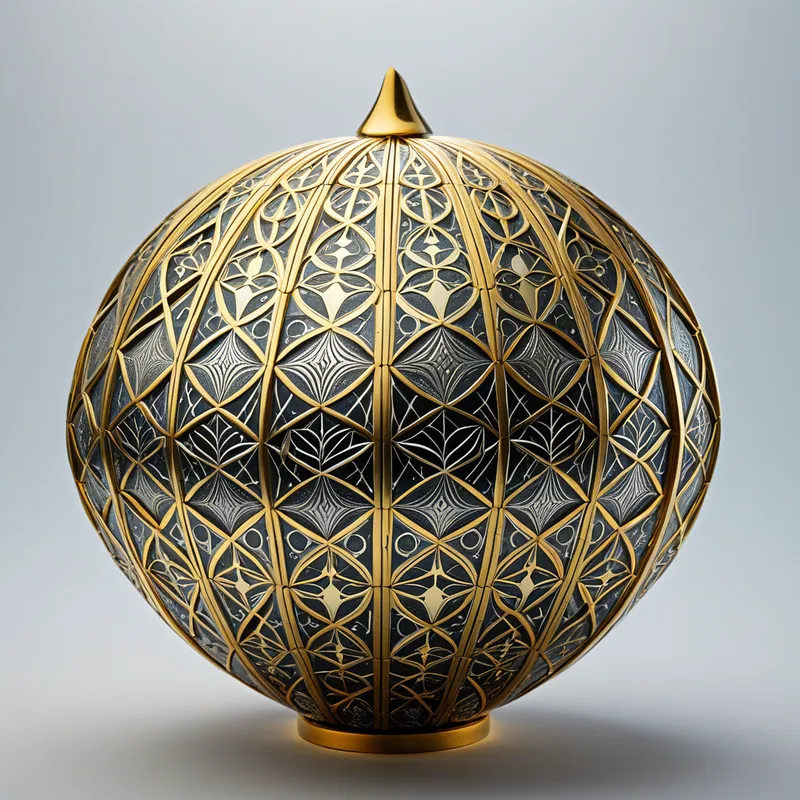
The dark resisted. It pressed in, cold and thick, trying to smother her nascent glow. Hanan stood firm, her song growing into a clear, piercing melody that cut through the silence. She poured her gathered light—the star-sparks, the ocean sighs, the wind-whispers—into a vessel of spun sky. Then, with a grace that was both tender and inexorable, she poured it out over the edge of the world.
It was not an explosion, but an emergence. A thin, golden line etched itself on the horizon. Then a blush of rose, a wash of lavender. The darkness, confronted with this gentle insistence, began to retreat, not in defeat, but in a kind of respectful withdrawal. The world held its breath. And then—the first bird, a maya, chirped. A flower unfurled. The people awoke, and for the first time, they saw the world revealed in all its color and detail, their faces wet not with tears of despair, but with dew of wonder.
Hanan had not conquered the dark. She had greeted it, and then persuaded it to make way. Every dawn since is her ritual repeated: a daily victory of gentle persistence over inertia, a promise whispered anew that no night, no matter how deep, is forever.
Cultural Origins & Context
The story of Hanan is part of the rich, pre-colonial pantheon of deities known in Tagalog mythology as the anitos or diwatas. Unlike the codified epics of neighboring cultures, these myths were primarily oral traditions, passed down through babaylans (shaman-priestesses) and community elders. They were not mere stories for entertainment but living cosmologies that explained natural phenomena, guided ethical conduct, and anchored communal identity.
Hanan’s myth functioned as a profound chronometer and a source of existential comfort. In an agrarian and maritime society, the dawn was a critical pivot point—the signal to begin fishing, planting, or traveling. Her story ritualized this daily transition, embedding it with sacred meaning. She was the divine explanation for the most reliable yet miraculous event: the return of light. Her narrative taught that renewal was woven into the fabric of existence, a divine contract between the people and the cosmos. The telling of her tale, perhaps at communal gatherings at dusk or dawn, served to align human rhythms with celestial ones, reinforcing a worldview where humanity was an active participant in a living, responsive universe.
Symbolic Architecture
At its heart, Hanan’s myth is an allegory for the birth of consciousness itself. The primordial, undifferentiated dark represents the unconscious—fertile, potential-filled, but also containing fear and the unknown. Hanan is the archetypal force of awakening, the first idea, the initial spark of awareness that allows form and distinction to emerge from chaos.
The dawn is not an attack on the night, but a conversation with it. True illumination understands what it emerges from.
Her tools are significant: song (vibration, intention), gathered starlight (fragmented insights from the "sleeping" mind), and the woven veil (the delicate membrane where the unconscious meets the conscious). She does not destroy the dark; she transforms her relationship to it. This is the model for integrating the shadow aspects of the self—not through brutal suppression, but through acknowledgment and gentle, persistent dialogue. The Morning Dew she creates is the symbol of this new, conscious reality: transient, reflective, and nourishing.
The Dreamer's Resonance
When the pattern of Hanan’s myth stirs in the modern psyche, it often manifests in dreams of profound transitions. One might dream of being in a deep, endless forest (Forest) at night, holding a single, fading match. The somatic feeling is one of acute responsibility and fragile hope—a tightness in the chest, a focused stillness. Or, one may dream of watching a horizon that remains stubbornly black, while an internal, insistent knowing whispers that the light must come.
These dreams surface during life’s "dark nights of the soul": periods of depression, after a significant loss, or at the daunting beginning of a new chapter. The psyche is rehearsing the archetypal movement from stagnation to initiation. The dreamer is Hanan on the mountaintop, tasked with generating their own hope from the sparse materials of their current despair. The dream is not a promise of rescue, but a revelation of the innate, god-like function within—the capacity to initiate dawn from within the personal darkness.

Alchemical Translation
The individuation process, the journey toward psychic wholeness, is a series of internal dawns. Hanan’s myth provides the precise blueprint for this alchemical work. The first step is Descent: voluntarily entering the personal darkness (the depression, the grief, the confusion) instead of fleeing from it. This is Hanan going to the mountaintop in the deepest night.
The second is Gathering: collecting the fragmented, often overlooked sparks of self—moments of past joy (Star), intuitions (Wind), and emotional truths (Ocean). This is the careful work of therapy, journaling, or reflection.
The third is The Act of Creation: weaving these fragments into a new narrative, a new "vessel" for the self. This is the song Hanan sings—the authentic expression of one’s being that has been forged in the dark.
The gold of the dawn is forged in the crucible of the deepest night. One must become the vessel, the breath, and the song.
The final, crucial step is Pouring Out: the conscious decision to live from this newly integrated place, to let this nascent dawn illuminate one’s actions and perceptions. The victory is not that darkness never returns, but that the individual now knows the ritual to summon the light from within. They have internalized the Goddess and become, in their own life, the bringer of their own morning.
Associated Symbols
Explore related symbols from the CaleaDream lexicon:
- Goddess — The archetypal feminine principle of creation, nurturing, and cyclical renewal, embodied by Hanan as the active force that births the new day from the womb of night.
- Morning Mist — The liminal substance between night and day, representing the transitional, veiled state of consciousness where transformation begins, much like Hanan's woven veil of dawn.
- Morning Dew — The tangible result of the dawn, symbolizing the fresh, transient, and nourishing insights that come after a period of inner darkness or reflection.
- Star — The fragmented points of light in the darkness that Hanan gathers, representing hope, guidance, and individual sparks of truth or memory that persist in the unconscious.
- Light — The core principle Hanan manifests, symbolizing consciousness, awareness, hope, and the revelation of truth that dispels the confusion of ignorance or despair.
- Darkness — The necessary counterpart to light, representing the unconscious, potential, the unknown, and the fertile void from which all new beginnings must emerge.
- Song — Hanan's primary tool, representing vibration, intention, authentic expression, and the magic of using one's unique voice to enact change in the world.
- Mountain — The sacred meeting place of earth and sky, symbolizing the vantage point of spiritual striving, isolation for the purpose of revelation, and the effort required to initiate change.
- Ocean — The deep, emotional, and unconscious realm from which Hanan gathers sighs, representing the vast, feeling underpinnings of the psyche that feed creative renewal.
- Bird — The herald of the new dawn, whose first chirp signals the success of Hanan's ritual, representing messenger energy, freedom, and the awakening of spirit.
- Vessel — The container (literal or metaphorical) that holds the gathered elements of dawn, symbolizing the psyche, the womb, or any form that holds potential until it is ready to be born.
- Door — The horizon itself, the threshold between night and day, symbolizing opportunity, transition, and the moment of passage from one state of being to another.