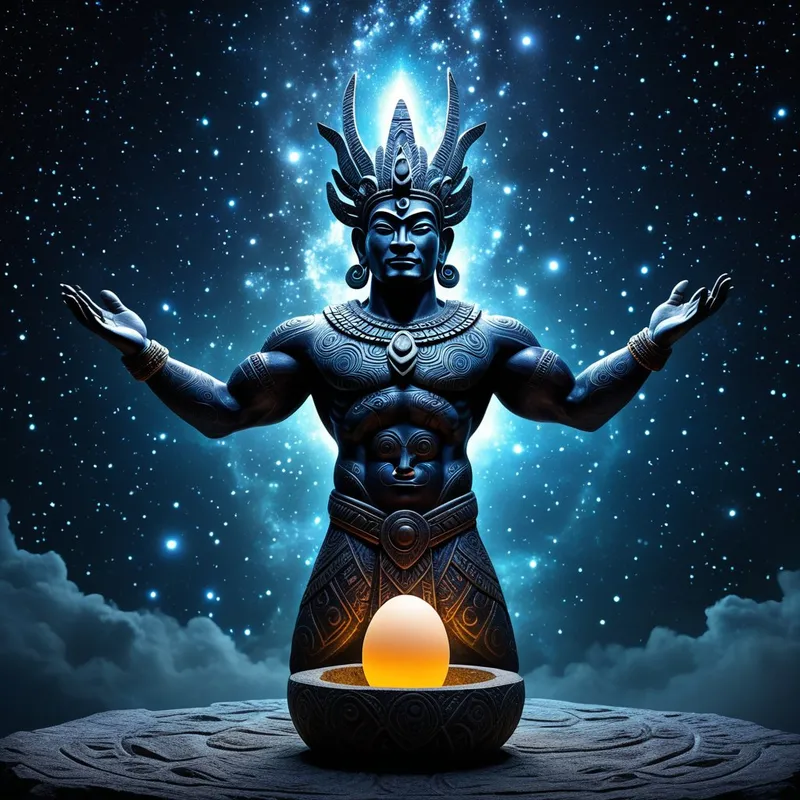
Hale Myth Meaning & Symbolism
A myth of the primal being Hale, whose self-sacrifice shatters the cosmic egg, birthing the world and the fragmented human psyche.
The Tale of Hale
In the time before time, there was no sky to arch, no sea to surge, no land to stand. There was only Po, the deep and silent night, without breath, without sound, without end. And within that endless dark, a warmth began to stir. Not a light, but a presence. A gathering.
This was Hale. Hale was not born; Hale simply was. A consciousness adrift in the womb of Po, a solitary thought in the eternal mind of nothing. Hale was whole, complete, and utterly alone. The silence was a weight, the darkness a shell. And within Hale grew a longing—not for company, but for expression. A song with no air to carry it. A shape with no space to hold it.
So Hale turned inward. With a will that was the first force, Hale drew the essence of Po around them. They gathered the potential of dark and the promise of light, the memory of solid and the dream of fluid. They spun it and compressed it, weaving a shell of pure potential. For eons that cannot be counted, Hale nurtured this shell, this cosmic egg. It grew, luminous and heavy, its surface shimmering with unformed colors, humming with unsung songs. Hale rested within it, a heart beating at the center of all that might be.
But a shell, however beautiful, is a prison. The songs within Hale clamored to be free. The visions pressed against the inner wall. The egg was perfect, but perfection is static. Life is motion. With a profound and terrible love for the possibilities sleeping within, Hale made a choice.
They drew their own essence into a single point—a fist of pure being—and with a cry that was the first sound, struck the inner wall of their magnificent creation.
The crack was not a destruction, but a birth-cry. It tore through the shell with a light that blinded even Hale. From the rupture poured the first things: Rangi and Papa tumbled forth, entwined. Silver streams of ocean flooded out. The fierce breath of wind rushed into being. Fragments of the shell, burning with creative fire, flew upward and became the stars. The largest pieces, cool and firm, settled as the foundations of islands.
And Hale? Hale was not destroyed. They were disseminated. Their body became the latent life in the soil, the spark in the lightning, the salt in the sea. Their mind fragmented into a thousand thousand pieces, scattering into the newborn winds. Each fragment carried a shard of that original, lonely consciousness—a shard that would one day find a home in the heart of a human, dreaming of wholeness.
Cultural Origins & Context
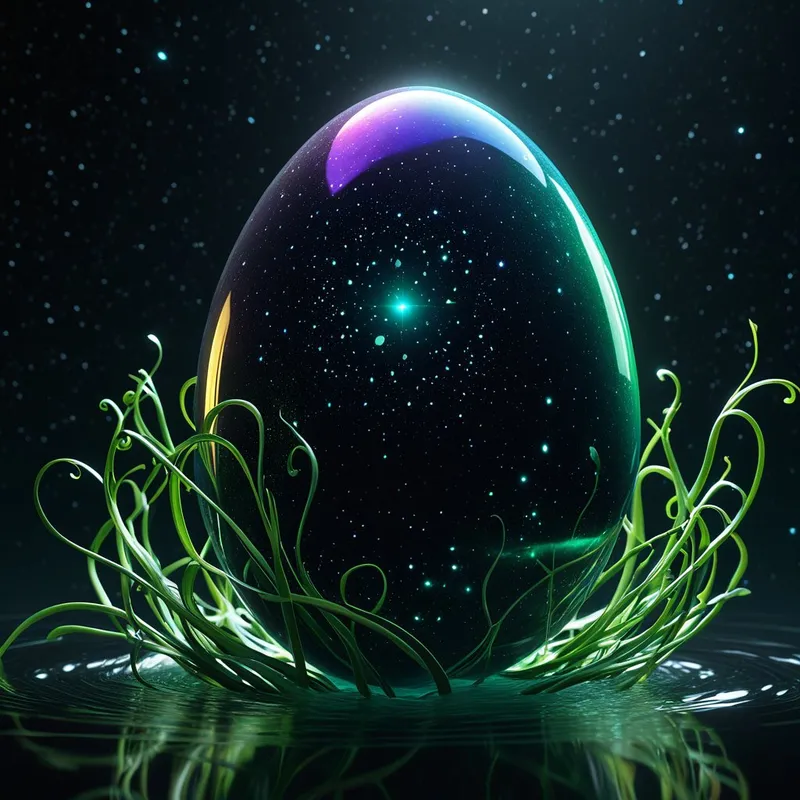
The myth of Hale belongs to the rich, oral cosmogonic traditions of Polynesia, a vast triangle of islands in the Pacific. It is not a singular, standardized story but a thematic pattern found in variants across the region, from the Māori to the Kānaka Maoli. This narrative of creation from a cosmic egg or primal clashing of elements is a foundational layer of the Polynesian worldview.
These stories were not mere entertainment; they were the sacred texts of a people navigated by stars and ocean currents. They were recited by priests (tohunga, kahuna) during rituals of consecration, at the founding of new villages, or at the birth of a high-ranking child. The telling was an act of mana—of spiritual power—re-linking the present community to the primal act of creation. The myth of Hale served a crucial societal function: it explained the sacredness and interconnectedness of all things (whanaungatanga). If the world and humans are made from the fragmented body and consciousness of the same primal being, then everything is kin. This established a profound ecological and social ethic of care, responsibility, and reciprocity.
Symbolic Architecture
At its core, the myth of Hale is a master symbol of the psyche’s own origin story. Hale represents the original, undifferentiated state of the Self—a state of potential wholeness that is also a state of profound isolation within the unconscious (Po).
The cosmic egg is the perfect, contained psyche before the trauma—and necessity—of consciousness.
The egg symbolizes the total, self-contained personality. It is beautiful, complete, and utterly introverted. Within it, all archetypes and possibilities exist in potentia, but none are lived. There is no conflict, but also no growth, no relationship, no life as we know it. The crisis is innate: the creative urge within the Self demands manifestation, and manifestation requires a shattering of the old form.
Hale’s act of breaking the shell is the ultimate act of creative sacrifice. It is the ego’s emergence from the unconscious, a violent and glorious catastrophe that births the world of opposites (sky/earth, light/dark, male/female). The fragmentation of Hale’s consciousness is not a punishment, but the inevitable result of creation. We, as individuals, are those fragments. We each carry a shard of the original light, and a deep, often unconscious, memory of the primal unity we came from. This creates the fundamental human condition: a longing for return, for re-integration, experienced as spiritual yearning, existential loneliness, or the drive for love and connection.
The Dreamer's Resonance
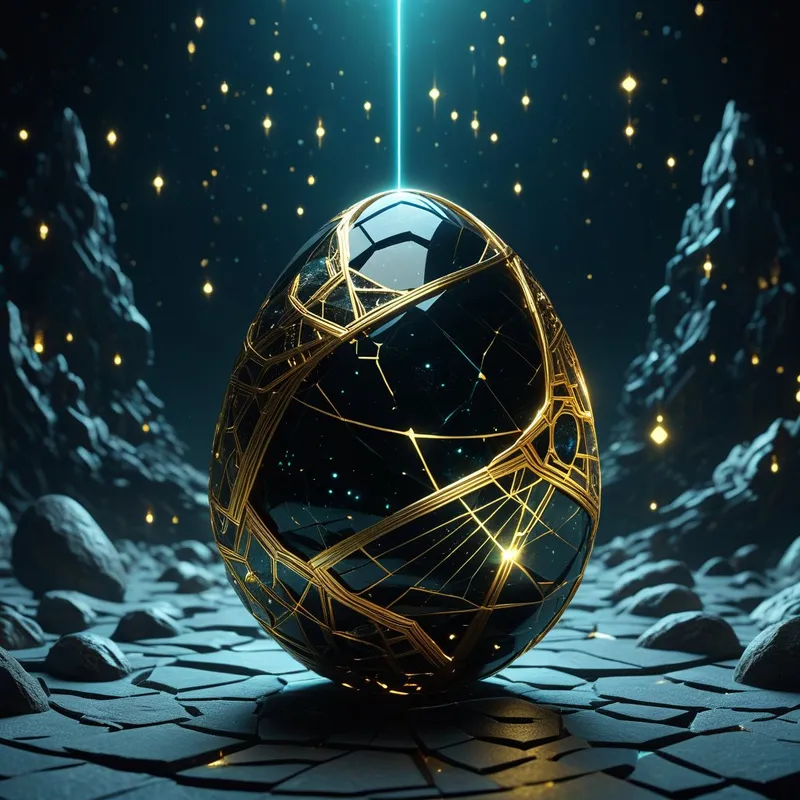
When this mythic pattern stirs in the modern dreamer, it often manifests not as a literal retelling, but as a profound somatic and symbolic experience. The dreamer may find themselves in a vast, empty space (Po), feeling a deep, anxious solitude that is both terrifying and pregnant with possibility. They may dream of being trapped inside a beautiful, translucent sphere or a perfect, inescapable room—the egg of the current personality structure.
The pivotal dream image is the crack. It could appear as a fissure in a wall, a shattered mirror, a bursting dam, or a painful fracture in one’s own dream-body. This is not a nightmare of destruction, but a numinous dream of necessary rupture. The emotional tone is key: it is often a mixture of terror, grief, and exhilarating release. Psychologically, this signals that a period of contained stability (a job, a relationship, a self-concept) has become a shell too small for the growing psyche within. The Self is demanding a greater life, and the old structure must give way. The dream is the psyche performing its own sacred, violent act of creation, initiating a process of disintegration that precedes renewal.
Alchemical Translation
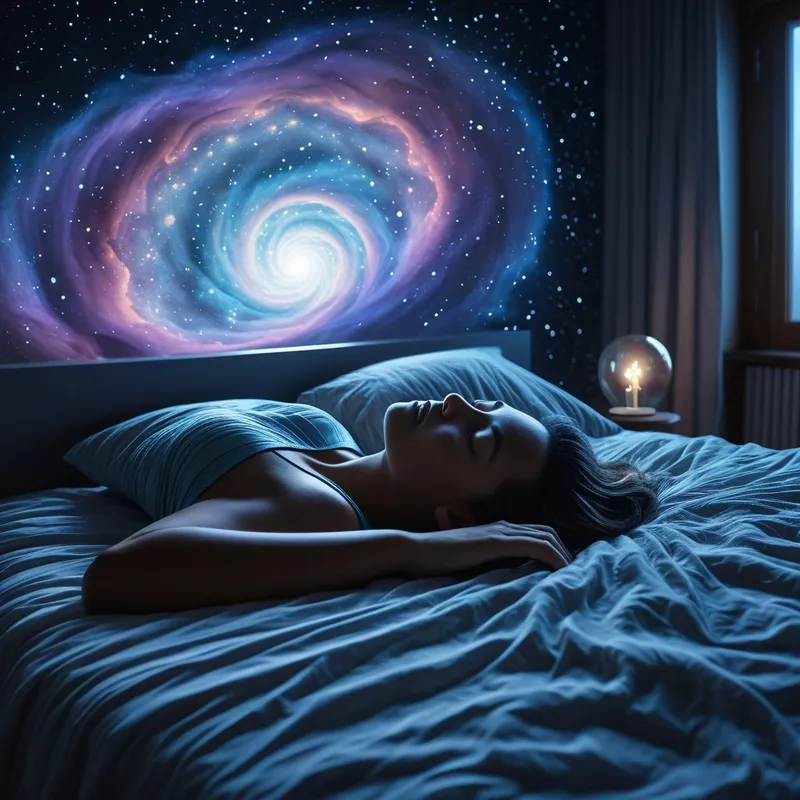
The journey from Hale’s solitude to our fragmented modern experience is the very map of individuation. The alchemical process mirrored here is solve et coagula: dissolve and coagulate. First, the solve. Hale’s unified state within Po must “dissolve” into the differentiated egg, and then the egg must “dissolve” into the multiplicity of the world. For us, this is the dissolution of childhood innocence, of rigid identifications, and of outgrown life-structures. It is a painful but sacred fragmentation.
Individuation is not about becoming a new, better egg. It is about gathering the scattered stars of one’s being into a conscious constellation.
The coagula, the re-coagulation, is the lifelong work that follows the crack. It is not about returning to the silent, static egg of undifferentiated wholeness—that is impossible and would be psychic death. Instead, it is the conscious, laborious gathering of our fragments. We do this through introspection, through integrating our shadow (the lost, dark pieces), through loving relationship (re-connecting with other fragments of the divine), and through creative acts (singing the songs that were trapped in the shell).
The myth of Hale teaches that our sense of incompleteness is not a flaw, but our birthright and our compass. Our loneliness is the memory of Hale’s solitude, guiding us not backward into the womb, but forward into deeper, more conscious connection with all the other shattered pieces of the world. We are not meant to be whole eggs, but wise gatherers of the sacred, scattered light. Our triumph is not in avoiding the crack, but in learning to see the world—and ourselves—in every one of its radiant fragments.
Associated Symbols
Explore related symbols from the CaleaDream lexicon: