Guru-Shishya Parampara Myth Meaning & Symbolism
The timeless myth of the sacred transmission of knowledge from master to disciple, a bond of fire, grace, and ultimate transformation.
The Tale of Guru-Shishya Parampara
Listen. In the time before time, when the world was still a whisper in the mind of the Brahman, there was a silence so profound it had a sound. From this silence emerged a longing—a desire to know itself. And so, the first relationship was born: the Knower and the longing to know. This is the seed of our tale.
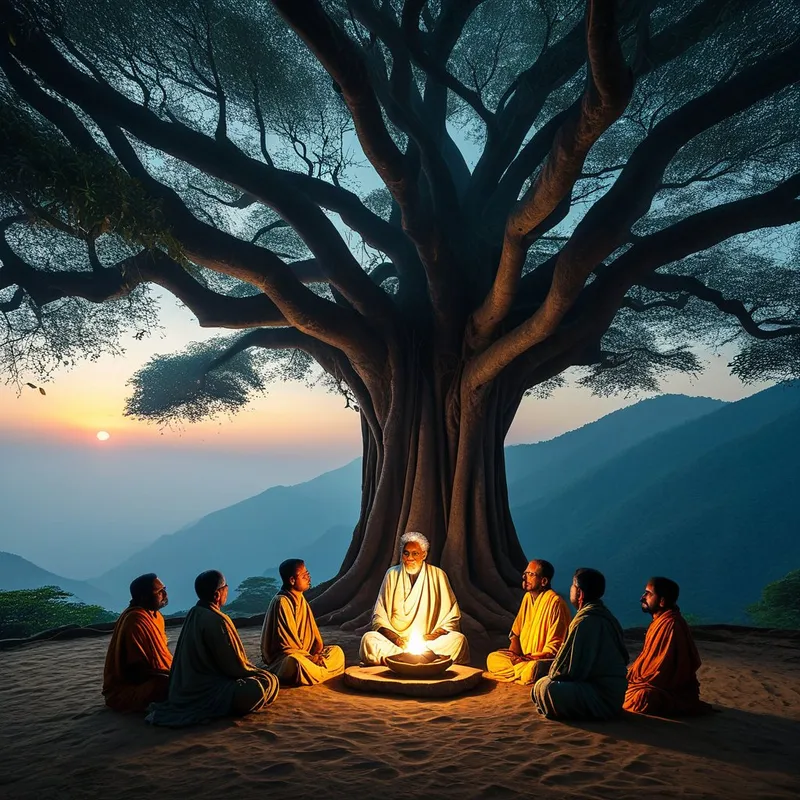
Picture the first Guru. He is not merely a man. He is a presence, a stillness seated at the root of the ancient Ashvattha tree, its branches weaving the tapestry of the heavens, its roots drinking from the underworlds of the unconscious. His name is Dakshinamurthy, the south-facing one. He says nothing. His eyes are closed, yet he sees everything. At his feet sit the first Shishyas, aged sages themselves, minds brimming with the scriptures of the world, yet hearts parched with a thirst no mere knowledge can quench. They sit in the cool dust, their bodies still, their souls leaning in. The conflict is not of clashing swords, but of a profound, aching question that hangs in the air between them: Who am I?
The rising action is not a battle, but a deepening of the silence. The Guru’s hand forms the Jnana Mudra—thumb and forefinger touching in a circle, the other fingers pointing to the earth. It is a silent sermon. In that gesture is the whole teaching: the infinite (the circle) embracing the finite (the individual). The air grows thick with presence. The disciples do not hear a lecture; they feel a vibration, a resonance that begins to hum in their own bones. The Guru does not give them something new; he ignites a flame that was always smoldering within them. He is the kindling. They are the wood.
The resolution is a dissolution. One by one, the faces of the aged disciples soften. The furrows of intellectual striving smooth away. A tear, not of sorrow but of shocking recognition, traces a path through the dust on a cheek. They do not receive an answer. They become the answer. The knowledge does not pass from one to the other like a object; it flowers simultaneously in the sacred space between them. The Guru, having ignited the fire, becomes transparent. The Shishya, consumed by the flame, realizes there was never a separate self to be taught. The lineage—the Parampara—is not a chain of people, but a river of awakening, each wave realizing it is the ocean.
Cultural Origins & Context
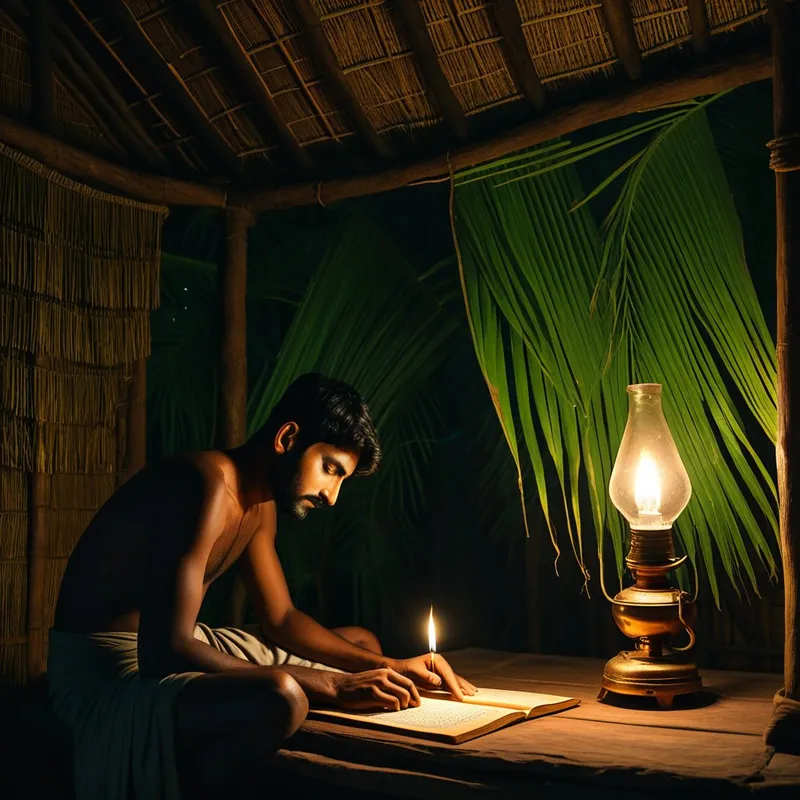
This mythic pattern is not a single story but the living backbone of Sanatana Dharma. It finds its earliest echoes in the Vedas, where the student (Brahmacharin) would dwell in the guru’s household (Gurukula), performing service and receiving instruction through oral transmission. This was not a mere educational system; it was a sacred technology for preserving and animating wisdom.
The myth was passed down not just in scriptures like the Upanishads—which are essentially dialogues between guru and shishya—but in the lived experience of countless lineages: of yoga, of tantra, of music, of dance, of medicine. The societal function was paramount. It was the means by which culture itself—its deepest spiritual truths, its arts, its sciences—was kept alive, not as dead information, but as a living flame passed from one awakened heart to a receptive one. It ensured that knowledge remained realized rather than just memorized.
Symbolic Architecture
At its core, the myth symbolizes the transmission of consciousness itself. The Guru represents the archetypal Self, the inner principle of order and wholeness. The Shishya represents the ego, the conscious mind that seeks, often through suffering and longing, to reunite with its source.
The Guru is not a person who gives you something you lack. The Guru is the mirror held up to the soul, revealing that the sought-after treasure has always been buried in the seeker's own cellar.
The Parampara symbolizes the continuum of consciousness across time and form. It is the psychological truth that wisdom is not invented, but remembered. The humble act of sitting at the feet represents the necessary dissolution of egoic pride, the "lowering" of the head (the seat of intellect) to the feet (the foundation of being). The fire of transmission symbolizes the alchemical process where base identity (lead) is transmuted into spiritual gold. The entire myth is a map of the psyche, where the outer relationship models the inner reconciliation between the personal and the transpersonal.
The Dreamer's Resonance
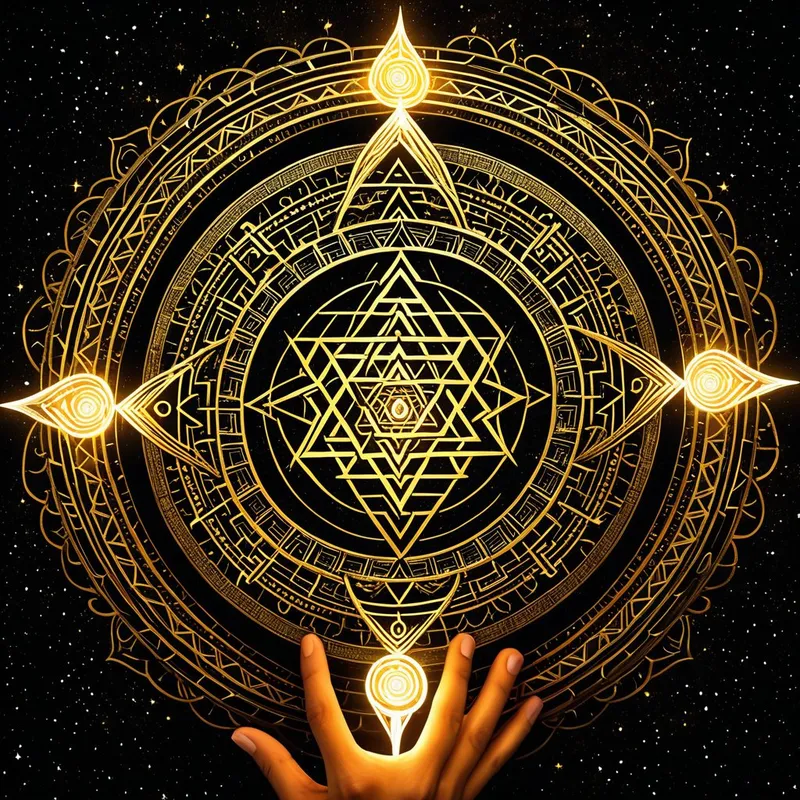
When this myth stirs in the modern dreamer, it often manifests as a profound somatic and psychological search for orientation. One may dream of finding a forgotten, wise teacher in an attic or a forest clearing. One may dream of kneeling, of receiving a book with glowing pages, or of a voice speaking a language that is not understood by the ears but known by the heart.
These dreams signal a critical phase in the individuation process: the ego’s recognition that it cannot navigate the depths of the unconscious alone. It is the soul’s craving for a "container," a guiding principle. The somatic feeling is often one of both deep relief and acute vulnerability—the relief of surrendering a burdensome, lonely quest, and the vulnerability of admitting one’s fundamental unknowing. The dream-Guru may appear as a specific person, an animal, a light, or even a disembodied presence. The psychological process is the activation of the inner guide, the archetype of the Self beginning to communicate directly with the conscious mind, offering not solutions, but a new way of seeing.
Alchemical Translation
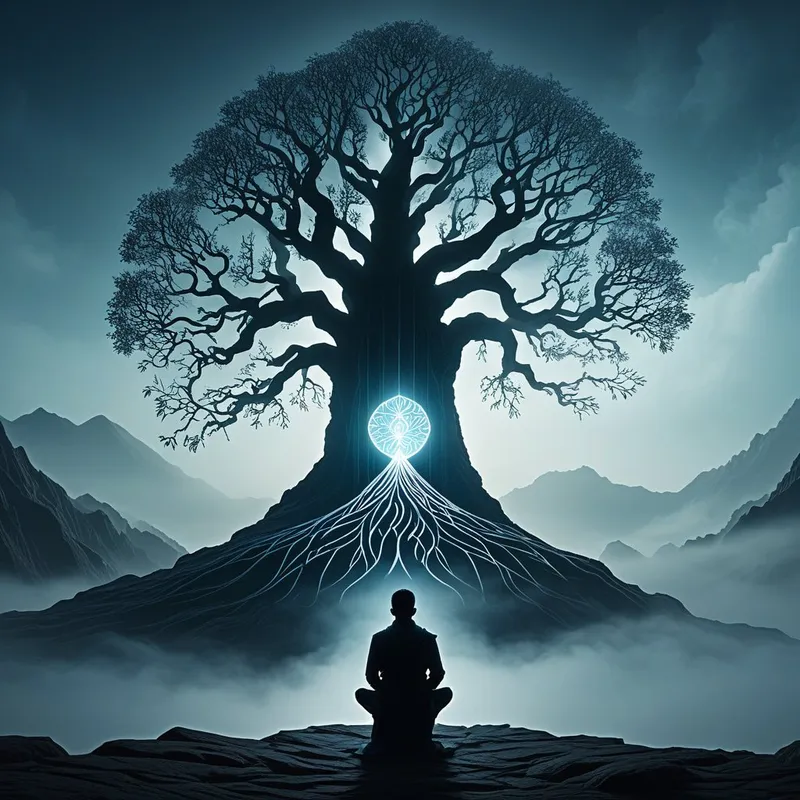
For the modern individual, the myth of Guru-Shishya Parampara models the sacred internal drama of psychic transmutation. The "Guru" is translated as the inner authority of the Self. The "Shishya" is our own conscious personality with all its doubts, desires, and conditioning. The "Parampara" is the lineage of our own lived experience and the inherited wisdom of our ancestors and culture, flowing through us.
The alchemical operation begins with Shraddha—often translated as faith, but better understood as resonant trust, the willingness to listen to the subtle intimations of the soul over the clamor of the ego. This is the act of "sitting at the feet." The middle stage is Seva, or selfless service. Psychologically, this is the hard work of inner observation, shadow work, and disciplined practice—clearing the debris of the psyche so the transmission can be received clearly.
Individuation is not a journey of becoming someone new, but of remembering who you have always been. The inner guru does not teach; it reminds.
The final stage is the Diksha—the initiation. This is the moment of integration, where a complex or a deep insight suddenly crystallizes, transforming one’s entire perception. It feels "given," because it comes from a place beyond the ego’s control. The ego (shishya) is not destroyed; it is redeemed by realizing its true source. The modern seeker’s task is to cultivate the sacred inner space where this transmission can occur—through meditation, creative work, relationship, or any discipline that quietens the ego and allows the voice of the deeper Self to be heard. In doing so, one becomes a link in the eternal parampara, receiving from the depths and, in time, offering from the fullness.
Associated Symbols
Explore related symbols from the CaleaDream lexicon: