Gregorian Chant Myth Meaning & Symbolism
A myth of sacred sound born from divine silence, sung by monks to weave a living bridge between the earthly and the eternal.
The Tale of Gregorian Chant
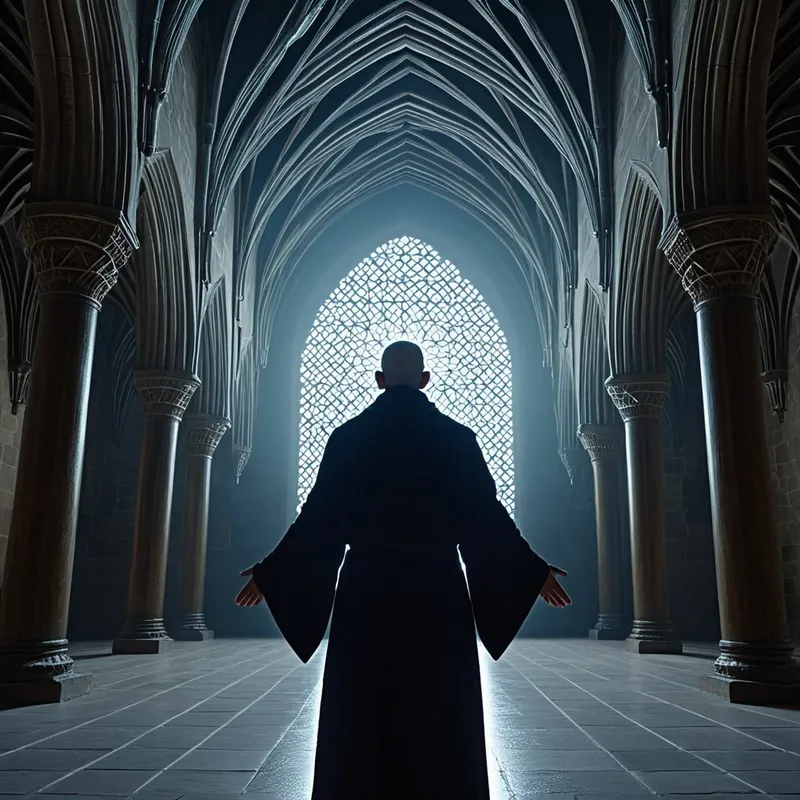
Listen. Before the word, there was the silence. Not an empty silence, but a pregnant, potent silence—the breath of Yahweh held before the first Fiat Lux. In the deep places of the world, in cold stone cells and under vaults that reached like stone ribs toward a hidden sky, men gathered in this silence. They were the keepers of the unspoken Word.
Their world was one of shadow and candle flame, of parchment and patience. The great enemy was Chaos—the formless roar of the world outside the cloister walls, the cacophony of the human heart in its raw, untamed state. Their weapon was not sword, but breath. Their strategy was not conquest, but alignment.
It began with a single voice, a low, clear tone rising from the depths of a robed chest. It was not a melody as the world knows melody, with flourish and pride. It was a line, pure and unwavering, a thread of human spirit spun from the lungs. Then another voice joined, not in harmony, but in parallel—a fifth above, creating a span, a space. Then another, and another, until the air itself within the stone chamber was no longer empty. It was woven. It became a living tapestry of sound, a latticework of tones that did not so much fill the space as become the space.
This was the Gregorian Chant. It had no composer, yet it was composed. It was given, they said, by a dove—the same dove that descended at the Jordan—whispering the pitches into the ear of a saintly pope. The chant was a received mystery, a sonic scripture. The monks were not performers; they were conduits. Their open mouths were the gates through which the divine Logos, which could not be fully captured in human language, might flow in its most essential form: as vibration, as ordered resonance.
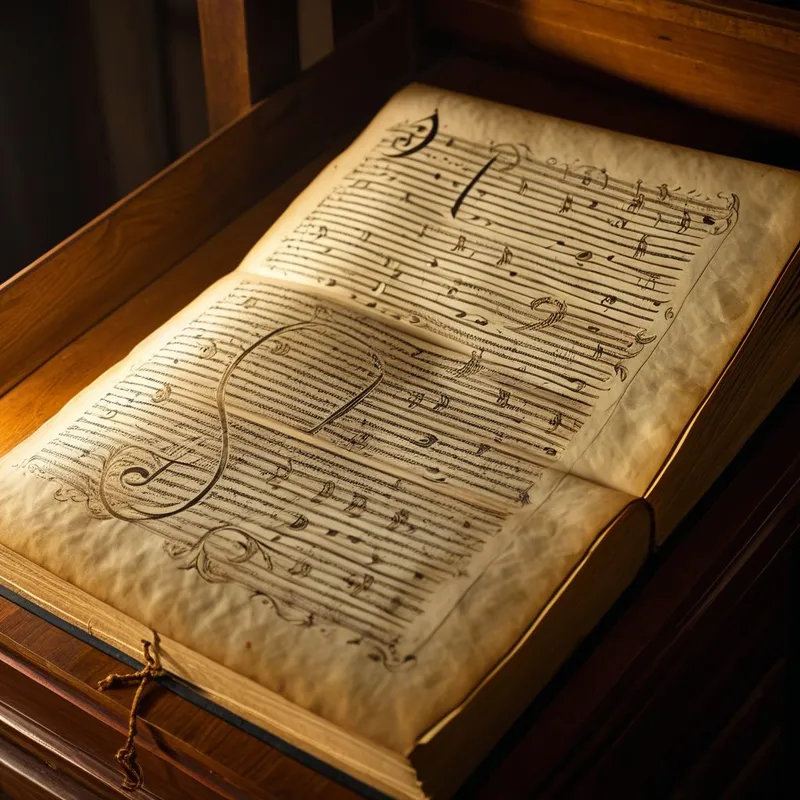
The conflict was eternal and internal: the raw, disordered noise of the fallen self against the pristine, celestial order of the chant. To sing it was to engage in a gentle, relentless war. Each note demanded surrender of personal expression. The rising and falling neumes on the page were not just instructions; they were a map of a spiritual landscape, and the voice was the pilgrim. The resolution was never final, but moment-to-moment. In the perfect unison of the schola, in the resonant frequency of the stone, the individual was not erased, but transmuted. He became part of a larger body, a single, breathing instrument playing the song of the spheres. For the duration of the chant, heaven and earth touched. The veil was not torn, but made vibrantly, sonically thin.
Cultural Origins & Context
This mythic soundscape emerged from the crucible of the early medieval West, following the decline of Rome. In a fragmented world, the Papacy and monastic orders like the Benedictines became pillars of a new, spiritual order. The chant is named for Pope Gregory I (c. 540–604), around whom legend crystallized, claiming he codified the repertoire through divine inspiration. In truth, it was a slow, collective work of generations, a fusion of Roman and Gallican musical traditions, systematized to unify the liturgy across Christendom.
It was passed down not through books alone, but through the living body of the monastery. Novices learned by listening and repeating, their bodies becoming vessels for the tradition. The chant’s societal function was profound: it was the sonic architecture of sacred time, marking the Liturgy of the Hours. It regulated the community’s life, sanctifying the mundane passage of day and night. It was also an act of cosmic maintenance—a belief held from Plato through the Middle Ages—that the right ordering of sound helped maintain the right ordering of the world.
Symbolic Architecture
At its core, the myth of Gregorian Chant is about the transformation of chaos into cosmos through the imposition of sacred order. The single, unison melodic line symbolizes the soul’s singular journey toward the divine, free from the distractions of harmonic complexity—a via purgativa. The modal scales, avoiding the familiar resolutions of major and minor, place the listener in a timeless, liminal space, neither fully here nor there.
The chant is the audible manifestation of the Logos—not the word that describes, but the vibration that structures.
The monk’s breath is the human spirit; the sustained tone is the will held steady in devotion. The stone abbey is not just a building but a symbolic resonator, a physical representation of the disciplined psyche that amplifies and contains the sacred sound. The dove of inspiration represents the irruption of the transcendent into the immanent, the moment where individual effort meets divine grace. The chant itself is the living bridge, the Jacob's Ladder, built not of stone but of synchronized breath and intention.

The Dreamer's Resonance
When this mythic pattern stirs in the modern unconscious, it often manifests in dreams of profound, resonant sound or its opposite: a silencing of inner chaos. One might dream of hearing a deep, wordless choir in a vast, empty building, feeling a vibration in the chest that brings peace. Or, one might dream of finally being able to produce a clear, sustained note after a lifetime of feeling voiceless.
These dreams signal a psychological process of ordering. The dreamer is likely grappling with internal fragmentation—a cacophony of anxieties, demands, and conflicting identities. The appearance of the chant symbolizes the psyche’s innate movement toward integration. It is the Self suggesting a return to a central tone, a core value, or a disciplined practice that can harmonize the disparate parts. The somatic feeling of resonance points to the need for alignment between one’s actions and one’s deepest, often silent, truth.

Alchemical Translation
The alchemical process mirrored in this myth is the opus contra naturam—the work against one’s base, disordered nature. The prima materia is the raw, noisy psyche, the "lead" of distracted and ego-driven consciousness. The monastic cell is the alchemical vessel, the sealed space of introspection and discipline.
The first stage is mortificatio, the death of the personal will. This is the surrender of the singer to the melody, the ego to the tradition. The breath becomes the spiritus, the connecting medium. The sustained practice of the chant is the slow separatio and purificatio, burning away the dross of individual whim to isolate the pure tone of being.
In the unison of the schola, the alchemical coniunctio is achieved: the marriage of the individual soul with the anima mundi, the world soul, represented by the celestial harmony.
For the modern individual, this translates not to joining a monastery, but to identifying the personal "chant"—that consistent, disciplined practice (meditation, journaling, art, ethical living) that serves as a tuning fork for the soul. It is the daily return to the single, clear note amidst life’s dissonance. The triumph is not a dramatic victory, but the achieved state of resonance, where one’s life ceases to be a series of reactive noises and becomes a coherent, purposeful song. The gold produced is not wealth or fame, but the integrated personality—a self that is a clear vessel, through which something greater than itself can sound.
Associated Symbols
Explore related symbols from the CaleaDream lexicon: