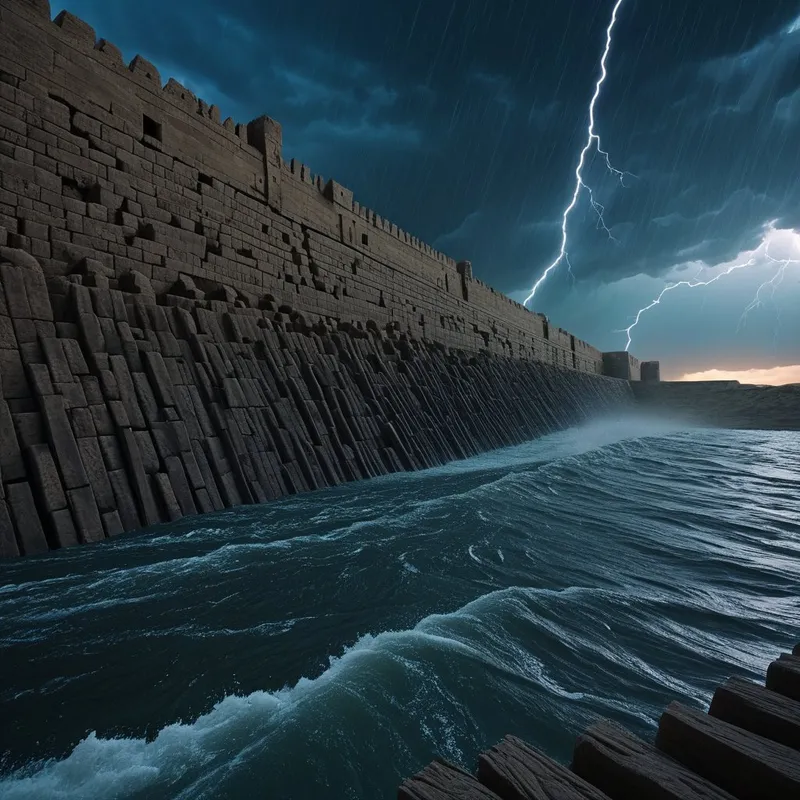
Great Flood Myth Meaning & Symbolism
A god's wrath floods the world; one man, warned, builds a boat to save life, emerging into a new covenant of human fragility and divine mercy.
The Tale of the Great Flood
Hear now the whisper from the clay, the story baked in the kiln of time. In the days when the gods walked closer, when the smoke of sacrifice was the very breath of the world, there arose a noise. Not a noise of battle or festival, but a ceaseless, multiplying hum—the din of humanity. Their cities swarmed like termite mounds; their clamor rose to the very gates of the Divine Assembly.
Enlil, the king of the gods, could find no rest. The sleep that nourishes the immortals was shattered, night after night, by the racket from below. “Their noise is too great!” he thundered. “Their numbers are without bound. They consume the bounty of the land and leave only their din. I will wipe them from the face of the earth. I will loose the Abubu—the Deluge. Let silence reign once more.”
The council of gods assented, bound by oath to keep the secret from mortals. But Ea, whose heart holds cunning and compassion, could not consent to the utter end of his creation. He did not break his oath. Instead, he went to the reed wall of the house of Atrahasis—a man of surpassing piety and wisdom—and he spoke not to the man, but to the wall.
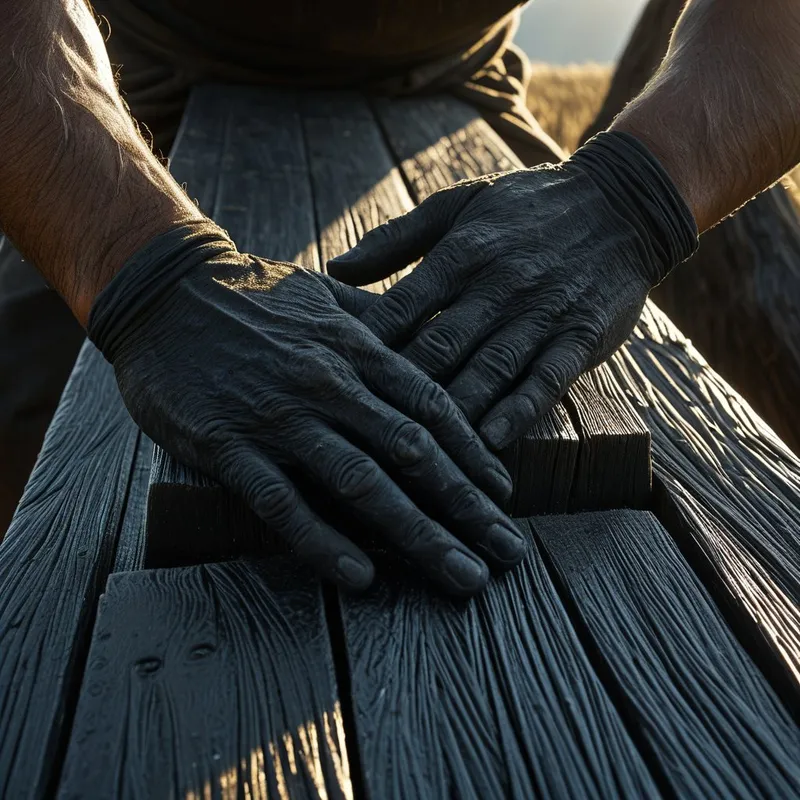
“Reed wall, reed wall! Listen and understand. Tear down your house of reeds, abandon your wealth. Build a boat, a great magurgurru. Let its dimensions be equal, its beams strong. Coat it with bitumen, inside and out. Into it, bring the seed of all living things: the beasts of the field, the birds of the air, your kin, and the craftsmen.”
Atrahasis heard the words meant for the wall. He did not question. He told his elders he must leave the city, for he had offended Enlil and would go down to the Apsu to live with his lord Ea. Then, with desperate haste, he built. For seven days, the sound of the adze and the mallet rang out, the smell of hot bitumen filled the air. The ark was loaded: his family, the animals, the grain.
Then came the day. The horizon grew dark, not with cloud, but with the turning away of the gods. The storm god Adad bellowed. The foundations of the earth were torn up. The Abubu rode on the winds, a weapon with no face, only fury. For seven days and seven nights, the flood raged. The world was returned to the Tiamat-state from which it was born—a single, roaring sea. All that was human was washed away. The gods themselves, seeing the totality of their decree, huddled in terror and thirst, for with the end of humanity, the end of their offerings had come.
On the eighth day, the boat ground to a halt on the mount of Nisir. Atrahasis waited. He released a dove. It returned, finding no perch. He released a swallow. It returned. He released a raven. It did not return. Then, he opened the great hatch and emerged into a world of utter silence and mud. He built an altar and made a sacrifice of sweet cane, cedar, and myrtle. The smell of the offering, the first in a new world, drifted up to the heavens.
The gods, starving for the savor, swarmed around the sacrifice like flies. Nintu wept, her lapis lazuli necklace torn in grief for her children, destroyed by her own consent. Enlil arrived in fury, seeing the boat and the survivors. “What? A soul escaped? No mortal should have outlived the destruction!”
Then Ea, the wise, spoke. “Punish the sinner for his sin, punish the wrongdoer for his wrongdoing. But be merciful, lest he be cut off. Instead of a flood, let there come lions to reduce the people, let there be famine, let there be pestilence. But do not bring the flood again.” And to Atrahasis, now renamed Utnapishtim, the gods granted the gift—or the curse—of eternal life, set apart at the mouth of the rivers. The covenant was remade: humanity would remain, but henceforth, their lives would be finite, threaded with hardship, their numbers checked not by total annihilation, but by the lesser plagues of the world.
Cultural Origins & Context
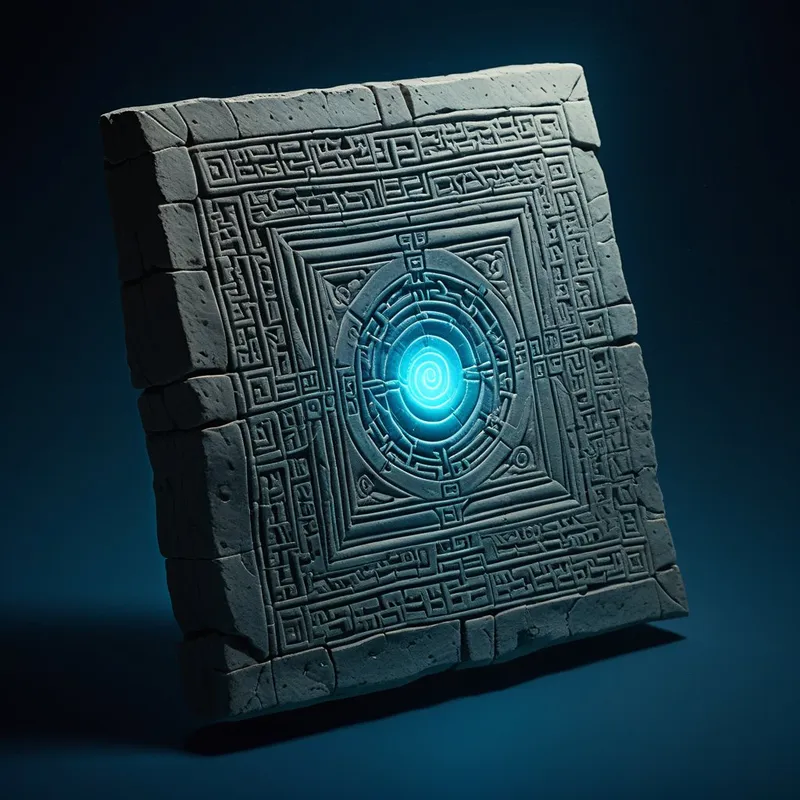
This is not one story, but a lineage of whispers across millennia. It is found in the Epic of Atrahasis (c. 18th century BCE), etched into the Standard Babylonian Version of the Epic of Gilgamesh (Tablet XI, c. 7th century BCE), and echoed in Sumerian king lists. It was not mere entertainment, but sacred history, recited by priestly scribes (āšipu) and perhaps during rituals. Its function was foundational: it explained the fundamental, flawed relationship between gods and humans. It justified the human condition—our mortality, our suffering, our constant noise—as the price of our continued existence after a divine near-annihilation. It served as a theodicy, a reason for why a world created by gods could be so filled with pain, while also reinforcing the supreme, capricious power of the divine assembly and the critical importance of heeding wisdom and maintaining ritual order (me).
Symbolic Architecture
The Flood is the ultimate symbol of the unconscious itself in its destructive aspect. It is the psychic tsunami that erupts when a dominant, conscious attitude (Enlil’s need for order and quiet) becomes too rigid, too intolerant of the vital, chaotic, creative life force (the multiplying, noisy humanity). The gods’ decision is a catastrophic psychological repression on a cosmic scale.
The flood is not punishment for evil, but the eruption of the unconscious when the conscious mind refuses to listen to the soul's clamor.
The ark is the vessel of consciousness, the temenos or sacred protected space built through attentive listening (to Ea’s whisper) and diligent, faithful work. It is not a ship for sailing, but a sealed container for preservation. Its cargo—the “seed of all life”—represents the totality of the psyche’s potential, all the instincts, talents, and ancestral patterns that must be saved from total dissolution. The hero is not a warrior, but a sage: the ego that aligns itself with the wisdom function (Ea), the part of us that can receive cryptic guidance from the deep Self and act upon it to ensure continuity of being.
The landing on Nisir and the sending of the birds is the slow, tentative process of re-relating to the world after a psychic catastrophe. It is the testing of reality, the careful extension of feeling (the dove), thought (the swallow), and finally, the dark, cunning intelligence of the unconscious (the raven) to find if solid ground—a new attitude—exists.
The Dreamer's Resonance
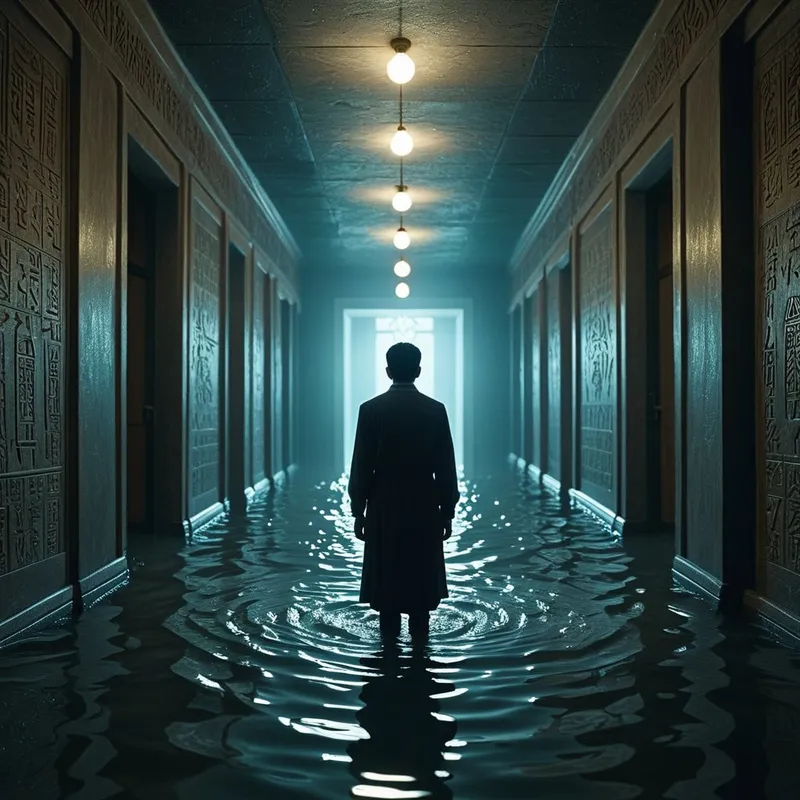
When this myth stirs in modern dreams, it rarely appears as a literal biblical scene. It manifests as overwhelming tides in city streets, rooms filling inexorably with black water, or the terrifying rise of a river breaching its banks. Somatically, it can correlate with feelings of panic, suffocation, or the dread of being utterly consumed. Psychologically, the dreamer is in the midst of, or on the brink of, a profound emotional overwhelm. This is not about everyday stress, but about a foundational structure of the personality—a long-held belief, a life-role, a core identity—that has become unsustainable and is now being dissolved by forces that feel divine in their power and indifference.
The dream may present a frantic search for “the boat”—a solution, a therapy, a retreat. The critical question the dream poses is: What is the “noise” you are making that the ruling principle of your life can no longer tolerate? And what “seed” must you absolutely save when everything else is being washed away? The process is one of necessary dissolution, a brutal initiation into a more authentic, if more fragile, state of being.
Alchemical Translation
The alchemical nigredo is perfectly mirrored in the flood’s muddy, chaotic waters—the reduction of all differentiated matter to a primal, uniform state. Atrahasis’s journey models the individuation process precisely because he is not trying to conquer the flood, but to endure it by becoming its vessel. He translates the divine decree of annihilation into an act of sacred preservation.
Individuation is not about avoiding the flood, but about learning to build the ark according to the secret instructions whispered to the soul.
The building of the ark is the conscious, disciplined work of analysis, introspection, and containment we undertake when we sense a coming crisis of meaning. The bitumen that seals it is the commitment to the process, making the vessel watertight against the dissolving waters of despair or madness. Emerging onto the mudflat of Nisir represents the albedo—the stark, washed-clean, and lonely stage after the storm has passed. The old world is gone. The sacrifice offered here is not to appease, but to re-establish relationship. It is the offering of one’s transformed perspective back to the guiding principles of the psyche (the gods).
The final gift—eternal life set apart at the “mouth of the rivers”—is the alchemical gold. It is not literal immortality, but the achievement of a symbolic, timeless perspective. The integrated individual lives at the confluence of the conscious and unconscious (the rivers), no longer fully identified with the noisy, mortal human collective, but bearing its wisdom as a witness. They carry the memory of the flood, which becomes not just a story of destruction, but the foundational myth of their own resilience and hard-won, enduring consciousness.
Associated Symbols
Explore related symbols from the CaleaDream lexicon: