Gol-e Sorkh Myth Meaning & Symbolism
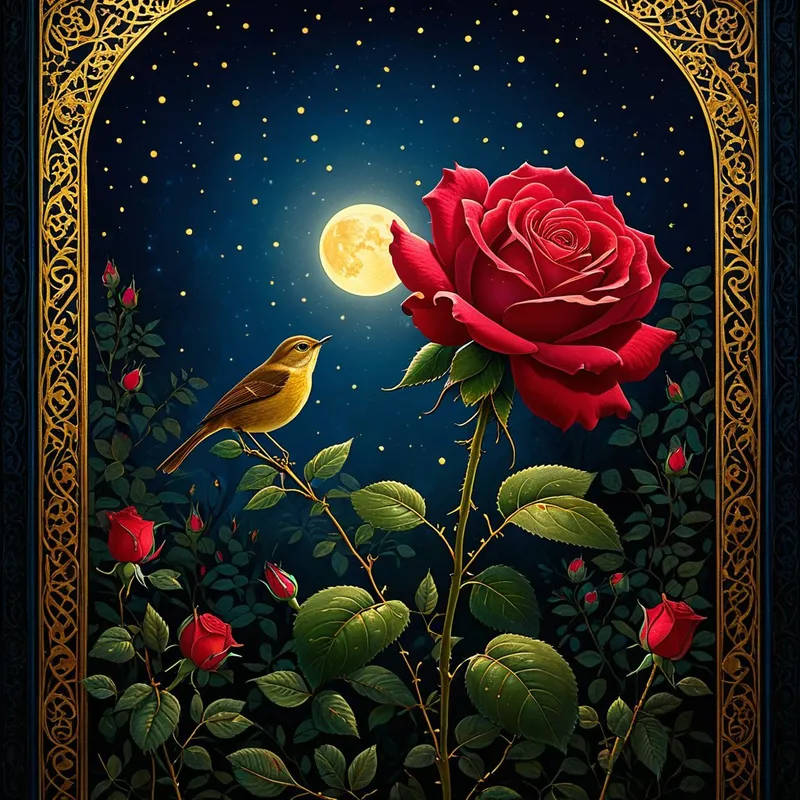
A myth of a nightingale's love for a red rose, born from its blood, symbolizing the soul's yearning and the beauty born of sacred suffering.
The Tale of Gol-e Sorkh
Listen, and let the scent of night-blooming jasmine carry you back. In a time when the moon was a sharper silver and the desert winds whispered older secrets, there existed a garden. This was no ordinary plot of earth, but a Paradise, where every flower held a fragment of divine thought. Among them grew a rosebush, proud and austere, bearing only buds of the purest, most mournful white.
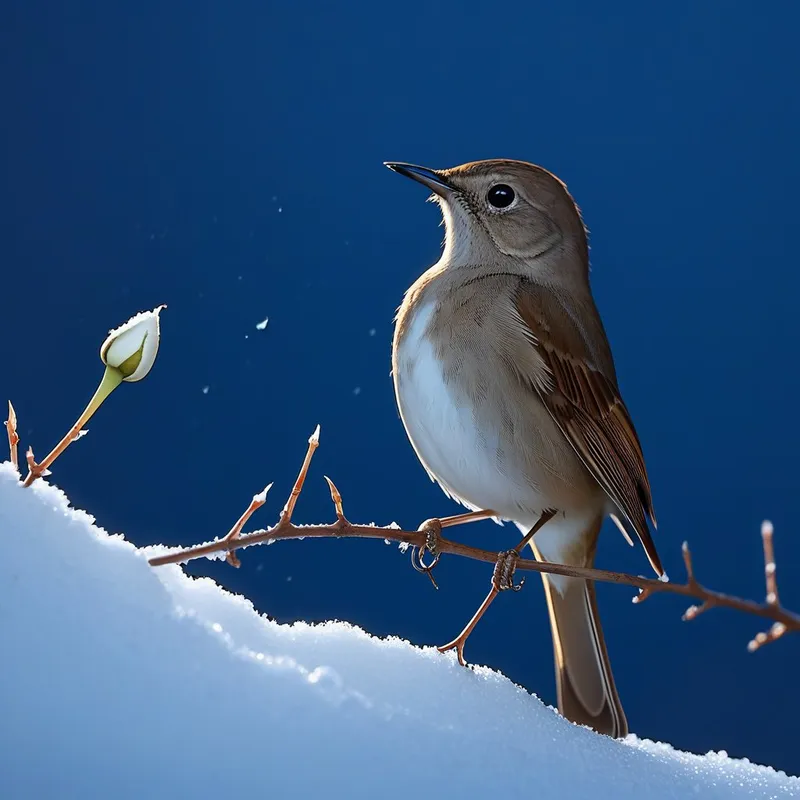
And there was a Bulbul. This was not merely a bird, but a creature woven from moonlight and melody, its soul a vessel for an unbearable longing. It sang not of simple things, but of a beauty it had heard in the rustling of celestial leaves, a beauty it could not find in the waking world. Night after night, its lament poured over the garden, a liquid silver thread of sorrow.
One evening, as a particularly poignant note hung in the air, the Bulbul’s gaze fell upon the white rosebud. In its flawless, closed form, the bird saw the perfect echo of the unattainable beauty it sought. A love, vast and desperate, flooded its tiny heart. It pleaded with the rose to open, to reveal the crimson heart it believed lay within. But the rose, bound by the law of its season and nature, remained shut, its thorny stem a fortress.
“I will die if I cannot behold your heart,” sang the Bulbul, its voice cracking. “Without your beauty, my song is dust.”
Driven by a passion that blurred the line between devotion and destruction, the Bulbul conceived a terrible, beautiful plan. As the moon reached its zenith, casting long, skeletal shadows, the bird flew to the rosebush. It did not alight gently. Instead, with a final, ecstatic trill, it pressed its breast directly against the sharpest, longest thorn at the stem’s base.
A sigh, not of pain, but of release, escaped it. The thorn pierced deep. And as the bird’s lifeblood—hot, vital, and sacred—began to flow, it sang. It sang its last and greatest song, a melody of union, of sacrifice, of love pouring itself out until nothing remained. Each drop of blood, each note of the dying song, fell upon the sealed white bud.
And then, silence.
But in that silence, a miracle unfolded. Where the blood and song had touched, a stain appeared on the white petals. It spread, deepening from pink to a vibrant, living crimson. The bud, warmed by the sacrifice, began to unfurl. By dawn, where there had been white, there now bloomed the first Gol-e Sorkh, its petals the color of heart’s blood, its fragrance carrying the ghost of a nightingale’s final song. The beauty the bird died seeking was born from its own essence, given freely unto death.
Cultural Origins & Context
The myth of Gol-e Sorkh is not found in a single, canonical text like the Shahnameh, but is woven into the very fabric of Persian poetic and mystical tradition. It is a cornerstone of Ghazal poetry, most famously immortalized by poets like Hafez and Attar. Passed down through oral recitation in coffeehouses, sung in classical Radif, and illustrated in miniature paintings, its primary function was not historical but ontological—it explained the nature of love, beauty, and the soul’s relationship with the divine.
In the context of Sufism, the tale became a central allegory. The nightingale represents the human soul (nafs), eternally yearning for God (the Beloved, symbolized by the rose). The rose’s initial indifference mirrors the divine’s inaccessibility to the unperfected soul. The sacrifice is the process of fana, where the ego-self must be “pierced” and dissolved so that true communion and beauty (baqa) can bloom. Thus, the myth served as a societal guide for understanding passionate love, both earthly and divine, as a transformative, often painful, journey toward ultimate truth.
Symbolic Architecture
At its core, Gol-e Sorkh is a map of the psyche’s most profound transformation. The White Rose is the potential self, perfect in form but latent, unmanifested, and perhaps innocent to the point of sterility. It is the idealized other, the anima or animus, or the symbolic Self before engagement with life’s passion.
The Bulbul is the driving force of Eros—not just romantic love, but the life force of connection, yearning, and creative desire. It is the part of the psyche that feels incomplete and seeks wholeness through fusion with an object of beauty. Its song is the expression of this longing, the beauty that precedes and necessitates the creation of new beauty.
The thorn is the necessary agent of transformation. Without wounding, there is no opening; without the piercing of the current form, the new essence cannot be revealed.
The blood is life itself—vitality, passion, and soul substance. Its sacrifice represents the ultimate cost of creation and union. The resulting Crimson Rose is the synthesized Self. It is not the white rose plus the nightingale, but an entirely new entity: beauty actualized through sacred suffering, wholeness achieved through the dissolution of the seeker into the sought. The rose now contains the nightingale’s essence; the beloved embodies the lover’s sacrifice.
The Dreamer's Resonance
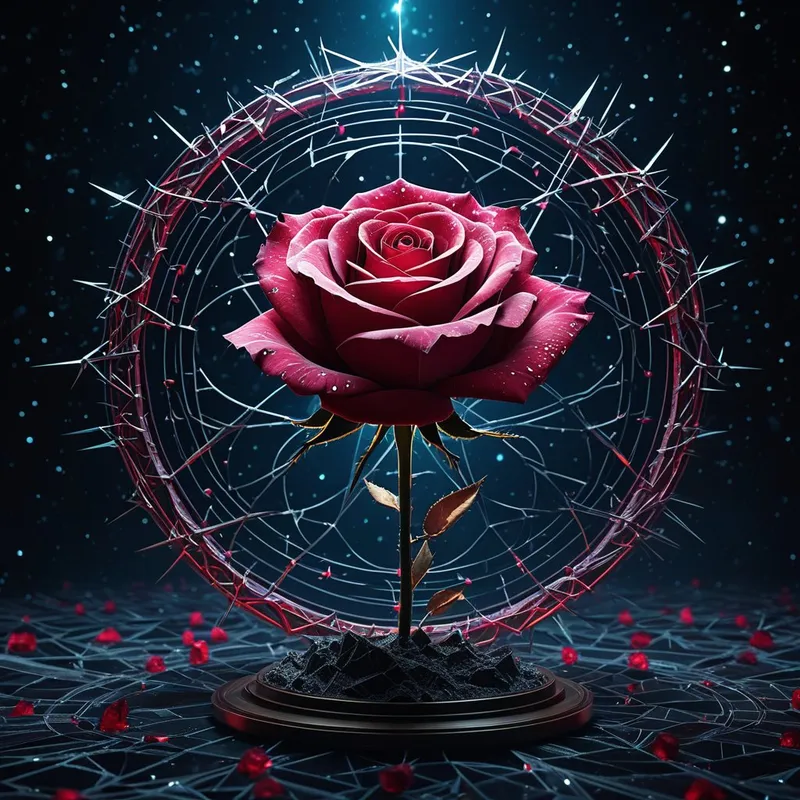
When this myth stirs in the modern unconscious, it often manifests in dreams of piercing longing or creative sacrifice. You may dream of a cherished project or relationship that feels just out of reach, represented by a beautiful but closed flower or a distant, enchanting song. The critical moment is the dream of voluntary wounding: pressing against a thorn, offering something precious (blood, a voice, a heart), not from masochism, but from a deep, somatic knowing that this is the only way forward.
Psychologically, this signals a process where the ego recognizes that its current form is insufficient to attain a desired state of being—be it love, artistic creation, or spiritual depth. The psyche is preparing for a kenosis, an emptying. The somatic feeling is often a tightness in the chest, a literal “heartache,” that dreams seek to dramatize and resolve. The dream is the nightingale’s song, asking: What idealized beauty am I yearning for, and what part of my current self must I consent to pierce and offer up to make it real?
Alchemical Translation
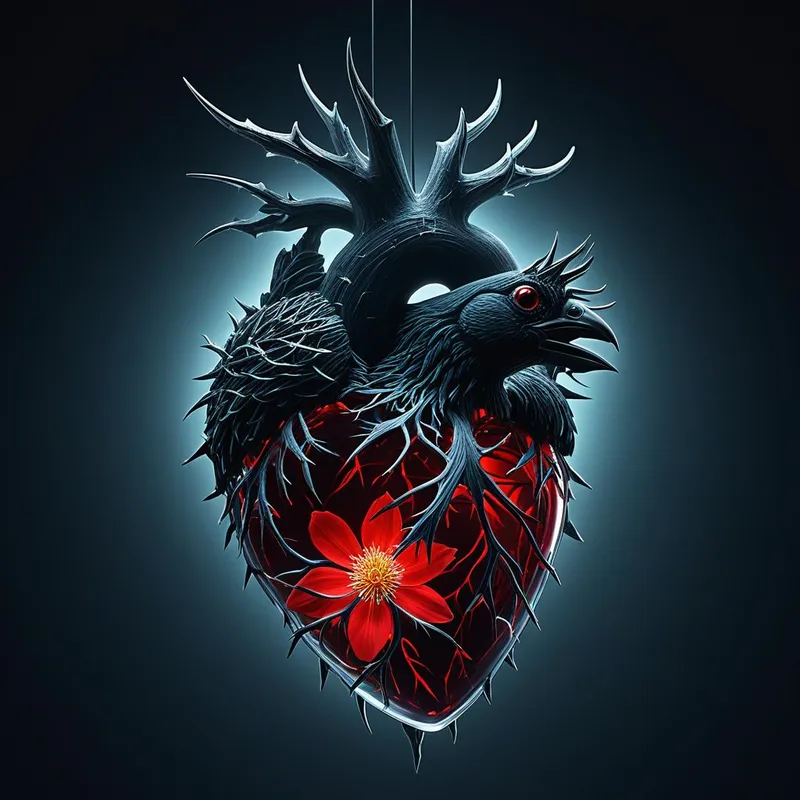
The alchemical process mirrored in Gol-e Sorkh is the Nigredo leading directly to the Rubedo. The Nigredo is not a vague depression, but the specific, conscious embrace of the thorn—the choice to endure the piercing insight, the painful sacrifice, the death of a former way of being (the nightingale as a separate, singing entity). This is the dissolution of the ego’s stance as the autonomous seeker.
The goal of individuation is not to become the nightingale who gets the rose, but to become the Gol-e Sorkh itself—the living artifact where seeker and sought, lover and beloved, sacrifice and beauty, are forever fused.
For the modern individual, this translates to any profound creative or psychological act. The writer must “bleed” onto the page, sacrificing comfort for truth. The individual in therapy must press against the thorn of a traumatic memory to allow a new, integrated self to bloom. The lover must risk the vulnerability of total offering. The myth teaches that the most sublime beauty—the realized Self—is never found by mere seeking. It is born from the alchemical marriage of our deepest longing (the song) and our willing sacrifice (the blood) upon the altar of a necessary wound (the thorn). The rose that blooms is our own completed soul, fragrant with the essence of all we dared to give away.
Associated Symbols
Explore related symbols from the CaleaDream lexicon: