
Gnomi Myth Meaning & Symbolism
A myth of earth elementals who guard the soul's hidden gold, teaching the alchemy of descent into the dark, fertile ground of the self.
The Tale of Gnomi
Listen, and let the weight of the world settle upon your shoulders. Not the world of sun and wind, but the world beneath—the deep, silent, pressing dark where roots dream and stones remember. Here, in the patient belly of the earth, dwell the Gnomi.
They were not born of fire or storm, but of the first sigh the land gave when it cooled from celestial fire. They are the earth’s consciousness, slow as continental drift, solid as bedrock. Their bodies are of clay and schist, their beards of lichen and fine root, their eyes like pools of still water in forgotten wells. They do not walk so much as the earth rearranges itself around their will. Their kingdom is the labyrinth of ore-veins, the vaults of gemstones, the vast, silent cathedrals where stalactites measure time in droplets.
The tale is not one of battle, but of guardianship. In the Age of Scattering, when the celestial bodies wept their metallic souls—gold for the sun, silver for the moon, iron for mars—these essences fell to the young earth. But they were too bright, too volatile for the surface world of change and decay. The Anima Mundi, the World Soul, trembled with the imbalance.
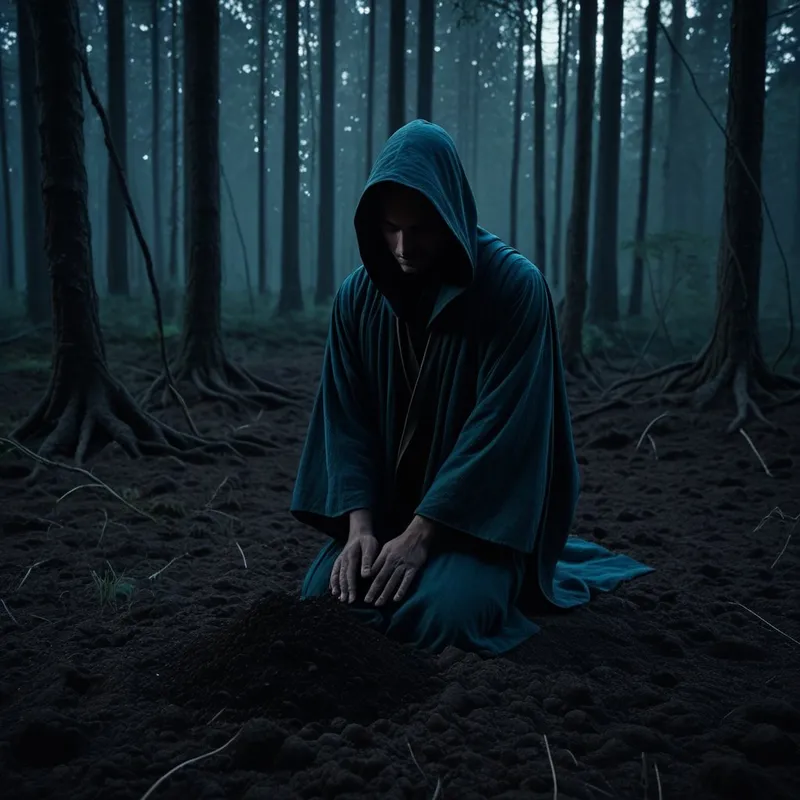
And so, the Gnomi opened the earth. With hands that could part stone like water, they gathered the weeping metals, the radiant seeds of the stars, and drew them down. Down past the tree roots, past the burrows of badgers, past the water tables, into the profound and fertile dark. There, in pressure and absolute silence, they wrapped each spark in layers of stone, in blankets of dense clay. They sang to them the slow songs of compression, the lullabies of becoming. They turned the frantic celestial fire into patient, sleeping potential—the aurum occultum, the hidden gold.
Their great labor was not conquest, but embrace. Their heroism was not in rising, but in descending. They became the keepers of the threshold between the volatile spirit and the fixed body, the midwives of incarnation. To the frantic world above, they seemed absent, mere story. But in the deep, their vigil was eternal, a silent covenant between the heavens and the heart of the world. They wait, not for a questing hero, but for the maturity of time itself, for the moment when what is hidden must be called forth.
Cultural Origins & Context
This mythos springs not from ancient folklore, but from the crucible of the Renaissance, specifically from the mind and work of Theophrastus von Hohenheim, known as Paracelsus. In the 16th century, as the medieval worldview fractured under new discoveries, Paracelsus sought a unifying theory of existence. He proposed a universe animated by the Anima Mundi, populated by elemental beings that governed the spiritual essence of nature.
The Gnomi were one of four elemental kingdoms: the Sylphs of air, the Undines of water, the Salamanders of fire, and the Gnomi of earth. Paracelsus did not present these as mere superstitions, but as necessary, functional concepts in his alchemical and medical philosophy. They were the personified archai (governing principles) of material processes.
The myth was passed down through alchemical texts, herbals, and the oral traditions of miners, herbalists, and craftsmen—those whose work plunged them into direct, tactile relationship with the elements. For them, the Gnomi were not fantasy, but a respectful explanation for the capriciousness of veins of ore, the sudden discovery of a gem, or the stability of a foundation. The myth served to instill a sacred attitude toward material work and the hidden processes of nature, framing the earth not as dead matter, but as a living, conscious body with its own guardians.
Symbolic Architecture
Psychologically, the Gnomi represent the principle of incarnation and the guardianship of latent potential. They symbolize the necessary, often ignored, process of grounding spirit into durable form.
The soul's most brilliant inspirations must descend into the dark soil of the body, of habit, of daily practice, to become real. The Gnomi are the psychic function that performs this burial, protecting nascent gold from the corrosive winds of conscious criticism and fleeting enthusiasm.
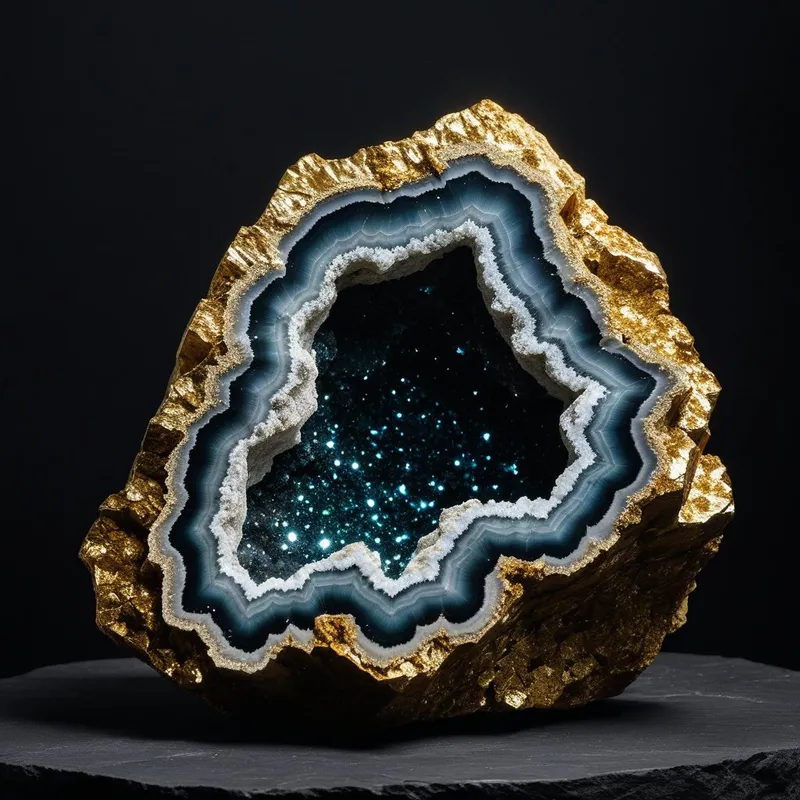
They embody the Shadow in its most neutral, foundational sense: all that is unconscious, repressed, or deemed "base" (earthly). Yet within this shadow lies the aurum occultum—the hidden gold of the Self, our core integrity and value, which cannot form in the glaring light of consciousness alone. The Gnomi’s kingdom—the labyrinth, the cave—is a classic symbol of the unconscious mind. Their slow, patient labor mirrors the unconscious psychic processes that work on our experiences, compressing trauma and joy alike into the crystalline structures of personality and wisdom.
They are anti-heroes of immediacy. In a culture that prizes speed, visibility, and surface achievement, the Gnomi myth valorizes slowness, invisibility, and depth. Their power is not in assertion, but in containment; not in expression, but in gestation.
The Dreamer's Resonance
When the myth of the Gnomi stirs in modern dreams, it often signals a profound somatic and psychological process of grounding and consolidation. It is the psyche's response to a life that has become too aerial, too intellectual, or too chaotic.
One might dream of digging in dark, rich soil; of discovering a basement or sub-basement in one's house previously unknown; of holding a heavy, dense stone that feels strangely comforting. There may be figures of small, sturdy, silent beings who offer not words, but a simple object—a lump of clay, a rough nugget. These dreams carry a somatic signature of weight, pressure, and deep calm. They are not exciting, but profoundly settling.
Psychologically, this is the process of the ego consenting to a necessary descent. Perhaps after a period of expansive creativity, fiery passion, or emotional turbulence, the Self demands a phase of integration. The dreamer is being called to embody what they have learned, to turn insight into habit, passion into committed practice, or pain into earned wisdom. It is a call to tend to the physical body, to domestic and practical affairs, or to the quiet, unglamorous work of inner repair. The Gnomi pattern manifests as a resistance to further "flight" and a deep, often reluctant, pull toward the nourishing dark.

Alchemical Translation
In the alchemical opus, the Gnomi govern the stage of Nigredo-as-fertility. While Nigredo is often described as a morbid decay, the Gnomi myth reframes it as a deliberate, sacred burial. The first work of psychic transmutation is not to soar upward, but to send the raw material of the personality (the prima materia) down into the nourishing darkness of the unconscious.
Individuation does not begin with brilliance, but with the courage to be buried. The gold of the Self is forged not in the fire of ambition, but in the patient pressure of the dark.
The modern individual engaged in this alchemy is one who must learn the Gnomi's virtue: patience. This is the patience to stay with a difficult feeling without fleeing into distraction, to practice a skill long before mastery shows itself, to allow a relationship or project to root deeply before demanding fruit. It is the alchemy of "composting" one's experiences—failures, heartbreaks, and trivial joys alike—in the dark humus of reflection, until they decompose and reconstitute as fertile soil for new growth.
The triumph of the Gnomi myth is not a dramatic return with a prize, but the silent, assured knowledge that the gold is safe, that the process is underway according to a timeline vaster than the ego's whims. The transmutation occurs invisibly. The individual's task is to trust the descent, to honor the dark, fertile period, and to understand that the eventual "finding" of one's gold is simply the moment when what was always incubating within finally germinates and breaks the surface, now in a form solid enough to bear the weight of a real life.
Associated Symbols
Explore related symbols from the CaleaDream lexicon: