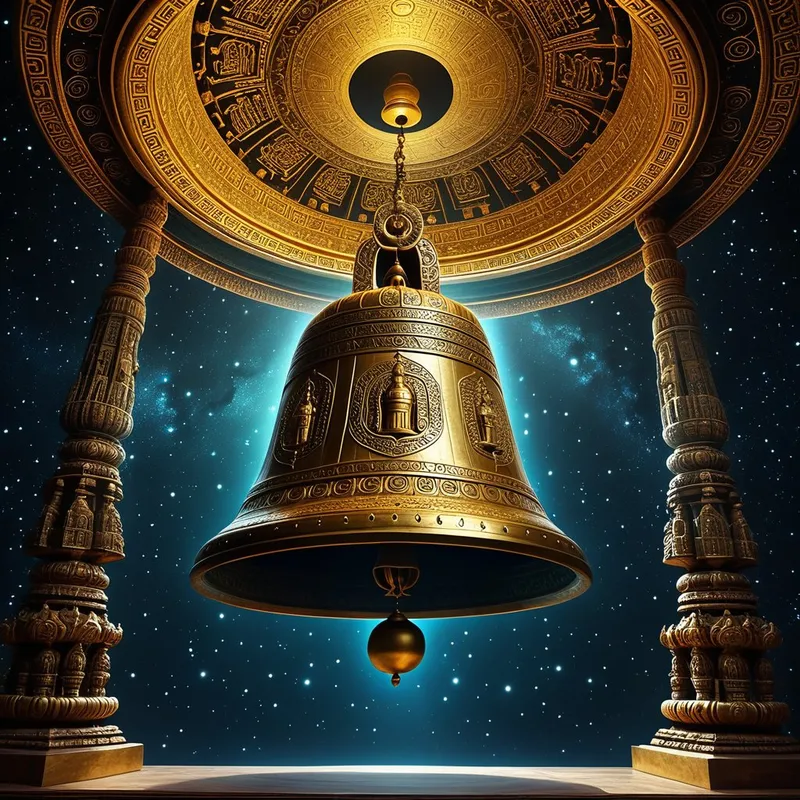
Ghanta Myth Meaning & Symbolism
The myth of Ghanta, the divine bell, whose sound shatters illusion, calls the soul to order, and awakens the divine within the human heart.
The Tale of Ghanta
Listen. In the time before time, when the worlds were still soft clay on the cosmic wheel, a profound silence reigned. It was not a peaceful quiet, but a dense, sleeping silence—the deep slumber of Brahman before its first exhalation. Within this silence, the gods themselves felt a subtle disquiet. Order, Dharma, was established, yet it lacked a voice, a clarion call to remind all beings of its eternal rhythm. The universe had light and dark, form and void, but it had no awakening.
The great deity Vishnu, resting on the coils of the serpent Ananta Shesha in the milky ocean, perceived this need. From his navel grew a lotus, and upon it sat Brahma, the architect of the manifested realms. Vishnu spoke, his voice a low rumble that stirred the ocean’s depths. “The wheel of Samsara turns, but its spokes make no sound. Creation needs a herald, a voice that cuts through the fog of Maya and calls the soul back to its source.”
The task of forging this herald fell to Vishvakarma. He gathered not iron or bronze, but the quintessence of the elements: the clarity of space (Akasha), the purity of fire (Agni), the fluidity of water (Jala), the steadfastness of earth (Prithvi), and the vitality of air (Vayu). He kindled a furnace with his own Tapas, a fire of such concentration it drew the gaze of sages from across the cosmos. For days and nights that were not days and nights, he worked, his hammer falling in rhythm with the primordial syllable Om.
And then, it was born. Ghanta. It rested in Vishvakarma’s hands, not merely an object, but a being of sound. Its body was the womb of the universe, its clapper the awakened soul. It was given to the gods, and its first ringing was not heard with the ear, but felt in the marrow of existence. It was a wave that washed over the three worlds—the heavens, the earth, and the nether realms. Where its sound touched, chaos stilled into potential, ignorance trembled, and the sleeping remembered, for a fleeting instant, their true, luminous nature. It became the voice of the temple, the herald of the divine, the first sound before prayer and the last echo after offering, a bridge between the human cry and the silent, listening absolute.
Cultural Origins & Context
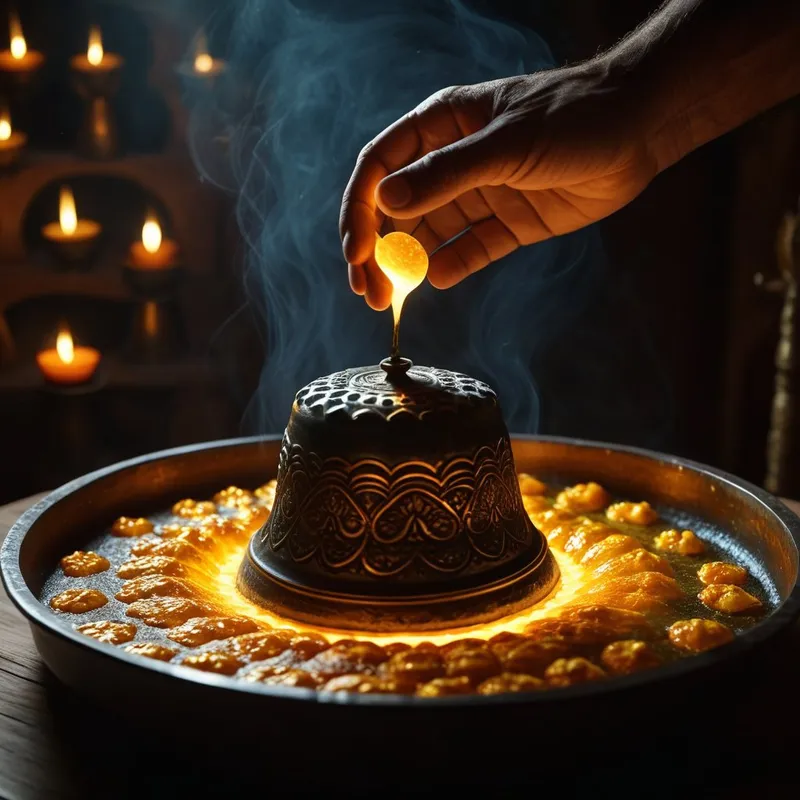
The myth of Ghanta is woven into the very fabric of Hindu ritual life, less a single narrative epic and more a living, breathing principle embedded in practice. Its origins are not found in one Puranic text but are diffused across Smriti literature, temple architecture treatises like the Shilpa Shastras, and the oral instructions of temple priests (Pujaris). The bell is not just an instrument; it is a sacred threshold object.
Its primary societal function is liturgical. The ringing of the Ghanta marks the commencement and conclusion of Puja, arati, and all temple ceremonies. This practice is passed down through generations of priests, a sacred technology. The sound is believed to purify the atmosphere, driving away negative, distracting energies (Rakshasas of the mind, one might say) and creating a sanctified space fit for the deity’s presence. It functions as a call to attention—not just for the devotees, but for the divine itself, an announcement that the ritual bridge between worlds is now open. In this sense, the myth is performed daily, millions of times across the subcontinent, making the abstract concept of divine awakening a tangible, auditory experience.
Symbolic Architecture
The Ghanta is a universe in miniature, a symbolic map of the journey from the manifest to the unmanifest and back again.
The bell’s body is the manifest world, its hollow interior the unmanifest source, and the sound is the moment of recognition that connects the two.
Its form is deeply allegorical. The handle represents the divine principle, Brahman, from which all emerges. The bell’s body symbolizes the entire created universe. The clapper is the individual soul, the Jivatman. In its dormant state, the soul is silent, identified with the solidity of the bell’s form—the material world. When set into motion through the effort of spiritual practice (the hand that rings it), the soul strikes against the limits of its own perceived reality. This strike is friction, effort, even suffering. But from this impact arises the Nada, the cosmic sound—the ringing that transcends the bell itself.
This sound represents Pranava, the vibrational essence of reality. It is the dissolution of boundaries. The sound that emanates fills the space, reminding all within hearing that the solid, separate form of the bell is an illusion; its true nature is pervasive, resonant emptiness. Psychologically, the Ghanta represents the ego-structure (the solid form) that must be “struck” by the insights of the unconscious or the shocks of fate to produce the resonant tone of the Self—the integrated, authentic psyche.
The Dreamer's Resonance
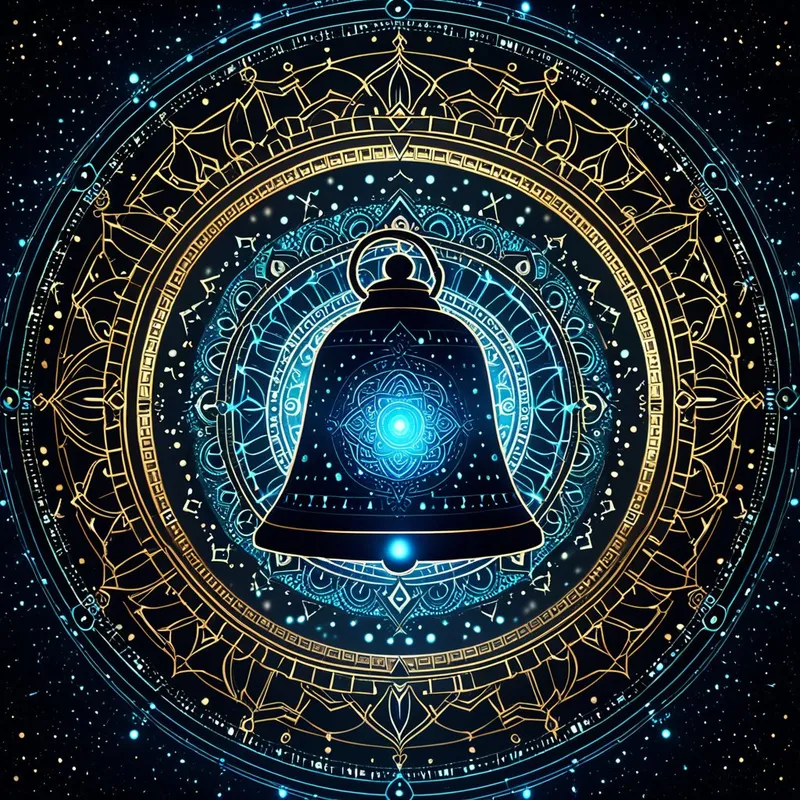
When the symbol of Ghanta appears in the modern dreamscape, it rarely manifests as a literal temple bell. Its presence is more subtle, more somatic. One might dream of a pivotal moment of decision preceded by a clear, piercing tone that seems to come from within the dream itself, cutting through a confusing narrative. Another might dream of touching a metal surface that vibrates with a profound, calming frequency, bringing sudden clarity to chaos.
These dreams often occur at psychological thresholds: the brink of a major life decision, during a crisis of faith or identity, or when emerging from a period of confusion or depression. The somatic process is one of resonance. The dream-ego, entrenched in the “solid metal” of its fixed attitudes and beliefs, is being struck by a force from the deeper Self. The resulting “sound” in the dream is the psychic vibration of a new truth trying to be heard. It is the call to awaken from the dream of who you thought you were. The dreamer may wake with a sense of having received a clear message, or with a lingering feeling of vibrational clarity, as if the mental static has been momentarily silenced.

Alchemical Translation
The myth of Ghanta models the alchemical process of psychic transmutation, the core of Jungian individuation. The prima materia, the leaden state of the psyche, is the unconscious identification with the ego—the silent, dormant bell believing itself to be only its ornate, separate form. The spiritual seeker’s efforts in therapy, introspection, or creative work are the hand that reaches for the clapper.
Individuation is not about building a better bell; it is about discovering that you are, and always have been, the ringing.
The “strike” is the confrontation with the shadow, the engagement with complex and painful material. This is the nigredo, the blackening, the necessary friction. It feels like a breaking. But from this conscious confrontation arises the liberating sound—the albedo or whitening. This is the moment of insight, the synthesis of opposites, where a rigid, ego-centric perspective dissolves into a more holistic understanding. The sound that emanates is the voice of the Self, a newfound inner authority and clarity that orders the chaotic elements of the psyche.
Finally, the sound fading into silence represents the rubedo, the reddening or completion. The integrated individual does not need to constantly ring the bell; they have become the space through which the sound moves. They carry the resonant emptiness within. The struggle triumphs not in perpetual noise, but in the ability to hold both form and emptiness, ego and Self, in a harmonious, vibrant tension. The Ghanta thus becomes an internalized symbol of the awakened psyche: a vessel that is most truly itself not when it is solid and silent, but when it is empty and resonant, participating in the cosmic music that turns the wheel of being from sleep to awakening.
Associated Symbols
Explore related symbols from the CaleaDream lexicon: