Gem of the Sun Myth Meaning & Symbolism
A tale of cosmic theft where the Sun's heart is stolen, plunging the world into chaos until restored by divine courage and cunning.
The Tale of the Gem of the Sun
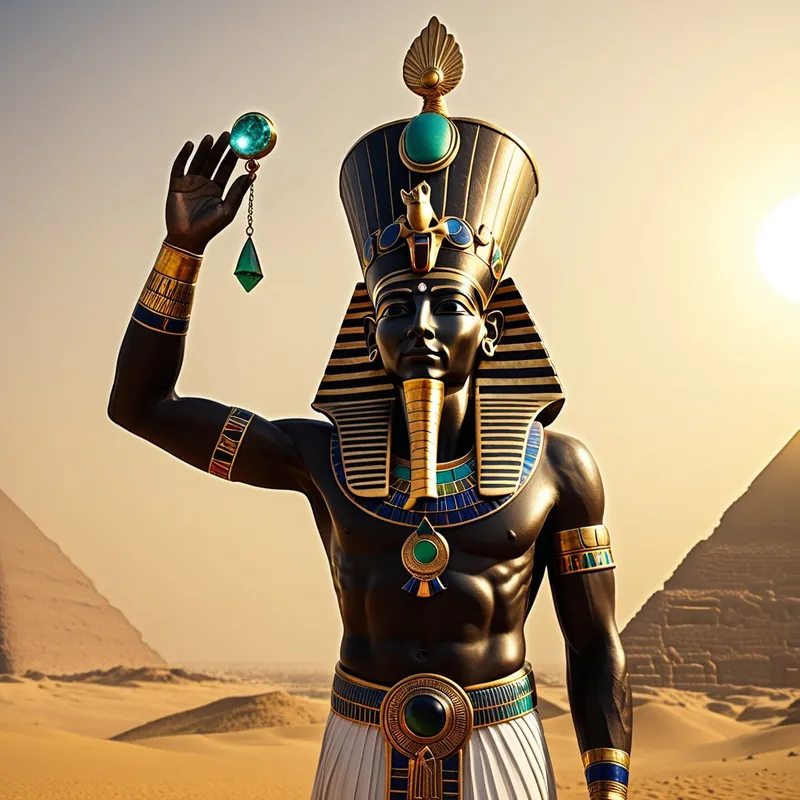
Hear now a tale from the time when the world was young, when the sky was the belly of Nut and the earth the back of Geb. In those days, the sun was not merely a disk of fire, but the very heart of Ra, a living, pulsing gem of such brilliance that to gaze upon it was to know creation itself. This Gem was the source of Maat, the rhythm of the Nile’s flood, the growth of the grain, and the beat within every chest.
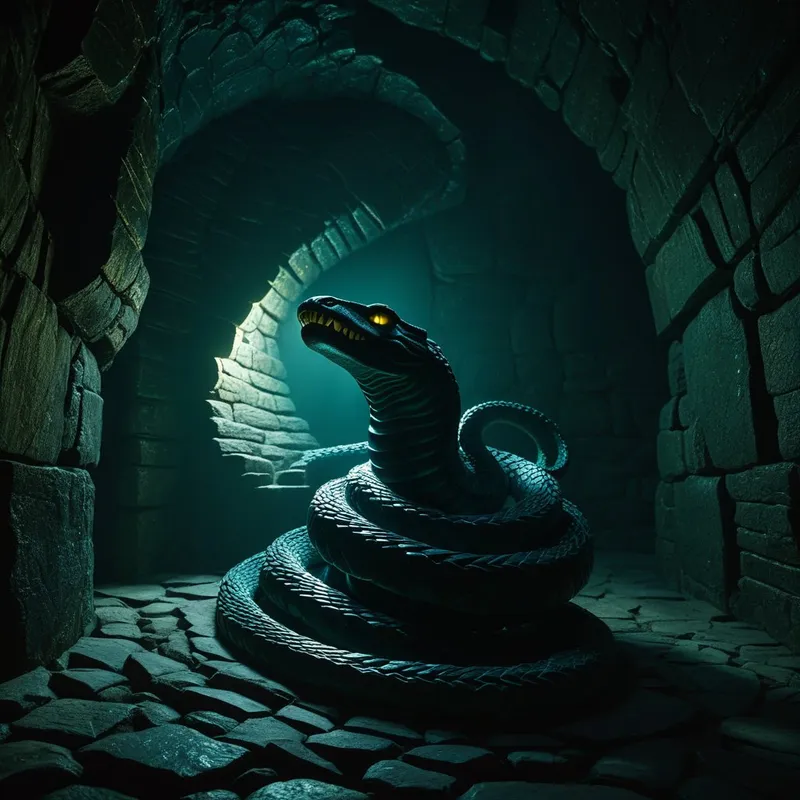
But in the deep, silent places beneath the world, where the waters of Nun still pooled, stirred a hunger. It was the hunger of Apep, the serpent of isfet—of disorder. Apep had no form but that which it stole; it had no light but that which it devoured. And it coveted the Gem. It dreamed of a world un-made, of a sun that beat no more, of a silence so profound it would swallow even the memory of light.
So, on a day when Ra’s solar barque sailed through the perilous twelfth hour of the night, Apep struck. It uncoiled from the abyss, a mountain of shadow and scale, and with a hiss that froze the souls of the dead, it lunged. Not at the barque, not at Ra’s form, but at the center of all things. Its jaws, wider than the horizon, closed around the radiant Gem nestled in Ra’s breast. There was no sound, but a terrible un-light, a sucking void, as the heart of the sun was torn away.
The world gasped. The solar barque listed, its light guttering. In the land of the living, dawn did not come. A grey, chilling twilight settled. The Nile waters grew sluggish and thick. In the temples, the fires on the altars died. Hearts faltered in human and beast alike, for the rhythm of the Gem was their rhythm. Chaos, isfet, seeped into the world like a poison.
But Ra was not alone. From the barque, Thoth cried out in a language of power, weaving spells of binding to slow the serpent’s retreat. Sekhmet roared, her fury a flash of crimson in the gloom, her claws raking Apep’s hide. Yet the serpent, bloated with stolen light, writhed toward its chasm. The Gem, now trapped within its gullet, flickered fitfully, a dying star in a prison of flesh.
The resolution came not from greater force, but from cunning and courage. It was Horus, the falcon-headed, whose eyes saw all. He did not attack the serpent’s impenetrable scales. Instead, he dove, a bolt of focused will, into the chaos of the struggle. As Apep thrashed, its maw gaped for an instant. In that instant, Horus plunged his arm deep into the darkness, past the fangs, guided by the fading pulse of the Gem. His hand closed not around cold stone, but around a core of agonizing, beautiful heat. With a cry that was both pain and triumph, he wrenched the Gem free.
As the Gem of the Sun returned to Ra’s breast, light exploded—not just the light of day, but the light of order restored. The barque righted itself. The Nile stirred. In the east, the horizon bled gold and crimson. Dawn, the daughter of this struggle, was born anew. Apep, wounded and shrieking, sank back into Nun, forever defeated but never destroyed, for the struggle is eternal. And Ra, his heart restored, sailed on, the rhythm of the world secure once more.
Cultural Origins & Context
This myth, while not preserved in a single canonical text like the Book of the Dead, is a synthesis of core Egyptian theological themes found in multiple sources: the Amduat, the Books of Nut, and the recurring motif of Ra’s nightly battle with Apep. It was not a folktale for the masses but a sacred narrative enacted in temple rituals and understood by the priesthood. Its telling was likely part of the profound liturgies performed to ensure the sun’s rebirth at dawn and the Nile’s annual inundation—events upon which all life depended. The myth functioned as a cosmic reassurance: the order of the world (Maat) is fragile and perpetually assailed by chaos (isfet), but through the combined power of the gods (divine principle), it is continually restored. It was a myth that explained the very nature of reality as a dynamic, daily triumph.
Symbolic Architecture
The Gem of the Sun is the ultimate symbol of the Ka, the animating life-force, and the centered self. It is not just Ra’s physical heart (ib) but his core identity and creative power.
The theft of the Gem is the experience of profound disorientation, where the central organizing principle of one’s life—purpose, faith, love, or meaning—is suddenly severed.
Apep represents the formless, annihilating aspect of the unconscious, the psychological shadow not as a repository of personal traits, but as the sheer, impersonal force of entropy and dissolution. Its theft is not for gain, but for the void. The ensuing twilight in the world mirrors clinical depression, existential dread, or a spiritual dark night where everything continues, but its vital essence is gone.
Horus’s intervention is critical. He represents the conscious, directed ego that must engage with the chaos. His action is not a wholesale slaying (which is impossible), but a precise, brave retrieval. He enters the darkness (the unconscious conflict) not to destroy it, but to reclaim what was lost to it. This is the archetypal act of reclamation of the Self from the grip of a complex or a period of psychic disintegration.
The Dreamer’s Resonance
When this myth patterns a modern dream, the dreamer is in a somatic and psychological state of central depletion. They may dream of a dead battery at the core of a machine, a stilled engine, a house where the furnace has gone out, or a personal “sun” that has been eclipsed. The body may report chronic fatigue, a feeling of emptiness in the chest, or a loss of appetite for life itself. The dream is diagnosing a theft of vitality.
The dreamer is not Ra, passively suffering the theft. They are the entire drama. They are the stolen Gem (the lost self), the devouring Apep (the consuming depression or anxiety), the faltering world (their life structures), and the Horus-like figure who must act. The dream presents the problem in mythic terms because the psyche understands crisis as a story of cosmic proportions. The call of such a dream is to identify what, or who, in the dream represents the potential for that brave, grasping reach into the darkness to pull the core self back into the light.

Alchemical Translation
The myth models the alchemical process of solve et coagula—dissolve and coagulate—applied to the psyche. First, the solve: the Gem is stolen, the conscious personality (Ra’s ordered journey) is dissolved into chaos and twilight. This is a necessary, if terrifying, descent. The old, perhaps rigid, solar consciousness must be disrupted for transformation to occur.
The retrieval is the coagula, the re-coagulation of the Self, but now a Self that has known the belly of the beast. The Gem is not merely returned; it is re-claimed.
This is individuation. The ego (Horus) does not become the Self (the Gem/Ra), but it enters into service of the Self. Its courage and cunning are employed not for its own glory, but for the restoration of the central, guiding luminary. The triumph is not the annihilation of chaos (Apep is eternal), but the hard-won ability to carry one’s vital core through the ongoing journey, knowing the darkness exists but cannot permanently possess the light. The modern individual undergoing this process moves from a state where their energy is done to them (stolen), to a state where they actively participate in its recovery and stewardship. The restored Gem shines not with naïve, untested brilliance, but with the profound, earned light of something that has been to the abyss and returned.
Associated Symbols
Explore related symbols from the CaleaDream lexicon: