Garden of Gethsemane Myth Meaning & Symbolism
A story of ultimate human anguish and surrender, where a divine figure confronts mortality and destiny in a moonlit olive grove.
The Tale of Garden of Gethsemane
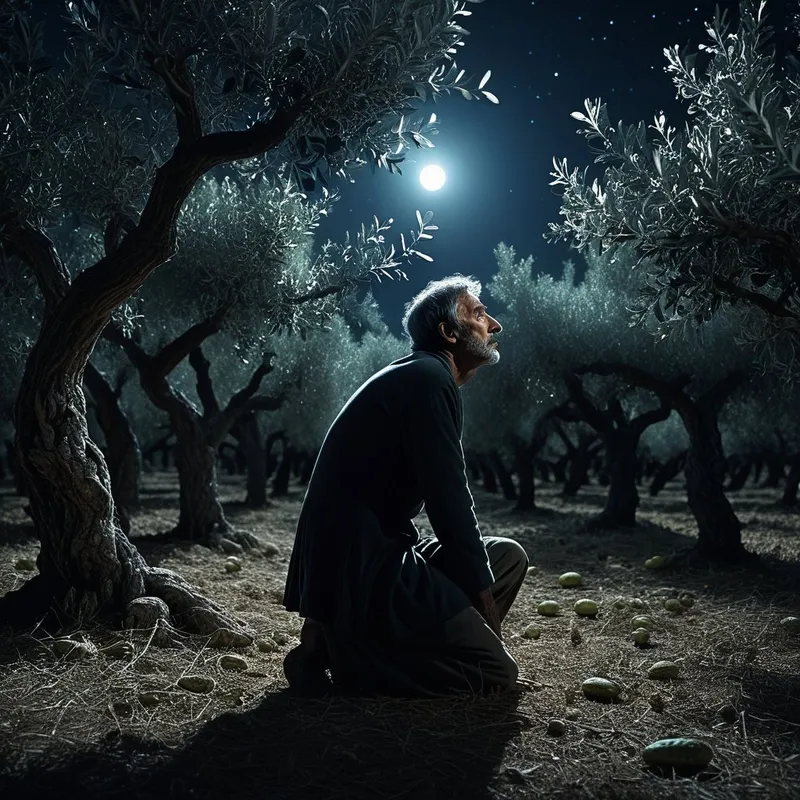
Listen, and let the night air carry you to a place of ancient stones and whispering leaves. Beyond the city walls, where the scent of myrrh and dust gives way to the cool breath of earth, lies a grove. It is a garden of olive presses, a place where fruit is crushed to yield its precious oil. On this night, under a watchful, indifferent moon, the grove becomes a stage for the universe’s most intimate drama.
He comes here, the teacher, with the weight of a world upon his shoulders. His friends, his disciples, are heavy with a feast and heavier still with a dread they cannot name. He tells them, “Sit here, while I go over there and pray.” His voice, usually a river of parables, is now a thin stream. He takes with him only three—the rock, the thunder, and the beloved—into the deeper shadows. The air is thick, not with humidity, but with a coming storm of the soul.
“My soul is overwhelmed with sorrow to the point of death,” he says to them. “Stay here and keep watch.” He staggers a few steps further, until he is alone with the gnarled trunks and the silent stars. Then he falls to the ground. Not in prayerful repose, but in the collapse of a man whose bones can no longer bear the burden. The cool soil presses against his cheek. He who spoke galaxies into being now feels the terrifying finitude of flesh.
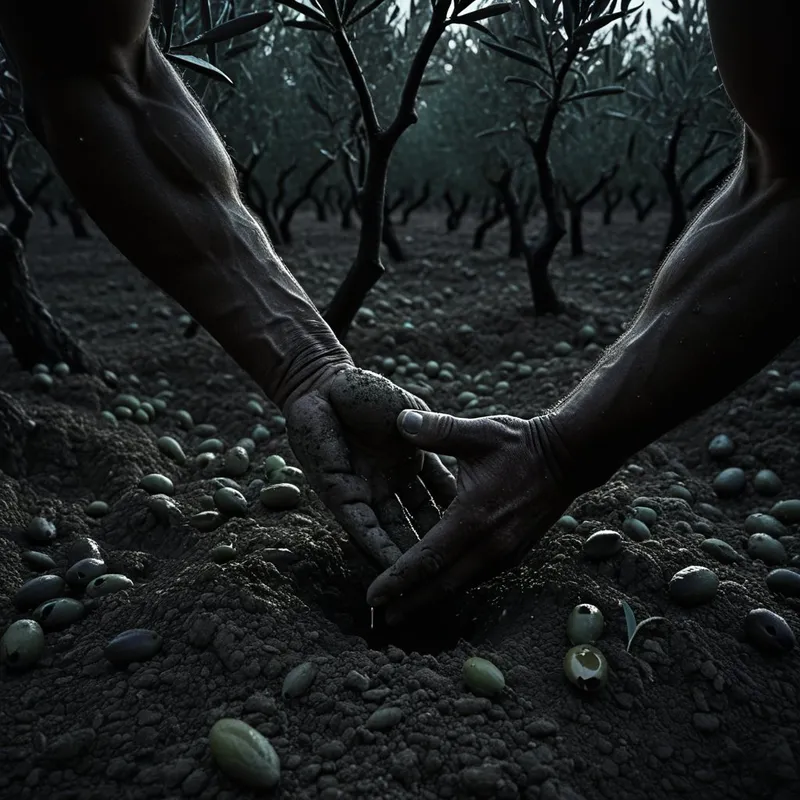
“Abba, Father,” he cries out, his voice tearing the silent fabric of the night. “Everything is possible for you. Take this cup from me.” The cup. It is not of wine, but of a bitter destiny, of betrayal, torture, and a death reserved for slaves and rebels. It is the full, horrifying measure of human suffering, offered to divine lips. He trembles. He sweats, not with exertion, but with a profound, psychic agony so intense that tradition says his sweat fell like great drops of blood upon [the earth](/myths/the-earth “Myth from Hindu culture.”/).
The conflict rages. The human will, screaming for preservation, for another path, any path. The divine will, a silent, immovable mountain. The grove holds its breath. The olive trees, themselves witnesses to centuries of pressing, seem to lean in.
Then, a resolution, born not of [triumph](/myths/triumph “Myth from Roman culture.”/), but of utter exhaustion and a love deeper than fear. The words come, a whisper that shakes the foundations of fate: “Yet not what I will, but what you will.” It is a surrender. Not a defeat, but a conscious, agonizing alignment. He rises from the ground. The internal war is over. The external one is about to begin. He returns to his friends and finds them sleeping, their spirits willing but their flesh weak. “Are you still sleeping?” he asks, with a sadness beyond reproach. “Look, the hour has come.”
And as he speaks, the flicker of torches appears between the trees. The clink of armor, the murmur of a mob led by a friend’s kiss. The garden, a moment ago a sanctuary of anguish, is now a trap. He steps forward, not as a victim fleeing, but as a man who has drunk from the cup and found, in its dregs, a terrible peace. “I am he,” he says to the armed band. And they lead him away.
Cultural Origins & Context
The story of [Gethsemane](/myths/gethsemane “Myth from Christian culture.”/) is found in all four canonical Gospels, with the most detailed and psychologically rich accounts coming from Luke and John. It was not a myth created in the abstract, but a foundational memory passed down by the earliest Christian communities, likely originating from the testimony of the very disciples who, though they slept, were proximate to the event.
Its societal function was multifaceted. For a persecuted minority, it modeled how to face inevitable suffering with dignity and surrender to a perceived higher purpose. It humanized their central figure in the most profound way, presenting him not as a stoic, unmovable god, but as a being who experienced the full spectrum of human terror and reluctance. This provided immense comfort; if the master trembled, then the disciple’s own fear was not a failure of faith, but part of the sacred journey. The story was told in worship, in secret gatherings, and later written into the texts that would form the Christian scripture, serving as the crucial pivot between the ministry of teaching and [the passion](/myths/the-passion “Myth from Christian culture.”/) of sacrifice.
Symbolic Architecture
[The Garden of Gethsemane](/myths/the-garden-of-gethsemane “Myth from Christian culture.”/) is the Self’s antechamber, the last private [moment](/symbols/moment “Symbol: The symbol of a ‘moment’ embodies the significance of transient experiences that encapsulate emotional depth or pivotal transformations in life.”/) before [the ego](/myths/the-ego “Myth from Jungian culture.”/) is dismantled by the demands of [destiny](/symbols/destiny “Symbol: A predetermined course of events or ultimate purpose, often linked to spiritual forces or cosmic order, representing life’s inherent direction.”/).
The true agony is not in the suffering itself, but in the conscious acceptance of it. The cup is not thrust upon the lips; it is lifted by one’s own trembling hand.
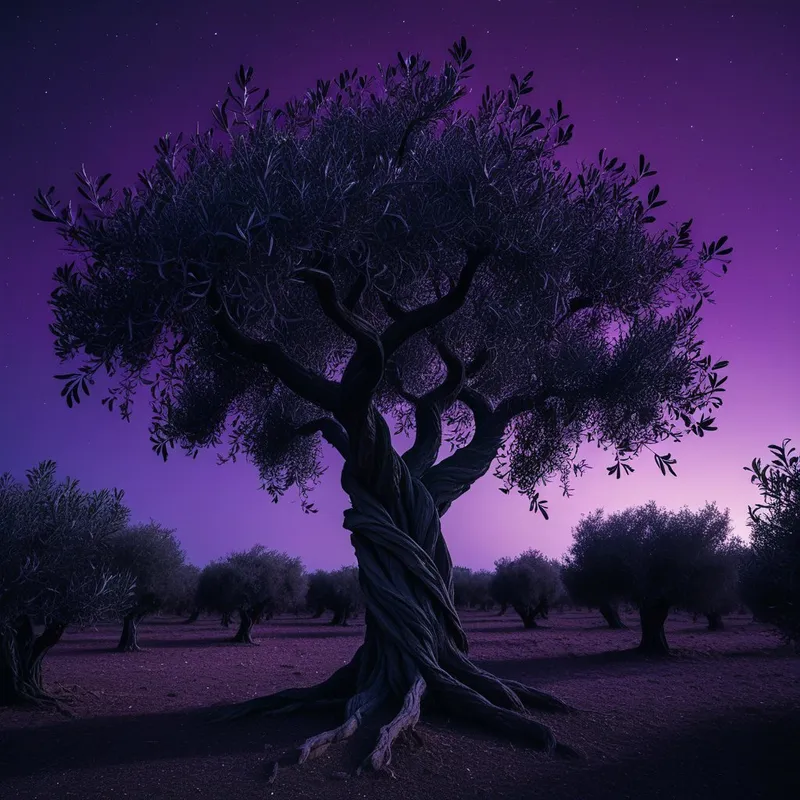
The Garden itself symbolizes the fertile, enclosed [space](/symbols/space “Symbol: Dreaming of ‘Space’ often symbolizes the vastness of potential, personal freedom, or feelings of isolation and exploration in one’s life.”/) of the [soul](/symbols/soul “Symbol: The soul represents the essence of a person, encompassing their spirit, identity, and connection to the universe.”/) where ultimate choices are made. It is a [temenos](/myths/temenos “Myth from Greek culture.”/), separate from the public world. The Olive Trees, ancient and twisted, represent [peace](/symbols/peace “Symbol: Peace represents a state of tranquility and harmony, both internally and externally, often reflecting a desire for resolution and serenity in one’s life.”/), wisdom, and the crushing pressure (Gat Shemanim) required to extract the anointing oil of a new [consciousness](/symbols/consciousness “Symbol: Consciousness represents the state of awareness and perception, encompassing thoughts, feelings, and experiences.”/). The [Night](/symbols/night “Symbol: Night often symbolizes the unconscious, mystery, and the unknown, representing the realm of dreams and intuition.”/) is the darkness of the unknown, the [shadow](/symbols/shadow “Symbol: The ‘shadow’ embodies the unconscious, repressed aspects of the self and often represents fears or hidden emotions.”/) that must be traversed alone.
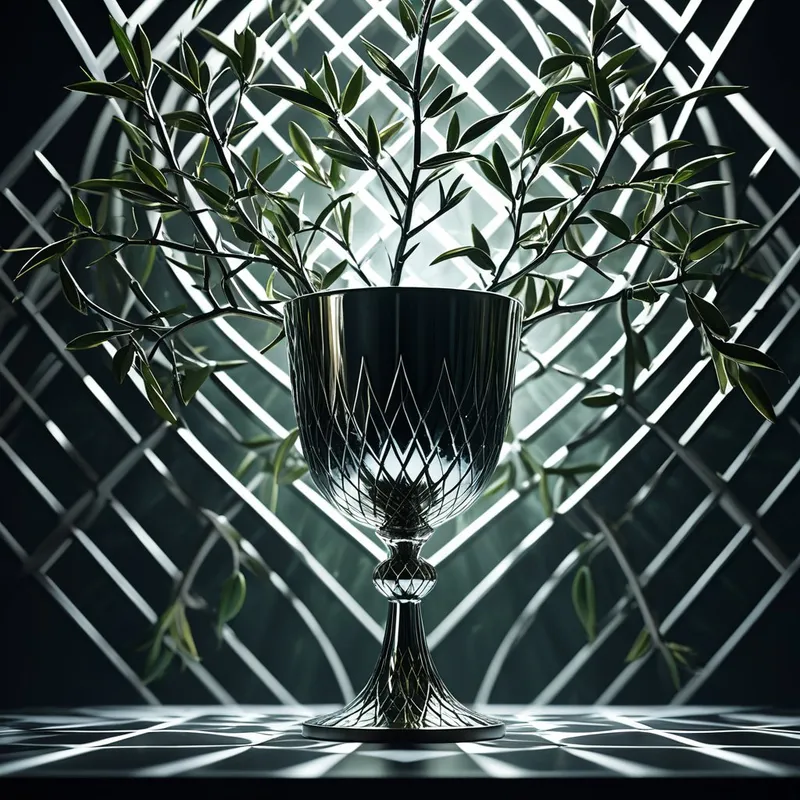
The core psychological [drama](/symbols/drama “Symbol: Drama signifies narratives, emotional expression, and the exploration of human experiences.”/) is the clash between the Personal Will (“take this cup from me”) and the Transpersonal Will (“not what I will, but what you will”). This is the ego’s final, desperate stand against the integrating [impulse](/symbols/impulse “Symbol: A sudden, powerful urge or drive that arises without conscious deliberation, often linked to primal instincts or emotional surges.”/) of the Self. The figure in the garden represents every individual who must consent to a necessary [death](/symbols/death “Symbol: Symbolizes transformation, endings, and new beginnings; often associated with fear of the unknown.”/)—of an old [identity](/symbols/identity “Symbol: Identity represents the sense of self, encompassing personal beliefs, cultural background, and social roles.”/), a cherished plan, a comfortable illusion—for a new, more authentic [life](/symbols/life “Symbol: The symbol of ‘Life’ represents a journey of growth, interconnectedness, and existential meaning, encompassing both the joys and challenges that define human experience.”/) to be born. The Cup is the [vessel](/symbols/vessel “Symbol: A container or structure that holds, transports, or protects something essential, representing the self, emotions, or life journey.”/) of one’s unique [fate](/symbols/fate “Symbol: Fate represents the belief in predetermined outcomes, suggesting that some aspects of life are beyond human control.”/), filled with both [bitterness](/symbols/bitterness “Symbol: A taste or sensation associated with unpleasantness, resentment, or unresolved emotional pain, often signaling toxicity or a need for acceptance.”/) and potential sacrament.
The Dreamer’s Resonance
When this myth stirs in the modern dreamscape, it rarely appears with biblical literalism. Instead, the dreamer finds themselves in a liminal garden—a backyard at midnight, an overgrown park, or a surreal landscape of dark, organic forms. The somatic feeling is one of crushing anxiety, a weight on the chest, a sense of being utterly alone with a looming, inescapable decision.
Psychologically, this dream pattern signals that the dreamer is at a threshold of surrender. They are holding onto a position, an identity, or a course of action with white-knuckled intensity, but the [psyche](/myths/psyche “Myth from Greek culture.”/) knows it is no longer tenable. The “disciples” in the dream—often represented as sleeping friends, indifferent family, or useless tools—symbolize the parts of the personality or external support systems that cannot help in this most intimate struggle. The dream is an enactment of the soul’s agony of consent, preparing the ego for the inevitable release it must perform in waking life. It is a profound, if terrifying, sign of impending transformation.
Alchemical Translation
The alchemical process mirrored in Gethsemane is [Nigredo](/myths/nigredo “Myth from Alchemical culture.”/)—[the dark night of the soul](/myths/the-dark-night-of-the-soul “Myth from Christian Mysticism culture.”/) where all certainties are dissolved in the acid of despair. This is not a failure of the individuation process, but its essential, fiery beginning.
The gold of the spirit is not found by avoiding the lead of human fear, but by submitting to the furnace that transmutes one into the other.
The individual’s journey follows the mythic map: First, one must withdraw to the garden—create a conscious, interior space for honest confrontation. Next, one must name the cup—articulate with brutal honesty the fate one fears and resists. This is the “take this from me” prayer, a necessary expression of the ego’s terror.
The critical alchemical operation is the surrender of the personal will. This is not passive resignation, but an active, conscious choice to align with a deeper current of life, often perceived as the will of the Self, destiny, or the universe. It is saying “yes” to the process of one’s own becoming, even when that process involves pain and the death of the old self. The sweat like blood is the [prima materia](/myths/prima-materia “Myth from Alchemical culture.”/)—the raw, psychic substance—being cooked in [the vessel](/myths/the-vessel “Myth from Alchemical culture.”/) of the soul.
Finally, one rises from the ground. This is the beginning of Albedo. Having consented, a paradoxical peace emerges. The individual can now meet the “torchlight” of external crisis—the betrayal, the loss, the change—not as a shattered victim, but as one who has already faced and integrated the greater internal war. They have drunk from their own cup and, in doing so, have begun the transmutation of agony into meaning, and mortal fear into a grounded, unshakable presence.
Associated Symbols
Explore related symbols from the CaleaDream lexicon: