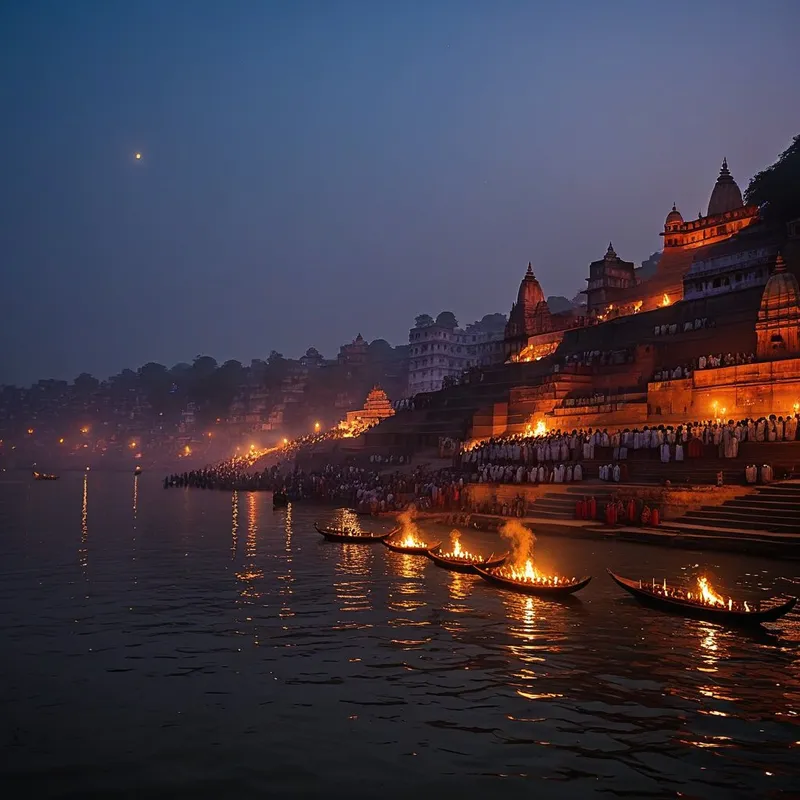
Funeral Pyres of Varanasi Myth Meaning & Symbolism
The myth of the sacred pyres where fire consumes the body to free the soul, granting moksha and breaking the endless cycle of samsara.
The Tale of the Funeral Pyres of Varanasi
Listen, and let the smoke carry the tale.
In the beginning, before time was measured in years, there was only the great, dark water. From it, Brahma brought forth the land, a sliver of earth held in the hand of Vishnu. This land was Kashi, the luminous city, the axis of the world. It was said that to die here was to be caught in the final, merciful net of the gods, a net woven not to trap, but to release.
But in those early ages, death was a different thing. The body, once its breath fled, became a weight. A prison of memory abandoned by its inhabitant. It was left to the elements, to the slow patience of earth and the gnawing teeth of beasts. The soul, confused and clinging, would wander the samsaric winds, drawn back into the womb by unfinished desire, by unspent karma, to live and die and live again. The wheel turned, relentless and heavy.
Then came Shiva, the great ascetic, the lord of ghosts and of endings. He saw the suffering of the bound souls. He took his abode in Kashi, making it his own royal city. And he brought with him a gift of terrifying grace: the sacred fire of transformation.
He decreed that upon the banks of the holy Ganga in his city, the final act for the body would not be one of decay, but of swift and total alchemy. The pyre would be built of sandalwood, its scent a prayer. The eldest son, his head shorn of worldly vanity, would circle the shrouded form three times, counter to the sun’s path, breaking the bonds of direction and time. He would anoint the mouth with ghee, the last sustenance. Then, with a torch lit from the perpetual dhuni of the ascetics, he would set the base alight.
The conflict was not in the act, but in the witnessing. The fire did not politely hide its work. It roared. It cracked bones like sacred syllables. It turned the flesh to smoke and the smoke to air. It was a violent, public, undeniable declaration: This form is gone. For the mourners, the heat on the skin was the heat of truth. The rising smoke was the visible ascent of all that was perishable.
And here was the resolution, the secret heart of the myth: in that very consumption, in that total reduction to ash, the soul was stripped of its final attachment—the attachment to the vessel itself. The pyre, blessed by Shiva’s presence in the very soil of Kashi, became a portal. The flames were not destroyers, but ferrymen. They burned away the last tether. The soul, light now, and clear, did not wander. It did not seek another womb. It stepped out of the turning wheel. It achieved moksha. The rising smoke mingled with the mist over the Ganga, and the soul merged with the boundless, like a drop returning to the ocean.
This was the promise of the funeral pyres of Varanasi: not an end, but a final, glorious beginning. A liberation authored by fire, on a shore watched over by the lord of dissolution himself.
Cultural Origins & Context
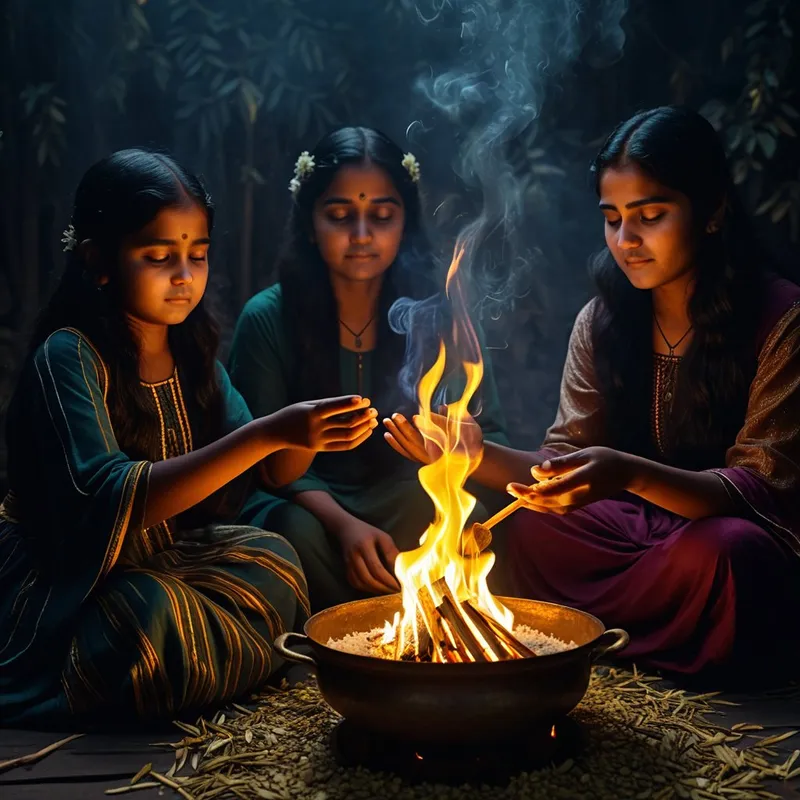
The practice and its mythological underpinnings are not contained in a single, canonical text but are woven into the living tapestry of Vedic and Puranic tradition, local folklore, and continuous ritual observance. The city of Varanasi (Kashi) is itself the primary scripture. Its antiquity is legendary, considered one of the oldest continuously inhabited cities on Earth and the earthly home of Shiva.
The myth functions as both theology and social technology. It was passed down not merely by priests but by the Dom community, the keepers of the burning ghats, and by generations of families who brought their dead to the river. Its societal function is profound: it provides a cosmic rationale for the most visceral and traumatic of human experiences—the disposal of the physical remnant of a loved one. It transforms a biological necessity into a sacred duty (antyeshti samskara) with world-altering consequences. The myth assures the community that the shocking act of cremation is not an act of violence against the deceased, but the ultimate act of love and liberation, a final gift that only the living can bestow.
Symbolic Architecture
At its core, the myth is a masterful symbolic map of psychic transformation, where the physical elements correspond to internal processes.
The Body represents the identified self, the ego, the accumulated persona of a lifetime—all that we believe we are. The Pyre is the catalyzing agent of transformation, the fierce heat of truth that must be faced to initiate change. The Fire is the purifying force of consciousness itself, the light of awareness that consumes illusion.
The pyre does not ask for permission; it demands surrender. It is the uncompromising confrontation with the fact of our own constructed nature.
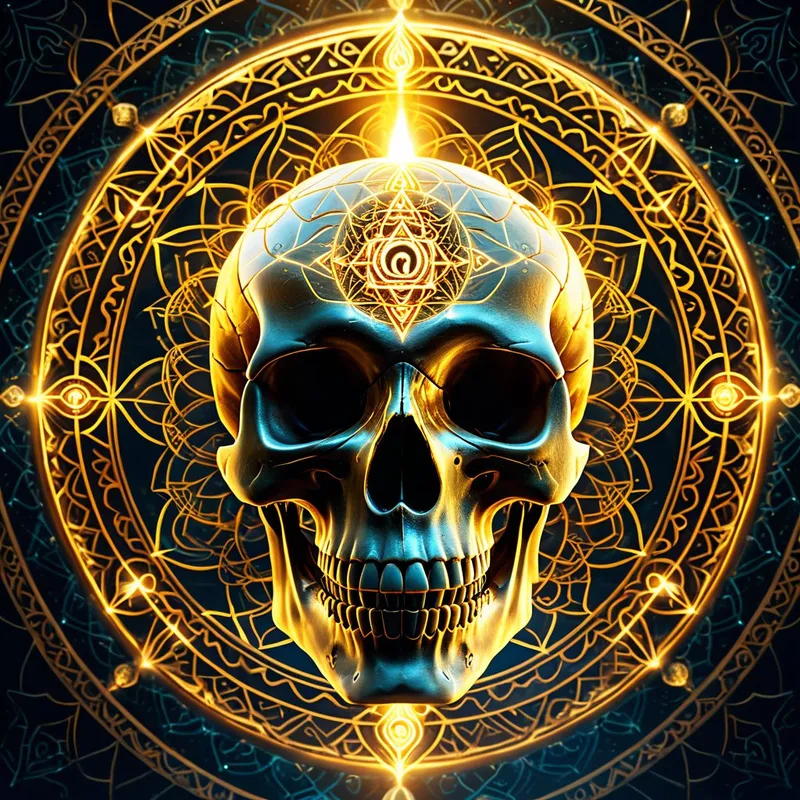
The Ganga water, into which the ashes are finally scattered, symbolizes the dissolving ground of being, the unified consciousness from which individuated forms arise and to which they return. The entire ritual landscape—the city of Shiva, the river, the fire—creates a mandala of dissolution, a sacred geometry designed to guide the psyche through the ultimate transition from identification with form to identification with the formless.
The Dreamer's Resonance
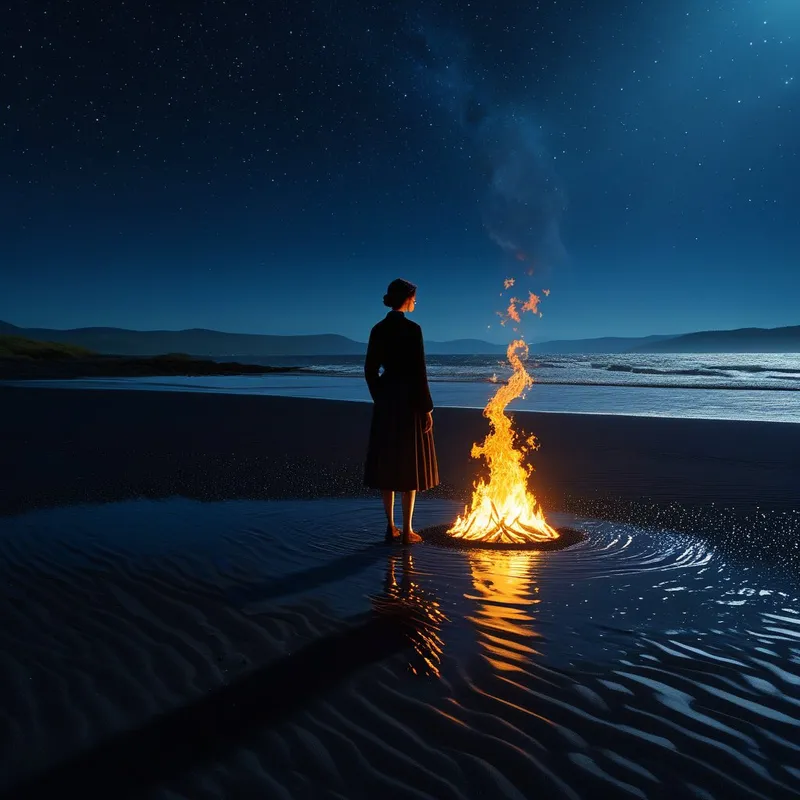
When this mythic pattern surfaces in modern dreams, it rarely appears as a literal cremation in Varanasi. Instead, the dreamer may encounter images of controlled, purposeful burning: a beloved house consumed by flames but leaving the inhabitants unharmed and feeling strangely free; a bonfire on a beach where personal belongings are tossed; or a forge where metal is heated to a brilliant, liquid state.
Somatically, the dreamer may report sensations of intense heat, a feeling of weightlessness, or a profound release of breath. Psychologically, this signals a process of radical ego-dismantling. The psyche is initiating the burning away of an outworn identity structure—a career role, a long-held self-image, a defining relationship, or a core belief. The dream is an assurance from the depths: this painful dissolution is not annihilation, but a necessary alchemy. The mourners in the dream often represent parts of the self that must witness and grieve the loss of the old form to allow the new state to emerge.
Alchemical Translation
For the modern individual navigating the path of individuation—the process of becoming psychologically whole—the myth models the final stage of psychic transmutation: the death of the ego as the central organizing principle.
Our lives are spent building the pyre of our identity, log by log: achievements, relationships, ideologies, possessions. The alchemical work begins when life itself, or a profound inner crisis, lights the torch. This is the "dark night of the soul," where everything we thought was solid and real is subjected to the fire of raw experience and uncompromising self-inquiry.
Individuation is not about building a better, shinier ego. It is about building a pyre for it, so that what is essential may be revealed.
The "eldest son" performing the rite is the responsible, adult consciousness that must perform this difficult duty. Circling counter-sunwise is the act of moving inward, against the grain of conventional, outward-facing life. Applying the ghee is offering forgiveness and gratitude to the old self. Setting the fire is the courageous act of letting go, of allowing the structure to burn.
The triumph is not in escaping the fire, but in passing through it. The ash that remains is not nothing; it is the essence, stripped of all superfluity. Scattering it in the waters symbolizes reintegration into the larger Self, the unconscious now made conscious. The individual is no longer identified solely with the personal narrative (the body), but experiences themselves as both the drop and the ocean. This is the moksha of the psyche: liberation from the compulsive cycle of identifying with temporary forms, and the realization of one's own timeless nature. The funeral pyre of Varanasi, in its terrifying beauty, shows us that true freedom is found not in avoiding the flame, but in understanding that we are what remains when the burning is done.
Associated Symbols
Explore related symbols from the CaleaDream lexicon: