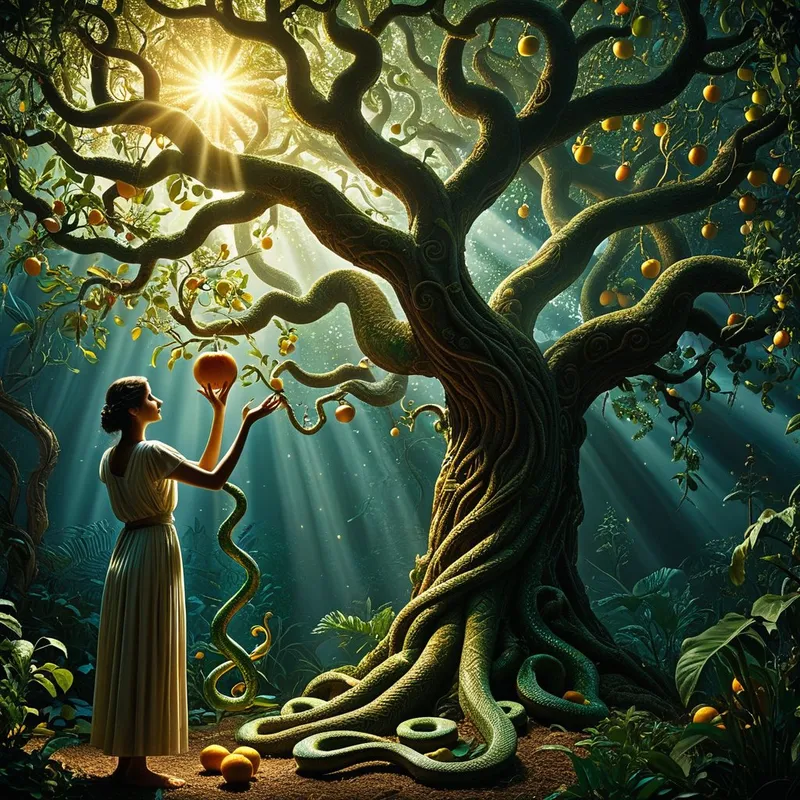
Forbidden Fruit Myth Meaning & Symbolism
A primordial tale of a command, a serpent, a choice, and the irrevocable awakening to knowledge, mortality, and the burden of self-awareness.
The Tale of Forbidden Fruit
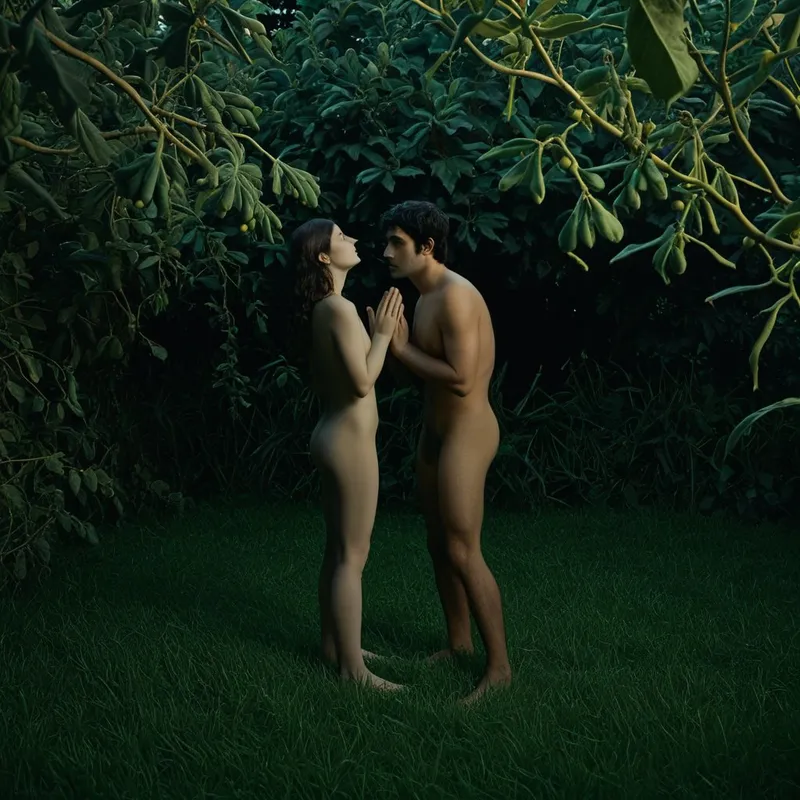
In the beginning, there was a garden. Not a garden as we know it, of weeds and labor, but a garden of utter belonging. The air was a perfume of living soil and blooming things, the light a gentle gold that knew no shadow of evening. Here, the first humans walked, their skin bare to the sun and their spirits bare to the breath of the divine. They knew no fracture, no inside or outside. They were of the garden, as the river and the lion were.
At the heart of this wholeness grew two trees, singular in their majesty. One was the Tree of Life, its leaves whispering of unbroken continuity. The other was the Tree of the Knowledge of Good and Evil. Its fruit hung, luminous and heavy, a perfect orb of potential. A single law echoed in the garden’s harmony: “You may eat of every tree, but of this tree, you shall not eat, for on the day you eat of it, you shall surely die.”
Then came the serpent, most subtle of all the creatures. It did not slither from a dark hole, but moved through the dappled light with an ancient grace. It found the woman by the forbidden tree and spoke not with a hiss, but with a voice that held the texture of the oldest vine. “Has God indeed said you shall not eat of every tree?” it inquired, weaving doubt into the fabric of pure instruction.
The woman replied, “We may eat of the trees, but of the fruit of this tree in the midst, God said, ‘You shall not eat, nor shall you touch it, lest you die.’”
The serpent’s gaze was deep and knowing. “You will not surely die. For God knows that on the day you eat of it, your eyes will be opened, and you will be like divine beings, knowing good and evil.”
The words hung in the air, a new and terrible possibility. The woman looked at the tree. She saw that its fruit was good for food, a delight to the eyes, and—this was the new thought—desirable to make one wise. The desire unfolded within her, a crack in the seamless world. She reached, she took, she ate. She gave also to her man, who was with her, and he ate.
And in that moment, the garden changed. Or perhaps their perception shattered. The light was no longer a garment but a glare. Their own bodies, once simply them, became objects of sudden, searing awareness—naked, exposed, vulnerable. They heard the sound of the divine presence walking in the garden in the cool of the day, and for the first time, they hid. They sewed fig leaves into crude aprons, the first human craft born of shame. When called forth, the man said, “The woman you gave me—she gave me fruit, and I ate.” The woman said, “The serpent deceived me, and I ate.”
And so the unity was broken. The ground was cursed for their sake. They were sent out from the garden, east of Eden, to a world of thorns and sweat, of birth-pangs and mortality. And at the gate, a flaming sword turned every way, guarding the way back to the Tree of Life.
Cultural Origins & Context
This foundational narrative is found in the Book of Genesis, the first book of the Hebrew Bible or Old Testament. Its origins are woven from the ancient Near Eastern tapestry, sharing motifs with Mesopotamian myths of primal humans, divine gardens, and lost immortality. For centuries, it was an oral tradition, a story told around fires and in temple courtyards, a way for a tribal people to explain the profound paradox of human existence: we bear the imprint of the divine yet are subject to toil, suffering, and death.
Its societal function was multifaceted. It established a monotheistic cosmology distinct from neighboring polytheisms. It provided an etiology—a story of origins—for human mortality, sexual awareness, agricultural struggle, and the pain of childbirth. Most critically, it framed the human condition within a covenant relationship defined by law, choice, and consequence. It was not merely a “how we fell” story, but a “how we became us” story: creatures capable of moral choice, and thus capable of both great evil and transcendent good.
Symbolic Architecture
The myth is less about a fruit and more about a threshold. Each element is a psychic component in the drama of awakening.
The Garden represents the unconscious paradise, the state of psychic undifferentiation where the ego is latent and the individual is merged with the parent (the divine). It is the womb of nature, complete but unconscious.
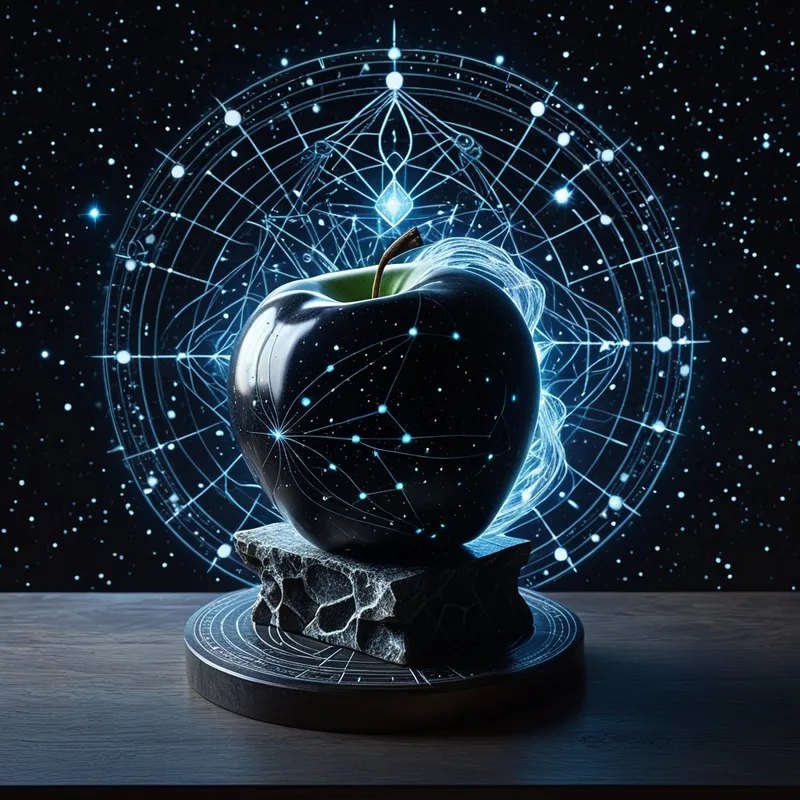
The Forbidden Fruit is not evil; it is the symbol of consciousness itself, bitter-sweet, dividing the world into known and unknown, self and other.
The Command represents the necessary boundary that creates the possibility of selfhood. Without a “thou shalt not,” there is no choice, no will, no I that can say yes or no. It is the structure against which individuality presses.
The Serpent is the trickster, the catalyst of consciousness. It is the voice of the inquiring mind, the rebellious instinct, the deep, chthonic wisdom that challenges imposed order. It is not the devil of later theology, but an older, more ambiguous symbol of transformation, healing, and dangerous knowledge.
The Fruit is the knowledge of duality—good/evil, pleasure/pain, self/other, life/death. To eat it is to gain reflective consciousness, to see oneself as an object, to experience shame, and to recognize mortality. It is the end of innocence and the beginning of the human soul’s journey.
The Dreamer's Resonance
When this myth pattern stirs in modern dreams, it signals a critical juncture in the dreamer’s individuation process. Dreaming of a forbidden room, a secret box, a locked door, or a tantalizing, off-limits object mirrors the Edenic dilemma.
The somatic feeling is often one of simultaneous dread and irresistible attraction—a tightening in the chest, a quickening pulse. Psychologically, the dreamer is confronting a taboo aspect of their own psyche, a knowledge or a potential they have been commanded (often by internalized parents, society, or the super-ego) to avoid. This could be creative power, assertive anger, sensual desire, or a painful truth about one’s history. The “serpent” in the dream may appear as a sly friend, a mysterious stranger, or even an alluring but dangerous animal, representing the inner drive toward wholeness that must bypass conscious resistance. The aftermath of the transgression in the dream—the feeling of being seen, exposed, or cast out—points to the inevitable and painful expansion of self-awareness that follows any genuine psychological growth.

Alchemical Translation
The alchemical journey begins in the massa confusa, the primal, unconscious unity. The myth models the first and most violent operation: the separatio. To become an individual, one must disobey the internalized law that demands perpetual childhood. One must “eat the fruit”—that is, consciously integrate the shadow, accept the burden of moral ambiguity, and bear the anxiety of freedom.
The expulsion from Eden is not a punishment, but a necessary birth. The flaming sword does not bar return; it forges the forward path.
The paradise lost is the psychic state we must outgrow. The toil, pain, and mortality of the world “east of Eden” are the conditions of authentic existence—the labor of alchemy. We work the hard earth of our lives (the nigredo) to produce the harvest of consciousness. The goal is not to crawl back to an unconscious garden, but to integrate that lost wholeness on a higher level. The sought-after Philosopher’s Stone is not a return to innocence, but the achievement of a conscious, embodied wisdom that has tasted both the fruit and the dust, and can hold them together. In this light, the myth is not a tragedy of a fall, but the heroic, if traumatic, origin story of the human spirit’s quest for its own divine likeness—a likeness earned through experience, not merely granted.
Associated Symbols
Explore related symbols from the CaleaDream lexicon: