Fenrir's Bonds Myth Meaning & Symbolism
The gods, fearing a prophecy, bind the great wolf Fenrir with a chain of impossible things, forging a destiny of inevitable betrayal and cosmic consequence.
The Tale of Fenrir's Bonds
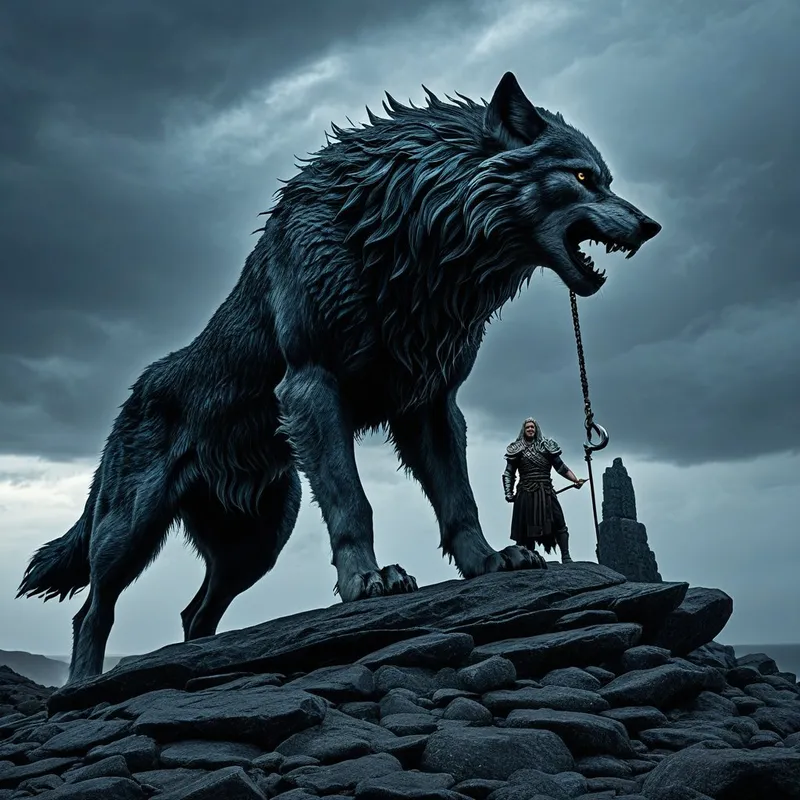
In the dawn of the world, when the roots of Yggdrasil were still tender, a shadow was born. From the union of the trickster Loki and the giantess Angrboða, three children came into being, each a portent of the final days. The second was a wolf, named Fenrir. He did not grow as other creatures grow. He grew with the hunger of ages, his size a terror, his strength a rumbling beneath the floor of the world. The Æsir in Asgard watched, and in their watchfulness, they felt a cold dread. For the Norns had whispered a prophecy: this wolf would be the doom of Odin himself at the twilight of the gods, Ragnarök.
Fear, cold and pragmatic, settled in the halls of the gods. They could not kill him, for it would stain their honor and break the sacred peace of their own grounds. So, they resolved to bind him. A chain was brought, thick and heavy, named Lædingr. "Test your strength, mighty one," they said with false cheer. Fenrir looked at the links, shrugged his mountainous shoulders, and with one effortless flex, shattered them like glass.
Undaunted, the gods forged a second chain, twice as strong, named Drómi. "Surely this will challenge you," they offered. Fenrir, now wary but proud, allowed them to fasten it. He strained, the metal screaming, the earth trembling under his paws. Then, with a sound like a mountain cracking, the links exploded outward, scattering across the field.
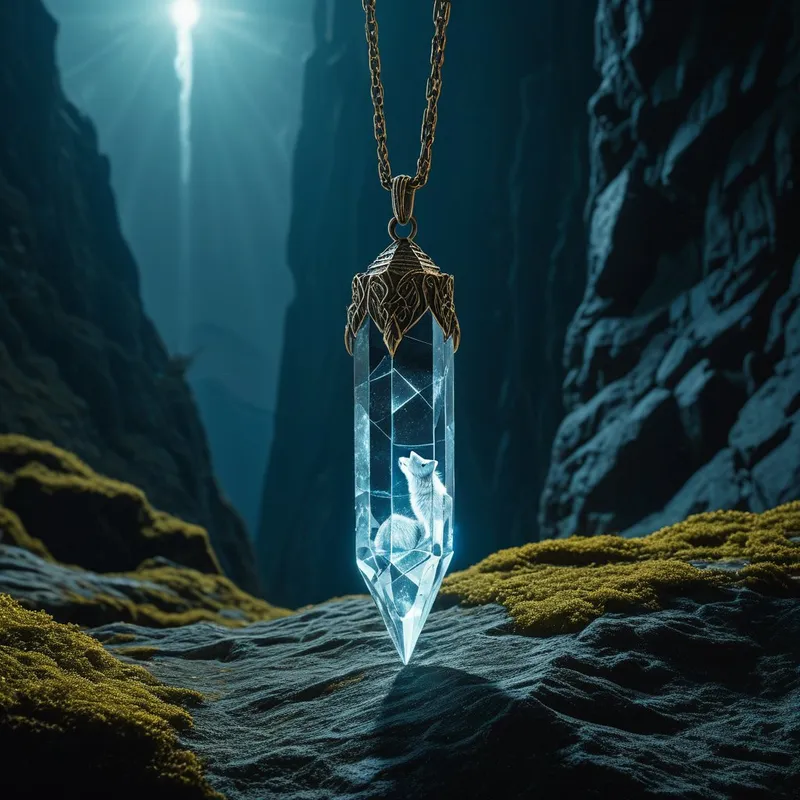
A silence fell, deeper than before. The shadow of the prophecy grew longer. The gods knew no forge in the nine worlds could make a chain of iron to hold him. So, they turned to cunning. Odin sent a messenger to the land of the dwarves, the master smiths in the dark places of the world. And from them, they received a fetter that was no fetter at all. It was smooth and soft as a silken ribbon, and its name was Gleipnir. It was crafted from six impossible things: the sound of a cat's footfall, the beard of a woman, the roots of a mountain, the sinews of a bear, the breath of a fish, and the spittle of a bird.
They brought this slender cord to Fenrir on the isolated island of Lyngvi. The wolf eyed it with deep suspicion. "You will gain no glory from binding me with this thread," he growled, his voice like grinding stones. "But I suspect it is made with magic and trickery. I will not allow it to be placed upon me unless one of you places a hand in my mouth as a pledge of good faith."
A stillness colder than the rivers of Hel gripped the gods. They looked at one another, their courage faltering. Then, one stepped forward. It was Týr, the bravest, whose word was his bond. Without hesitation, he placed his right hand between the wolf's jaws.
The gods bound Fenrir with Gleipnir. The more the wolf struggled, the tighter the magical bond became. Realizing he had been tricked, that his freedom was eternally stolen, Fenrir shut his jaws. The sound of breaking bone echoed across the silent island. Týr did not cry out, but stood, his honor intact, his hand forfeit. The gods, their victory ash in their mouths, took a sword and wedged it into Fenrir's mouth, propping his jaws agape. His howl of rage and betrayal became a river of foaming saliva, Ván, which would flow until the end of all things. There he lay, bound, a prisoner of fear and fate, waiting for the day the bonds would break.
Cultural Origins & Context
This myth, preserved primarily in the 13th-century Poetic Edda and Prose Edda of Snorri Sturluson, was not mere entertainment. It was a foundational narrative for a culture intimately acquainted with harsh necessity, fate, and the complex ethics of survival. Told in halls during the long winters, it served as a philosophical crucible. The Norse worldview did not shy away from paradox: the gods were powerful yet doomed, honorable yet capable of profound betrayal. The myth of Fenrir's binding explores this tension at its most acute.
Its societal function was multifaceted. It explained a cosmic reality—why a great wolf is bound, why the god Týr has one hand—while also modeling difficult social concepts. It asked the listener to contemplate the price of security, the nature of a binding oath (even a dishonorable one), and the terrifying reality of prophecies that fulfill themselves through the very actions taken to avoid them. The story was a tool for teaching about courage in the face of inevitable loss, the weight of leadership, and the acknowledgment that some forces in the world are too vast to be controlled, only temporarily restrained.
Symbolic Architecture
At its heart, this is a myth about the containment of the uncontrollable. Fenrir is not mere "evil"; he is a force of nature, a manifestation of raw, destructive potential that is an intrinsic part of the cosmos. He is the shadow of the Æsir themselves—the chaotic, amoral, and boundless power that their order is built upon and must inevitably confront.
The chain that binds the shadow is woven from denials: the things we say do not exist, the sounds we cannot hear, the strengths we refuse to acknowledge.
The fetter Gleipnir is the ultimate symbol of psychological repression. It is not brute force (the broken iron chains), but subtle, magical denial—the "impossible" things we use to convince ourselves a part of our nature does not exist: the silence where there should be sound, the absence where there should be presence. The sword in Fenrir's mouth symbolizes the stifling of expression; the great howl of the psyche is forced into a ceaseless, impotent drool.
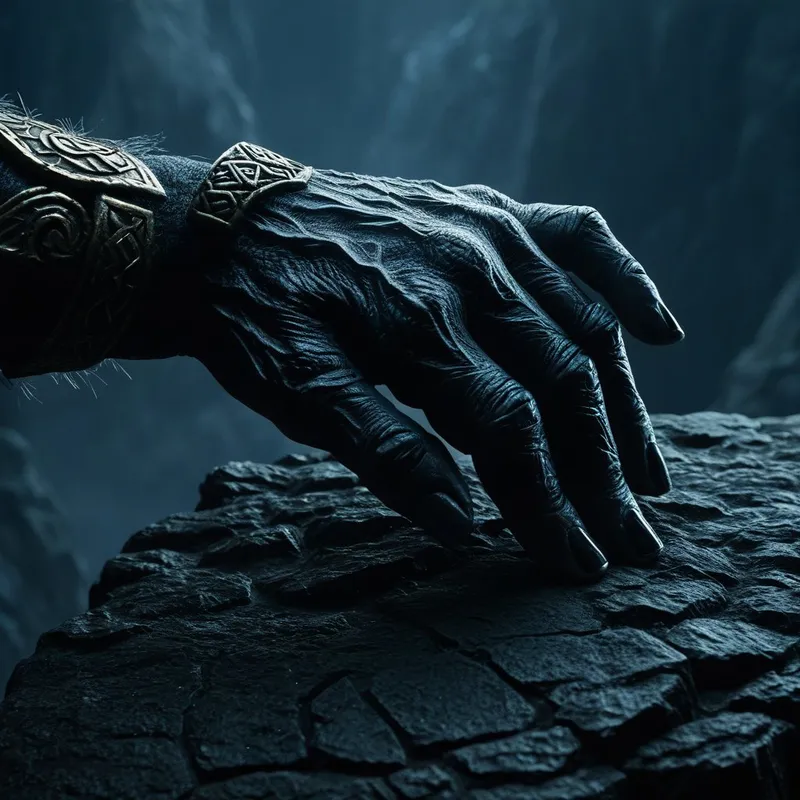
Týr's sacrifice is the critical pivot. He represents the conscious ego's capacity for integrity, even in a corrupt action. To bind the shadow, a part of the self must be given over to it. The loss of the hand—the instrument of action and pledge—is the permanent cost of this pact of repression. The myth tells us that to deny a fundamental part of existence, we must maim our own capacity for wholeness and truthful action.
The Dreamer's Resonance
When this myth stirs in the modern dreamer, it often manifests as a profound somatic experience of constriction. One may dream of being bound by something deceptively fragile—a thread, a whisper, a social contract—that generates immense, panic-inducing pressure. The dream landscape might be an island of isolation (Lyngvi, "Heathery Isle"), representing a part of the psyche that has been quarantined.
The psychological process is one of confronting a bargained containment. The dreamer is going through a phase where an old agreement—often made in childhood or under societal pressure—to hold back a powerful aspect of their nature (anger, creativity, wildness, ambition) is becoming unbearable. The "sword" propping the jaws open might appear as a forced smile, a chronic tension in the jaw, or a feeling of being unable to speak one's truth. The dream is the system signaling that the cost of repression (the lost "hand," a sense of agency or integrity) is now outweighing the perceived safety. It is the howl of the bound self, echoing up from Ván—the river of hope and expectation turned to frothing frustration.
Alchemical Translation
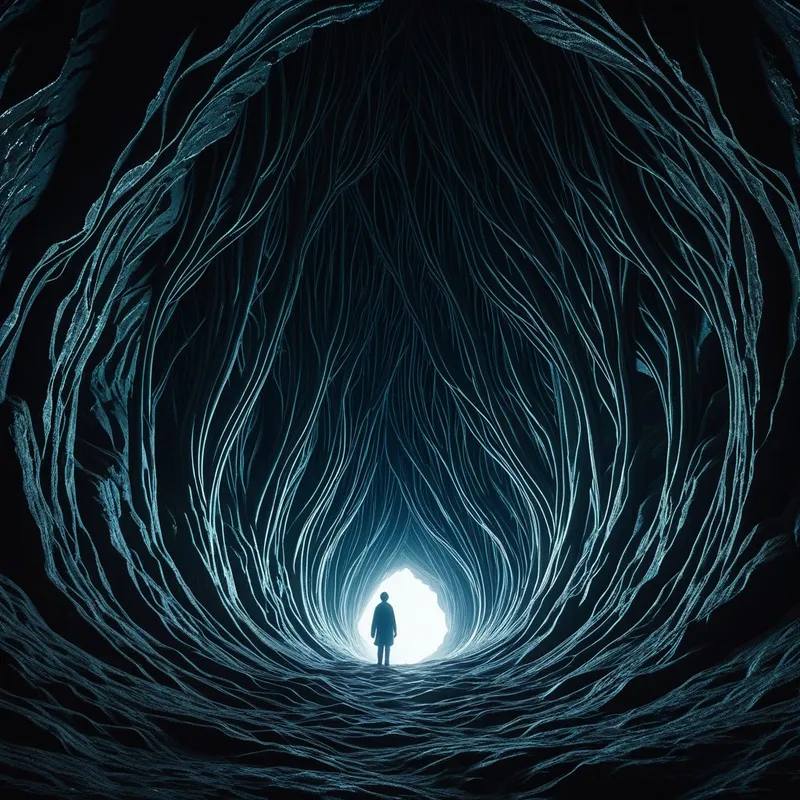
The individuation process modeled here is not one of slaying the monster, but of undergoing the inevitable failure of its bonds. The modern individual's journey is not to re-bind Fenrir more tightly, but to consciously approach the island, hear the howl, and prepare for Ragnarök within.
The first alchemical stage is Recognizing Gleipnir: identifying the seemingly insignificant, "impossible" denials that constitute our personal bondage. What "sound of a cat's footfall"—what subtle, ignored intuition—have we used in our own binding?
The second is Honoring Týr's Hand: acknowledging the part of ourselves that willingly participated in this binding for a perceived greater good (safety, belonging, order). This requires integrating the courage and sacrifice of that decision, while also mourning the lost capacity it incurred.
The ultimate transmutation occurs when the individual stops maintaining the sword in the wolf's jaws, allowing the howl to be heard. This is not unleashing chaos, but accepting that the contained force is a part of the whole self.
The final stage is the conscious alignment with fate. The myth foretells that at Ragnarök, Fenrir will break free and fulfill his destiny. Psychologically, this is the moment when the repressed content erupts into consciousness, often catalyzing a crisis that destroys an old, rigid structure of the personality (the Odin-consciousness). This is not a failure, but a necessary apocalypse for rebirth. The alchemical goal is to meet this inner Fenrir not as an enemy, but as a destined part of one's totality, integrating his boundless, terrifying energy into a new, more complete and resilient consciousness. We move from being the gods who bind in fear, to the cosmos that contains both the binder and the bound in its inevitable, transformative cycle.
Associated Symbols
Explore related symbols from the CaleaDream lexicon: