Fate Myth Meaning & Symbolism
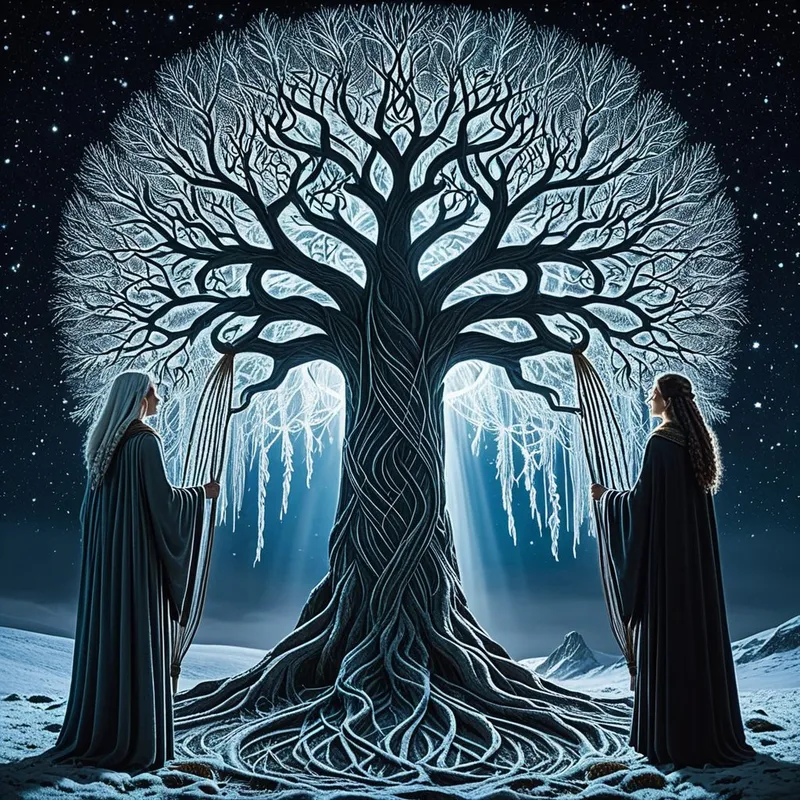
The three Norns weave the threads of destiny at the foot of the world tree, a cosmic tapestry binding gods and mortals to an inescapable, sacred order.
The Tale of Fate
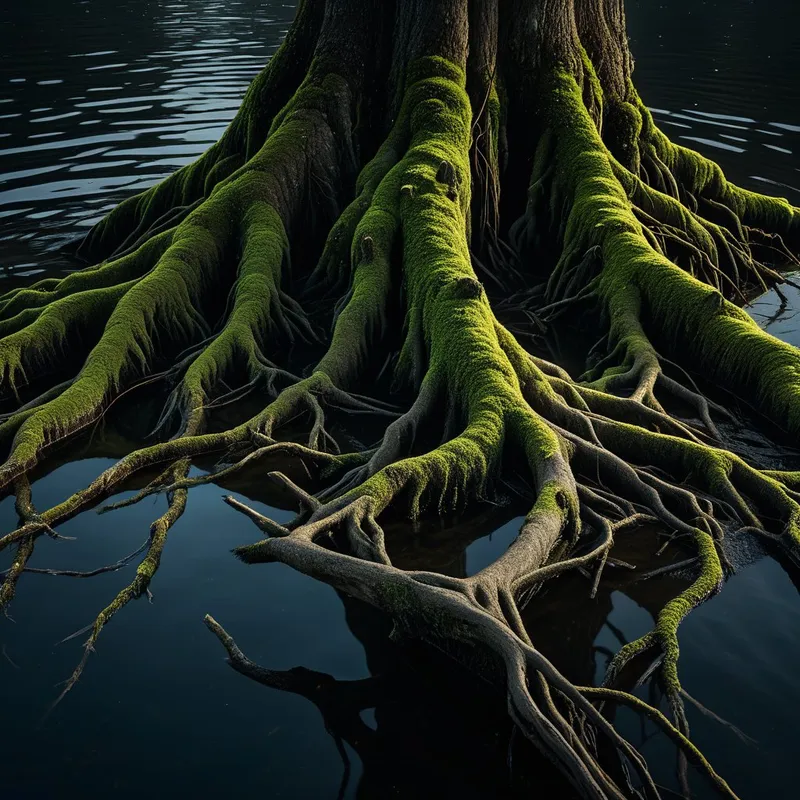
Listen, and hear the whisper from the roots of the world. Beneath the groaning, ice-laden boughs of Yggdrasil, where the air is thick with the scent of damp earth and ancient decay, there is a well. Its waters are blacker than a moonless night, yet they hold the shimmer of all that was, is, and shall be. This is the Well of Urd.
Here, they dwell. Not in golden halls, but in the silent, dripping dark. Three sisters, older than the sun, wiser than the wind. Their names are a breath on the bark of the tree: Urd, Verdandi, and Skuld. Their faces are not seen, but felt—a presence like the weight of centuries, the chill of deep stone. They do not speak to the gods who sometimes come to seek counsel; they simply work.
From the well’s dark water, they draw the substance of destiny. It is neither liquid nor solid, but a shimmering, ethereal thread, glimmering with potential. Urd, her hands gnarled like the roots around her, holds the spindle. She spins the thread from the primal waters, pulling the past into a tangible line. Verdandi, her movements fluid and ceaseless, takes the thread. She weaves it upon a loom that is the very fabric of the cosmos, her fingers dancing as she intertwines the thread with all other threads—the lives of men, the deeds of giants, the glory and folly of the Aesir. The pattern is vast, incomprehensible, a tapestry that drapes over the nine worlds.
And there is Skuld. She stands with a solemn stillness, holding shears that gleam with a cold, final light. She does not cut with malice, nor with haste. She watches the weaving, and when a thread has fulfilled its measure in the pattern, when its part in the grand design is complete, her shears descend. The thread falls silent. A god may rage, a hero may weep, but the cut is clean. The severed end is taken by Urd, and the cycle begins anew, the past feeding the future.
Even Odin, who gave an eye for wisdom and hung nine nights on the world tree to learn the runes, comes here. He rides his eight-legged steed Sleipnir down to the deepest root. He gazes into the well, seeking to read the pattern, to know his own end and the doom of the gods at Ragnarok. The Norns do not acknowledge him. They weave. The message is clear: knowledge of the pattern does not change it. The thread is spun, woven, and cut. That is the law. That is Orlog.
Cultural Origins & Context
This myth was not a simple bedtime story for the Norse. It was the bedrock of a worldview, passed down through skalds (poets) and elders in the flickering light of the longhouse fire, amidst the smell of smoke and mead. The primary sources, the Poetic Edda and the later Prose Edda, codify these oral traditions, presenting the Norns as fundamental to the cosmic order.
In a culture facing the harsh realities of a northern climate, sea voyages, and constant strife, the concept of an immutable fate provided a profound, if grim, comfort. It was not a philosophy of despair, but of dignity. If your wyrd was already woven, then the measure of a person was not in avoiding death, but in meeting it—and every challenge before it—with courage and honor. The myth functioned as a societal anchor, teaching acceptance of life’s inherent limits while valorizing the strength to face them head-on. The gods themselves were subject to this law, making the universe not a place of chaotic chance, but of sacred, inescapable order.
Symbolic Architecture
The myth of the Norns presents a profound symbolic architecture for understanding existence itself. It is a map of time, consciousness, and the structure of reality.
The three Norns are not mere personifications but represent the tripartite nature of time as a continuous, creative process. Urd (Past) is the raw material, the accumulated history and karma from which the present is drawn. Verdandi (Present) is the active moment of becoming, where choices are integrated into the unfolding pattern. Skuld (Future/Necessity) is not a predetermined point but the inevitable consequence shaped by the past and present weaving; she is the debt that must be paid, the result that must come to be.
Fate is not a prison sentence written in stone, but a tapestry being woven in real-time. We are both the thread and the weaver's hand in the present moment.
Yggdrasil symbolizes the interconnectedness of all things—the psychological, spiritual, and physical realms. The Well of Urd is the unconscious, the deep, dark source of primordial memory and potential from which the threads of consciousness (destiny) emerge. The weaving is the process of life itself, where individual threads (lives) are given meaning through their relationship to the whole pattern.
The Dreamer's Resonance
When this myth stirs in the modern unconscious, it often manifests in dreams of being bound, guided, or confronted by an impersonal, powerful system. You may dream of tangled yarn or cables, of being led down a specific path by unseen forces, or of meeting three wise, often stern, feminine figures. A common somatic experience upon waking is a feeling of weight—not of oppression, but of profound significance, as if one's life carries a gravity and purpose beyond daily concerns.
Psychologically, these dreams signal an encounter with the archetype of destiny. The dreamer is likely grappling with a major life transition, a feeling of being "on the right path" or trapped by circumstances, or a deep questioning of life's purpose. The Norns in dreams do not give answers; they present the fact of the tapestry. The emotional work for the dreamer is to move from resistance to the concept of limits, toward a conscious relationship with their own life's pattern. It is the psyche's way of initiating a process of aligning the ego with the larger Self.
Alchemical Translation
The alchemical process modeled here is not about breaking fate, but about consciously participating in it—the transmutation of blind destiny into conscious destiny. The first stage (nigredo) is the descent to the roots, to the Well of Urd. This is shadow work: confronting one's past (Urd), the inherited patterns, traumas, and gifts that form the initial thread.
The second stage (albedo) is the work of Verdandi, the present moment. Here, in the clear light of consciousness, one takes up the thread of one's inherited nature and begins to weave it with intention. This is the act of making choices, building a life, integrating experiences. It is where free will operates within the constraints of the thread's material.
The ultimate alchemy is to look into the shears of Skuld—to fully accept one's mortality and limits—and, in that acceptance, find the freedom to weave with unparalleled courage and authenticity.
The final stage (rubedo) is the conscious embrace of Skuld. This is the integration of death, of ending, of necessary conclusions. It is the understanding that for the pattern to be beautiful, threads must end. The psychic triumph is to know one's fate—to see one's vulnerabilities, talents, and inevitable end—and to not be paralyzed by it, but to be liberated into full, responsible action. The individual achieves individuation not by escaping their pattern, but by understanding it so deeply that their life becomes a perfect, willing expression of its unique thread within the grand tapestry. This is the sage's peace: not control over fate, but harmony with it.
Associated Symbols
Explore related symbols from the CaleaDream lexicon: