
Eros Myth Meaning & Symbolism
The primordial force of desire, Eros, whose arrows bind chaos into cosmos, weaving the soul's longing for wholeness and terrifying, beautiful union.
The Tale of Eros
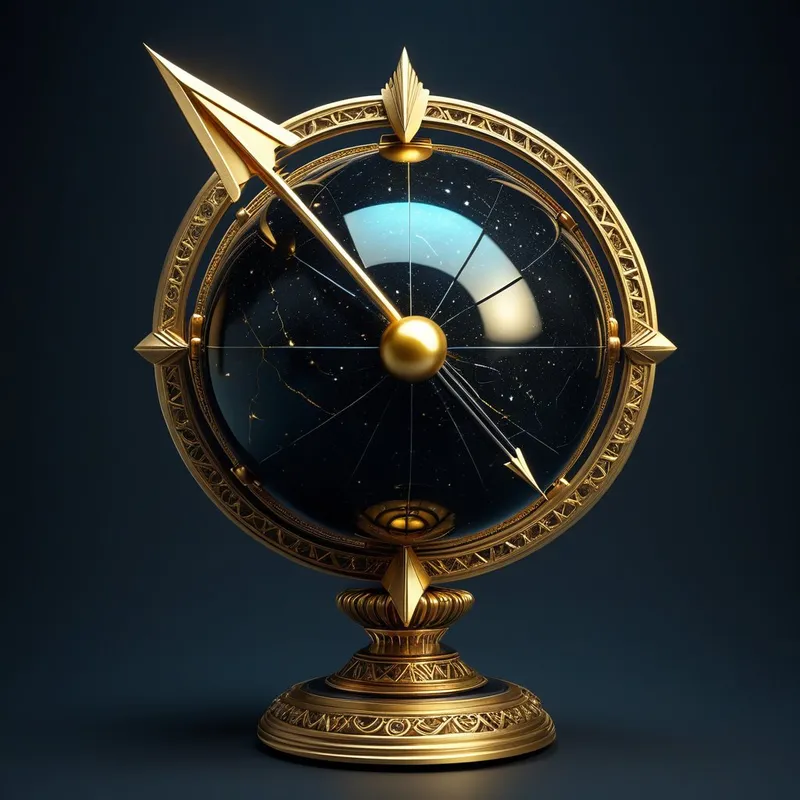
Listen. Before the world was ordered, before the seas had shores or the sky had stars, there was a yearning in the dark. From that first, formless ache, Eros was born, a being not of flesh but of force, older than the gods themselves. He was the golden-bowed archer whose arrows did not kill, but made alive. With them, he stirred the void into longing, and from longing, all things came to be.
In a later age, when the Olympians ruled from their cloud-wreathed heights, a king had a daughter of such devastating beauty that men forgot to worship Aphrodite. Enraged, the goddess summoned her son—now often imagined as a beautiful, capricious youth—and commanded him: “Make the girl fall in love with the most vile, wretched creature you can find.” Eros, the unseen architect of hearts, flew to the mortal realm, his quiver of arrows at his side: gold to ignite consuming passion, lead to sow cold aversion.
He found the girl, Psyche, in her father’s palace, weeping. For an oracle had declared she must be left on a mountain peak to wed a monstrous, serpentine lord. As Eros drew a leaden shaft for her, he leaned close… and pricked his own finger on the tip of a golden one. The god of desire was himself wounded by desire. He swept Psyche away not to death, but to a hidden, enchanted valley, a palace wrought of whispers and starlight. Here, he came to her only in the utter blackness of night, a voice of honey and shadow, a touch of fire and wind. “You must never seek to see me,” he whispered. “Trust in the darkness, and you will know only love.”
For a time, Psyche dwelled in bliss. But the human heart cannot abide mystery forever. Tormented by sisters who whispered of monsters and her own gnawing doubt, she one night lit a single, trembling lamp. The light fell not on a horror, but on the most beautiful being imaginable: the winged god himself, asleep, his bow and arrows resting beside the bed. In her shock, a drop of scalding oil fell upon his shoulder. He awoke, his eyes holding not love, but a betrayal deeper than any wound. “Love cannot live where there is no trust,” he said, his voice breaking the enchantment. And he was gone, leaving Psyche alone in a barren field, the palace vanished like a dream at dawn.
Her journey then began—not to find him, but to earn him. She wandered a world grown grey, until the scornful Aphrodite herself set impossible tasks: to sort a mountain of mixed seeds, to gather wool from murderous golden sheep, to fetch water from the speech-defying river Styx, and finally, to descend into the underworld and retrieve a box of beauty from Persephone. Psyche, aided by ants, a reed, an eagle, and a tower’s advice, accomplished each through humility, cunning, and desperate courage. Yet on the final step, curiosity again undid her. Opening the box, she was overcome not by beauty, but by a deathlike sleep.
It was Eros, his wing healed, who found her thus. His love, tempered by her trials and his own pain, had grown stronger than any command. He flew to Zeus and pleaded. Moved, the father of gods granted immortality to Psyche. On Olympus, before the assembled deities, they were wed. From their union was born a daughter named Hedone—Joy.

Cultural Origins & Context
The myth of Eros and Psyche is not found in the epic cycles of Homer but in a later, literary form in the Metamorphoses (or The Golden Ass) by the Roman writer Apuleius. However, its roots are profoundly Greek. Eros appears in Hesiod’s Theogony as one of the first primordial beings, a cosmic force of attraction. By the Classical period, he was often “demoted” to Aphrodite’s playful, sometimes mischievous son, reflecting a societal shift to view love as a personal, often disruptive, emotion rather than a cosmic principle.
The story was a popular subject for art and poetry, a narrative that functioned on multiple levels. For the everyday Greek, it was a captivating romance and a cautionary tale about the dangers of curiosity (hubris) directed at the divine. For philosophers and mystery cults, it was an allegory of the highest order. It was told not in public amphitheaters but in more intimate settings, perhaps during symposia or as part of initiatory teachings, serving as a map for the soul’s journey from mortal blindness to divine recognition.
Symbolic Architecture
At its core, this is not a love story, but the story of Love and Soul. Eros represents the primal, often terrifying force of Desire itself—not merely romantic, but the fundamental urge toward connection, creation, and completion. Psyche is the human soul, embodied, curious, flawed, and capable of immense endurance.
The wound of Eros is the precondition for all creation; it is the crack through which the divine enters the mortal realm.
Their nocturnal union symbolizes the soul’s initial, unconscious encounter with the numinous. It is blissful but unsustainable, because it requires the soul to remain in ignorance. The lamp, and the searing oil, represent the painful light of consciousness. To truly see the object of one’s desire—to behold the divine, the beloved, or the depths of one’s own psyche—is inherently a crisis. It shatters the comfortable illusion. The four labors are the archetypal trials of individuation: sorting the chaotic contents of the unconscious, confronting the “golden” yet dangerous aspects of one’s nature (the sheep), navigating the waters of oblivion (the Styx), and finally, making the ultimate descent into the underworld of the shadow to retrieve a transformative essence.
The Dreamer's Resonance
When this myth stirs in modern dreams, it signals a profound engagement with the dynamics of desire and the soul’s integrity. Dreaming of a radiant but forbidden lover who vanishes at dawn points to a nascent connection with an anima/animus figure or a creative inspiration that the conscious ego is not yet ready to “see” and integrate. The dream-ego may feel the ecstasy of the union but also the terror of its conditions.
Dreams of impossible tasks—sorting endless piles, approaching terrifying yet beautiful creatures, or finding oneself at a treacherous river—mirror Psyche’s labors. These are somatic signals of a psyche undergoing a necessary, arduous restructuring. The feeling is not of random anxiety, but of a mythological weight; the dreamer is participating in an ancient pattern of ordeal and initiation. The climax is often not success, but the moment of “opening the box”—a dream action of irresistible curiosity that leads to a state of paralysis or enchanted sleep. This symbolizes the ego’s final surrender, the point where the conscious mind must fall still so that a greater, transpersonal force (Eros) can intervene and complete the process.

Alchemical Translation
The alchemy here is the transmutation of blind, instinctual attraction (eros as biological impulse) into conscious, sacred union (Eros as unifying principle). Psyche begins as an object of beauty, a passive victim of divine whimsy. Through her trials, she becomes a subject, an active seeker. Eros begins as an agent of another’s will (Aphrodite’s), a personified force. Through his wound and his loss, he gains a will of his own, choosing to plead for his beloved’s divinity.
The goal is not the elimination of curiosity, but its redemption; not the avoidance of the wound, but the healing that makes the bond unbreakable.
For the modern individual, this models the journey of relationship—not just to another, but to one’s own soul and one’s destiny. We first encounter our deepest longings in the dark, through feeling and intuition. The crisis comes when we insist on bringing the full light of analysis, skepticism, or egoic control to that mystery, and we “burn” it, experiencing a painful separation. The ensuing “labors” are the internal and external work required to become a vessel worthy of that longing’s return: discerning our inner chaos, facing our shadow, and braving the depths of despair. The immortal marriage on Olympus symbolizes the achieved state where the soul (Psyche) is no longer mortal and perishable in its self-conception, and desire (Eros) is no longer a foreign, capricious god, but an integrated, life-giving partner. The child, Hedone (Joy), is the fruit of this union—not a fleeting pleasure, but the profound delight that arises when Soul and Desire are reconciled and made sacred.
Associated Symbols
Explore related symbols from the CaleaDream lexicon: