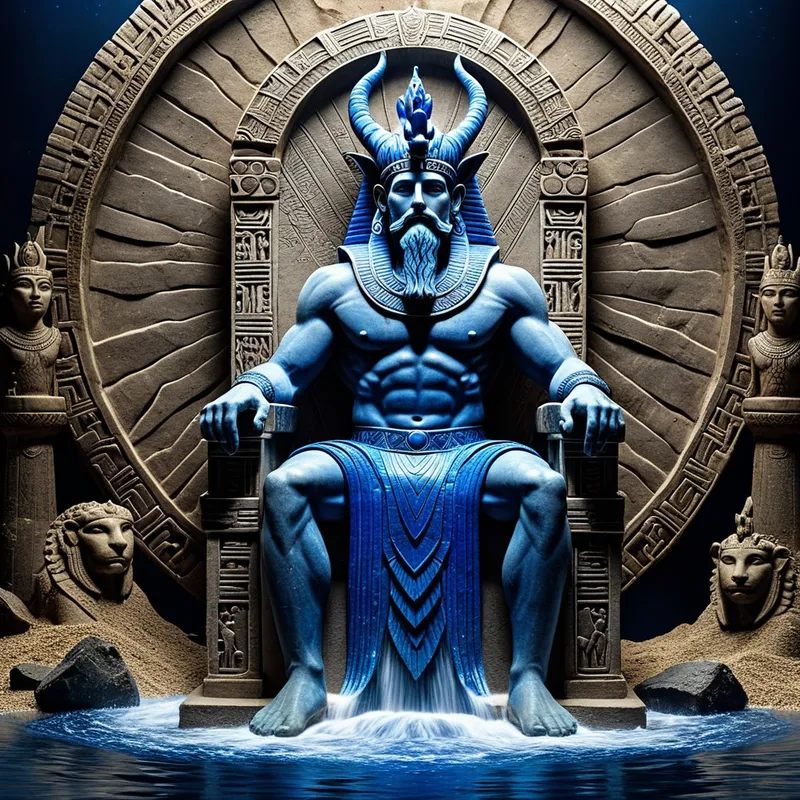
Enki Myth Meaning & Symbolism
The story of the cunning god of sweet waters, wisdom, and civilization, who shapes humanity and navigates the perilous balance between order and chaos.
The Tale of Enki
In the beginning, before the first brick was laid, the world was a place of two great powers. Above, the vault of An stretched, immense and distant. Below, the churning, primal waters of the Abzu lay deep in the earth. And between them, the young gods labored, their toil endless and their cries echoing in the formless void.
But there was one who moved differently. His name was Enki, the cunning one, the lord of sweet waters. He did not strain against the earth; he flowed into it. His domain was not the far sky nor the raw, sleeping depths of the Abzu, but the life-giving veins of water that could be coaxed to the surface. He was the god of the me—the sacred, invisible decrees that are the blueprints for all things: kingship, truth, carpentry, the art of lovemaking. He held them not as a king holds a scepter, but as a craftsman holds his tools, with a knowing touch.
The great mother, Ninhursag, created the green and growing things. But the gods grew weary. Who would tend the canals, harvest the grain, and bear the offerings? Their lament was a dry wind over the fledgling world. In the heart of the Abzu, in his temple of dark, cool waters, Enki heard them. He called for his wise vizier, Isimud, and spoke a plan born not of force, but of clever substance.
“Let us take clay,” Enki said, his voice like the murmur of a deep spring. “Let us mix it with the flesh and blood of a god who understands both divine purpose and toil.” From the assembly, a god was chosen. Enki purified the clay in the pure waters of the Abzu. Ninhursag breathed upon the figures he pinched and shaped. And so, from the mingled essence of earth, water, divine intelligence, and mortal necessity, humanity was born—to serve, yes, but also to carry a spark of the divine craft within.
Yet Enki’s nature was one of boundless, often mischievous, curiosity. In a lush paradise called Dilmun, Ninhursag caused eight perfect plants to grow. Enki, seeing them, desired to know their essence, their inner me. One by one, he consumed them. Furious at this violation of her creations, Ninhursag cast a death curse upon him. Enki fell ill, eight parts of his body withering. The world grew still, fearing the loss of its wise lord.
The gods pleaded. Finally, a clever fox persuaded Ninhursag to return. To heal Enki, she birthed eight healing deities, one for each ailing part. As each god was born, Enki was restored. From his rib, she birthed Ninti, giving life not just to the god, but to the very concept of healing from brokenness. Balance was restored, not through battle, but through the generative power of remedy born from conflict itself.

Cultural Origins & Context
This mythic tapestry was woven in the world’s first cities—Eridu, Ur, Uruk—where life was literally sustained by the precarious management of the Tigris and Euphrates waters. Enki’s primary cult center was Eridu, believed to be the first city, built upon the very edge of the Abzu. His myths were not mere stories but foundational software for civilization. They were recited by temple priests and scribes, often in the context of the Hieros Gamos, reinforcing the sacred link between the ruler, the god, and the fertility of the land.
The function was profound: to explain humanity’s dual nature (of divine clay and mortal toil), to model the intelligent application of wisdom (me) to chaotic nature, and to provide a divine patron for the essential, life-giving arts of irrigation, craftsmanship, and diplomacy. Enki was the divine engineer, the patron of the scribe, and the clever negotiator in divine disputes. His stories served as a mythic blueprint for creating order (cosmos) from the ever-present threat of chaos (the Abzu, or the later Tiamat).
Symbolic Architecture
Enki represents the archetype of the intelligent, transformative principle. He is not the king, but the king’s advisor; not the raw creative force, but the shaper and facilitator. His element is water—specifically sweet water, the bringer of life to the desert, symbolizing consciousness that fertilizes the unconscious, making the hidden depths fruitful and accessible.
He is the archetype of fluid intelligence, the one who solves problems not by conquering them, but by understanding and redirecting their flow.
The me he holds are the archetypal patterns themselves—the primordial forms of culture, technology, and social order. His consumption of the plants in Dilmun symbolizes the psychological necessity of internalizing knowledge, even at the risk of over-extension and “poisoning.” His subsequent healing by Ninhursag illustrates a critical psychological truth: deep learning and transformation often involve a crisis, a disintegration, which must be met by a nurturing, regenerative force (the anima) to birth a new, more integrated wholeness. He is the god of the process, not the static state.
The Dreamer's Resonance
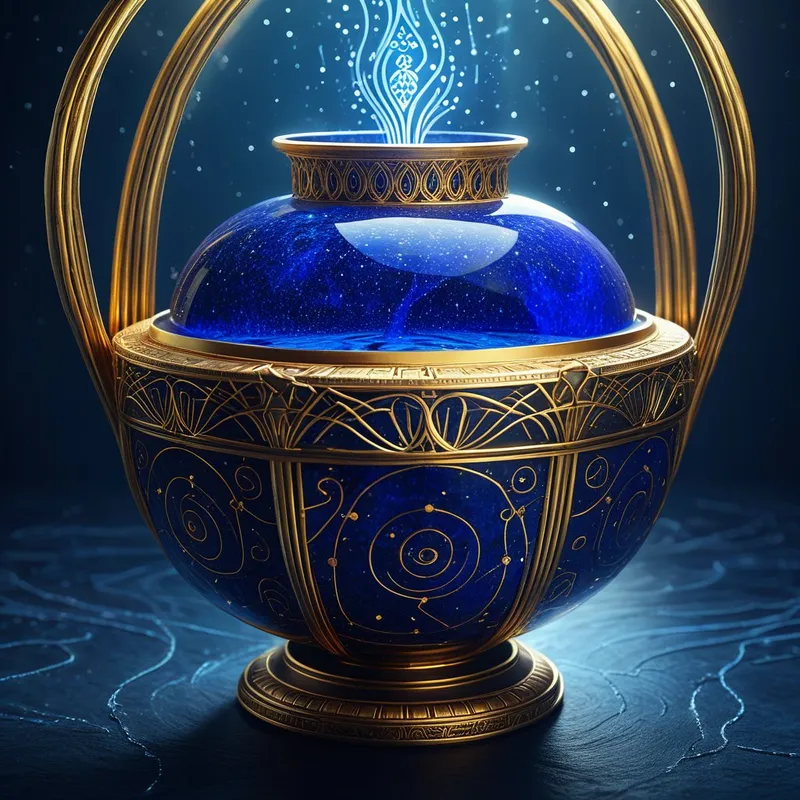
When the pattern of Enki stirs in the modern psyche, it often manifests in dreams of intricate problem-solving, of finding hidden springs in barren landscapes, or of containing chaotic floods with cleverly designed channels. One might dream of a labyrinthine basement filled with slowly rising water that must be understood and guided, not simply pumped out.
Somatically, this can correlate with a feeling of pressure in the head (the “cunning” plan forming) or a release in the joints and fluids of the body (the “flow” being restored). Psychologically, the dreamer is likely navigating a situation that requires wit, adaptability, and a deep understanding of underlying systems—be it a complex work project, a family dynamic, or an internal conflict. The shadow aspect of Enki appears as trickery for its own sake, manipulative cleverness, or an avoidance of direct confrontation to a pathological degree. The dream asks: Are you using your intelligence to create and heal, or merely to circumvent and consume?
Alchemical Translation
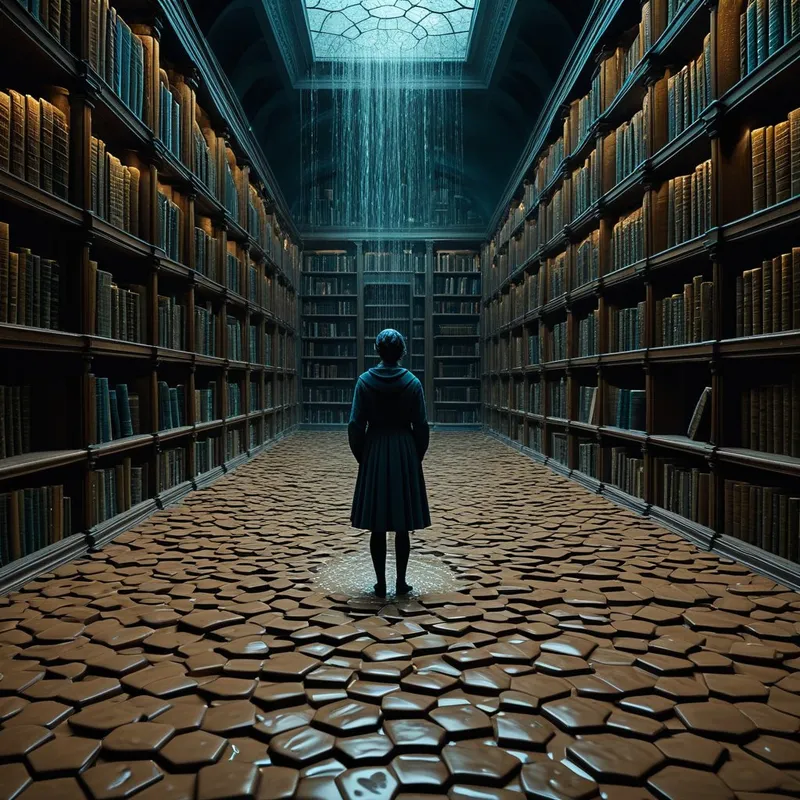
For the individual on the path of individuation, Enki models the alchemical stage of Solutio—dissolution in the waters of the unconscious. His journey is not one of heroic conquest, but of intelligent immersion and recombination.
The goal is not to defeat the primal Abzu, but to learn its laws, to build your temple upon its shore, and to draw up its contents with respect and art.
First, one must identify their inner “Abzu”—the deep, often chaotic well of instincts, talents, and unconscious material. The Enki process involves “building Eridu”: establishing a conscious structure (a practice, therapy, creative work) at the edge of this depth to engage with it. Then comes the shaping of “clay”: taking the raw, earthy substance of one’s life experiences and innate nature and mixing it with the “blood” of a sacrificed attitude (a old self-image, a defensive pattern) to create a new, serving, and authentic identity.
The crisis of “eating the plants” is the inevitable overreach, the inflation that comes with new knowledge or power, which leads to a curse—a psychological breakdown or severe conflict. The alchemical translation occurs in the healing. One must call upon the inner Ninhursag, the nurturing, creative anima, to birth specific “healing deities”—new, nuanced capacities for integration. Each healed part (the rib of relationship, the jaw of communication, the mind of thought) becomes a specialized god, a sovereign function within a now-more-unified psyche. The triumph is a wisdom that is not hoarded, but fluid, life-giving, and eternally engaged in the creative, balancing act of world-building.
Associated Symbols
Explore related symbols from the CaleaDream lexicon: