
Encantado Myth Meaning & Symbolism
The myth of the Encantado, a dolphin spirit who walks as a man, embodies the perilous allure of transformation and the call from the depths of the world-soul.
The Tale of Encantado
Listen, and let the humid breath of the jungle carry you to the time when the river was not just water, but a living, breathing vein of the world. Beneath the black, mirror-like surface of the Rio Amazonas, in the city of Encante, dwell those who are both more and less than human. They are the Encantados, lords of the deep currents. By day, they are the boto, rosy-skinned and wise-eyed, singing songs that weave through the roots of the flooded forest.
But when the full moon hangs heavy, painting a silver road on the water, a transformation stirs. A great boto rises to the surface, its form shimmering like heat haze. The flesh flows, the flukes recede, and from the river steps a man—handsome beyond compare, dressed always in immaculate white, with a hat to hide the blowhole that never fully vanishes. His eyes hold the deep, dark mystery of the riverbed.
This Encantado is drawn by the sound of festa—the thrum of the tamboril, the laughter, the pulse of human life on the bank. He walks into the village, a stranger of captivating charm and slight, unsettling grace. He seeks the most beautiful woman, the one with a song in her soul that echoes the one in the river’s heart. He dances with her all night, his gaze a gentle current pulling her in. He is the perfect gentleman, yet his touch is cool, and his smile never quite reaches those ancient eyes.
He whispers promises of a life of ease and beauty in Encante, where no one grows old and sorrow is drowned by eternal music. Seduced by the melody of his voice and the depth of his promise, she follows him to the water’s edge. As the first hint of dawn bleeds into the sky, he takes her hand. They wade into the black water. It does not soak his white suit. It envelops them. As she submerges, she sees not a man, but the sleek, powerful form of the boto beside her, guiding her down, down into the luminous, drowned world, leaving behind only a faint ripple and the echo of a distant song.
Some say she finds eternal joy. Others whisper that, come morning, she is found wandering the banks, memoryless and with child, a faraway look in her eyes—a look that holds the shadow of deep water and the haunting melody of a love that was never quite human.

Cultural Origins & Context
This myth springs from the heart of the Amazon Basin, a narrative born from the intimate, daily relationship between riverine communities and the world’s greatest rainforest. The storytellers were the people of the várzea, for whom the pink river dolphin (boto) was a familiar yet profoundly mysterious neighbor. The myth was not mere entertainment; it was a vital etiological and social framework.
Told by elders around fires, it served multiple functions. It explained the unexplained: pregnancies with no acknowledged father, disappearances, or strange behaviors were often attributed to the Encantado’s influence. It enforced social boundaries, particularly for young women, warning of the dangers of charismatic strangers and the perilous allure of the unknown. Most deeply, it was a way to articulate the sacredness and sentience of the river itself. The Encantado is the personified spirit of the Amazon—beautiful, provision-giving, but also possessive, deep, and potentially treacherous. The myth encodes a fundamental ecological wisdom: the river is life, but it demands respect and understanding of its hidden, powerful nature.
Symbolic Architecture
The Encantado is the ultimate symbol of the liminal. It exists in the threshold between worlds: animal and human, water and land, spirit and matter, the conscious world and the unconscious Encante.
The Encantado is the call of the deep Self—irresistibly attractive, promising wholeness, yet demanding we leave the familiar shore of our ego.
Psychologically, the Encantado represents the anima/animus in its most compelling and archetypal form. It is the inner other, the soul-image, that emerges from the depths of the personal and collective unconscious to captivate the conscious mind. Its hypnotic allure is the promise of integration, of a life infused with the magic and depth of the unseen world. The white suit and hat symbolize the persona—the civilized, acceptable mask this deep content wears to enter our conscious world. The hidden blowhole is the tell, the flaw in the persona that hints at its true, non-human origin.
The journey to Encante is the descent into the unconscious. It is a necessary, perilous, and transformative process. The potential loss of memory upon return signifies the difficulty of integrating such a profound experience into everyday consciousness; some part of the soul remains enchanted, forever changed by its contact with the deep.
The Dreamer's Resonance
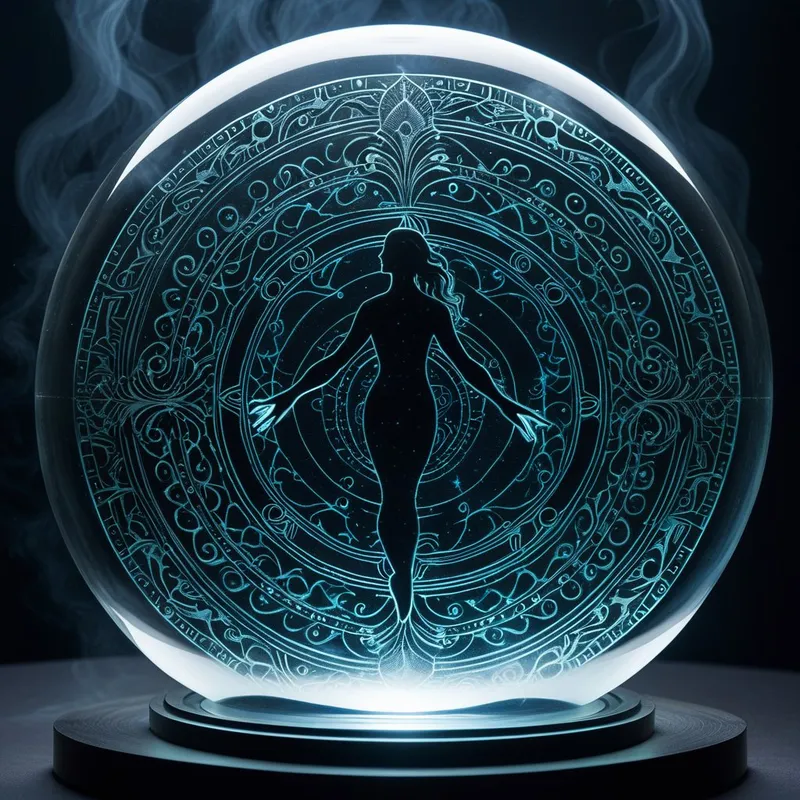
When the pattern of the Encantado myth arises in modern dreams, it signals a powerful encounter with the transformative pull of the unconscious. You may dream of a mesmerizing, almost too-perfect stranger who offers a profound change or escape. You may dream of being near or entering a body of water that is both beautiful and frighteningly deep. You may find an object of captivating beauty that seems to hold a secret.
Somatically, this can feel like a magnetic pull in the chest or gut, a mixture of exhilaration and dread. Psychologically, you are likely at a crossroads where an old identity or life structure feels sterile, and a new, more soulful possibility is calling. This "call" is not intellectual; it is an enchantment, a seduction by a part of your own psyche that has been submerged and now demands recognition. The dream is the first dance. The conflict is between the ego’s desire for safety and the soul’s desire for depth. The danger in the dream-myth is the same as in the story: a total dissolution, a loss of self in the other, without the capacity to return and integrate the experience.

Alchemical Translation
The alchemical process mirrored in the Encantado myth is solutio—dissolution. The rigid, known form of the ego (the life on land) must be dissolved in the aqua permanens, the eternal waters of the unconscious, to be reconstituted at a higher level.
The triumph is not in resisting the call, but in learning to breathe the water—to integrate the enchantment without losing the self.
The modern individual’s journey begins with the "festival"—a time of outer engagement where the call is heard. The Encantado’s arrival marks the irresistible invitation to the nigredo, the dark night of the soul, where one must willingly be led into the unknown depths. The struggle is the fear of annihilation, of losing one’s mind, one’s memory, one’s place in the world.
The alchemical goal, however, is not to remain forever in Encante (psychosis, permanent inflation) nor to flee the encounter entirely (repression, spiritual sterility). It is to undergo the dissolution and return, like the mythic woman sometimes does, changed. She carries the child—the filius philosophorum, the new creation born of the union between consciousness and the unconscious. Even if memory is clouded, the encounter leaves an indelible mark, a deeper connection to the inner source of life and enchantment.
Thus, the myth models individuation as a perilous love affair with one’s own depths. It teaches that the soul’s call is both a seduction and a summons to wholeness, and that our task is to court this deep magic with enough consciousness to bring back its gifts to the waking world, transforming not by escaping humanity, but by embracing the full, enchanted spectrum of what it means to be alive.
Associated Symbols
Explore related symbols from the CaleaDream lexicon: