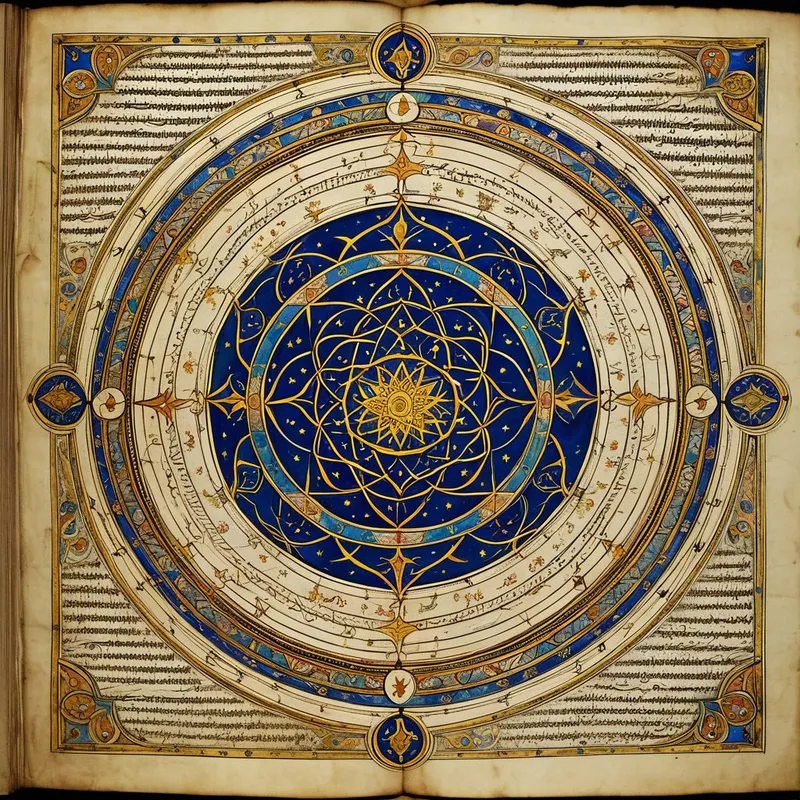
Ein Sof Myth Meaning & Symbolism
The myth of the boundless, unknowable Ein Sof, whose self-contraction creates a void for the universe to emerge, modeling the psyche's descent into form.
The Tale of Ein Sof
Before the Before. Before the whisper of a thought, before the memory of a name, before the concept of a concept, there was only It. Not a being, but Being itself. Not a light, but Light itself, so absolute, so complete, so infinite that it left no room for anything else—not even the idea of an else.
It was the Ein Sof, the Without-End. An ocean without shore, a sun without surface, a presence so total it was indistinguishable from absence. It filled all, was all. In that perfect, placeless unity, there was no here, no there, no then, no now. Only the Is.
Yet, within that boundless Is, a stirring arose. Not a desire, for desire implies lack, and there was no lack. Not a thought, for thought implies an object, and there was only subject. It was a primordial inclination, a gentle, inward sigh—the first hint of an Other. The Ein Sof turned its attention, if such a thing can be said, upon itself. And in that turning, it performed the first and most profound of all acts: it withdrew.
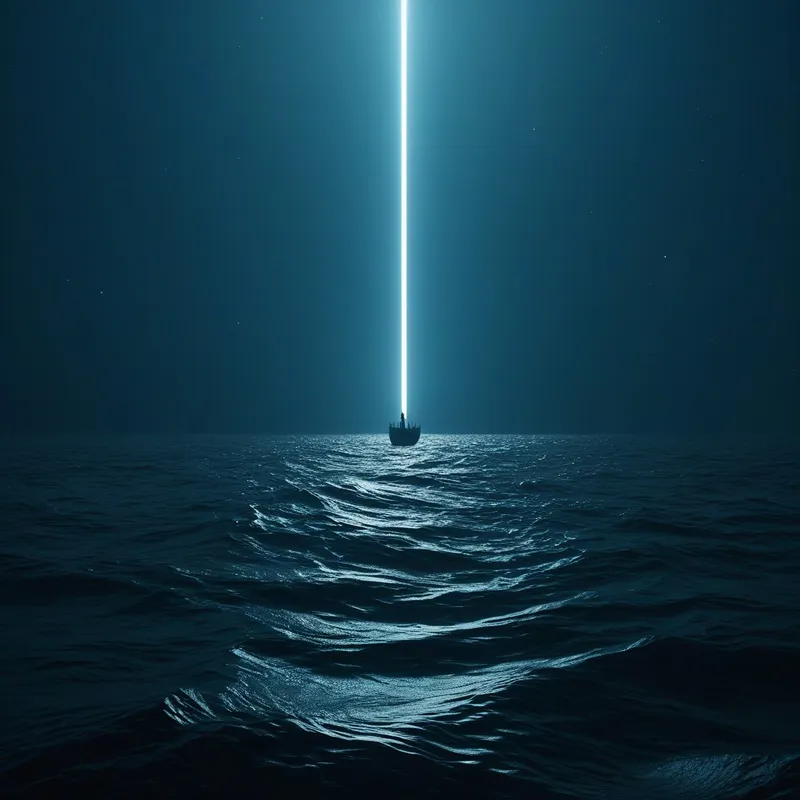
It contracted. From a single, central point within its own infinite expanse, the Light receded. It drew back into itself, not in fear or retreat, but in an act of ultimate generosity. Where the Light had been, there now remained a hollow, a womb, a Chalal—a Vacated Space. This was not nothingness as we know it, but a fertile, receptive nothingness, aching with potential. Into this void, this holy absence, the Ein Sof extended a single, slender ray of its own essence.
This ray, this Kav, pierced the darkness of the Chalal like a needle of starlight threading the fabric of the night. And as it streamed forth, it began to differentiate. It crystallized into vessels, into forms, into the ten sacred Sefirot. These were not separate things, but modulated frequencies of the One Light: Keter, the Crown of potential; Chokhmah, the Father of thought; Binah, the Mother of understanding. Down through the pillars of Mercy and Judgment, the ray cascaded, forming the archetypal patterns of all that would be: Love, Strength, Beauty, Foundation, and finally, the indwelling Presence, Malkhut, the Kingdom.
Thus, from the boundless All, through an act of sacred self-limitation, the stage for a world was set. The universe was not made from something, but within the space made by Something’s loving retreat.
Cultural Origins & Context
The myth of Ein Sof and the Tzimtzum is the foundational narrative of Lurianic Kabbalah, a profound mystical system that emerged in the 16th century in the Galilean town of Safed. Its primary architect was Rabbi Isaac Luria, known as the Ari (the Lion). This was not a myth for the masses, but an esoteric, oral teaching passed in secret circles of disciples. It arose in the aftermath of the traumatic expulsion of Jews from Spain, offering not a historical explanation for suffering, but a cosmic, metaphysical one. The myth provided a framework to understand exile, fragmentation, and the possibility of redemption (Tikkun Olam, "mending the world") as processes written into the very fabric of creation. It was a map of the divine psyche, and by extension, the human soul, explaining how the One becomes the Many and how the Many might journey back toward the One.
Symbolic Architecture
At its heart, the myth of Tzimtzum is a paradox: creation begins not with an expansion, but with a contraction. Not with an outpouring, but with a withholding. This is its first and most radical symbolic truth.
To create an Other, the Self must first make room for it. True relationship is born from sacred withdrawal, not engulfing presence.
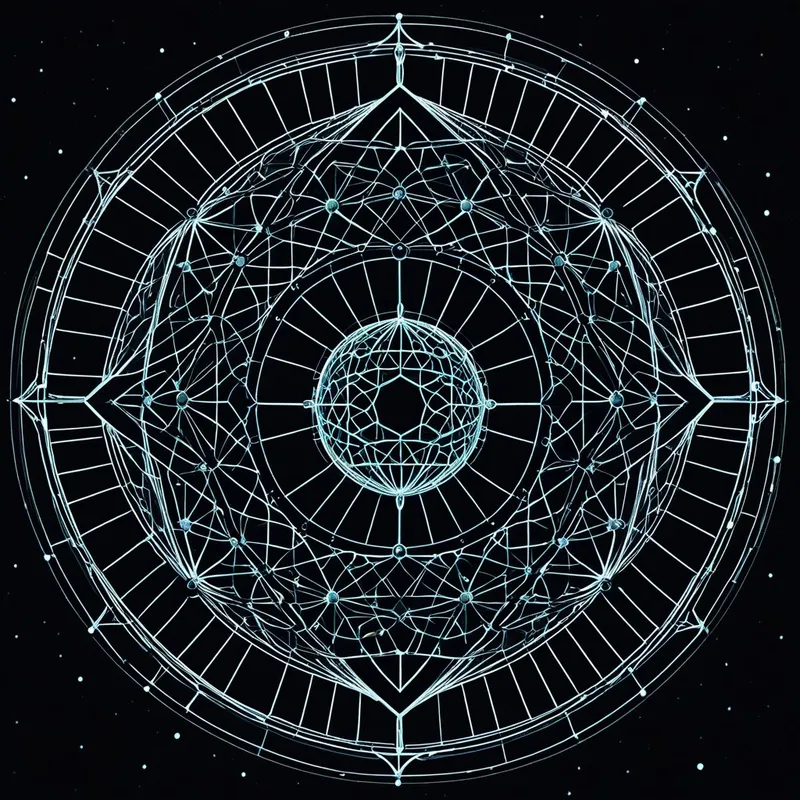
The Ein Sof symbolizes the primordial, undifferentiated state of the unconscious—the totality of the psyche before the dawn of ego-consciousness. It is pure potential, but potential so complete it is static. The Tzimtzum, then, is the first act of consciousness: a self-limitation. The ego, or the conscious self, emerges not by adding something, but by the unconscious ceding ground. It creates a psychic space—the Chalal—where differentiation, thought, feeling, and relationship can occur. The ten Sefirot represent the archetypal structures of the psyche itself, the fundamental patterns through which raw, unconscious energy (Ein Sof) becomes organized into the complexities of human experience.
The Dreamer's Resonance
When this myth stirs in the modern dreamer, it often manifests not as a literal story, but as a profound somatic and atmospheric experience. One might dream of being in a vast, dark, and silent space that feels simultaneously empty and intensely pregnant. There is a sense of awe, of solitude, and of immense potential. This is the dream-echo of the Chalal.
Psychologically, this signals a process of de-structuring. Old, rigid identities or compulsive patterns are dissolving back into the unconscious (Ein Sof). The conscious mind experiences this as a void, a loss of meaning, or a creative dry spell. It is the necessary prelude to a new emanation. The dreamer is in the sacred pause between who they were and who they are becoming. The psyche is performing its own Tzimtzum, clearing a space within for a new configuration of the self to stream forth. It is often accompanied by feelings of both terror and profound peace.
Alchemical Translation
The individuation process, the journey toward psychic wholeness, is perfectly modeled by this myth. We begin in a state of unconscious identification—with our family, our culture, our persona. This is our personal Ein Sof, a totality that feels complete but is, in fact, undifferentiated.
The first and most courageous act of becoming an individual is not to add more to oneself, but to consciously withdraw from what one has been.
This is the alchemical negredo, the dark night. We must contract from our habitual patterns, our compulsive attachments, and our engulfing relationships to create an inner Chalal—a space of free will and authentic possibility. This withdrawal is not nihilism; it is the creation of a vessel. Into this vessel, the light of the Self (the central, organizing archetype of the psyche) can then emanate, differentiating into the various "Sefirot" of our mature personality: our unique wisdom (Chokhmah), our capacity for understanding (Binah), our balanced compassion and discipline, and our ability to be fully present in the world (Malkhut).
Thus, the myth teaches that our deepest creativity and our truest self are born not from endless accumulation, but from a sacred, strategic emptiness. To find the All, we must first honor the liberating power of the Void.
Associated Symbols
Explore related symbols from the CaleaDream lexicon: