Drekavac Myth Meaning & Symbolism
A spectral entity born from untimely death, its piercing cry in the wilderness warns of unresolved sorrow and the psyche's raw, unintegrated territories.
The Tale of Drekavac
Listen, and let the fire’s glow grow low. In the time when the world was thick with forest and the old gods still whispered in the wind, there existed a terror not of tooth and claw, but of sound and sorrow. It was the time of the liminal hours—the shuddering breath between day and night, the fragile veil between the worlds of the living and the dead.
From the deepest, untamed woods, where sunlight dared not linger, it would come. Not with a roar, but with a cry. A sound that was neither human nor beast, but a harrowing amalgam of both—the desperate wail of a lost child twisted with the raw screech of a wounded animal. This was the voice of the Drekavac.
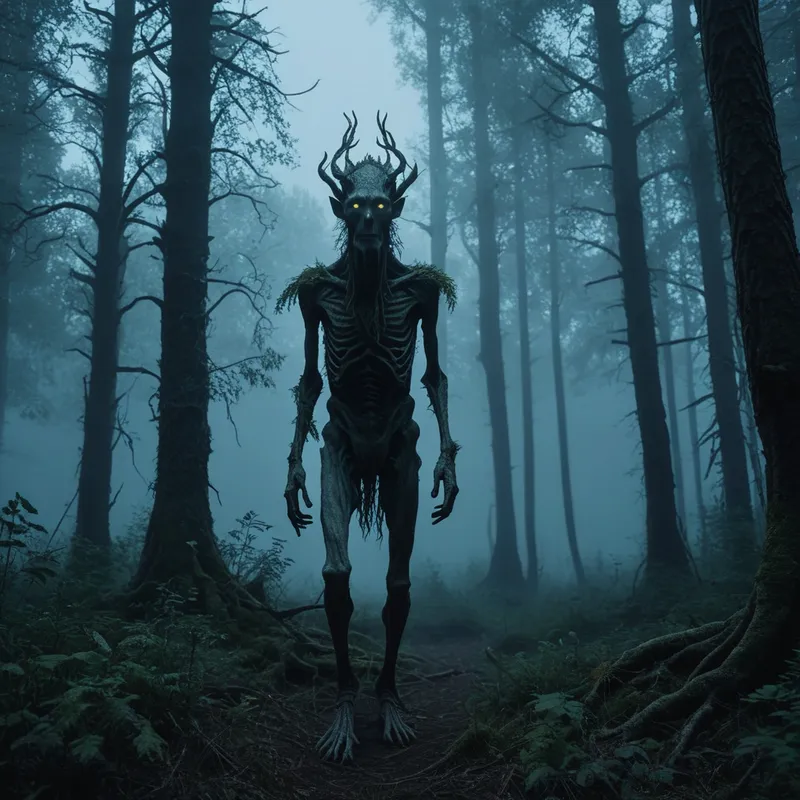
It was said to be born from a soul that knew no rest. A child who died unbaptized, before its name could be woven into the fabric of the world. Or one who perished alone, in pain and fear, its final breath a question unanswered by the earth or sky. Denied the proper rites, denied the journey across the Smorodina River, its spirit could not settle. It became trapped in the in-between, its form a reflection of its torment: sometimes glimpsed as a pale, emaciated child with oversized, luminous eyes; other times as a grotesque, furred creature with limbs too long, stumbling through the undergrowth.
The Drekavac did not hunt for flesh. It hunted for echoes. It wandered the forest edges, the abandoned fields after harvest, the lonely crossroads. And when the moon was shrouded or the first mists of autumn rose, it would release its cry. That sound would slice through the silence, a physical chill that seized the heart of any who heard it. It was a sound that spoke of profound abandonment, of a love severed too soon, of a story cut off mid-sentence. To hear it was to feel the void where belonging should be. The villagers would bolt their doors, bring their children inside, and whisper prayers to the Domovoi, for the Drekavac’s cry was an omen. It warned of illness, of misfortune, of death brushing close by. It was the wilderness itself giving voice to the sorrow that civilization tried to bury.
Cultural Origins & Context
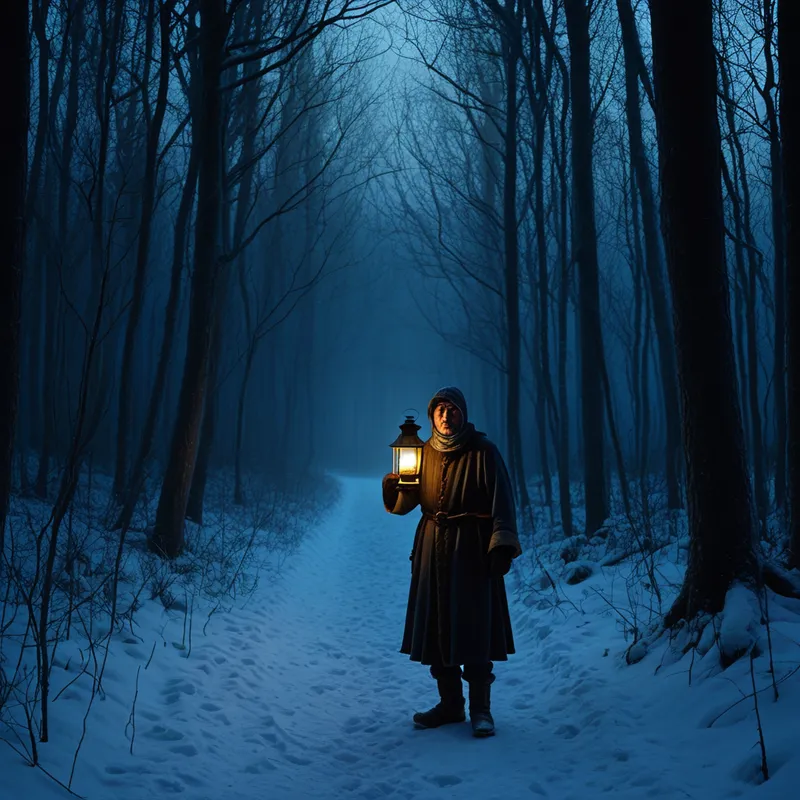
The myth of the Drekavac is rooted deeply in the pre-Christian, animistic worldview of the Slavic peoples, particularly those of the Balkan regions. This was not a story crafted in courts or temples, but one born and breathed around hearths and in fields, a folklore of the peasantry. It was passed down through generations by grandparents on long winter nights, a potent oral tradition meant not merely to frighten, but to instruct and explain.
Its primary societal function was twofold: it enforced cultural and ritual norms, and it gave form to very real, existential fears. The specific link to unbaptized or improperly buried children underscored the critical importance of community ritual—the baptism, the funeral feast (pomana). To die outside these rites was to risk becoming a danger to the very community you left behind. The Drekavac thus served as a grim reinforcement of social and religious cohesion.
Furthermore, it personified the palpable dangers of the untamed wilds (the puscha). The forest was not a park but a vast, unknown entity, a place of wolves, bears, and getting lost. The eerie cries of actual animals—lynxes, foxes, owls—could easily be interpreted by a fearful, isolated traveler as the wail of the Drekavac. The myth gave a name and a shape to the formless anxiety provoked by nature’s vast indifference and the ever-present shadow of mortality, especially the tragic, senseless death of the young.
Symbolic Architecture
Psychologically, the Drekavac is a pristine embodiment of the shadow, specifically the aspects of grief, shame, and primal abandonment that we exile from our conscious selves. It is the psychic residue of trauma that was never processed, the pain that was silenced but not silenced, now returning with a voice that cannot be ignored.
The unwept tear becomes a wail in the woods of the soul. The story untold becomes a ghost that haunts the margins of your life.
The Drekavac’s form—neither fully child nor beast—symbolizes a state of arrested development, a psyche frozen at the moment of trauma. Its habitat, the Forest and the liminal hours, represents the unconscious mind itself: dark, untamed, and most accessible during our own transitions (dusk/dawn, waking/sleeping). Its cry is not an attack, but a symptom. It is the sound of the wounded self, desperate for witness, for the ritual acknowledgment it was denied. It does not bring misfortune; it announces it, because unintegrated pain inevitably manifests as repeating patterns of suffering, “illness,” and “bad luck” in our lives.

The Dreamer's Resonance
When the motif of the Drekavac arises in modern dreams, it seldom appears as a literal Slavic specter. Instead, one may dream of a lost, crying child in a vast, empty building; of hearing one’s own voice emit a strange, animalistic sound; of being pursued not by a monster, but by a haunting, sorrowful melody or an unanswered phone ringing in a deserted landscape.
These dreams signal a critical phase of somatic and psychological processing. The body-mind is beginning to thaw a frozen experience. The “cry” is the symptom breaking through the ego’s defenses. The dreamer is likely encountering a deep-seated feeling of orphanhood—an emotional abandonment, a betrayal of trust, or a grief that was never fully felt. There is a profound sense of isolation, of being stuck between worlds: between who you were before the wound and who you are trying to become after it. The dream is the psyche’s own liminal space, where the exiled pain is finally finding its voice. It is terrifying because it is raw, unmediated, and demands attention.
Alchemical Translation
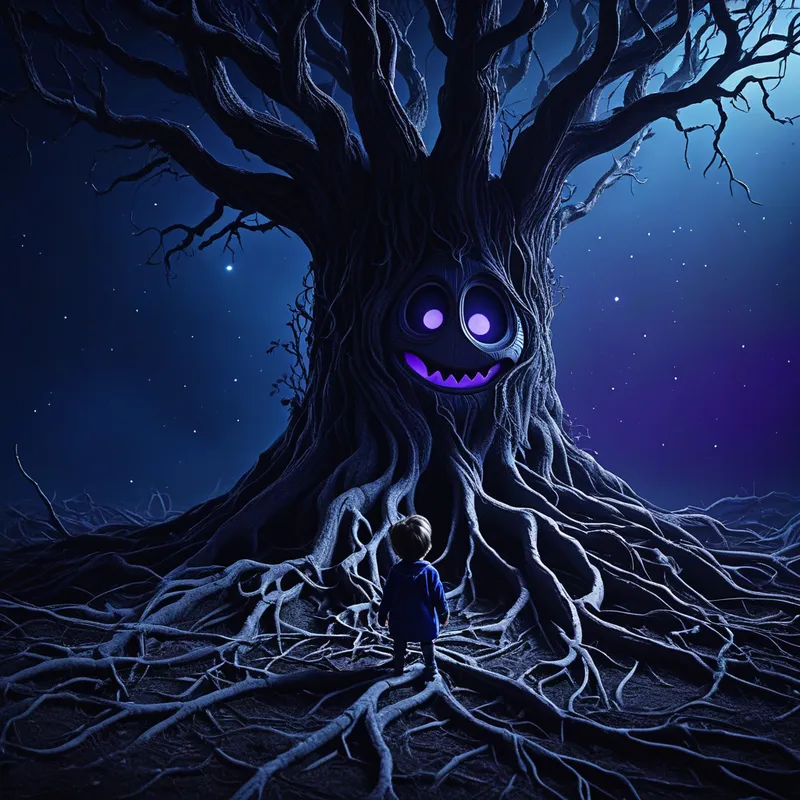
The alchemical journey modeled by the Drekavac myth is not one of slaying the monster, but of reclaiming the orphaned cry. The triumph is in the transmutation of passive haunting into active mourning.
The first stage, nigredo (the blackening), is the encounter itself: hearing the wail in your inner wilderness, facing the depression, anxiety, or unexplained rage that signals unprocessed material. This is the “omen” phase, where old pains surface. The heroic task here is not to flee and bolt the door, but to stay and listen. This requires immense courage—the courage of the Orphan who must face their abandonment.
The second stage, albedo (the whitening), involves the work of differentiation and cleansing. Who or what within you is crying? What died without proper burial? This is the ritual that was missing: the act of witnessing your own pain with compassion, of giving a name to the unnamed loss. It is the baptism of your own experience into the light of consciousness.
To integrate the shadow is not to become it, but to give its chaos a voice within the chorus of the self, thereby transforming its solitary scream into a note in the song of your wholeness.
The final transmutation, rubedo (the reddening), is the integration. The wail, once a sign of fractured trauma, becomes a testament to survival. The energy bound in perpetual mourning is released and made available for life. The Drekavac does not disappear; its essence is redeemed. It becomes an inner sentinel, a depth of feeling and empathy born of profound suffering, now guarding the thresholds of your psyche with hard-won wisdom instead of fear. The orphan finds a home within the larger, more complex structure of the individuated Self.
Associated Symbols
Explore related symbols from the CaleaDream lexicon:
- Forest — The deep, untamed unconscious mind and the wild, unprocessed territories of the psyche where repressed memories and instincts reside.
- Child — The innocent, vulnerable self that experienced trauma or abandonment, frozen in time and requiring recognition and integration.
- Death — Not merely physical death, but the psychic death of innocence, trust, or a way of being, which must be ritually mourned to prevent haunting.
- Spirit — The disembodied essence of unresolved experience, trapped between states and seeking resolution or release through acknowledgment.
- Wound — The original site of psychic injury that never fully healed, the source of the haunting cry and the point where transformation must begin.
- Grief — The core emotional content carried by the Drekavac, representing sorrow that was suppressed or disallowed, now demanding expression.
- Shadow — The totality of the disowned self, of which the Drekavac is a specific manifestation—the exiled pain, shame, and primal fear.
- Ritual — The act of conscious acknowledgment, mourning, and storytelling that was denied to the soul, which is necessary to transform a haunting into a memory.
- Fear — The primary somatic and emotional response to the Drekavac's cry, representing the ego's resistance to facing the depth of its own woundedness.
- Journey — The process of venturing into the inner wilderness (the unconscious) to encounter, listen to, and ultimately integrate the orphaned parts of the self.
- Voice — The repressed sound of pain finding expression, the symptom that is also the beginning of the cure, the cry that must be heard to be healed.