Dreamtime Paintings Myth Meaning & Symbolism
Ancestral beings journey across a formless land, singing its features into solid, sacred existence, leaving a living map of song and story for all time.
The Tale of Dreamtime Paintings
In the beginning, there was no time. There was only the Alcheringa, a deep, dreaming stillness. The earth lay sleeping, a vast, flat, and featureless plain under a blank, grey sky. It was a canvas of potential, waiting for the first brushstroke of spirit.
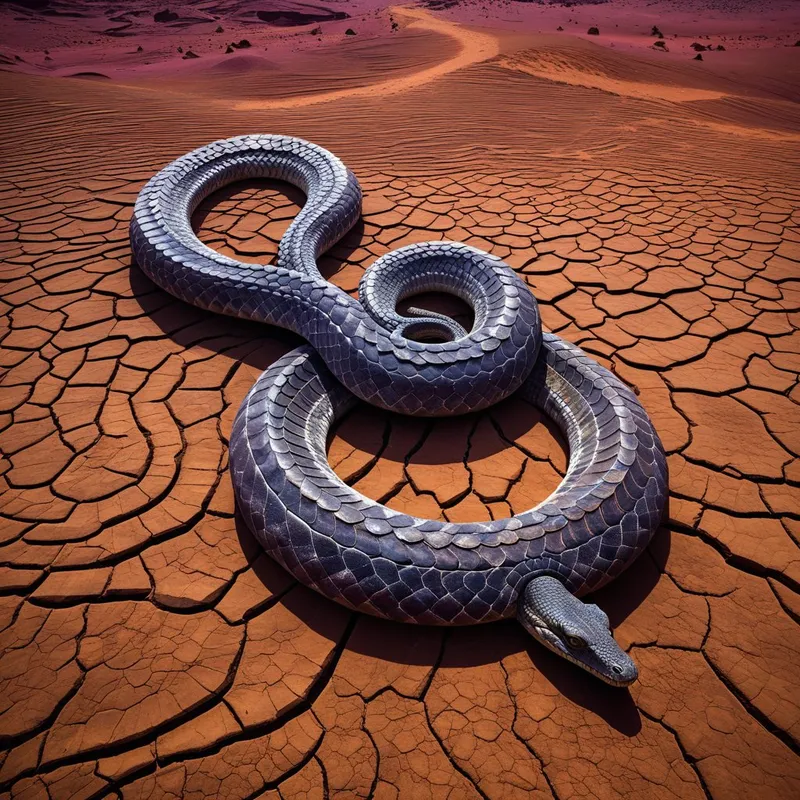
Then, they stirred. From beneath the earth and within the sky, from the very fabric of the dream itself, the Ancestral Beings awoke. They were not gods as others know them, but embodiments of nature itself: the immense Rainbow Serpent, winding and powerful; the Ancestral Hunters, tall and swift; the Ancestral Women, wise and fertile. They emerged into the grey world and began to wander.
And as they wandered, they sang. Their songs were not mere melody; they were vibrations of pure meaning, spells of becoming. The Rainbow Serpent slid her colossal body across the dust, and where she moved, her deep, rumbling song gouged out riverbeds and raised up mountain ranges. The Ancestral Hunters threw their spears, and their sharp, whistling chants carved valleys and scattered stone. The Ancestral Women dug with their digging sticks, and their rhythmic, nurturing hums opened waterholes and caused the first seeds to quicken.
Their journeys were epic, crisscrossing the continent. Every action was a stanza, every footfall a note. When they fought or loved, their passions shaped the land—a cluster of rocks became a council place, a stand of trees a lovers’ bower. When they grew weary and decided their work was done, they did not die. They transformed. Some sank back into the earth, becoming the very rock formations they had sung. Others ascended into the sky, becoming the stars and constellations that would guide the people to come. Their bodies became the landscape, but their essence—their life-force and their law—remained within it, a resonant memory.
And so, the world was painted. Not with pigment, but with story. Not with brush, but with breath. The entire continent became a living gallery, a sacred text written in creek beds, mountain ranges, and star paths. These are the original Dreamtime Paintings: the world itself, a testament to the moment when song solidified into stone, when dream took on the weight of reality.
Cultural Origins & Context
This is not a single myth, but the foundational framework for hundreds of distinct Aboriginal Nations across Australia. The concept of the Dreaming or Tjukurrpa (in many Central Desert languages) is the bedrock of ontology, law, and identity. It is not a “myth” in the sense of a past event, but a continuous, living reality that exists parallel to the everyday.
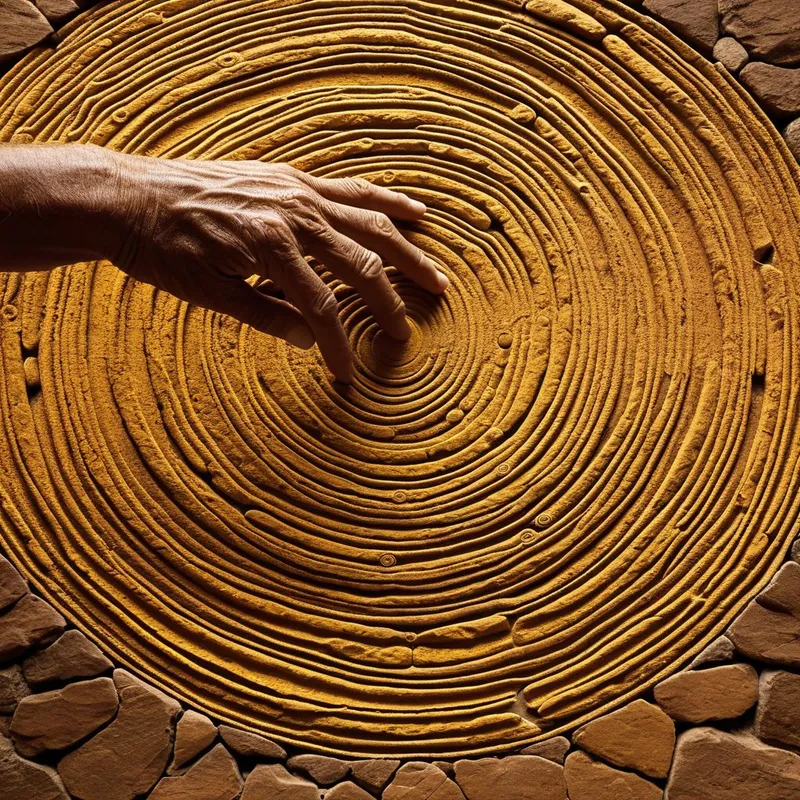
The “paintings” are the land itself. The stories and laws embedded within it are maintained through intricate oral traditions—song cycles, dances, and ceremonies that are the direct inheritance and responsibility of specific kinship groups. These groups are the custodians of specific Songlines, the invisible pathways the Ancestors traveled. To perform the ceremony is to re-activate the creative power of the Dreaming, to renew the world and one’s connection to it. The physical dot paintings and rock art created by Aboriginal artists are not mere representations; they are ceremonial maps, mnemonics, and manifestations of this eternal, sacred geography. They are a way of “holding country” and keeping the song alive.
Symbolic Architecture
At its core, this myth presents a universe where consciousness precedes and creates form. The world is not an accident of physics, but an intentional act of imagination made manifest.
The land is a memory palace built not for kings, but for the soul of a people. Every hill is a stored thought, every river a flowing verse.
The Ancestral Beings symbolize the archetypal, formative forces of the psyche itself—the primal energies of desire, conflict, nurturance, and exploration that, when given conscious expression (song), structure our inner and outer reality. Their transformation into the landscape symbolizes the process of psychic imprinting, where powerful experiences and insights become permanent features of our inner world.
The Songlines represent the connective tissue of meaning. They are the pathways of logic, narrative, and identity that link disparate elements of our experience into a coherent whole. To lose the song is to become spiritually lost, adrift in a landscape of unrelated, meaningless events. The act of “singing the country” is the ultimate act of psychological integration—recognizing the sacred story in the raw material of existence.
The Dreamer’s Resonance
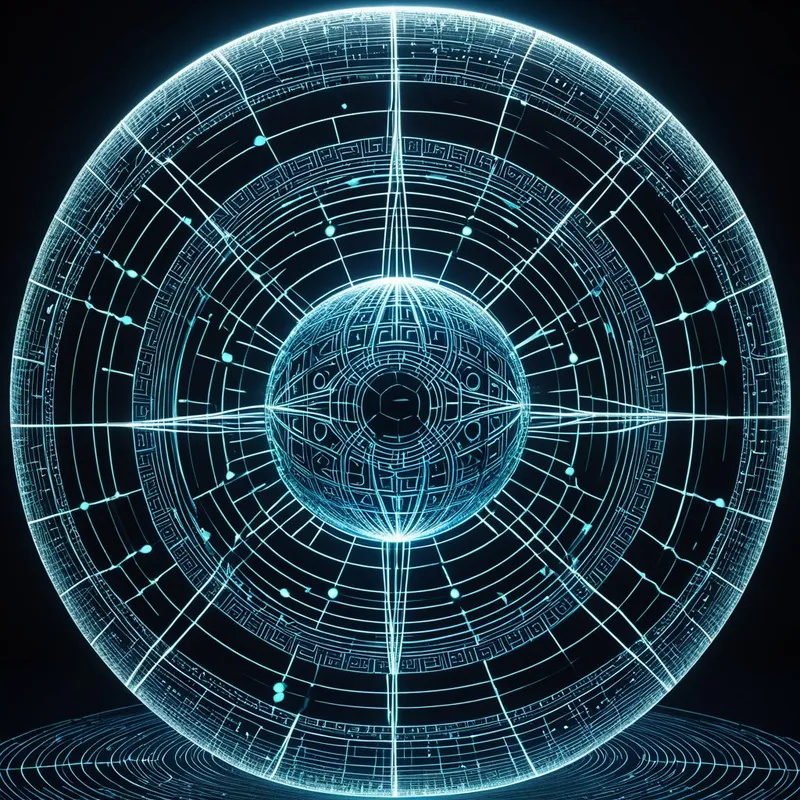
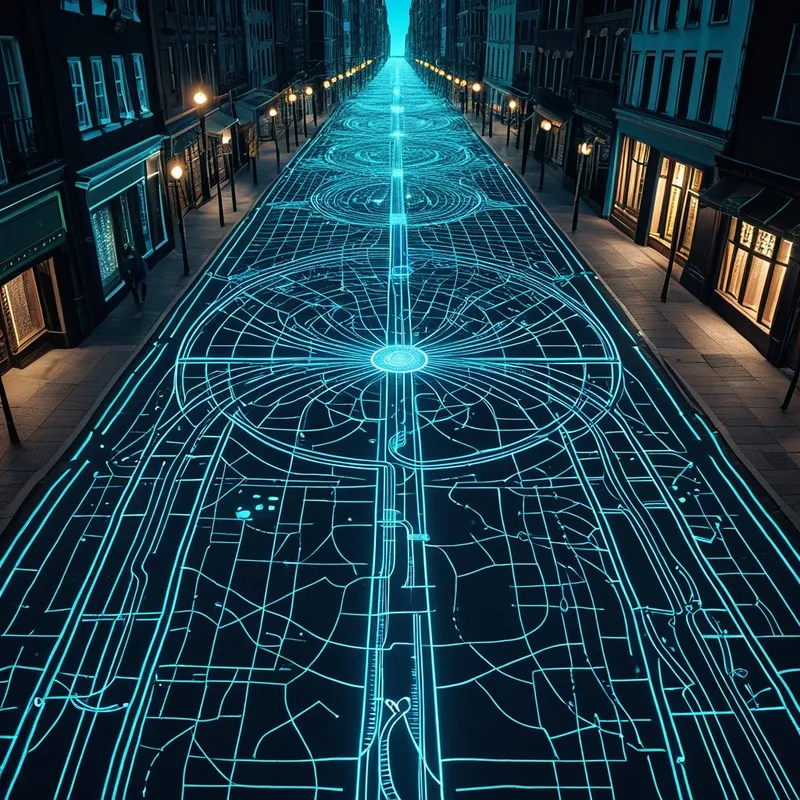
When this mythic pattern stirs in the modern dreamer, it often signals a profound process of inner world-building or re-mapping. You may dream of discovering hidden pathways in familiar places, of landscapes that shift and form in response to your voice or movement, or of finding ancient, glowing symbols etched into the walls of your own home.
Somatically, this can feel like a deep, resonant humming in the chest or a feeling of your feet making contact with a vibrant, living ground. Psychologically, you are navigating your own Dreaming. You are in the process of giving form to formless potentials—perhaps a new creative project, a new identity, or a new understanding of your personal history. The dream is showing you that you are the ancestor of your own life, singing your world into being with every choice and every deeply held value. The anxiety or awe in such dreams comes from the weight of this creative responsibility.
Alchemical Translation
The alchemical journey modeled here is the transmutation of chaos (the grey plain) into a sacred, ordered cosmos (the living land). This is the heart of individuation: becoming the conscious author of your own existence.
Individuation is not finding yourself, but singing yourself into being. The raw ore of the unconscious must be traveled, shaped, and ultimately inhabited.
The first stage is the emergence—the courage to let the ancestral, archetypal forces within you stir from their slumber. The second is the journey—the often arduous, looping path of applying your unique “song” (your talents, your voice, your authentic action) to the raw material of your life. Every challenge faced, every love embraced, becomes a feature on your internal map. The final stage is the transformation and return: not an end, but a sinking of your conscious achievements back into the bedrock of the unconscious, where they become permanent, life-sustaining resources. You become both the wanderer and the landscape. Your life, with all its scars and beauties, becomes your ultimate Dreamtime Painting—a testament not to a finished product, but to the sacred, ongoing act of its creation. To know your song is to know your law, and to walk your songline is to live in truth.
Associated Symbols
Explore related symbols from the CaleaDream lexicon: