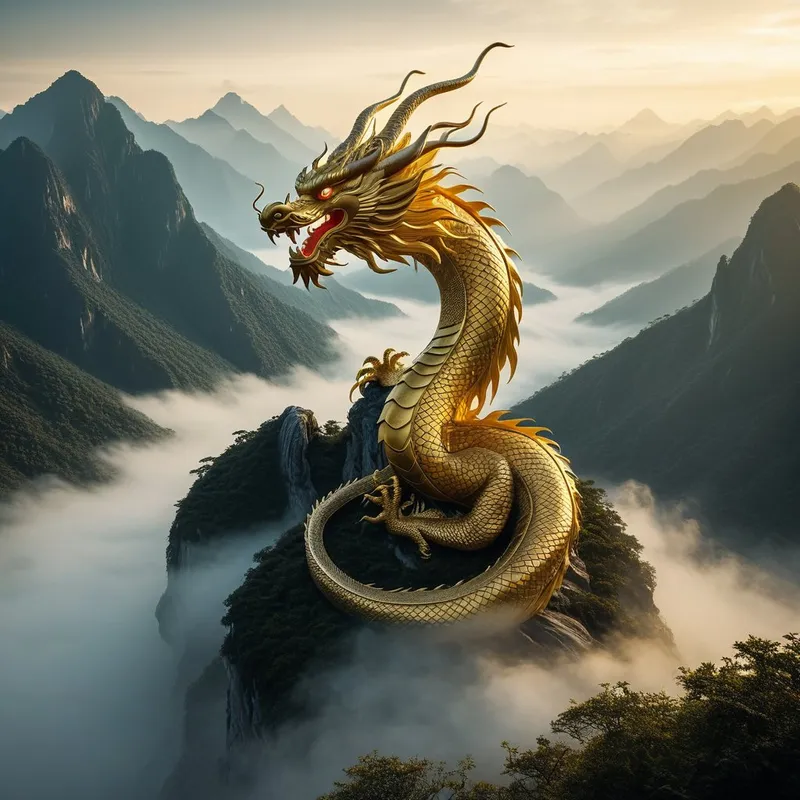
Dragon Lines Myth Meaning & Symbolism
The myth of the Earth's vital energy currents, woven by cosmic dragons, guiding harmony between humanity, nature, and the heavens.
The Tale of Dragon Lines
Before the first emperor, before the first walled city, the world was a body of raw, dreaming power. The mountains were its bones, the rivers its blood, and the winds its breath. And through this colossal, slumbering form, there flowed the Qi of the cosmos itself—not as a formless mist, but as a living, conscious river. The ancients did not discover these currents; they witnessed their birth.
In the time of myth, when heaven and earth were still close enough to whisper, the Tianlong descended. It was not a beast of scales and fire, but a being of pure intention, a serpentine will of the sky. It descended to the wild, unshaped earth, a realm ruled by the Dilong. The Earth Dragon was the spirit of the deep caverns, the root-tangled soil, the patient, grinding weight of stone.
Their meeting was not a battle, but a courtship. The Tianlong, with its celestial mandate, sought to bring order; the Dilong, with its terrestrial wisdom, resisted being tamed. For eons, they moved across the primordial landscape—one weaving patterns from the stars above, the other channeling the deep fires below. Where the Tianlong’s breath touched a mountain peak, it would sharpen, reaching for the heavens. Where the Dilong’s body coiled through a valley, a river would begin to sing, carving its bed.
Their conflict was the world’s creation. The rising action was the slow, agonizing, beautiful process of their entanglement. The celestial dragon would pull, seeking straight lines and divine geometry; the terrestrial dragon would anchor, creating curves, hollows, and hidden places. Their struggle traced paths of immense power—lines where the breath of heaven and the blood of earth mingled. These were the first Longmai. They pulsed where the dragons’ bodies lay together, where contention turned to confluence.
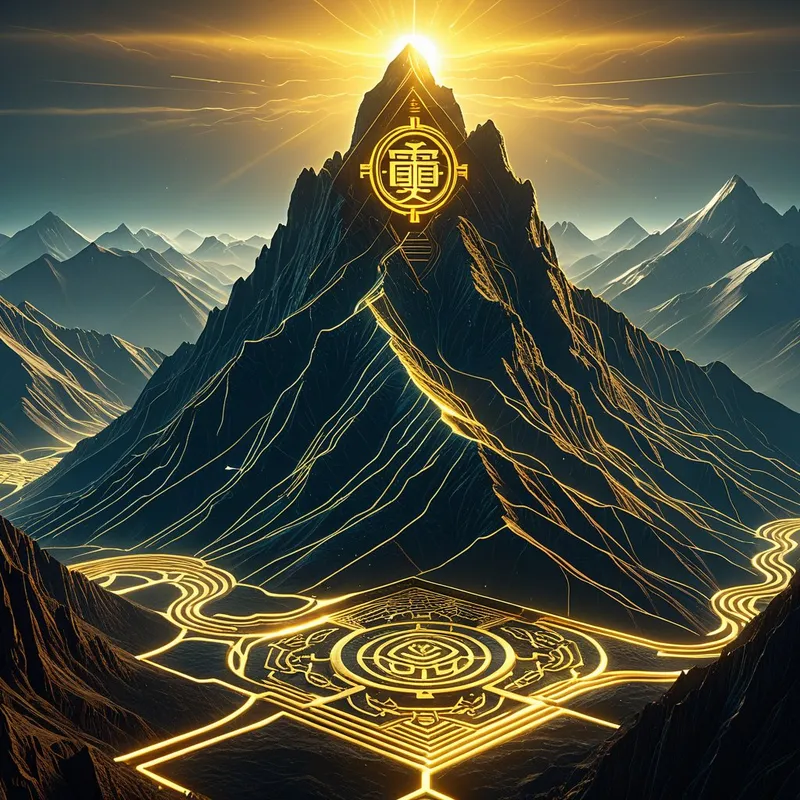
The resolution was not a victory, but a vow. The two great dragons, exhausted and intertwined, sank into a sacred slumber within the very bones of the world. Their coiled bodies became the mountain ranges. The paths of their eternal dance became the rivers. And the luminous trails of their merged Qi—the compromise between sky and soil, order and wildness—remained as invisible, thrumming channels. They left a promise: that any human who could learn to listen, to feel the subtle tremor in a standing stone or the particular song of wind through a pass, could find these lines. To build a home, a temple, or a tomb upon them was to tap the very pulse of the world, to place one’s own life within the holy dialogue of the dragons.
Cultural Origins & Context
The concept of Dragon Lines, or Feng Shui (Wind and Water), is not a single myth from a discrete text, but a living cosmology woven into the practical and spiritual fabric of Chinese civilization for millennia. Its origins are shamanic, emerging from the early animistic observation of the land. The first “diviners” were likely wise individuals who noted where settlements thrived and where they failed, correlating health and fortune with specific landforms—the protective curve of a hill, the nourishing presence of water, the auspicious alignment of a valley.
This knowledge was systematized over centuries, becoming central to Xiangdi (geomancy). It was passed down through oral tradition and secretive master-apprentice lineages, often associated with the Daoist pursuit of harmony with the Dao. Its societal function was profoundly pragmatic and spiritual: to align human activity—from building an imperial capital like Beijing to placing a farmer’s cottage—with the invisible, benevolent currents of the earth. It was a technology of belonging, ensuring that human structures did not offend but rather collaborated with the spirit of the place, securing prosperity, health, and cosmic favor.
Symbolic Architecture
At its core, the myth of the Dragon Lines is a profound map of relationship. It symbolizes the fundamental interconnectedness of all things—heaven, earth, and humanity—not as a hierarchy, but as a dynamic, flowing system.
The two dragons represent the essential polarities of existence. The Tianlong is the archetype of spirit, consciousness, order, and descending inspiration. The Dilong is the archetype of body, the unconscious, chaos, and ascending instinct. Their struggle is the creative tension necessary for all life. The Longmai themselves are the symbolic offspring of this union.
The Dragon Line is the healed scar where cosmic opposites met and chose communion over conquest. It is the path of integrated power.
Psychologically, this maps onto the relationship between our conscious ego (the Tianlong seeking order and purpose) and our unconscious depths (the Dilong, with its raw instincts, ancestral memories, and somatic wisdom). A person living in dissonance builds their “dwelling” against the grain of their own inner landscape. A person in harmony learns to sense their own internal Longmai—the channels where thought and feeling, spirit and body, can flow together without blockage, generating vitality and authentic presence.
The Dreamer’s Resonance
When the motif of Dragon Lines appears in modern dreams, it seldom manifests as literal, mythological beasts. Instead, it surfaces as a somatic or spatial intuition of hidden currents and necessary alignments.
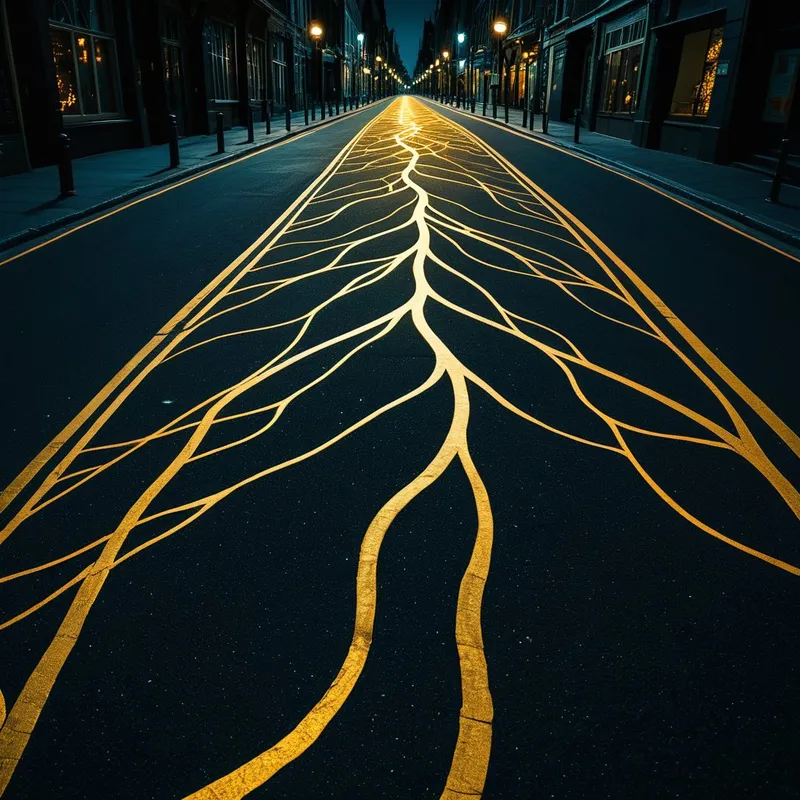
A dreamer might find themselves in a familiar yet strangely charged landscape—their childhood home, a work office, a city street. They feel a compelling pull to move in a specific, non-linear path. They might see cracks in the floor from which a warm, golden light emanates, or hear a deep, rhythmic hum from beneath the ground. They may dream of adjusting furniture, opening windows, or even digging—not to find treasure, but to “unblock” something. The psychological process here is one of internal geomancy. The dream-ego is attempting to sense and correct the flow of its own psychic energy.
The dream is signaling that some aspect of the dreamer’s life—a relationship, a career path, a deeply held belief—is built “against the dragon line.” It is causing a stagnation of Qi, manifesting as depression, anxiety, chronic fatigue, or a sense of profound disconnection. The dream is an invitation from the unconscious (the Dilong) to the conscious mind (the Tianlong) to re-negotiate their relationship, to find the hidden, harmonious path through the internal terrain.
Alchemical Translation
The individuation process, the alchemical journey of becoming whole, is perfectly modeled by the work of the Feng Shui master in the myth. It is not about conquering the inner dragon (the shadow, the instinct), nor being ruled by it. It is about the meticulous, respectful art of alignment.
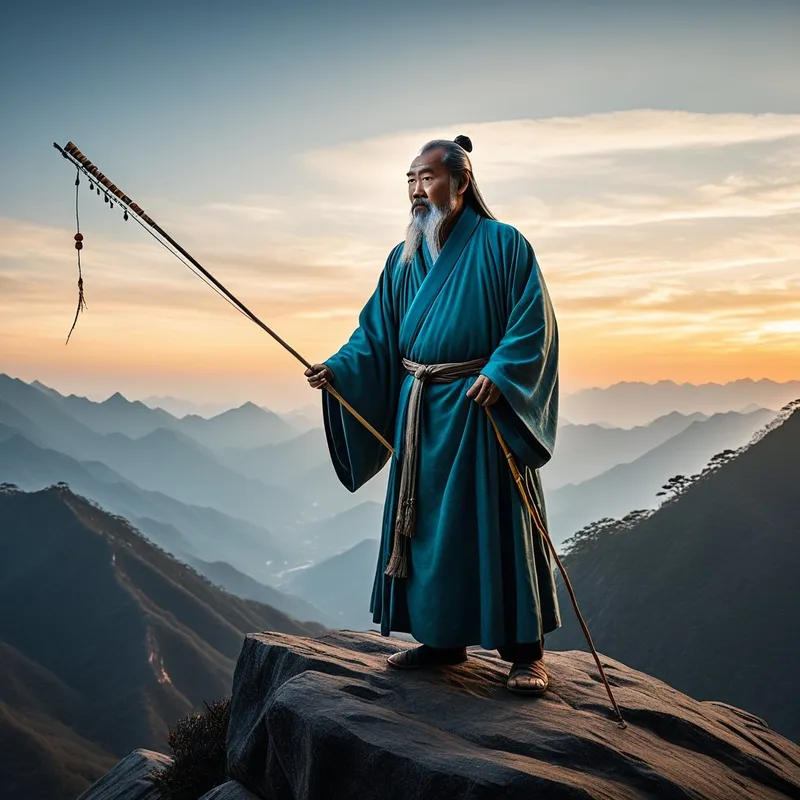
First, one must become the sage on the mountain: observing the landscape of the psyche without judgment. Where are the blockages (repressed trauma, rigid beliefs)? Where are the chaotic, overflowing places (uncontrolled emotions, compulsions)? This is the assessment of the Qi.
Individuation is the slow, patient tracing of one’s own hidden topography, learning where the dragons of spirit and instinct have chosen to sleep within you.
The alchemical work is the gentle, persistent effort to “move the furniture” of the soul. This might involve integrating a neglected talent (opening a window to celestial inspiration), or confronting a buried grief (digging to clear an earth-bound blockage). The goal is to allow the vital energy to circulate freely, so that the celestial aspirations (Tianlong) are nourished by earthly wisdom (Dilong), and the earthly existence is illuminated by celestial purpose.
The triumph is not a dramatic slaying, but a profound settling. It is the moment when one’s life—one’s choices, relationships, and creative expressions—feels inexplicably right, as if it has settled into a groove prepared by a wisdom greater than the ego. One has built one’s dwelling—one’s conscious personality—directly upon the Dragon Line. One lives in the awakened space where the great dialogue between heaven and earth continues, and becomes, at last, a conscious participant in its eternal flow.
Associated Symbols
Explore related symbols from the CaleaDream lexicon: