Doorposts in Exodus Myth Meaning & Symbolism
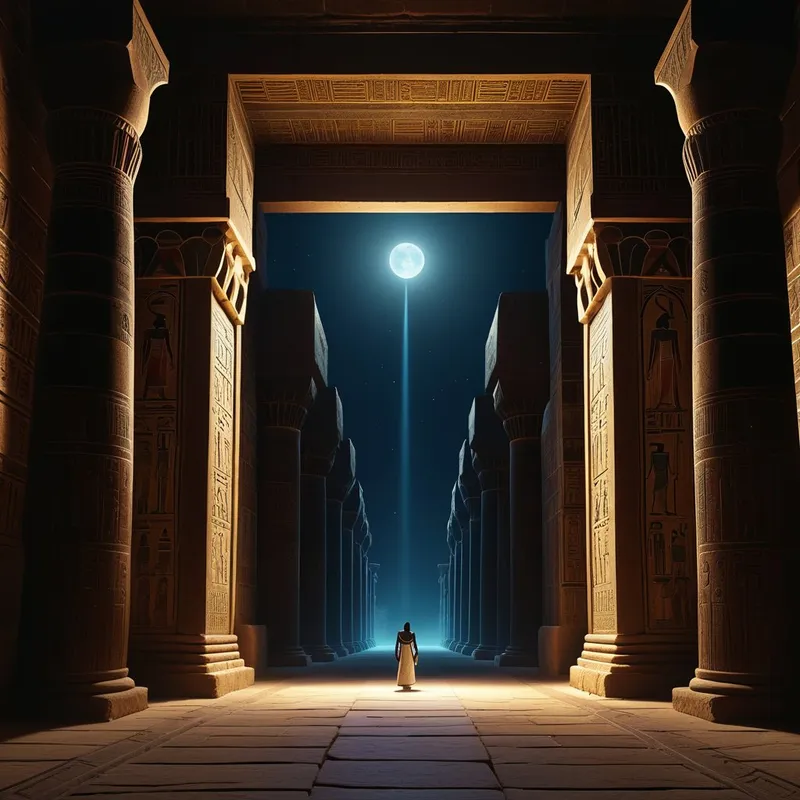
A divine judgment passes over Egypt, sparing only those households marked by the blood of a lamb upon their doorposts.
The Tale of Doorposts in Exodus
Listen. The air in Mizraim had grown thick, a broth of dust and despair. For centuries, the breath of a people had been pressed into the mud, shaping bricks for monuments to gods not their own. Their groans were the foundation stones of empire. Then, a voice spoke from a burning bush that was not consumed, and a man with a stammering tongue became the vessel for a thunderous demand: Let my people go.
Pharaoh’s heart, harder than granite, refused. And so the plagues descended—not mere misfortunes, but a systematic unraveling of the cosmic order of Egypt. The life-giving Nile turned to blood, a mockery of its divinity. Frogs, flies, and locusts erupted from the soil in unnatural swarms. Livestock died, boils festered on skin, hail fell from a clear sky, and darkness—a darkness you could feel, a woolen blanket smothering the sun—covered the land for three days. Each plague was a direct strike against a god in the Egyptian pantheon, a dismantling of their reality. Yet, the royal will remained unbroken, calcified by pride.
Then came the final decree, whispered in the tents of the slaves. This would be no public spectacle. This would be a visitation, house by house, in the deepest watch of the night. The Destroyer would pass through the land, and the firstborn of every household, from the heir to the throne to the child of the mill slave, would meet its breath.
But a sign was given. A loophole in the fabric of fate.
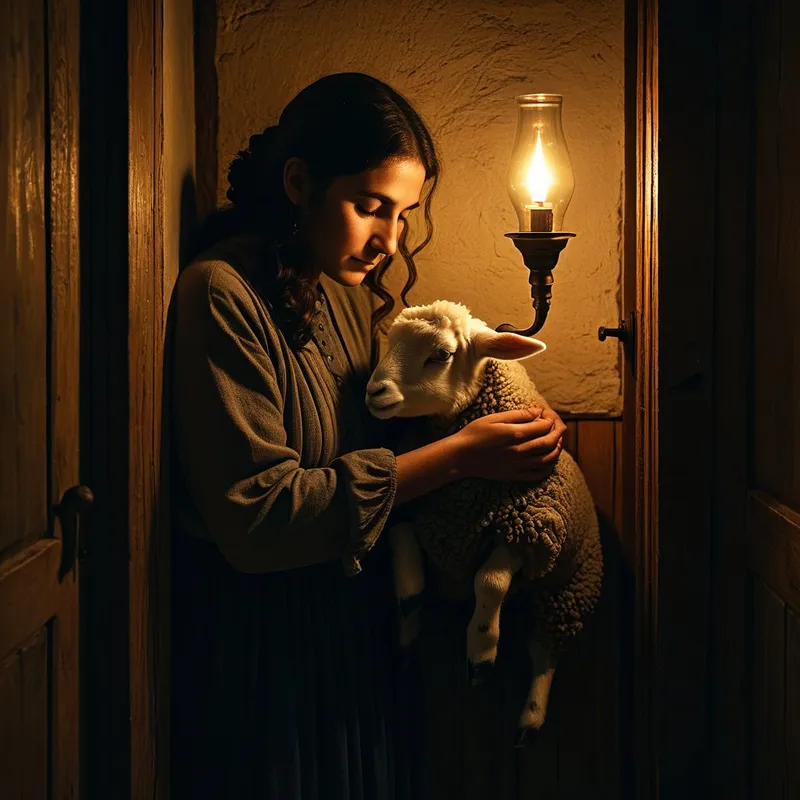
Each Hebrew household was to take an unblemished lamb. At twilight, the lamb was to be slaughtered. Then, with a bundle of hyssop, they were to dip into the basin of its blood and strike it—once, twice—on the two doorposts of their home. And once more, a final stroke upon the lintel above. The mark would be a stark, vertical-horizontal seal, a crimson frame around the doorway.
That night, the world held its breath. Inside the marked houses, families huddled. The roasted lamb had been eaten hastily, with bitter herbs and unleavened bread. They were dressed for a journey that had not yet been called. The only light was the low flame of the hearth, flickering against the dark stain on the doorframe. Outside, a silence deeper than the prior darkness descended. Then, a sound—not a sound for the ears, but a vibration in the soul, a wave of absolute negation passing through the streets. A wail began in the palace, a single piercing cry that multiplied into a chorus of anguish that filled the land. But for those behind the blood-marked threshold, there was only the terrible, merciful quiet. The judgment passed over.
With the dawn came not sunlight, but the sound of urgent movement. Pharaoh’s command was finally broken. "Go!" The people, no longer slaves but not yet a nation, gathered their kneading bowls, their unleavened dough, and the gold and silver pressed into their hands by terrified neighbors. They stepped across the threshold, out of the house of bondage, leaving behind the silent doorposts, their sacred stain already drying in the desert wind.
Cultural Origins & Context
This narrative forms the pivotal climax of the Book of Exodus, the second book of the Torah. Its primary context is the Passover (Pesach) festival, one of the oldest continuously observed rituals in human history. For millennia, it has been recounted not as a distant legend but as a foundational family memory during the Seder. The instruction is explicit: "You shall tell your child on that day, ‘It is because of what the LORD did for me when I came out of Egypt.’" The story is thus internalized; each participant is to feel as if they personally crossed that threshold.
Societally, its function was and remains multifaceted. It established a core identity narrative of a people chosen and protected through a specific covenant, marked by ritual obedience. It served as an etiological myth for the Passover laws. Most profoundly, it embedded into the cultural psyche the archetype of the liminal threshold—the precise, fragile point between two states of being: slavery/freedom, death/life, judgment/grace.
Symbolic Architecture
The doorpost is the ultimate symbol of the boundary. It is the architecture of decision, the place where inside meets outside, safety meets danger, the known meets the unknown. In this myth, it becomes the sacred interface between divine judgment and divine mercy.
The threshold is not a wall but a filter. It does not deny the passage of power, but transforms its meaning for those within.
The blood is not a magical charm but a symbol of substituted life—the innocent lamb for the firstborn son. It represents the stark economy of sacrifice and the tangible, messy application of faith. It is not enough to believe privately; the sign must be enacted, made visible on the very structure of one’s dwelling, turning the home into a sanctuary.
The Destroyer represents the impersonal, inexorable aspect of cosmic law or consequence. It does not discriminate based on ethnicity, but on the condition of the threshold. The myth posits that there are forces in the cosmos—psychological, spiritual, karmic—that move with a terrible neutrality. Our positioning in relation to them is everything.

The Dreamer's Resonance
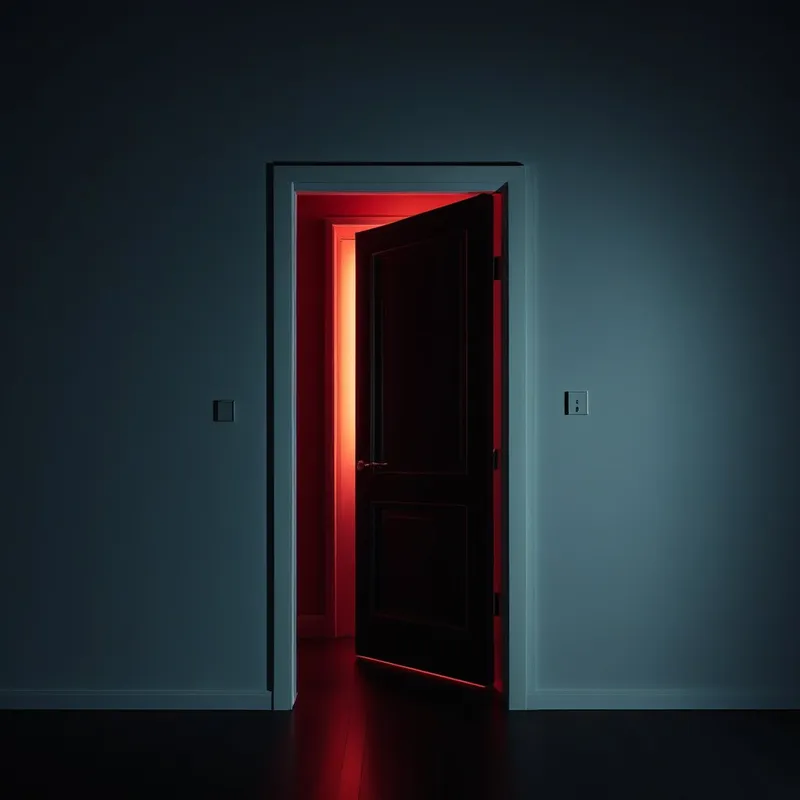
When this myth stirs in the modern unconscious, it often manifests in dreams of thresholds: standing before a strange door, being unable to lock a door against an approaching threat, or painting or marking a doorway. The somatic feeling is one of acute vulnerability mixed with urgent preparation.
Psychologically, this dream pattern signals a profound inner transition. The "Egypt" is an entrenched state of being—a toxic relationship, a deadening job, a crippling pattern of thought, a "slavery" to an old identity. The plagues represent the escalating, often chaotic internal and external crises that force a confrontation with this state. The dream of marking the doorpost is the psyche’s ritual act of delineation. It is the moment the dreamer, in their depths, makes a definitive choice to separate their emerging self from the old order that is doomed to a kind of death. The blood represents the "cost"—the vital energy, the cherished attachment, the familiar comfort that must be consciously sacrificed to effect the passage.
Alchemical Translation
The alchemical journey is one of individuation, moving from the massa confusa (chaotic mass) to the lapis philosophorum (philosopher's stone). The Exodus myth is a perfect map of this nigredo and albedo—the blackening and whitening.
First, the nigredo: the "plagues." The old, inflated ego-structure (Pharaoh) must be systematically broken down. Every source of security (Nile/gods) is revealed as flawed. This is a painful, disorienting dissolution, a descent into the "darkness that can be felt."
The crucial alchemical operation is the separation at the threshold. The doorpost is the vas (the sacred vessel). The applied blood is the conscious application of the prima materia—one's own raw suffering, acknowledged sacrifice, and committed intent—to create a defined boundary. This act transforms the vessel (the self) into a protected space where the new can gestate.
The liberation of the Self requires a death at the border. Not the death of the essence, but the death of the identity that cannot cross.
Finally, the albedo: the "passing over" and the exodus. The dawn finds the individual psychologically mobile, stripped of the leavened ego (hence unleavened bread), carrying the treasures of insight gleaned from the experience, and stepping into the "wilderness"—the liminal space of transformation where the new, liberated consciousness is forged. The marked doorpost is left behind; its work is done. The individual has internalized the threshold, becoming the one who can now navigate between worlds, having learned that true freedom is born from a sacred demarcation.
Associated Symbols
Explore related symbols from the CaleaDream lexicon: