Dionysus & Maenads Myth Meaning & Symbolism
The god of wine and ecstasy leads women into the wild mountains, where societal order dissolves into a sacred, terrifying, and transformative frenzy.
The Tale of Dionysus & Maenads
Listen. The story begins not in the sun-drenched agora, but in the whispering dark of the vine. It is the tale of the god who arrives, and the world he unravels.
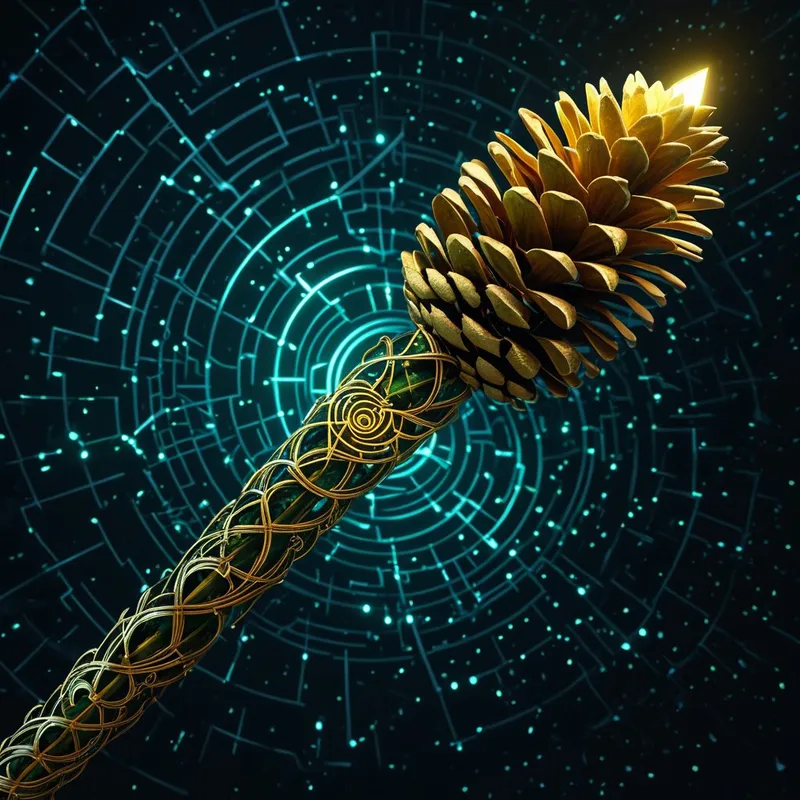
He came from the east, they say, from lands where the earth itself pulses with a different rhythm. Dionysus, son of Zeus and the mortal Semele, bore the lightning in his blood and the scent of crushed grapes in his wake. He was not like the other Olympians, serene upon their marble thrones. His throne was the forest floor, his scepter a fennel stalk tipped with a pine cone—the thyrsus. Where he walked, wine sprang from the soil and milk from the rock. He wore a crown of ivy, and a leopard-skin cloak, and his eyes held the twin fires of ecstasy and terror.
He came to Thebes, a city of strict walls and stricter laws, ruled by his own cousin, Pentheus. The king looked upon this effeminate, long-haired stranger and his band of foreign women with their tambourines and wild cries, and he saw only a threat to order. He tried to bind the god, but the chains fell away. He tried to imprison him, but the doors would not hold.
But the true story belongs to the women. The daughters of Thebes, the mothers and wives—Agave, Ino, and others—heard a sound from beyond the city gates. It was the call of the god, a low thrumming in the blood, a flute-song that bypassed the mind and spoke directly to the womb and the wild heart. One by one, they dropped their spindles, left their looms silent, and walked out of their houses. They left their children sleeping, their husbands bewildered. They followed the sound into the Cithaeron mountains.
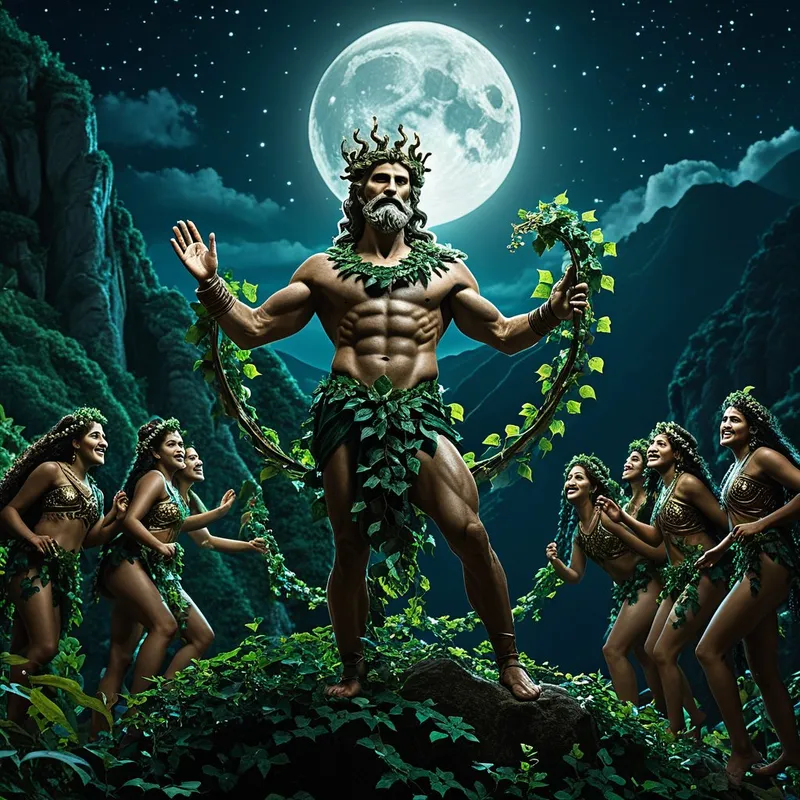
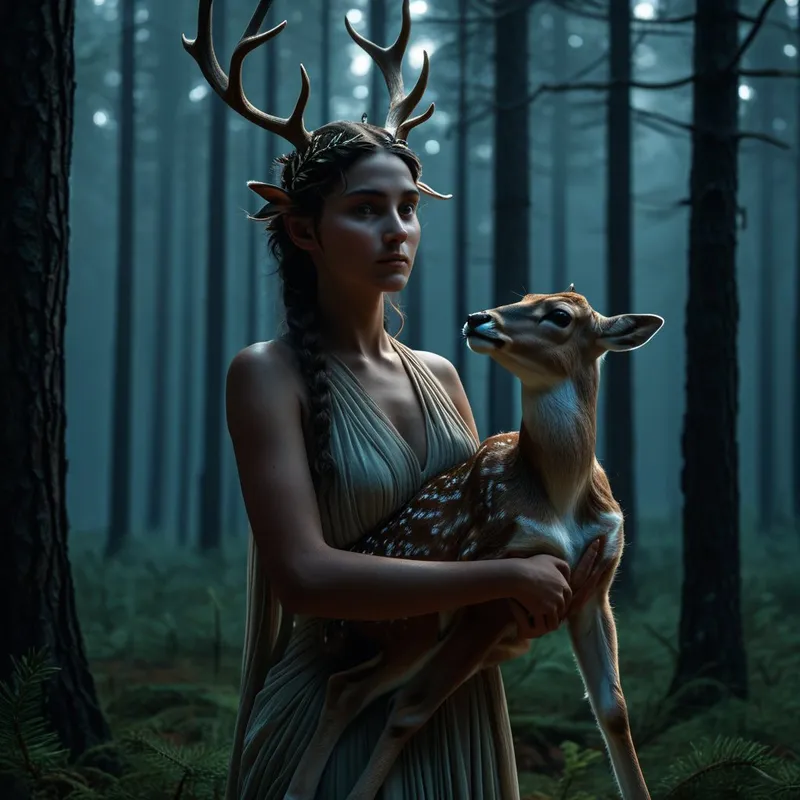
There, under the naked moon, the transformation began. They shed their peploi and donned the skins of fawns. They took up the thyrsus, and with a touch, it made honey and wine drip from the earth. They became Maenads, the "raving ones." Their hair streamed free. They danced with a fury that shook the ground, their cries echoing off the cliffs. They could tear bulls apart with their bare hands. Serpents coiled harmlessly in their hair. They suckled wolf cubs and gazelles alike. In their frenzy, they were invulnerable, filled with a power both terrible and sublime—the mania of the god.
Pentheus, in his folly, disguised himself as a Maenad to spy on their secret rites. But from the high pine where he hid, the god made him visible. Agave, her eyes clouded by divine madness, saw not her son, but a mountain lion, a beast to be sacrificed to the god. The Maenads descended. There was no steel, only hands and the raw, tearing strength of their ecstasy. The king was dismembered, and Agave, triumphant, carried his head back to Thebes on her thyrsus, believing it the prize of a glorious hunt. Only when the madness lifted, drip by terrible drip, did she see what she held. The god’s justice was complete, written not in law, but in blood and shattered sanity. The walls of order had been breached from within, by the very forces they sought to deny.
Cultural Origins & Context
This myth, most powerfully preserved in Euripides’ tragedy The Bacchae, was not mere entertainment. It was a cultural nerve, exposed and raw. The Dionysian cult was a real and potent force in the Greek world, offering experiences utterly alien to the civic, rational, masculine ideal of the polis. Its origins likely lie in earlier, ecstatic nature cults from Thrace and Phrygia, which Greece absorbed and transformed.
The rites of Dionysus, often secret and exclusively for women (the Maenadism), provided a sanctioned, temporary outlet for energies that daily life repressed. For a few days each year, women could leave their domestic spheres and become vessels of a raw, natural power. The city both feared and needed this ritual. It feared the chaos, but it needed the catharsis—the purging of collective tension—that the festival provided. The myth of Pentheus served as a dire warning: do not deny the god. To refuse the irrational, the emotional, the chthonic, is to invite a far more destructive form of it into your very home. The storytellers, from village priests to tragic poets, were mediators of this terrifying truth.
Symbolic Architecture
At its core, this myth is about the return of the repressed. Dionysus represents everything civilization builds walls against: instinct, emotion, irrationality, the fluidity of identity, the raw fecundity of nature, and the unconscious itself. He is the spiritus contra spiritum—the spiritual (ecstatic) force that stands against the merely intellectual spirit.
The thyrsus is the ultimate symbol of this paradox: a weapon of peace that unleashes war on the psyche, a rod of discipline that channels chaos.
The Maenads symbolize the latent, instinctual power within the personal and collective psyche—often gendered as feminine, but present in all—that is culturally bound and domesticated. Their frenzy is not mere violence; it is a unio mystica, a dissolution of the ego’s boundaries. They become one with the animal world, with the god, with each other. This is both blissful and terrifying, for to lose the self is the ultimate fear and the ultimate desire.
Pentheus is the rigid ego, the persona so identified with control, order, and skepticism that it becomes brittle. His voyeurism represents the ego’s doomed attempt to rationally observe and control the unconscious forces. His dismemberment is the inevitable shattering of a psyche that will not bend. It is not a punishment, but a brutal, necessary disintegration.
The Dreamer's Resonance
When this myth stirs in modern dreams, it signals a profound somatic and psychological uprising. To dream of wild, ecstatic dancing, of leaving a structured environment for a forest or mountain, of being part of a frenzied crowd, or of tearing or being torn apart, points to a deep-seated rebellion against an overly controlled life.
The somatic process is one of pressure release. The body, long held in the postures of duty or repression, is screaming for expression. The psychological process is the eruption of the shadow. The civilized self is being confronted by its own denied vitality, rage, sensuality, or creativity. The dream-ego may play the role of Pentheus, terrified and fascinated by the wild figures, or it may find itself becoming a Maenad, experiencing both the terror and the liberation of letting go. Such dreams often precede or accompany major life changes, breakdowns, or breakthroughs, where an old, rigid identity must die.

Alchemical Translation
The alchemical journey modeled here is the nigredo—the blackening, the dissolution, the descent into primal chaos that is the necessary first step toward wholeness. The individuation process requires not just building a strong ego, but also the humbling, terrifying task of dismantling it to contact a more fundamental layer of being.
The madness of the Maenad is the fire that reduces the leaden ego of Pentheus to its essential, chaotic state, from which a more fluid and authentic gold can eventually be formed.
For the modern individual, the "alchemical translation" is the conscious engagement with one’s own Dionysian energies. It is allowing the "inner Maenad" a voice—not necessarily through literal frenzy, but through practices that dissolve rigid control: ecstatic dance, immersive art, deep ritual, or shadow work. It is recognizing the "Pentheus" within—the inner critic, the hyper-rationalist, the controller—and understanding that its tyranny invites psychic disaster. The goal is not to live in perpetual frenzy, but to achieve what the Greeks called sophrosyne—a healthy-mindedness born from having acknowledged and integrated the madness, not from having walled it out. The one who has danced on Cithaeron can walk in the agora with a different step, carrying the memory of the vine in their soul, having made the wild god a conscious guest rather than a destructive stranger.
Associated Symbols
Explore related symbols from the CaleaDream lexicon: