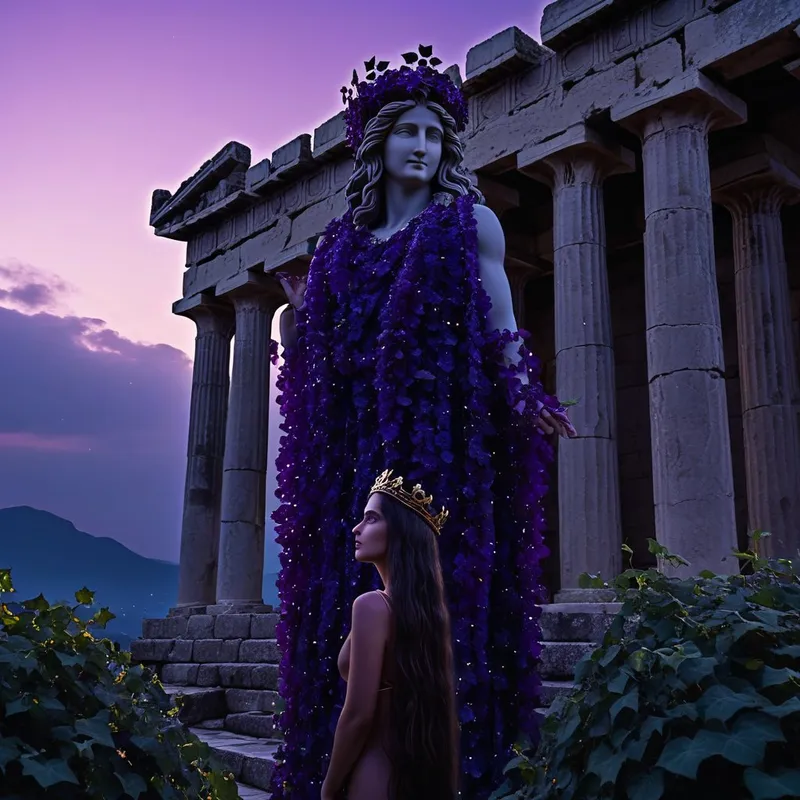
Dionysus & Amethystos Myth Meaning & Symbolism
A mortal maiden, Amethystos, is transformed into a purple crystal by Dionysus to protect her from his wrath, creating a symbol of divine grace and sober clarity.
The Tale of Dionysus & Amethystos
Listen, and let the scent of crushed grapes and night-blooming flowers carry you to a time when gods walked the earth in the guise of storms and passions. The air is thick with the promise of revelry and the sharp, green smell of the vine. Here strides Dionysus, his brow crowned with ivy, his hand grasping the pine-cone tipped thyrsus. He is the breaker of chains, the liberator, but also the force of untamed nature that knows no master.
On this day, a shadow has fallen across his divine heart. A mortal, in his insolence, has slighted the god. A cold fury, colder than the deepest winter stream, rises in Dionysus. It is not the joyous madness of the Maenads, but a dark, predatory wrath. He summons his sacred beasts—the spotted leopards, their eyes glowing like embers, and the great tigers, whose silent steps promise swift vengeance. “Find the first mortal you see,” the god commands, his voice like thunder in the hills, “and let them feel my displeasure.”
Through the sun-dappled woods they pad, a wave of fanged and clawed destiny. Their path leads them to a clearing, where a young maiden named Amethystos walks alone. She is pure of heart, a devotee of Artemis, and she seeks only the quiet solitude of the grove to offer her prayers. The peace shatters. The beasts emerge from the foliage, a living wall of muscle and hunger, their growls vibrating in the very air she breathes.
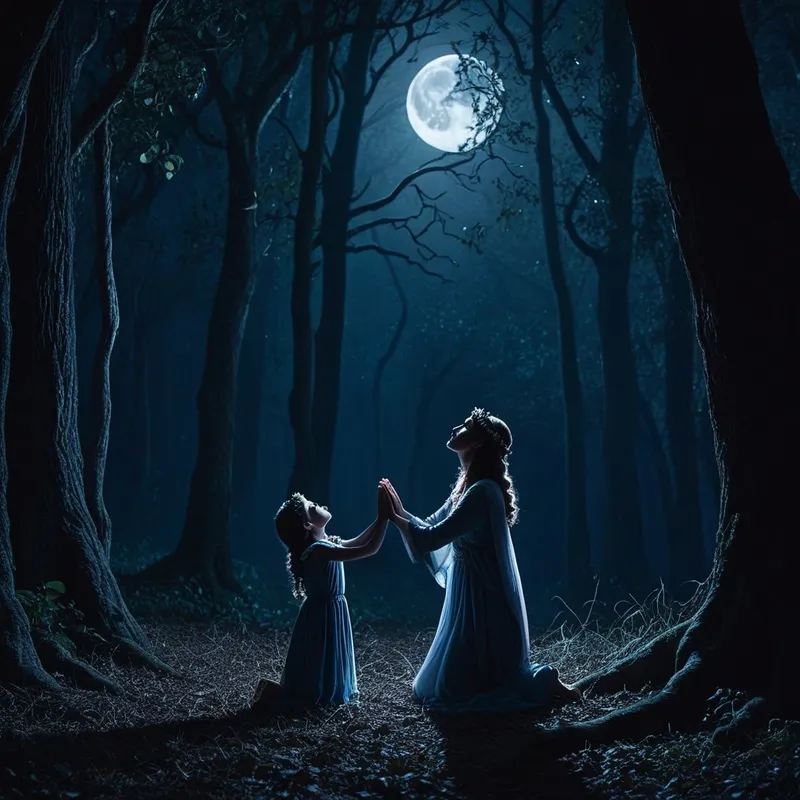
Terror grips her, cold and absolute. There is no escape. As the great cats coil to spring, Amethystos does the only thing she can. She throws herself to the earth, not in surrender, but in supplication. She cries out, not to the approaching god of frenzy, but to the cool, distant goddess she serves. “Artemis! Chaste Artemis! Protect me! Let me remain untouched, let me remain pure!”
Her prayer is a silver arrow shot into the twilight. And it is heard. In the moment between the beast’s leap and its fatal landing, a miracle of stillness occurs. The air itself seems to harden into crystal. A brilliant, cold light—the light of the moon made solid—envelops Amethystos. Where a trembling maiden knelt, there now stands a statue of the most astonishing beauty. But it is not stone. It is a crystalline formation, luminous and clear, yet shot through with the rich, deep purple of royal wine, of twilight, of a sacred bruise.
Dionysus arrives, his anger still a storm cloud around him. He sees the transformed maiden, this perfect, frozen form glowing with the light of Artemis’s intervention. And in that sight, his wrath melts away, replaced by a profound and humbling awe. He touches the cool, smooth surface of the crystal. He understands. He has been checked not by force, but by a purity that invoked a higher law. In a gesture of remorse and reverence, the god of wine takes a cup. He pours the dark, intoxicating liquid over the radiant crystal. The wine stains the clear quartz, seeping into its very heart, dyeing it forever with the color of his own domain—a perpetual, beautiful apology.
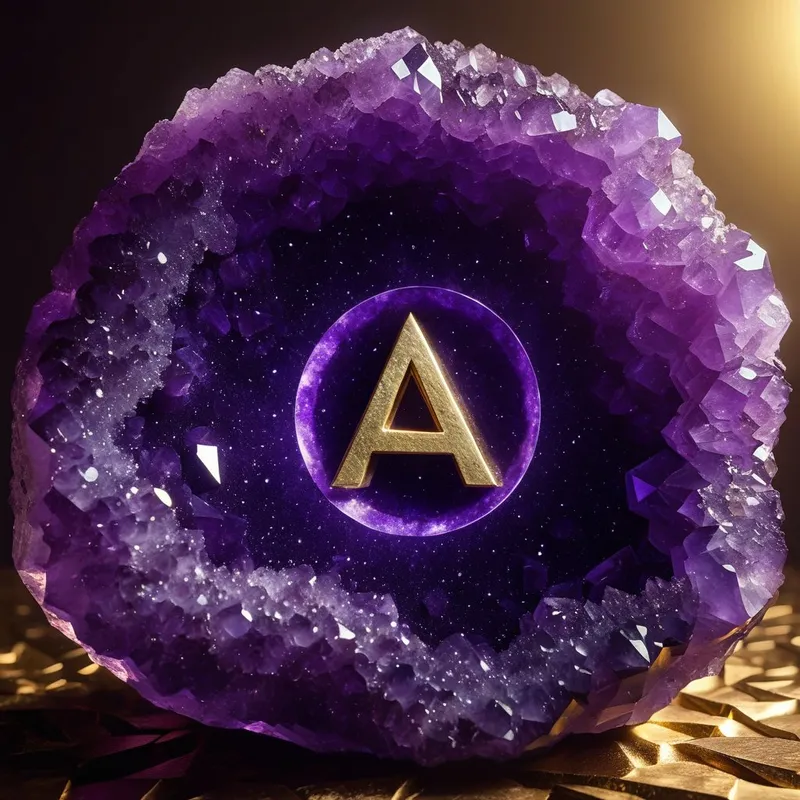
“From this day,” Dionysus declares, his voice now soft with wonder, “this stone shall be called amethystos—‘not intoxicated.’ Let it be a ward against drunkenness, a reminder that even in ecstasy, there must be a place of clarity. Let it carry the memory of the maiden who, through her devotion, transformed wrath into protection.”
Cultural Origins & Context
The myth of Amethystos is not found in the grand epic cycles of Homer or Hesiod, but emerges from the rich soil of later mythography and etymology. It is a classic example of an aetiological myth, crafted to explain the origin, name, and purported properties of the amethyst gemstone. The primary source is the work of the Greek writer Nonnus, though the story’s folkloric roots are likely much older.
In the symposium culture of ancient Greece, where wine was central to social, philosophical, and religious life, the need to mythologize the balance between indulgence and control was paramount. The story served a practical societal function: it provided a divine sanction for the belief that amethyst could prevent or cure drunkenness. Wealthy Greeks would often drink from cups carved from amethyst or set with the stone, literally embedding the myth into their ritual of consumption. The tale thus acted as a narrative anchor for a cultural practice, blending commerce, spirituality, and social etiquette. It was a story told not just by poets, but by merchants, healers, and hosts, a piece of practical wisdom wrapped in divine drama.
Symbolic Architecture
At its core, the myth presents a profound dialectic between two powerful divine forces: the ecstatic, boundary-dissolving energy of Dionysus and the pure, bounded, disciplined energy of Artemis. Amethystos, the mortal, becomes the literal and figurative vessel for their interaction.
The amethyst is the embodied moment where ecstasy meets its limit, where the wave of passion crashes against the shore of the soul and is transformed into something beautiful and enduring.
Dionysus represents the unconscious in its raw, untamed form—the drives, the passions, the creative and destructive chaos that underlies consciousness. His initial wrath is the shadow side of this power: the unconscious content that, when ignored or insulted, rises up to devour the conscious personality (Amethystos). Artemis represents the conscious ego in its ideal form: disciplined, focused, autonomous, and connected to a higher principle (in her case, chastity as a form of self-containment).
The transformation is the critical alchemical moment. Amethystos does not fight the Dionysian force with more force; she invokes a different quality. She calls upon her own centered truth (Artemis), and in doing so, catalyzes a metamorphosis. She is not destroyed, but transmuted. The stone is the symbol of this new, third thing: a consciousness that has integrated the Dionysian energy (the purple stain of wine) without being dissolved by it. It is structure infused with passion, clarity colored by depth.
The Dreamer's Resonance
When this myth stirs in the modern dreamer, it often signals a psychological process of confrontation and necessary hardening. To dream of being pursued by wild, intoxicated, or chaotic forces (the Dionysian beasts) speaks to a feeling of being overwhelmed by unconscious material—perhaps a rising tide of anger, unprocessed grief, addictive impulses, or chaotic life changes.
The figure of Amethystos in the dream—the act of kneeling, praying, or being frozen/crystallized—points to the psyche’s attempt to establish a sacred boundary. It is a somatic cry for containment. The dream is not advocating for cold, emotionless rigidity, but for the creation of a conscious vessel strong enough to hold the powerful energies at play. The resulting “crystal” in the dream—whether it appears as a gem, a shield of light, or simply a feeling of cool, hard clarity—is the nascent symbol of the Self beginning to form a protective, integral structure amidst inner turmoil. The dream process is one of moving from passive victimhood to a state of invoked transformation, where the threatening force is paradoxically integrated as the very thing that gives the new structure its color and character.
Alchemical Translation
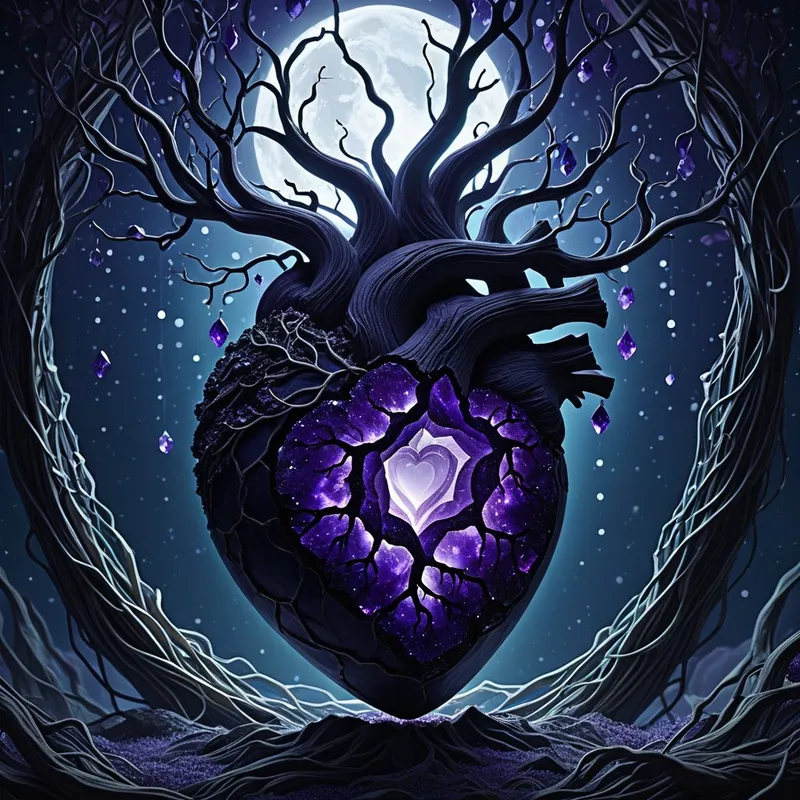
The individuation journey modeled here is one of sacramentalizing the shadow. It is not about defeating our inner Dionysus—our passions, our madness, our creative chaos—but about finding the right vessel to contain it, so it becomes a source of beauty and power rather than destruction.
The first step is the insult or provocation: the conscious ego (the mortal) ignores or disrespects the power of the unconscious. This leads to the wrathful eruption: the shadow content attacks in a distorted, bestial form. The pivotal alchemical operation is the invocation. This is not a fight, but a sincere turning towards a higher principle of order and integrity within oneself—one’s own “Artemis.” This principle acts as a catalyst.
The goal is not to remain the pure, untouched maiden, but to become the amethyst: a being who has been profoundly touched, stained, and altered by the depths, yet whose core structure has been clarified and strengthened in the process.
The final act is consecration. Dionysus himself anoints the crystal with wine. In our psychological translation, this means the conscious ego, once it has achieved this new, crystallized strength, can now consciously invite the previously dangerous energy back in, on new terms. The passion is poured over the clarity, dyeing it, making it part of its essence. The individual becomes someone who can move in the world of emotion, creativity, and relationship (the wine) without losing themselves to intoxication. They carry their clarity within, a living amethyst, a testament to the transformation wrought when we meet the god at the gate not with a sword, but with a prayer for a form strong enough to hold him.
Associated Symbols
Explore related symbols from the CaleaDream lexicon: