
Dionysus Myth Meaning & Symbolism
The twice-born god of wine, madness, and ecstasy, whose myth charts the terrifying and liberating dissolution of the rigid self.
The Tale of Dionysus
Hear now the tale of the god who arrives not with order, but with a shout of revelry that shatters silence. He is the Stranger, the Liberator, the Mad One. His name is Dionysus.
His story begins not in the light, but in fire and secrecy. His mother, the mortal princess Semele, loved by the great Zeus, was tricked by a jealous Hera into asking her divine lover to reveal his true, Olympian form. No mortal can bear that sight. Semele was consumed in celestial flame. But Zeus, swift as thought, snatched the unborn child from her ashes and sewed him into his own thigh, a living womb of divine flesh. Thus was Dionysus born a second time, the "twice-born" god.
Cast out from heaven’s order, he was raised in secrecy, a god disguised, wandering the wild places of the earth. Nymphs and satyrs were his first companions. From the earth, he drew forth the secret of the vine, the juice that stirs laughter and tears, that loosens the tongue and unbinds the limbs. Where he walked, the hard ground grew soft with moss, and stone yielded to the relentless push of tendril and leaf.
But his destiny was not the wilderness alone. It was the city, the fortress of reason and law. He came to Thebes, his mother’s city, now ruled by his cousin, King Pentheus. Pentheus saw only a dangerous foreigner, a pretty youth leading the women of the city—his own mother Agave among them—into the mountains in ecstatic frenzy. He saw madness and disorder, a threat to his throne of stone.
Pentheus tried to bind the god, to cage the wild spirit. He arrested the Stranger, locked him in a dark cell. But locks cannot hold a force of nature. Earthquakes shook the palace, and ivy burst through the mortar. Dionysus walked free, his bonds turned to falling leaves. With a terrible, persuasive grace, he then tempted Pentheus himself. He offered the king a chance to see the secret rites, to spy on the Maenads in their sacred madness. Consumed by voyeuristic pride and fury, Pentheus agreed, disguising himself in the fawn-skins of a worshipper.
Guided by the god he sought to condemn, Pentheus climbed the mountain. He hid in a pine tree, peering down at the swirling dance. But Dionysus, with a whisper, revealed him. “Behold the beast who spies on our mysteries!” The Maenads, led by Agave in her divine frenzy, saw not a king, but a mountain lion. With a collective cry that was neither human nor animal, they descended. They pulled the tree from the earth, and with their bare hands, they tore Pentheus limb from limb. Agave, triumphant, carried her son’s head back to Thebes on her thyrsus, only realizing her horrific deed as the god’s madness lifted, leaving behind the unbearable truth.
Thus did the god establish his worship. Not through gentle persuasion, but through the terrifying, ecstatic dissolution of all that denies the wild, raw pulse of life.

Cultural Origins & Context
The myth of Dionysus is not a tidy, Olympian fable. It is a deep, chthonic current that flowed into Greece from the East, from Phrygia and Thrace, carrying with it the scent of earth, blood, and ferment. He was the god of the “other,” the outsider whose cult was often practiced at the margins—in the mountains, outside the city walls—primarily by women, the Maenads or Bacchae. Their rituals, the orgia, were a sanctioned, sacred release from the strictures of polis life, a temporary return to a primal, collective state.
The primary vessels for this myth were the tragic playwrights, most powerfully Euripides in his play The Bacchae. Here, the conflict between the rigid, Apollonian order of Pentheus and the fluid, Dionysian chaos is staged with devastating psychological clarity. The myth was performed in the heart of Athenian civic life, the theater of Dionysus itself, serving as a profound societal safety valve and a terrifying reminder. It functioned as both a warning against repressing the instinctual life and a recognition of its awesome, destructive-creative power. To honor Dionysus was to acknowledge the part of nature that cannot be civilized, the madness that resides alongside reason.
Symbolic Architecture
Dionysus represents the principle of undifferentiated life force itself—the zoe that pulses before and beyond the individual bios. He is the archetypal spirit of ecstasy (ekstasis), meaning “to stand outside oneself.” His symbols form a lexicon of transformation:
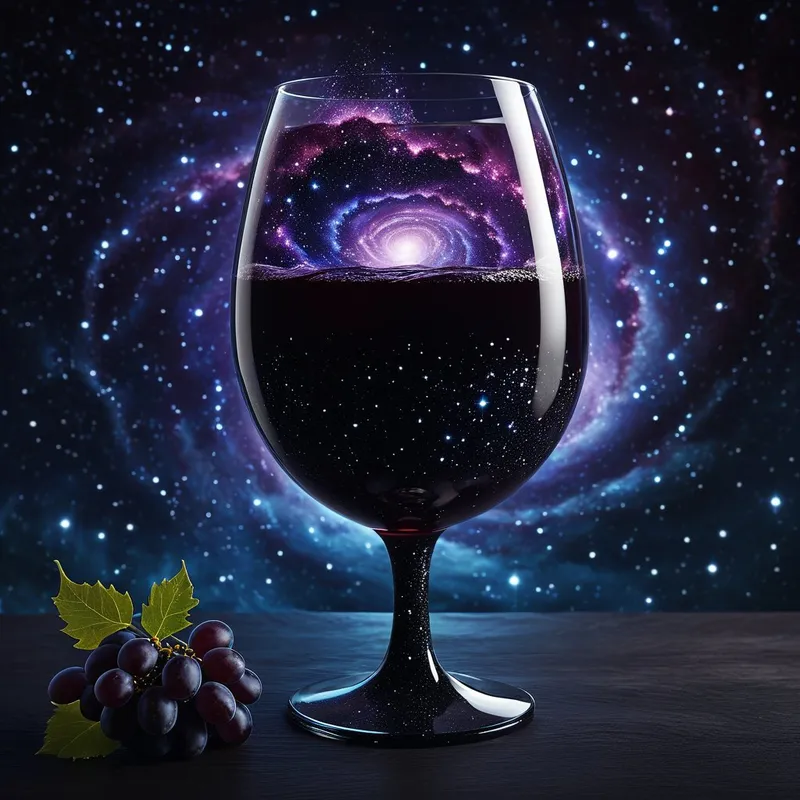
- The Vine & Wine: The alchemy of decay into ecstasy. The grape must be crushed, its essence fermented in darkness, to become the wine that dissolves boundaries.
To drink the wine of Dionysus is to willingly submit to a temporary death of the ego, seeking communion with the deeper, collective stream of being.
- The Thyrsus (pine-cone tipped staff): A weapon that is also a fertile wand. It symbolizes the terrifying, generative power of nature, the phallic force that can both create and destroy.
- The Mask: Dionysus is the god of the theater, of role and disguise. The mask represents the fluidity of identity, the realization that the “self” is not a fixed statue but a series of performances over an abyss of primal energy.
- The Sparagmos (dismemberment): The horrific fate of Pentheus is the central symbol. It represents the necessary, often violent, deconstruction of an outworn, rigidified personality structure (the tyrannical king/ego) that refuses the call of the deeper Self.
- The Twice-Born: His unique birth signifies that true vitality often requires a catastrophic end—a burning away of the old, “mortal” container—to be reborn from a more profound, “divine” source within.
Psychologically, Dionysus is the archetype of the dynamic unconscious, the realm of instinct, emotion, and archetypal possession. He opposes the tyranny of a hyper-rational, controlling consciousness (Pentheus) that seeks to deny or bind these forces, demonstrating that such repression leads not to order, but to a far more catastrophic and involuntary explosion.
The Dreamer's Resonance
When the Dionysian pattern stirs in modern dreams, it rarely appears as a classical god. It manifests as the overwhelming, irrational force that threatens the dreamer’s carefully constructed world.
- Dreams of wild, uncontrollable nature: Vines breaking through walls, floods in the living room, animals invading the home. This is the somatic signal of instinctual life demanding recognition, pressing against the barriers of repression.
- Dreams of frenzied dancing or chaotic festivals: The dream-ego finds itself in a swirling, loud, ecstatic crowd, often feeling both terrified and irresistibly drawn in. This indicates a psychological process where collective, emotional energies are rising, and the individual psyche is being called to participate, to lose its isolated stance.
- Dreams of intoxication or transformation: Drinking a strange potion, feeling one’s body melt or mutate. This is the direct experience of psychic dissolution, the ego’s fear of losing its boundaries and definite form.
- Dreams of being pursued by a mob or a wild force: A modern recasting of the Pentheus archetype. The dreamer is the tyrannical ego being hunted by the very aspects of the self it has denied and exiled to the wilderness.
The somatic experience is one of expansion, heat, chaos, and a loss of control. The psychological process is the unconscious compelling the conscious mind to face what it has deemed “too much”—too much emotion, too much desire, too much life.

Alchemical Translation
The myth of Dionysus is a brutal map for the alchemical stage of solutio—dissolution. In the journey of individuation, we must move beyond the persona, the adapted social mask, and encounter the shadow. But the Dionysian ordeal goes further; it is the dissolution of the very ego that tries to integrate the shadow.
The triumph of Dionysus is not the creation of a new order, but the revelation that order itself is a temporary fiction played out upon an eternal, creative chaos.
For the modern individual, the “alchemical translation” involves several agonizing steps:
- The Divine Spark in Ashes (The Semele Moment): A burning away of an old identity, a cherished self-image, or a foundational belief. This feels like annihilation, a crisis of meaning. It is the necessary death of what is merely mortal in us.
- Gestation in the Wound (The Thigh-Birth): A period of dark incubation. The new potential must be hidden, nurtured in the very flesh of our suffering or dislocation (Zeus’s thigh). This is a time of withdrawal, of seeming passivity, where the new consciousness is forming in secret.
- The Return as Stranger (The Wanderings): The reborn aspect of the self returns, but it feels foreign, unsettling, even “mad” to our established personality. It brings gifts (the vine) that are initially intoxicating and disruptive.
- Confrontation with the Inner Tyrant (The Pentheus Conflict): The ego, the inner ruler terrified of chaos, will try to bind, analyze, and control this new energy. This internal civil war must be endured.
- Sparagmos and Recognition (The Mountain Ordeal): The final, violent surrender. The rigid ego-structure is dismantled. This is experienced as breakdown, madness, or profound disorientation. Yet, from this dismemberment comes a horrific clarity—the recognition, like Agave’s, of what we have denied and destroyed in our quest for control.
The goal is not to become a raving Maenad, but to achieve what the Greeks called enthousiasmos—to be filled with the god. It is to allow the Dionysian current to flow through a more permeable, less rigidly defended self, transforming our relationship to chaos from one of fear to one of awed, respectful participation. We learn to hold the thyrsus, not as a weapon against others, but as a staff to navigate the wild, fertile, and terrifying ground of our own deepest being.
Associated Symbols
Explore related symbols from the CaleaDream lexicon:
- Living
- Bar
- Tail
- Playground
- Festival
- Fun
- Amusement
- Costume
- Wine
- Toddler
- Dude
- Celebration
- Extremely
- Naked
- Flesh
- Clown
- Mad
- Crib
- Haircut
- Cot
- Orgasm
- Joint
- Intense
- Commotion
- Newborn
- Joy
- Mob
- Lush Vineyard
- Chocolate Fountain
- Whipped Cream
- Wine Bottle
- Fizzy Soda
- Spicy Taco
- Festival Costume
- Ripped Leggings
- Tropical Shirt
- Neon Leggings
- Party Mask
- Ripped Trousers
- Funky Bowtie
- Wacky Headband
- Grand Theater
- Rhapsody of Life
- Fractured Reality
- Whirling Dervish
- Festive Partygoer
- Enigmatic Clown
- Golf Cart
- Burgundy Wine
- Plum Purple
- Strontium Burst
- Francium Burst
- Potassium Burst
- Flowering Vine
- Fuchsia Bloom
- Pinecone
- Hanging Ivy
- Pine Cone
- Frosted Pinecone
- Hanging Grapevine
- Lush Ivy
- Insect Parade
- Hyperactive Cockatoo
- Spotted Leopard
- Phantom Mask
- Firework Stand
- Steel Drums
- Alto Saxophone
- Conga Drums
- Stylish Tuba
- Vibrating Djembe
- Sonic Castanets
- Water Balloon
- Rubber Duck
- Tilt-a-Whirl
- Dance Floor
- Wine Tasting
- Carnival Mask
- Oktoberfest Beer Steins
- Tinsel
- Scented Pinecone
- Oscar Wilde's Dandy Cane
- Whirling Dervishes
- Timeless Theater
- Dreamlike Graffiti
- Expressionist Color Palette
- Dripping Paint
- Retro Bar Cart
- Funky Lounge Chair
- Pop Art Chair
- Stylish Bar Cart
- Sleek Wine Bottle Opener
- Wine Glass
- Juicer
- Pepper Mill
- Patterned Leg Warmers
- Dance Party in a Van
- Game Console
- Silly String
- Art Deco Theater
- Late-Night Food Truck
- Brewery Tasting Room
- Fragmented Mirror
- Spilled Wine
- Ornate Mask
- Polka Dot Fabric
- Tropical Leaf Prints
- Blossoming Grapevine
- Acorn
- Hammock of Vines
- Spurred Vines
- Primal Instincts
- Fermented Foods
- Ritual Mask
- Ritual Dance
- Sistrum Rattle
- Decomposing Leaves
- Pine Needle Bough
- Shaman's Mask
- Fizzing Bubble
- Online Shame
- Entropy Gradient
- Mod
- Climax
- Catharsis
- Dissolution
- Sprout
- Infancy
- Seizure
- Asymmetrical
- Overflow
- Elation
- Euphoria
- Ecstasy
- Delight
- Jubilation
- Glee
- Eccentricity
- Twirl
- Subliming
- Fragmenting
- Shattering
- Fermented
- Nutty
- Yeast
- Mustard
- Babies
- Infant