Dionysian Procession Myth Meaning & Symbolism
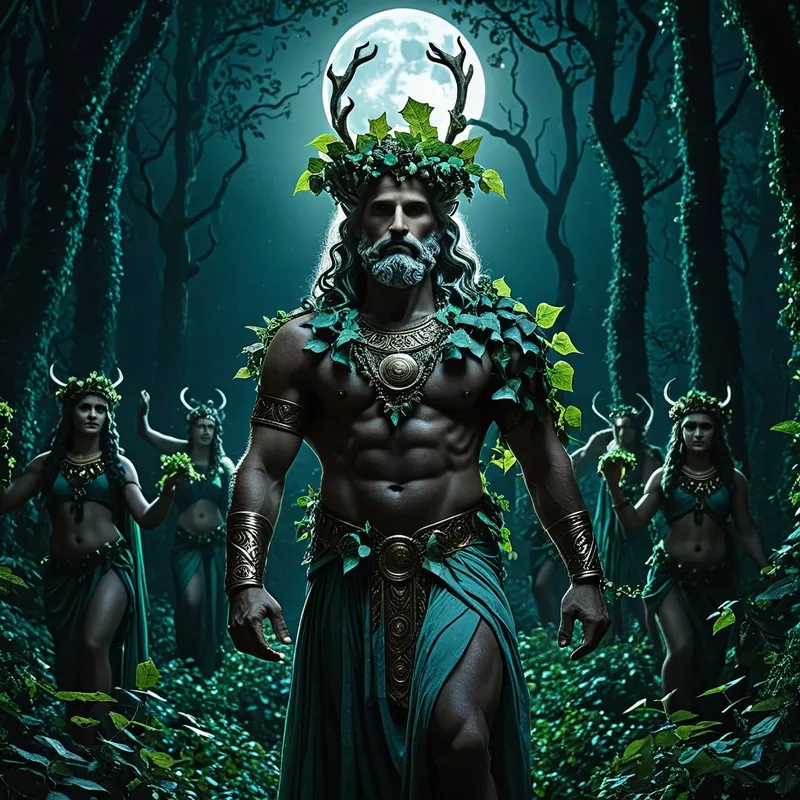
The god Dionysus leads a wild, ecstatic procession of followers through the wilds, dissolving boundaries and unleashing primal, transformative life-force.
The Tale of Dionysian Procession
Hear now the sound that splits the world in two. It is not thunder from the high seat of Zeus, but the deep, rhythmic pulse of drums from the untamed mountains. It is the call of the one who comes from afar, the god who is a stranger in his own land. His name is Dionysus.
He walks the dusty roads of Boeotia and the steep, pine-clad slopes of Cithaeron, and he is never alone. Where he passes, the rigid order of the city falls away like a discarded mask. His hair is dark and flowing, crowned with the relentless green of ivy and vine. In his hand, he carries the thyrsus—a spear that does not kill, but makes the earth itself burst with life.
And behind him, they come. The women of the towns and villages, mothers and daughters, queens and servants—their eyes wide and unseeing of the mortal world, now filled with the god’s own fire. They are the Maenads, the "raving ones." Barefoot, clad in fawn-skins, their hair unbound, they move to a music only they can hear. They shake the thyrsoi, and honey and milk, the sustenance of the wild, drip from their tips. They call out his divine names: Bromios (the Roaring One), Euios (the Shouter), Lysios (the Liberator).
With them come the Satyrs, playing double-flutes and tambourines, their hooves kicking up clouds of dust that smell of damp soil and crushed herbs. Spotted leopards, tamed by the god’s mere presence, pad silently beside them. The air grows thick with the scent of pine resin, crushed grapes, and the sweet, intoxicating perfume of the god himself.
This is the thiasos, the sacred procession. It is not a parade; it is a migration of the soul. They tear through the forest not as destroyers, but as lovers in a fierce embrace with the raw heart of nature. With their bare hands, they practice sparagmos—the rending apart of living creatures—and omophagia—the eating of raw flesh. It is not mere savagery, but a terrible sacrament, a consuming of the god’s own vital essence, a shattering of the boundary between human and beast, between eater and eaten.
Those who stand against the procession, who bar their gates and mock the stranger-god, meet a fate that is both punishment and revelation. King Pentheus of Thebes, trying to spy on the Maenads from a tree, is mistaken for a mountain lion. His own mother, Agave, in her divine madness, leads the women in tearing him limb from limb. The god’s justice is the justice of the vine: it cracks the stone that tries to contain it. The procession does not argue; it overwhelms. It does not negotiate; it transforms. And when the dawn finally pales the sky, the revelers collapse, spent and human again, with the memory of the god burning in their veins like a forgotten, essential truth.
Cultural Origins & Context
This myth was not a singular story but a living, breathing reality woven into the religious and social fabric of ancient Greece. Its primary vessels were not just epic poets like Homer, who gives Dionysus a minor role, but the lyric poets, the playwrights, and, most importantly, the rituals themselves. The great tragedian Euripides captured its terrifying, paradoxical power in his masterpiece, The Bacchae, performed in Athens in the 5th century BCE.
The myth served a crucial societal function. In the highly structured, patriarchal, and Apollonian world of the Greek polis (city-state), with its emphasis on reason, order, and civic duty, the Dionysian Procession represented the sanctioned, periodic return of everything the city repressed: the wild, the emotional, the feminine, the ecstatic, the chaotic. It was a social safety valve. The Greater Dionysia festival, from which Greek tragedy and comedy emerged, was a civic incarnation of this procession—a time when the community collectively stepped into a liminal space of ritualized madness, storytelling, and emotional release, thereby reaffirming the social order by temporarily transcending it.
Symbolic Architecture
At its core, the Dionysian Procession is a myth of the return of the repressed. Dionysus himself, the god born from the thigh of Zeus after his mortal mother Semele was incinerated by divine glory, is a symbol of the paradoxical, suffering, and resurrected life-force that cannot be killed.
The thyrsus is the ultimate symbol of this paradox: a weapon that brings forth fertility, a staff of control that unleashes chaos.
The procession maps the psyche's journey from rigid ego-consciousness (the walled city) into the untamed realm of the unconscious (the mountain). The Maenads represent the instinctual, intuitive, and creative energies—often gendered feminine—that civilization seeks to domesticate. Their frenzy (mania) is not insanity, but a state of divine possession, a total surrender of the individual ego to a larger, transpersonal power.
Sparagmos and omophagia are brutal but profound symbols of deconstruction and reintegration. To become whole, the old, rigid structures of identity must be torn apart. The raw, undigested "stuff" of life—our passions, our shadows, our primal instincts—must be consciously ingested and made part of us, rather than projected outward onto enemies or repressed into neurosis.

The Dreamer's Resonance
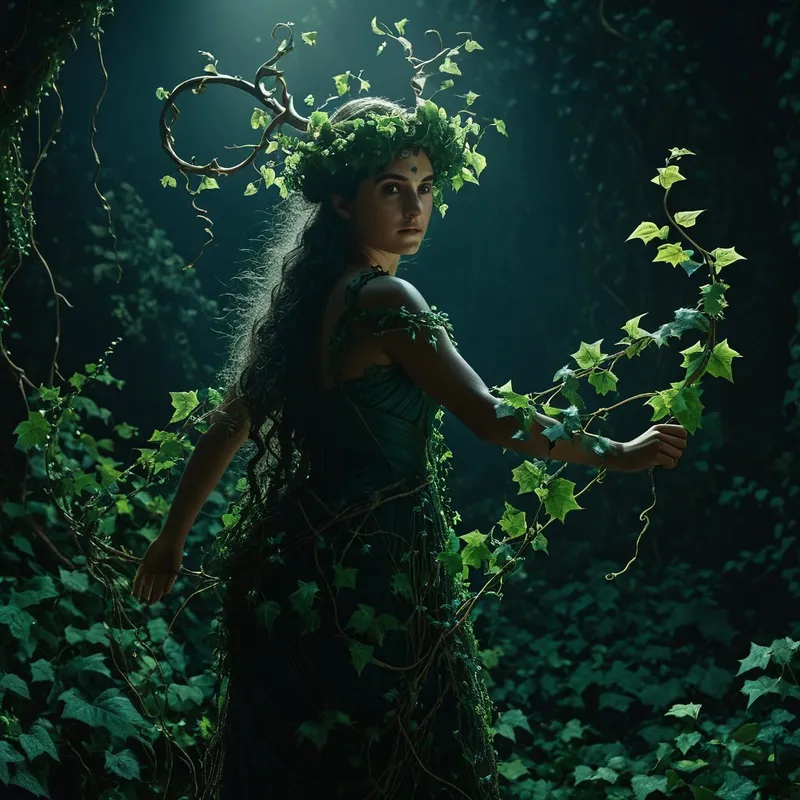
When this myth stirs in the modern dreamer, it often signals a profound pressure from the unconscious for liberation and expansion. The dreamer may find themselves in a chaotic crowd, moving with irresistible momentum, or wandering in a lush, overgrown forest where the rules of reality are suspended.
Somatically, this can correlate with feelings of restlessness, a sense of being "stuck" or overly controlled, or conversely, with surges of inexplicable energy or emotion. Psychologically, it marks the onset of what Carl Jung called an enantiodromia—the emergence of the unconscious opposite. The overly rigid, disciplined, or Apollonian conscious attitude is being invaded by its Dionysian counterpart. The dream is the inner thiasos knocking at the gates of the dreamer's personal Thebes. It is a call to acknowledge the wild, creative, ecstatic, and irrational dimensions of the self that have been exiled, often at great cost to one's vitality and wholeness.
Alchemical Translation
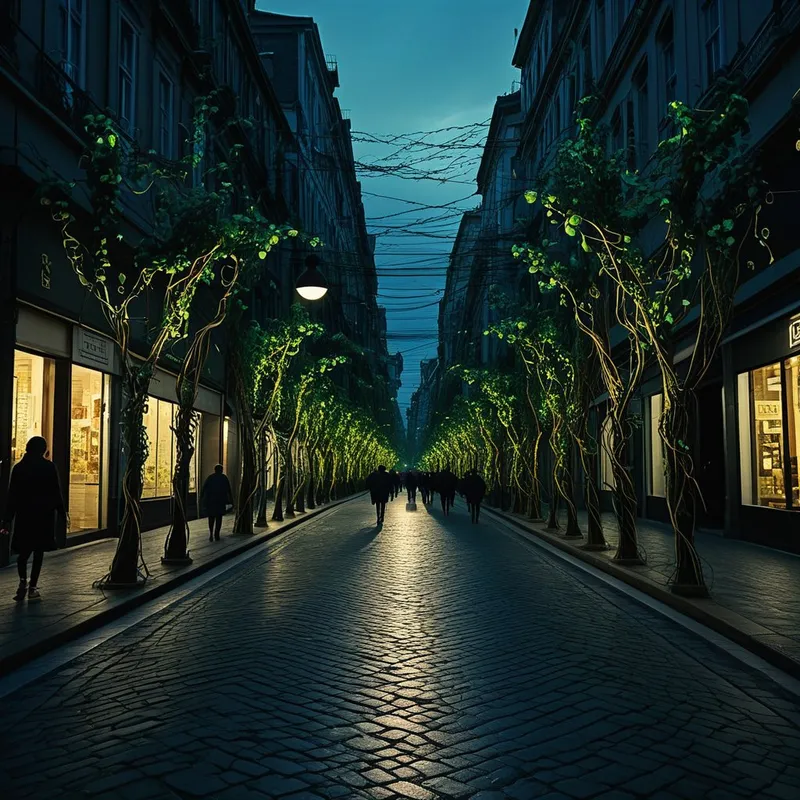
The alchemical journey mirrored in the Dionysian Procession is the solve et coagula—"dissolve and coagulate." The conscious personality (the city of Pentheus) must first be dissolved in the aqua vitae, the living water of emotion and instinct represented by the wine and the wild. This is a dangerous, potentially destructive phase—the nigredo or dark night of the soul. It feels like madness, loss of control, and the rending apart of one's familiar identity.
The goal of the procession is not permanent chaos, but the revelation that order and chaos, reason and ecstasy, are two faces of the same divine reality.
From this dissolution, a new, more expansive consciousness can coagulate. The individual who has courageously joined their own inner procession does not return as the same person. They return initiated. They have tasted the raw flesh of their own shadow and survived. They carry within them the memory of the thyrsus—the knowledge that true power is not domination, but the ability to channel the chaotic, creative life-force into form (art, relationship, meaningful work). They become more fluid, more resilient, more whole. They achieve a paradoxical individuation: a stable sense of self that is capable of ecstatic self-surrender, a personal identity that is porous to the transpersonal. They are, in the end, no longer just a citizen of the city, but also a devotee of the wild mountain.
Associated Symbols
Explore related symbols from the CaleaDream lexicon: