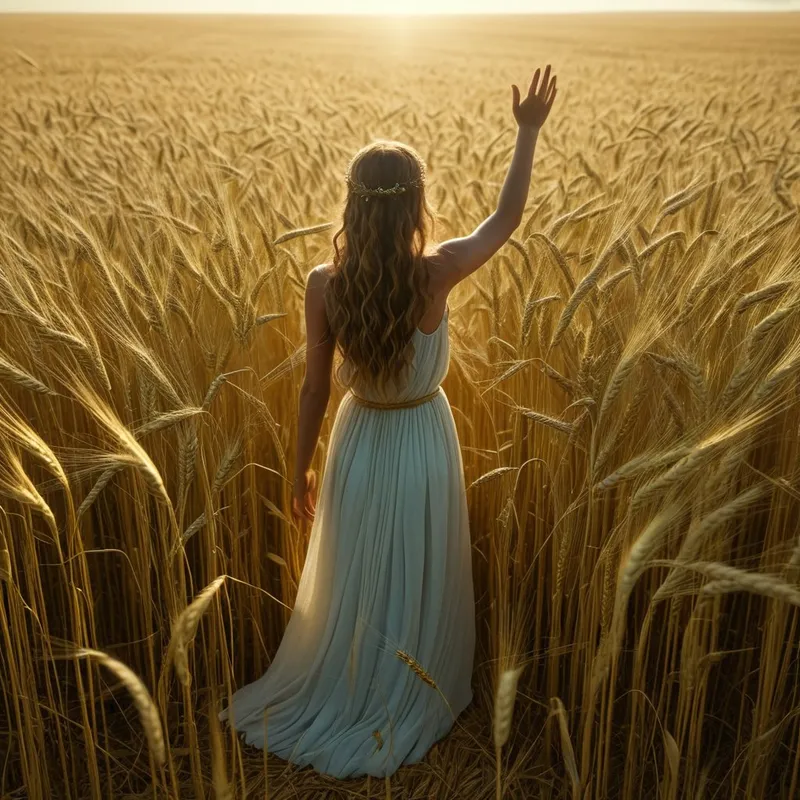
Demeter's Lost Rites Myth Meaning & Symbolism
A story of a goddess's world-stopping grief, a secret pact with mortals, and the sacred, transformative rites that were whispered but never fully written down.
The Tale of Demeter's Lost Rites
Hear now of the time the world grew cold, when the green heart of the earth ceased its beating. It began not with a war or a cataclysm of stone, but with a single, piercing cry—a mother’s cry that shattered the music of the seasons.
Demeter, she of the golden hair and the hands that coax life from the sleeping soil, walked the fields of Gaia. Her daughter, Persephone, was gathering flowers in a meadow where narcissus bloomed with a perfume meant to beguile gods. The earth then yawned wide. From the chasm rode Plouton in his chariot of jet, his hand closing around Persephone’s wrist. Her cry was swallowed by the closing earth. Only a torn girdle and scattered blossoms remained.
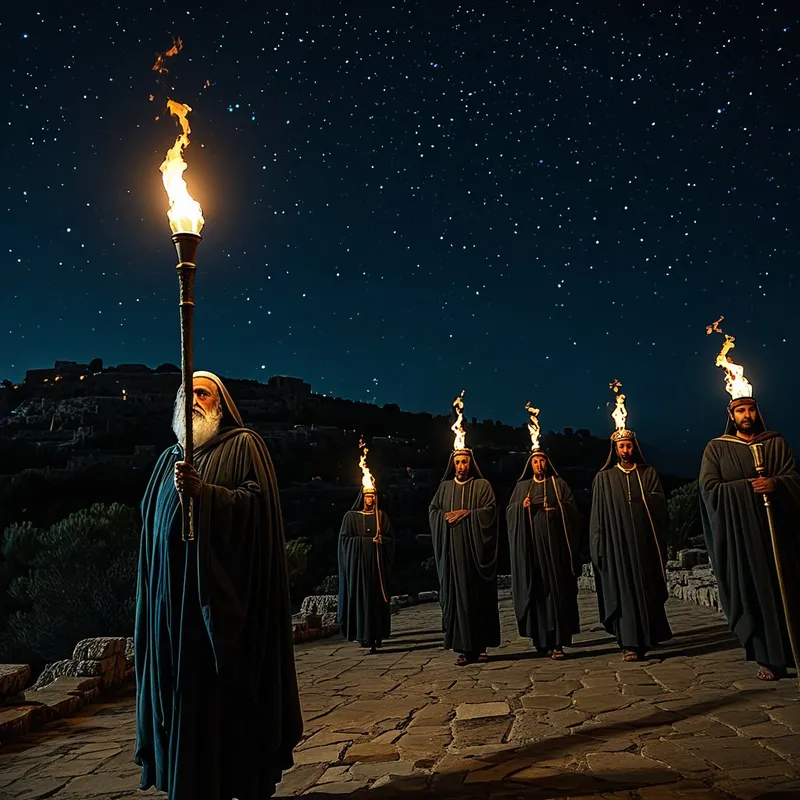
Demeter’s grief was a force of nature unto itself. She cast off her divinity like a glittering cloak and wandered the mortal world, a grieving crone cloaked in shadows. For nine days and nights, she neither ate nor drank, carrying twin torches that burned with a cold, desperate flame. The land mirrored her soul. Where her feet fell, grass withered. Vines turned to brittle threads. The soil hardened into iron, and a great famine seized the world. Mortals prayed to a silent sky; the gods themselves grew weak from lack of offering.
In her wandering, she came to Eleusis, disguised as an old woman named Doso. There, at the well, the daughters of King Celeus took pity on her. They brought her to their palace to nurse the infant prince, Demophoön. In the quiet of the royal hearth, a flicker of purpose returned to the goddess. By night, she held the child in the heart of the fire, anointing him with ambrosia to burn away his mortality and grant him eternal life. But the queen, Metaneira, screamed in terror at the sight. The spell was broken.
Revealing her terrible, glorious form, Demeter commanded the people of Eleusis to build her a great temple. And there, in her dark sanctuary, she sat. The great hunger of the world deepened. Finally, the king of the gods, Zeus, could bear the ruin no longer. He sent Hermes down to the sunless realms to parley with Hades. A pact was struck: because Persephone had eaten a few seeds of a pomegranate in the underworld, she must return there for part of each year. But for the rest, she could walk in the light.
When Persephone emerged, the very stones wept with joy. Demeter’s torch-flame warmed, and life surged back into the world. But before she restored the seasons fully, the goddess gathered the rulers of Eleusis. In the deep night, within the confines of her new temple, the Telesterion, she taught them. She showed them things unseen and spoke words unrecordable. She instituted the Eleusinian Mysteries—sacred rites, drómena (things done), and legómena (things said), performed for over two millennia. These were her gifts to mortals: a profound comfort, a glimpse beyond the veil of death, born directly from the raw material of her own unbearable loss. The rites flourished, yet their core, the direct transmission of the goddess’s secret, remained forever lost to the written word, whispered only from initiate to initiate in the sacred dark.
Cultural Origins & Context
The story is the heart of the Homeric Hymn to Demeter, composed around the 7th century BCE. This was not mere entertainment; it was the aition, the sacred founding story, for the most famous and enduring mystery cult of the ancient world: the Eleusinian Mysteries. For nearly two thousand years, from the archaic period through the Roman era, initiates from all walks of life—enslaved persons, aristocrats, philosophers like Plato and Cicero—made the pilgrimage from Athens to Eleusis to be inducted.
The myth was performed, not just read. It provided the narrative framework for the secret rituals held annually. The function was societal and profoundly personal. In a world without universal doctrines of an afterlife, the Mysteries offered euphemia (good hope) in the face of death. By re-enacting Demeter’s search, descent (symbolically), and joyful reunion, initiates underwent a psychological and spiritual transformation. They were shown something—a sacred object, a divine vision (epopteia)—that forever altered their understanding of life’s end. The myth and its rites served as a cultural container for the universal human experiences of grief, loss, and the yearning for continuity, binding the community together through a shared, awe-inspiring secret.
Symbolic Architecture
At its core, this is a myth of the Sacred Feminine in its triune form: the Maiden (Persephone), the Mother (Demeter), and the Crone (Demeter in her grief). The abduction is not merely a kidnapping but a necessary descent into the unconscious, the realm of Plouton (wealth), where latent aspects of the self are held.
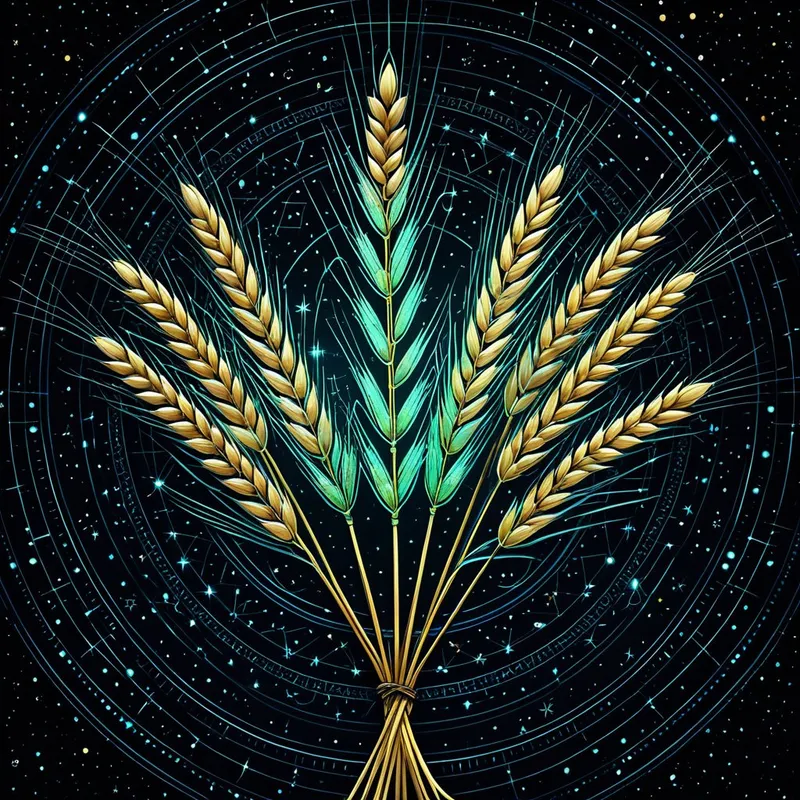
The grain must fall into the dark earth and die to itself to be reborn as the nourishing stalk. So too must the conscious self descend to integrate the shadow and return whole.
Demeter’s wrath, which withers the world, symbolizes how unprocessed, monumental grief can freeze the psyche, halting all growth and creativity. Her transformation into a nurse at Eleusis represents the redirecting of that potent life-force into a new, sacred purpose—from personal mourning to universal teaching. The pomegranate seeds are the indelible mark of the underworld experience; once tasted, one can never fully return to a state of naive innocence. The resulting cycle—six months of light, six of dark—becomes the ultimate symbol of natural and psychic law: life is inextricably woven with death, joy with sorrow, abundance with scarcity.
The Dreamer's Resonance
When this myth stirs in the modern dreamer, it often signals a profound encounter with the archetype of Hieros Gamos between consciousness and the deep unconscious. To dream of a lost child, a barren landscape, or a desperate search is not necessarily about literal motherhood, but about a vital part of the self that has been snatched away into the shadows—a creative spark, a sense of joy, a core identity.
The somatic experience is one of fallowness. The dreamer may feel listless, creatively blocked, or emotionally numb, mirroring Demeter’s frozen world. The appearance of liminal spaces—empty wells, thresholds, tunnels—points to the psyche preparing for a descent. A dream of being offered dark, seeded fruit (like a pomegranate) suggests the unconscious is presenting the terms for a necessary, if difficult, integration. This dream pattern is the psyche’s ritual enactment of a forced but ultimately transformative initiation into a deeper layer of being, often following a real-world loss, betrayal, or major life transition.
Alchemical Translation
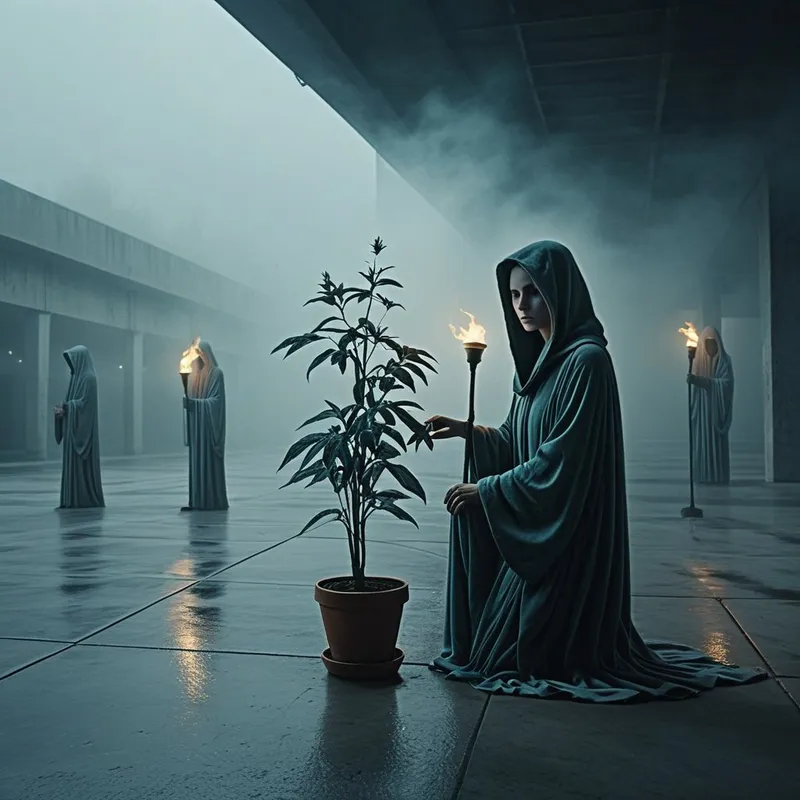
The alchemical journey of the myth maps perfectly onto the process of individuation. The initial state is nigredo—the blackening, the despair and barrenness of Demeter’s grief. This is a necessary dissolution of the old, naive self.
The wandering and disguise represent the albedo—the whitening, a period of reflection, humility, and encountering the “other” (the mortal family of Eleusis). Here, in service to another (nursing Demophoön), the goddess begins to transmute her personal pain into a universal principle. The failed attempt to immortalize the child is critical; it signifies that the goal is not to escape mortality (the human condition), but to find meaning within it.
The ultimate treasure revealed in the Mysteries was not a secret about the gods, but a revelation about the self: that within the mortal vessel lies an immortal spark, witnessed only in the confrontation with its opposite.
The establishment of the Mysteries is the rubedo—the reddening, the creation of the sacred vessel (the ritual) that can hold the paradoxical truth of life-in-death. For the modern individual, this translates to finding or creating one’s own “rites”—personal practices, art, relationships, or philosophies—that honor the full cycle of experience. It is the understanding that our deepest wounds, when fully metabolized, can become the source of our most sacred wisdom and our capacity to hold space for the suffering and transformation of others. We do not “get over” our Persephone moments; we learn to carry the pomegranate seeds within us, and in doing so, we become initiates in the eternal mystery of our own becoming.
Associated Symbols
Explore related symbols from the CaleaDream lexicon: