Daedalus and Icarus Myth Meaning & Symbolism
A master craftsman and his son escape a labyrinth with wings of wax, a soaring triumph shadowed by a fatal fall towards the sun.
The Tale of Daedalus and Icarus
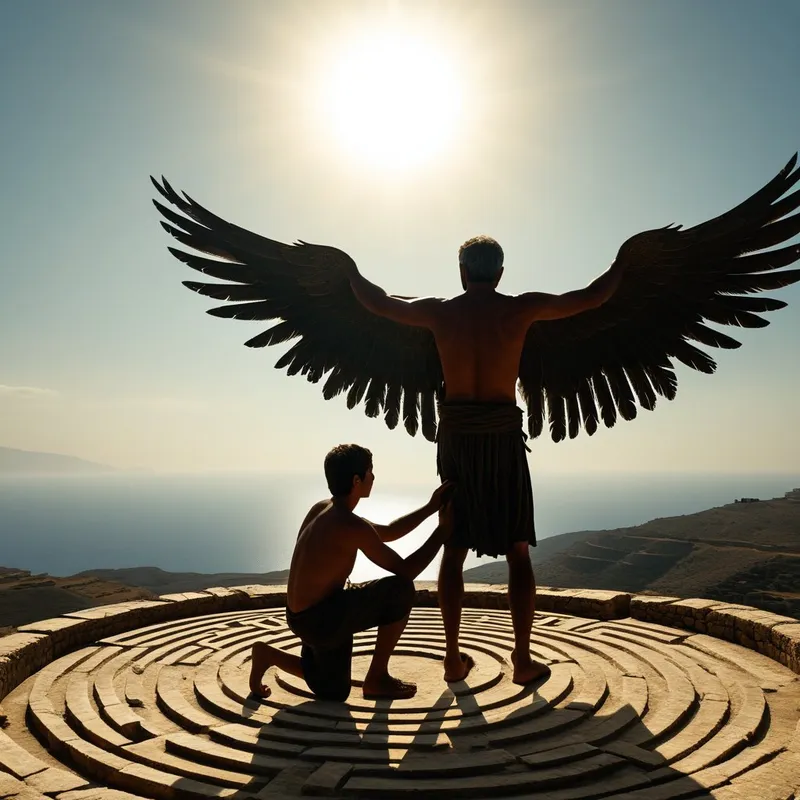
Hear now the tale of the man who dared to rival the gods with his hands, and of the boy who flew too close to their fire. It begins in the echoing stone halls of King Minos, beneath the shadow of a monstrous secret. Daedalus, the master artisan, his mind a labyrinth more intricate than any he could build, found himself a prisoner within his own greatest creation. The Labyrinth, a twisting prison of stone, held not only the bull-headed terror but also the genius who designed it. Minos, in his fury and fear, sealed the sea and land against escape. The sky alone remained unwatched.
Daedalus, his fingers stained with wax and his eyes measuring the flight of gulls, turned his genius upward. "Minos may control the earth and the waves," he mused to his young son, Icarus, "but he does not control the air." In a hidden chamber, the scent of melting beeswax and the down of plucked feathers filled the air. He crafted two great pairs of wings, binding feather to feather with cunning knots and careful layers of wax, creating a second nature—a fragile, glorious technology of escape. As he fastened the final wing to his son's shoulders, his voice was grave with the weight of prophecy. "Follow my path through the middle air, my son. Do not fly too low, lest the damp sea spray clog your wings and drag you down. But mark this above all: do not fly too high. The sun is the chariot of Helios. Its heat is a forge that will undo our work."
Then, with a running start from the highest parapet, the inventor and the boy became something new. The wind caught under their crafted pinions, and with a gasp that was both terror and ecstasy, they were aloft. The world shrank beneath them: the labyrinth became a child's puzzle etched in sand, the palace a toy, the sea a shimmering, endless plain. Daedalus led, a steady, beating rhythm against the vault of heaven. Icarus followed, and in his breast, a wild, expanding joy took root. The caution of his father became a distant murmur, drowned by the roar of the wind and the brilliant, all-consuming embrace of the sun. He soared higher, drunk on freedom, chasing the radiant warmth. He felt the wax on his shoulders grow soft, then warm, then liquid. A feather loosened, spiraled away. Then another. The great wings, his borrowed divinity, began to unravel.
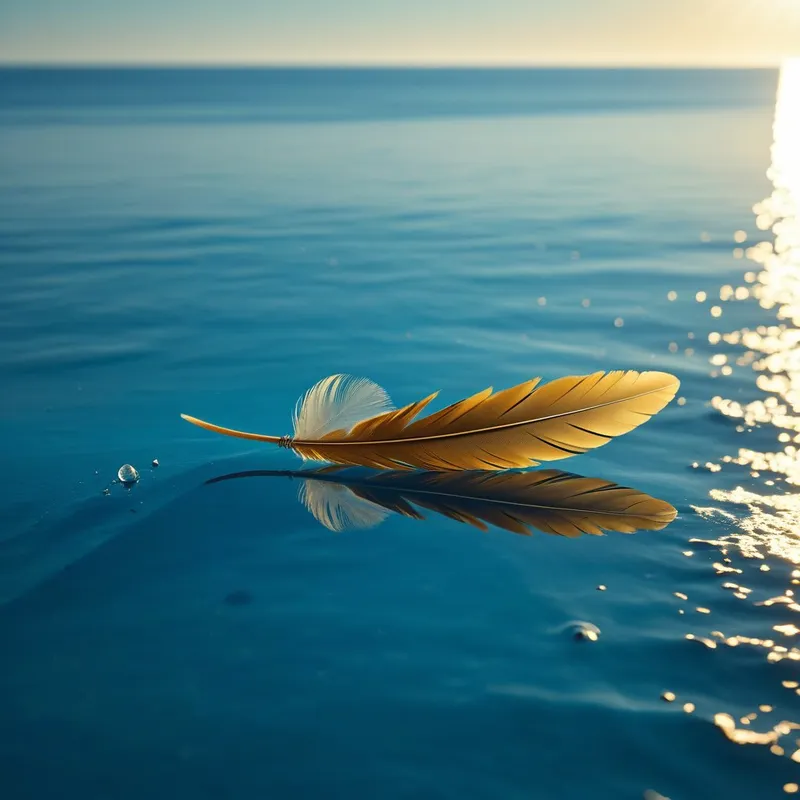
A cry—not of fear, but of sudden, shocking dissolution—pierced the sky. Daedalus turned to see his son not as a bird, but as a boy, tumbling through the empty, uncaring blue. The sea, that "indifferent azure" as the poets say, rushed up to meet him. There was no mighty splash, only a small, final punctuation in the vastness. Daedalus, the creator, landed on a distant shore, a broken man. He buried his son on an island now named Icaria, and hung his own wings in the temple of Apollo, an offering and a testament to a victory that was also an eternal loss.
Cultural Origins & Context
This haunting story reaches us from the corpus of Greco-Roman myth, most famously recorded in Ovid's Metamorphoses. It is a myth deeply embedded in the Hellenic worldview, which balanced profound admiration for human ingenuity (metis) with a sacred terror of overstepping divine boundaries (hubris). Daedalus himself is a complex figure, a archetypal technites whose creations—the Labyrinth, the animated statues, the wings—blur the line between mortal craft and god-like generation. The myth was not merely entertainment; it was a cultural cautionary tale told to illustrate the perilous price of innovation and the immutable laws of nature and the gods. It served as a narrative anchor in a society navigating the rapid advancements of engineering, art, and exploration, reminding citizens that every ascent contains the seed of a potential fall.
Symbolic Architecture
The myth is a perfect, tragic geometry of symbols. Daedalus represents the disciplined, brilliant intellect—the ego that seeks to solve problems and transcend limitations through craft and reason. Icarus is the untamed spirit, the youthful puer aeternus (eternal boy) driven by ecstasy, impulse, and the longing for unmediated experience.
The labyrinth is the complex, entrapping structure of our own psyche or circumstances, from which we must escape not by fighting the Minotaur, but by rising above it.
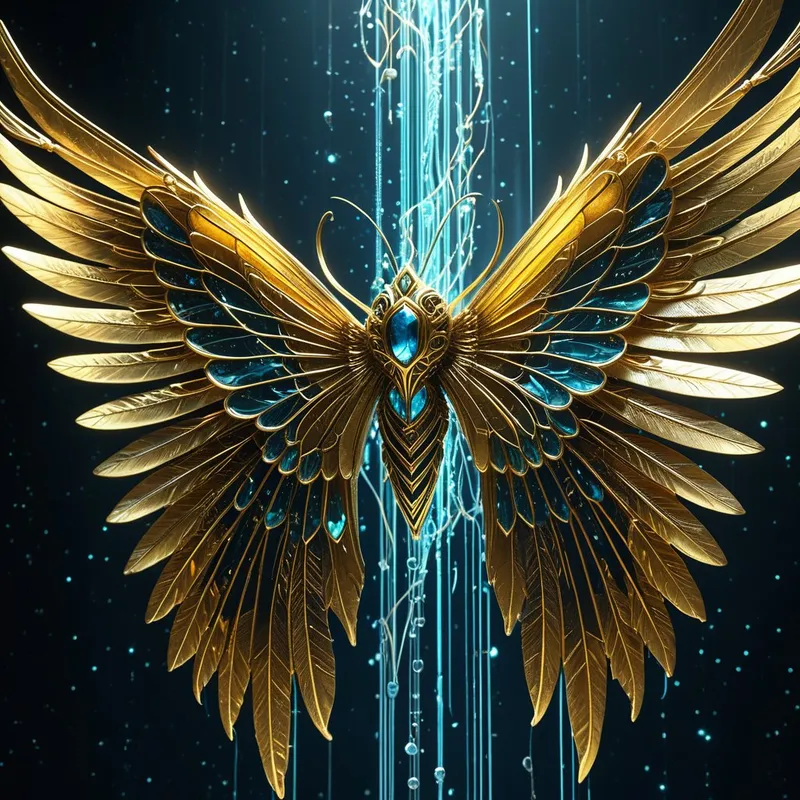
The wings are the sublime but fragile technology of aspiration—any tool, idea, or passion that elevates us beyond our natural state. They are made of nature (feathers) and human artifice (wax), a temporary fusion doomed to separate. The sun is not a villain, but an absolute. It represents the ultimate source—divine truth, blinding success, pure consciousness, or unintegrated libido—whose raw, unmediated power destroys the delicate constructs of the ego. The sea is the unconscious, the primal, watery realm of emotion and dissolution. The flight path itself is the critical symbol: the Middle Way. It is the path of individuation, requiring one to navigate between the chthonic pull of unconscious inertia (the sea) and the inflationary identification with the divine (the sun).
The Dreamer's Resonance
When this myth stirs in the modern dreamscape, it signals a psyche in the throes of a transformative, potentially perilous, ascent. To dream of crafting or wearing fragile wings speaks to a burgeoning creative project, a new identity, or a bold plan for escape from a confining "labyrinth" (a job, relationship, or mindset). The somatic feeling is often one of exhilarating lift, mixed with acute anxiety.
Dreaming of the fall itself, or of melting wax, is a profound corrective from the unconscious. It indicates that the dreamer's ambitions have become inflated; they are identifying too completely with a heroic or ideal image, ignoring practical limitations ("the father's warnings"). The fall is not a punishment, but a necessary de-integration, a humbling return to the human scale. It is the psyche's way of preventing a psychotic break from reality, enforcing a crucial grounding. The dream may leave one with the feeling of terror, but also with a strange sense of relief—the burden of unsustainable flight has been removed.
Alchemical Translation
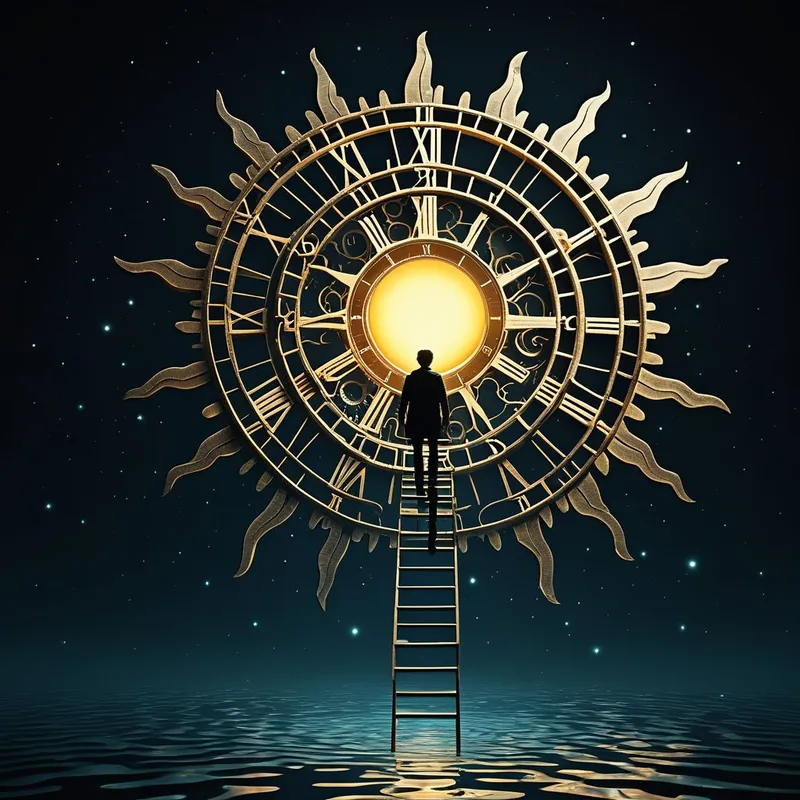
In the alchemical vessel of the soul, the myth of Daedalus and Icarus maps the stage of Sublimatio—the spiritual ascension. The base matter (the imprisoned self in the labyrinth) is heated by the fire of necessity and intellect (Daedalus's cunning) and attempts to rise in a purified, volatile form.
The goal of the opus is not to reach the sun, but to survive the flight—to integrate the soaring vision of the spirit with the grounding wisdom of the father.
Daedalus represents the senex (old wise man) principle that must guide the puer energy. A successful psychic transmutation requires that the "Icarus complex"—the addictive rush of unbounded possibility—be tempered by the disciplined, mournful wisdom Daedalus gains upon landing. The true triumph is not the flight alone, but the conscious bearing of its consequence. The individuated self is the one who, having dared to fly and witnessed the cost, can walk the earth with a heavier, wiser step. It hangs its wings in the temple, no longer as a tool for escape, but as a sacred relic of a lesson written in wax, feather, and sea. The labyrinth is not destroyed; it is seen from a new perspective, understood as a part of the landscape from which one has, painfully and imperfectly, been freed.
Associated Symbols
Explore related symbols from the CaleaDream lexicon: