
Crocus and Smilax Myth Meaning & Symbolism
A youth's love for a nymph leads to his transformation into a saffron crocus, a myth of desire's beautiful, tragic, and fragrant transmutation.
The Tale of Crocus and Smilax
Hear now a tale not of thunderous Zeus nor of wise-eyed Athena, but of the quiet, fierce magic that stirs in the sun-warmed soil and the green, twining shadows. It is a story of the borderlands, where mortal passion brushes against the cool, eternal skin of the wild.
In the deep, dappled groves of Arcadia, where light fell in shattered coins upon the moss, there lived a youth named Crocus. He was not a hero of famed lineage, but his beauty was of the earth itself—vibrant, fleeting, and utterly captivating. His laughter was the sound of a clear spring, and his form moved with the grace of a young sapling in the wind. And into this verdant world walked Smilax.
She was a nymph, a spirit of the wild places. Where Crocus was vivid and open, Smilax was elusive, a creature of hidden glades and tangled thickets. Some say she was a nymph of the bindweed, that tenacious vine that embraces and climbs, yet remains forever separate, anchored to its own secret life. When Crocus saw her, a fire was kindled in him that no mortal water could quench. He pursued her through the forests, his heart a drumbeat against his ribs, his offerings of wildflowers falling from heedless hands.
But the love of a mortal for a nymph is a dangerous alchemy. His ardor, so bright and consuming, was to her like the harsh noon sun to a creature of the dusk. His mortal need, his desperate, grasping love, felt heavy, a net where she desired only the freedom of the breeze through leaves. She enjoyed his company, perhaps was even amused by his devotion, but a nymph’s heart is a deep wood, and Crocus could only ever wander at its edge.
His passion became a torment. Each day, he grew more frantic, his vibrant spirit withering under the ache of unrequited longing. He would plead, compose verses that fell on her like autumn leaves, and follow her until even his strong limbs failed. Smilax, in turn, grew weary. The weight of his desire was a burden, a constant pull away from her essential, wild nature. What was a playful chase to her was a life-and-death pursuit to him. In her divine frustration, or perhaps in a moment of ruthless compassion, she acted. She could not return his love, but she could end his suffering.
Thus, she called upon the older powers of the earth, the ones that listen to the pleas of the wild spirits. Or perhaps it was the great goddess Hera, protector of sacred bonds and avenger of their disruption, who saw the imbalance and intervened. The stories whisper it both ways. The result was a transformation, a divine resolution to an impossible human pain.
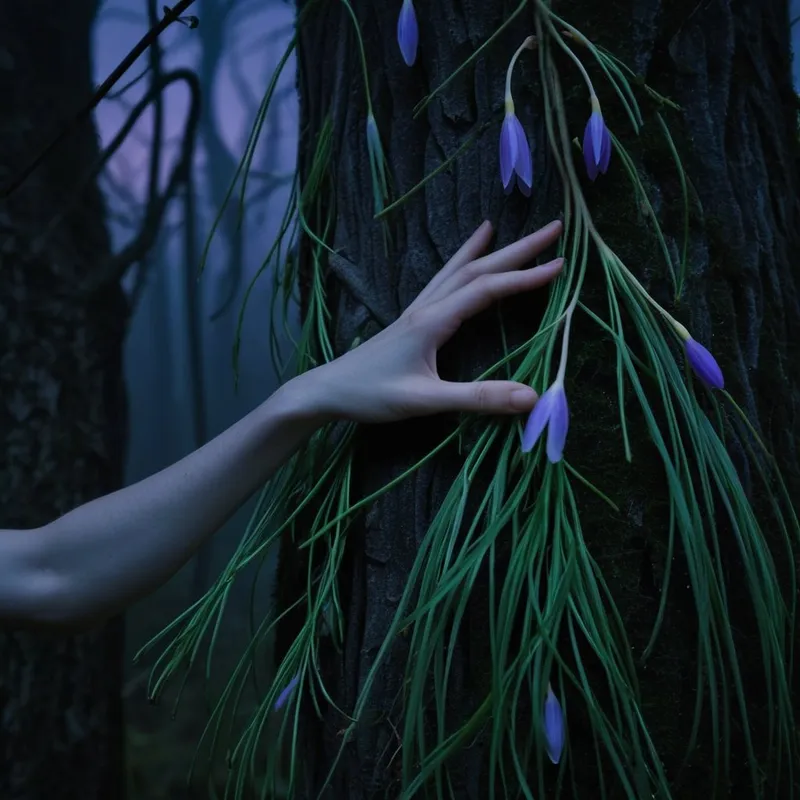
Where the youth Crocus had fallen to his knees in despair, his tears soaking the Arcadian soil, a new life burst forth. His mortal form dissolved, not into the gloom of Hades, but into the very essence of color and scent. From the ground sprang a delicate, cup-shaped flower of the most vivid purple, cradling within it three fiery, crimson stigmas—the last physical testament of his burning heart. He became the saffron crocus. And Smilax, too, was changed, receding fully into her nature, becoming forever the bindweed plant, Smilax, that twines but does not unite. The pursuer and the pursued, the lover and the beloved, were finally at peace, transformed into neighboring forms in the eternal tapestry of nature.
Cultural Origins & Context
This poignant myth survives not in the grand epics of Homer, but in the quieter, more botanical texts of the ancient world. Our primary source is the Alexipharmaca of Nicander, and later references in the work of the Roman poet Ovid. Its transmission is that of the natural historian and the poet, not the rhapsode. This places it within a rich tradition of “aitia” (αἴτια)—stories that explain the origins of flora, fauna, and natural phenomena.
In the Greek worldview, every whispering reed and towering oak could hold the essence of a transformed being. The myth of Crocus and Smilax functioned as an etiological tale, answering the question: “Why does this beautiful, fragrant flower exist alongside this clinging vine?” It rooted the landscape in narrative, making nature a book of frozen stories. Furthermore, it served as a cultural parable about the boundaries of desire and the consequences of loving that which is, by its very nature, untamable. It spoke to the Hellenistic understanding of the tragic gap between mortal yearning and divine reality, a gap that could only be bridged by a metamorphosis that transcended both states.
Symbolic Architecture
At its core, this is a myth of psychic boundaries and the alchemy of unfulfilled desire. Crocus represents the ego in a state of intense, singular longing—the force of human passion that seeks to possess, to merge, to make the Other into a fulfillment of the Self. His beauty makes his tragedy all the more acute; even a perfect form cannot compel love.
The unrequited longing of the soul is the crucible in which the base lead of obsession is transmuted into the gold of essence.
Smilax symbolizes the anima in its most autonomous, naturalistic form—not as a soul-guide, but as the wild, independent spirit of life that refuses to be captured or defined by another’s need. She is the objective psyche itself, which exists according to its own laws. The bindweed she becomes is a perfect symbol: it embraces, entangles, and appears to give itself, yet it remains a separate organism, ultimately following its own growth pattern.
The transformation is the key. It is not a punishment, but a profound resolution. Crocus does not die; he is translated. His burning, unmet desire is not extinguished but is distilled into its purest form: vibrant color, delicate form, and precious fragrance (saffron). His passion becomes creativity and beauty accessible to all. Smilax’s retreat into her vine is an integration, a return to her own authentic nature, free from the projection of another.

The Dreamer’s Resonance
When this myth stirs in the modern dreamer, it often manifests as dreams of chasing or being chased by an elusive, captivating figure through a dense forest or labyrinthine garden. The dreamer may feel a potent mix of yearning, frustration, and exquisite sadness. Somatic sensations might include a tightness in the chest (the burning heart), a feeling of being rooted to the spot, or the vivid, hyper-real perception of a particular color (often purple or gold).
Psychologically, this signals a confrontation with an “unattainable other.” This could be a literal person, but more often it is an inner figure—an ideal, a state of being, a creative inspiration, or a part of one’s own soul that feels just out of reach. The dream is mapping the tension between the ego’s desire to possess and the psyche’s inherent autonomy. The process underway is the beginning of a necessary sacrifice: the sacrifice of the ego’s demand for a specific outcome. The dream asks, “What must you stop chasing in order to let it transform into what it truly is—and in doing so, transform yourself?”
Alchemical Translation
The individuation process modeled here is that of sublimation in its deepest sense. The myth provides a map for dealing with life’s most painful “no”—the denied desire, the failed pursuit, the love that will not be as we wish it to be.
The first stage is the identification (Crocus’s all-consuming passion). The ego is fused with its object. The second is the confrontation with the autonomous other (Smilax’s refusal). This creates the nigredo, the darkening, the despair of unmet longing. The third and crucial stage is the divine intervention or the call from the Self—the transformative agent (here, the gods or Smilax’s own power). This is the alchemical fire.
The psyche’s ultimate creativity often springs not from wishes fulfilled, but from desires honorably dissolved.
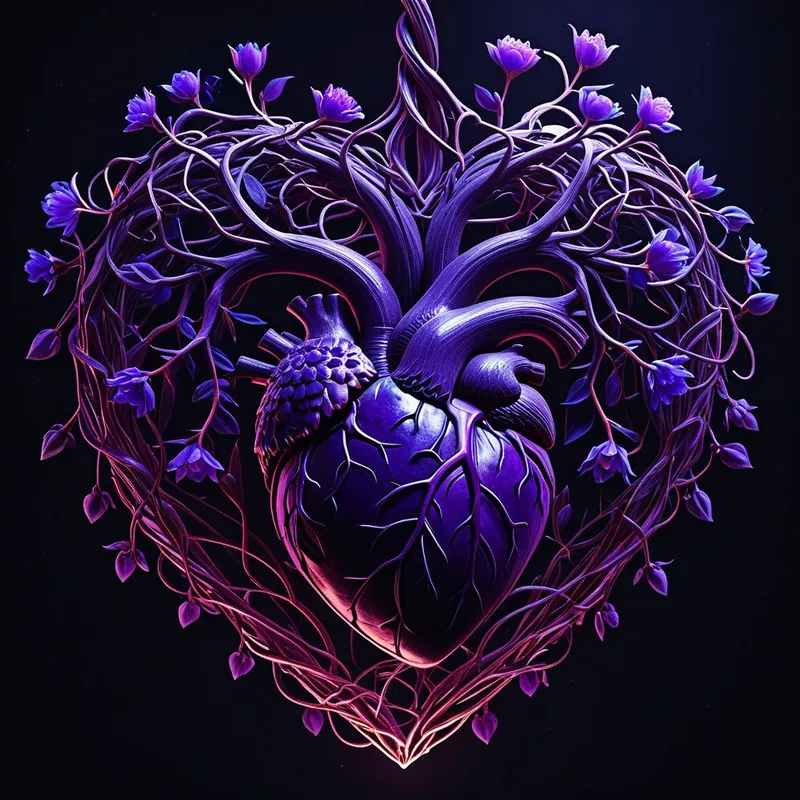
The final stage is transmutation. The ego’s specific, personal desire for possession (Crocus possessing Smilax) is sacrificed. In its place arises a universal value: beauty, art, fragrance, healing (the saffron crocus). The personal tragedy becomes a collective gift. The modern individual undergoing this process must ask: What in my life feels like this impossible, burning pursuit? Can I consent to its transformation? Can I allow that specific want to die, so that its essence can be reborn as a creative force that serves my soul and the world? The myth assures us that this is not a loss, but the only way to turn the lead of heartbreak into the gold of authentic being. We are not asked to abandon our passion, but to let it change form, from a chain that binds to a flower that blooms.
Associated Symbols
Explore related symbols from the CaleaDream lexicon: