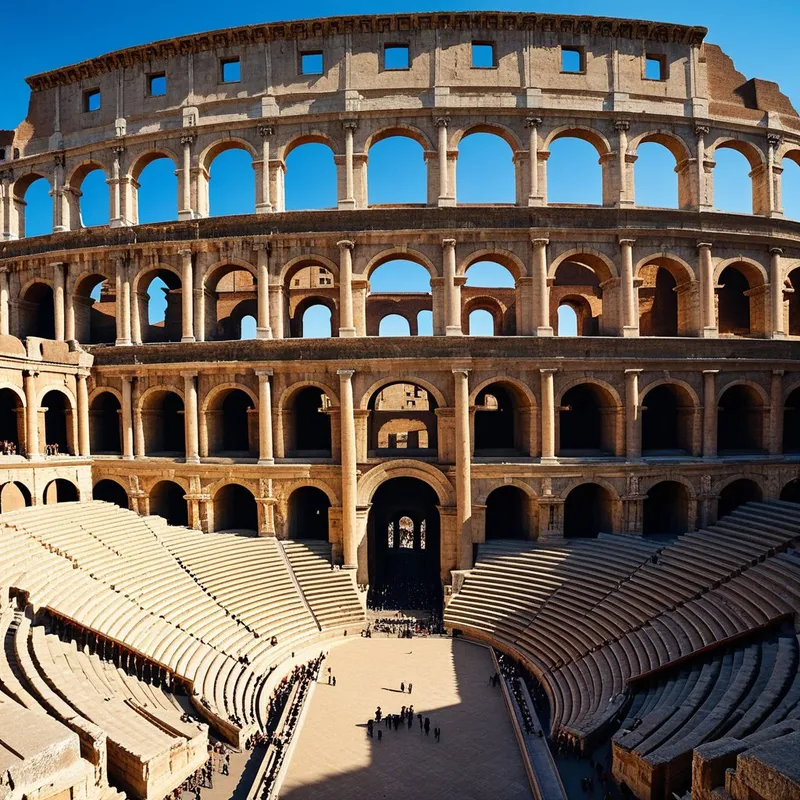
Colosseum Myth Meaning & Symbolism
The Flavian Amphitheatre, a stone heart where Rome enacted its myth of order through sacred violence, spectacle, and the sacrifice of the other.
The Tale of Colosseum
Hear now the song of the stone heart. It did not rise from the earth like a hill, but was born—a birth commanded by a Titus Flavius Vespasianus, who sought to bury the memory of a tyrant’s excess beneath a monument to the people. For ten years, the sweat of slaves and the genius of engineers was its midwife. They quarried the bones of the earth—travertine, tuff, brick—and bound them with a mortar stronger than fate. They raised not a temple to a single god, but a temple to the city itself, to its Genius, to its insatiable appetite for spectacle.
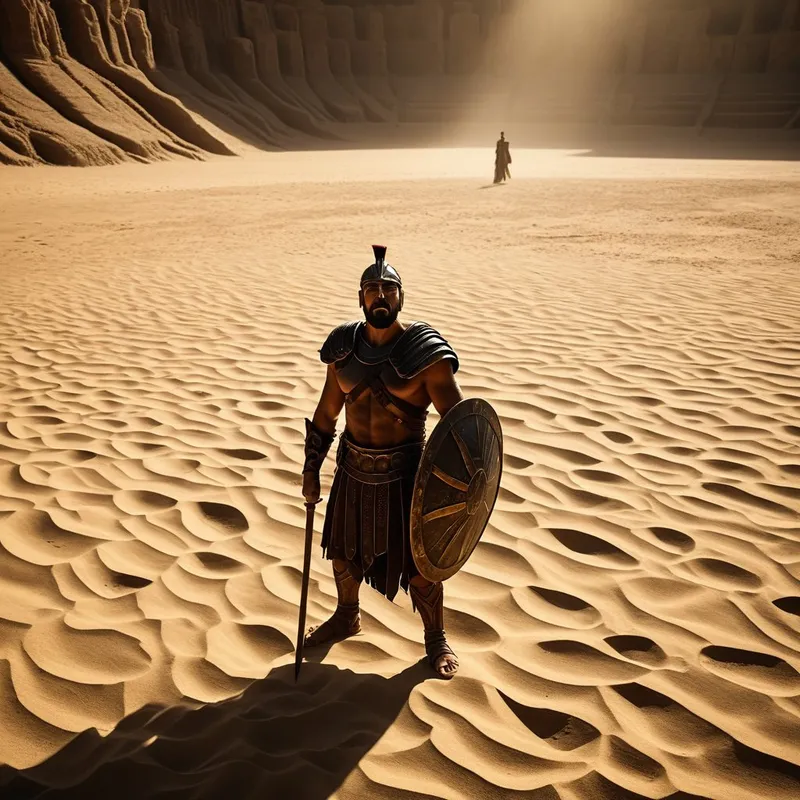
On its inaugural days, a hundred days of games, the air itself changed. The scent of incense from the morning’s pompa gave way to the iron tang of blood and the dry choke of dust. The sand, the harena, drank deeply. Here, the myth was not spoken but performed. The gladiator, the Samnis or the Retiarius, was not merely a man but an archetype made flesh—the barbarian, the fisherman, the hero, the condemned. His conflict was a sacred drama. The crowd’s roar was the voice of the Fates, a thunderous missio or a downward-turned thumb, the iugula.
Beasts from the edges of the known world—lions with sun-gold manes, bears from the northern forests—were paraded and slain in elaborate hunts, venationes, that re-enacted Rome’s dominion over chaotic nature. At noon, the farce of common criminals executed in mythological tableaux: a Laocoön torn by serpents, an Icarus falling from a scaffold. And beneath it all, a hidden world of tunnels—the hypogeum—where the machinery of spectacle groaned, where men and beasts awaited their turn in the light, where the myth was caged before its release.
The resolution was never peace, only the setting of the sun. The sand was raked smooth, the blood absorbed. The great velarium was furled. The stone heart beat on, silent until the next dawn, its elliptical embrace holding the echo of a hundred thousand breaths, a monument to the perpetual cycle of life offered for death, and order reaffirmed through sacred violence.
Cultural Origins & Context
The myth of the Colosseum is not preserved on papyrus but in its very stones and the meticulous records of its games. Its “story” was the lived experience of the Roman populace for nearly five centuries. Commissioned by Emperor Vespasian around 70-72 CE on the site of Nero’s despised private lake, its construction was a profound political and psychological act: returning land to the people and providing a new, centralized stage for the panem et circenses.
This myth was told by the state, through the editors who financed the games, and by the crowd itself, whose collective will dictated the narrative of each combat. Its societal function was multifaceted: it was a tool of social control, a demonstration of imperial power and beneficence, a religious ceremony that honored the gods and the imperial cult, and a brutal reinforcement of the Roman social order. The spectacle visually reiterated who was Roman (the audience in their stratified seating) and who was not (the condemned, the foreigner, the slave on the sand). It was a ritual of civic cohesion, binding the multitude through shared, cathartic violence.
Symbolic Architecture
The Colosseum is a vast, stone mandala of the Roman psyche. Its perfect ellipse is not a circle, representing a static heaven, but an elongated ring, mirroring the arena of life itself—dynamic, focused on a central conflict. The cavea, the seating, is a precise map of the Roman world order, from the ima cavea to the standing room for the poor.
The arena sand is the prima materia of the collective soul, upon which the drama of order versus chaos is eternally projected.
The gladiator symbolizes the ultimate paradox: the despised yet adored, the sacrificed yet immortalized. He is the sacer individual, whose ritualized death serves to purify and strengthen the community. The games themselves are a grand, terrifying metaphor for the Roman worldview: civilization (humanitas) is a thin veneer maintained by the constant, ritualized suppression of chaos (the wild beast, the foreign enemy, the criminal impulse). The hypogeum represents the collective shadow—all that is hidden, feared, and potent, which must be carefully managed and brought forth in a controlled manner lest it overwhelm the conscious order above.
The Dreamer's Resonance
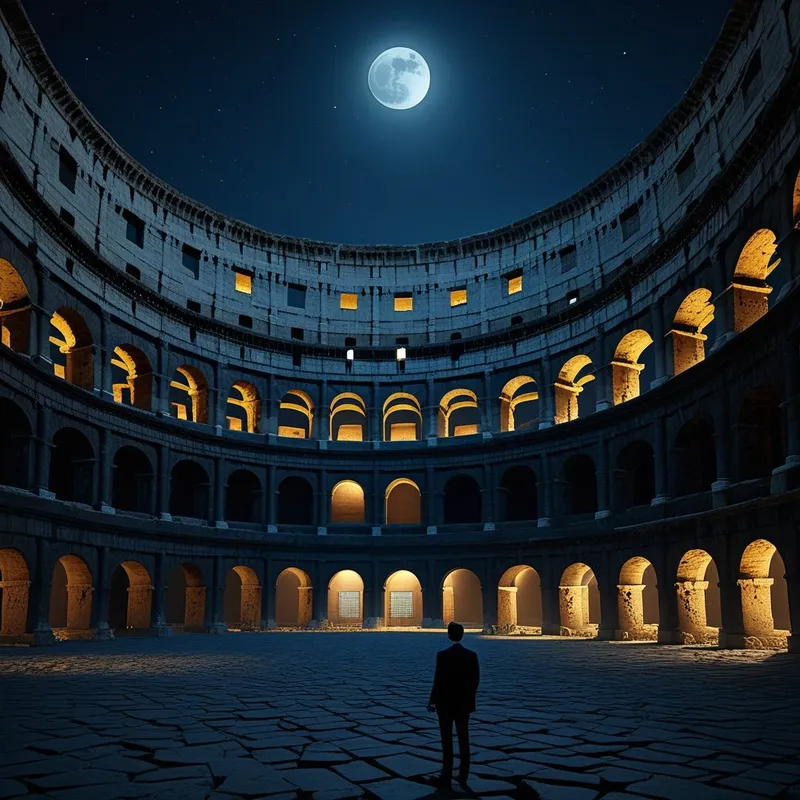
To dream of the Colosseum is to encounter the architecture of one’s own internalized spectacles and judgments. The dreamer may find themselves in the stands, part of a roaring, faceless crowd, complicit in a drama they cannot control—speaking to feelings of social pressure, loss of individuality, or fear of collective judgment. Alternatively, to be in the arena, alone on the vast sand, is to experience the somatic terror of exposure, of being the focal point of immense, critical attention—the ego feeling scrutinized by the unconscious totality of the Self.
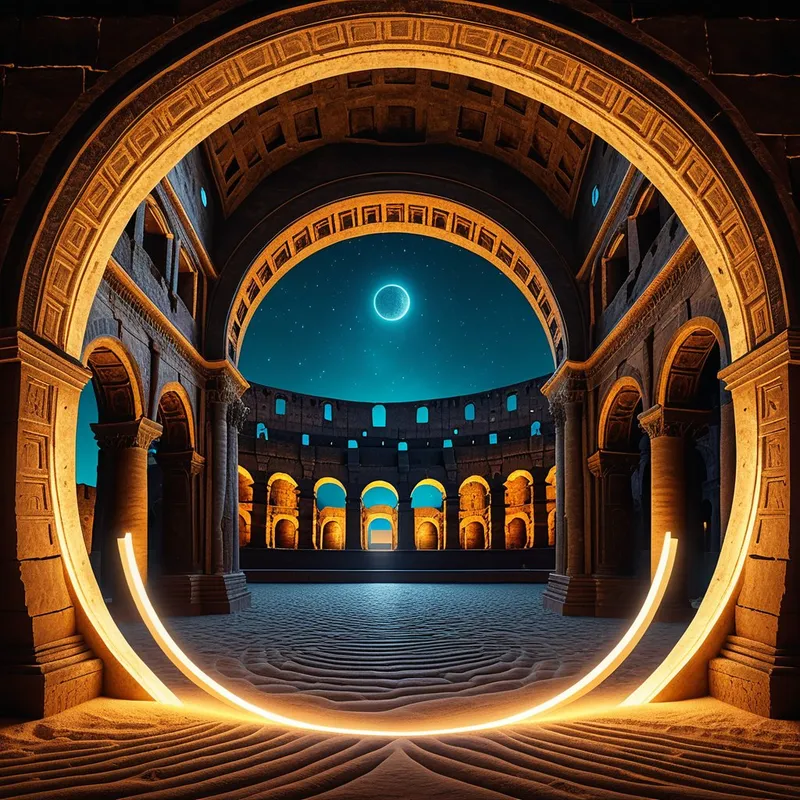
The dream Colosseum is often empty, a liminal space of crumbling arches. This points to a psychological structure—a pattern of conflict, performance, or defense—that is now obsolete but whose architecture still stands. The dream asks: What inner gladiators are still fighting old battles? What beasts from your personal shadow are still caged in the hypogeum of your psyche, awaiting a managed, yet potentially transformative, confrontation?
Alchemical Translation
The alchemical process modeled here is the mortificatio and separatio performed on a grand, collective scale, which the individual must internalize. The crude matter—the raw instincts, the foreign “otherness” within us, the chaotic emotions—is brought into the vas (the arena) of conscious awareness. It is not merely suppressed, but confronted in a ritualized space.
The goal is not the death of the instinct, but its sacred transformation through acknowledged conflict. The thumb turned downward is the ego’s harsh judgment that must be suspended.
The modern individuation journey mirrored here involves constructing a conscious, sacred space (one’s own moral and psychological framework) where inner conflicts can be staged and witnessed without immediate, destructive acting out. One must move from being solely a passive spectator in the stands of one’s own life to becoming the editor of the games—the conscious self that chooses which inner figures (the critical parent, the rebellious child, the ambitious hero) will engage, and with what intent. The ultimate triumph is not the victory of one part over another, but the integration of the vitality and truth each combatant represents, thereby transforming the bloody sand of internal civil war into the fertile ground of a more complete Self. The stone heart of the psyche learns to beat for the whole organism, not just for the triumph of the ruling faction.
Associated Symbols
Explore related symbols from the CaleaDream lexicon: