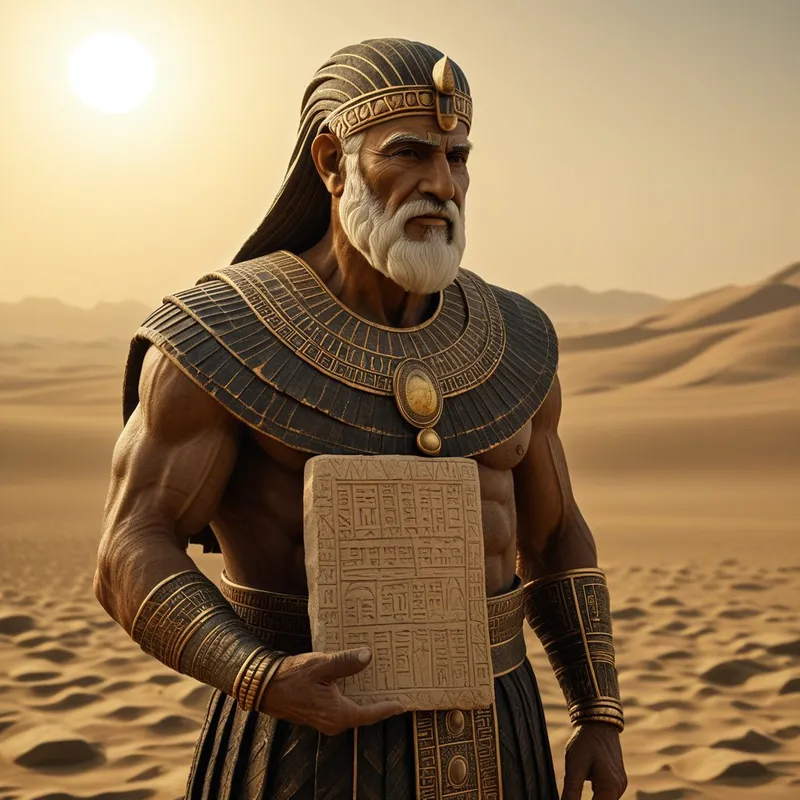
Clay Tablets of Gilgamesh Myth Meaning & Symbolism
A king's desperate quest for eternal life leads him to the ends of the earth, only to find that true immortality lies not in flesh, but in story.
The Tale of the Clay Tablets of Gilgamesh
Hear now the tale of the king who was two-thirds god and one-third man, a tale pressed into the very flesh of the earth. In the sun-baked city of Uruk, where the bricks were baked by the hands of gods and men, there ruled Gilgamesh. His strength shook the walls; his will bent the people. He was a storm given human form, and his city groaned under his boundless energy.
The gods heard the lament of Uruk. In their wisdom, they fashioned from clay a counterweight, a wild man named Enkidu. His hair was a thicket, his skin clothed only by the steppe. He drank with the gazelles and knew nothing of wall or king. But a trapper saw him, and a plan was woven. A priestess of Inanna was sent. She awakened Enkidu with her touch, and with her words, she tamed him. The animals fled from his new scent—the scent of civilization and longing.
Enkidu journeyed to Uruk, and he blocked the king’s path at the wedding house. They clashed like two bulls, shaking the very foundations. The earth trembled, dust filled the air, and in the shattering of a doorframe, a friendship was forged. Gilgamesh, the untamed king, found his mirror in the tamed wild man. Their restless energy now had a direction: glory. They ventured to the distant Cedar Forest, its scent a promise on the wind. There, they faced the guardian Humbaba, whose voice was a flood and whose face was a maze of intestines. Together, they slew him, and the silence that followed in the felled grove was colder than any battle cry.
Triumphant, they returned. The goddess Inanna saw Gilgamesh in his glory and desired him. She offered him the treasures of the world. But Gilgamesh, flush with the power of his bond with Enkidu, spurned her. His rejection was a mortal insult. In her wrath, Inanna sent the Bull of Heaven to ravage Uruk. Once more, the two friends stood together. They slaughtered the divine bull, and as its lifeblood soaked the soil, they laughed in the face of the gods.
Then, the silence returned. Not the silence of a forest, but the slow, creeping silence of a chamber. Enkidu fell ill. A fever born of divine retribution seized him. For twelve days, Gilgamesh watched the light fade from his friend’s eyes, felt the mighty hand grow cold in his own. When Enkidu’s last breath escaped, it took a part of Gilgamesh’s soul with it. The king who feared nothing was now haunted by a single, terrifying truth: This will be me.
Driven by a terror deeper than any demon, Gilgamesh cast off his royal robes. He wandered the wastes, his skin scoured by sand and grief, seeking Utnapishtim, the one man granted eternal life by the gods. He crossed the Mashu Mountains, traveled through absolute darkness, and sailed the Waters of Death. He found the ancient one, who told him of the great flood and the secret of the gods. As a test, Utnapishtim challenged Gilgamesh to stay awake for seven days. The exhausted king failed instantly, sleeping like the dead.
In pity, Utnapishtim’s wife urged her husband to give the broken king a gift. He told Gilgamesh of a plant that grew at the bottom of the sea, a plant that could restore youth. With desperate hope, Gilgamesh dove, retrieved the thorny plant, and began his journey home. He had it. The secret was in his hand. But stopping at a freshwater spring to bathe, he laid the plant on the shore. A serpent, drawn by its scent, slithered from the reeds, consumed the plant, and immediately shed its skin, reborn. Gilgamesh could only watch, weeping bitter tears, as the serpent swam away, possessing the immortality he had crossed the world to find.
Empty-handed, he returned to Uruk. He walked its mighty walls, built by his own command. And there, in the shadow of his own creation, he understood. He called for a scribe. He commanded that his story, his grief, his quest, and his failure, be inscribed on tablets of clay. He pressed his legacy into the earth, so that long after his name was dust, men would read of the king who sought life and found, instead, a story.
Cultural Origins & Context
This epic is humanity’s oldest surviving substantial literary work, originating in ancient Sumer around 2100 BCE. It was not a single, static text, but a living narrative that evolved over a millennium, told and retold across the Akkadian, Babylonian, and Assyrian empires. It was performed by skilled bards in royal courts and temple precincts, the rhythmic cadence of the poetry meant for the ear as much as the eye.
The story functioned as more than entertainment. It was a foundational text that explored the very parameters of Mesopotamian existence: the fraught relationship between humanity and the capricious gods, the duties of kingship, the wildness of nature versus the order of the city, and, most profoundly, the human condition defined by mortality. Gilgamesh’s journey from a tyrannical, restless ruler to a wise, albeit sorrowful, one provided a model for leadership and introspection. The clay tablets themselves were not mere paper; they were durable artifacts, meant to endure, ensuring that the king’s name and the civilization’s deepest questions would literally be built into the fabric of their world.
Symbolic Architecture
At its core, the epic is a profound map of the psyche’s confrontation with its own limits. Gilgamesh begins as pure, undirected Ego, a force of nature that must be tempered. Enkidu represents the instinctual, natural Shadow—not evil, but untamed potential. Their battle and subsequent union symbolize the essential, often violent, integration of the conscious self with the unconscious other, a process that creates a whole person capable of great deeds.
The greatest heroism is not in slaying the monster abroad, but in facing the void within.
The quest for the plant of immortality is the ultimate spiritual bypass—a desperate attempt by the ego to avoid the central, non-negotiable fact of existence: decay and death. The serpent, an ancient symbol of cyclical renewal, does not steal the plant out of malice. It embodies the very principle Gilgamesh seeks to possess. It shows that immortality is not a property to be owned by the individual ego, but a process belonging to the timeless, instinctual world. Gilgamesh’s failure is his initiation into true wisdom.
The Dreamer's Resonance
When this myth stirs in the modern dreamer, it often signals a profound somatic and psychological reckoning with loss and limitation. To dream of desperately searching for a lost, precious object (the plant), only to have it consumed or transformed, speaks to the grief of a fading opportunity, the end of a relationship, or the confrontation with aging. The dreamer may feel the raw, animal panic of Gilgamesh in the wilderness—the terror of meaninglessness that follows a shattered identity, often one built on strength, success, or a crucial partnership.
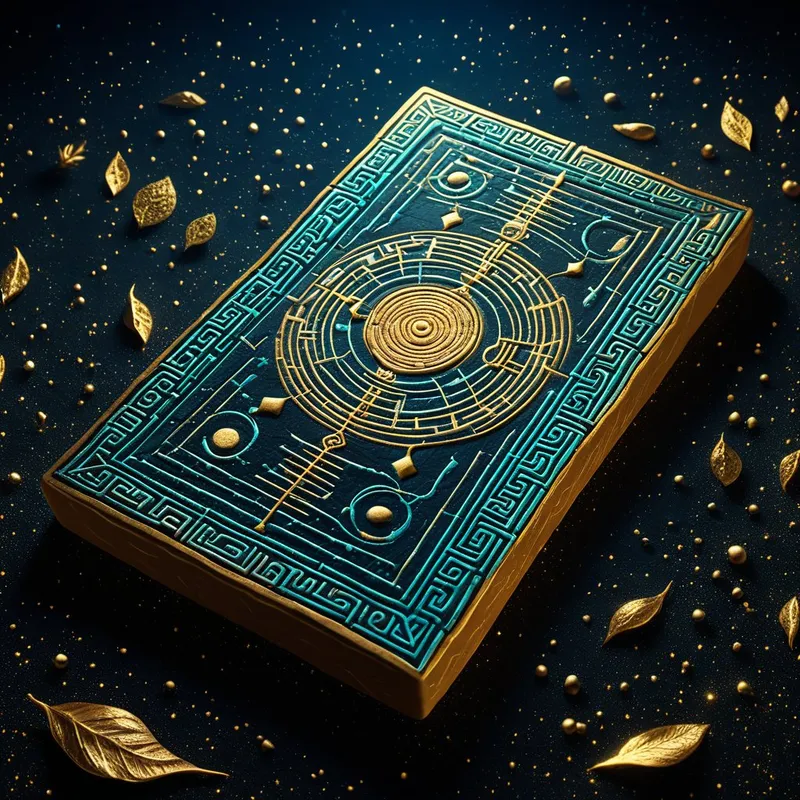
Dreams of ancient, crumbling tablets with unreadable text reflect anxiety about legacy and the fear that one’s life’s work will be forgotten or misunderstood. The somatic experience is one of heaviness, of carrying a weight (like clay tablets) that is both precious and burdensome. This is the psyche working through the dissolution of the ego’s grand projects, initiating a necessary, if painful, descent from a heroic self-image into a more human, vulnerable state.
Alchemical Translation
The alchemical journey of the epic mirrors the process of Individuation. Gilgamesh begins in the nigredo, the blackening: his tyrannical rule and his crushing grief over Enkidu represent a state of chaotic, suffering ego-consciousness. His frantic quest is the albedo, the whitening—a misguided attempt to purify and escape this darkness by achieving an impossible, spiritual perfection (immortality).
His failure at the spring is the crucial rubedo, the reddening. It is not a triumph of the will, but a surrender to reality. He weeps. In that moment of absolute defeat, the psychic metal is forged. The ego’s project of eternal self-preservation dies, and a new consciousness is born.
The alchemical gold is not eternal life for the body, but the creation of a soul that can contemplate its own end.
He returns to Uruk, not as a triumphant hero, but as a witness. His command to inscribe his story on clay is the ultimate act of psychic transmutation. He translates his raw, personal experience of loss and failure into a lasting, communal form—story. This is the true immortality: the conscious integration of one’s life, with all its folly and beauty, into the great human narrative. The individual ego dissolves, but in doing so, it contributes its unique verse to the eternal epic of what it means to be human. The quest ends where it began, at the walls of the city, but the man who looks upon them is now a vessel of hard-won wisdom, his legacy no longer in a magical plant, but in the enduring, fragile clay of shared meaning.
Associated Symbols
Explore related symbols from the CaleaDream lexicon: