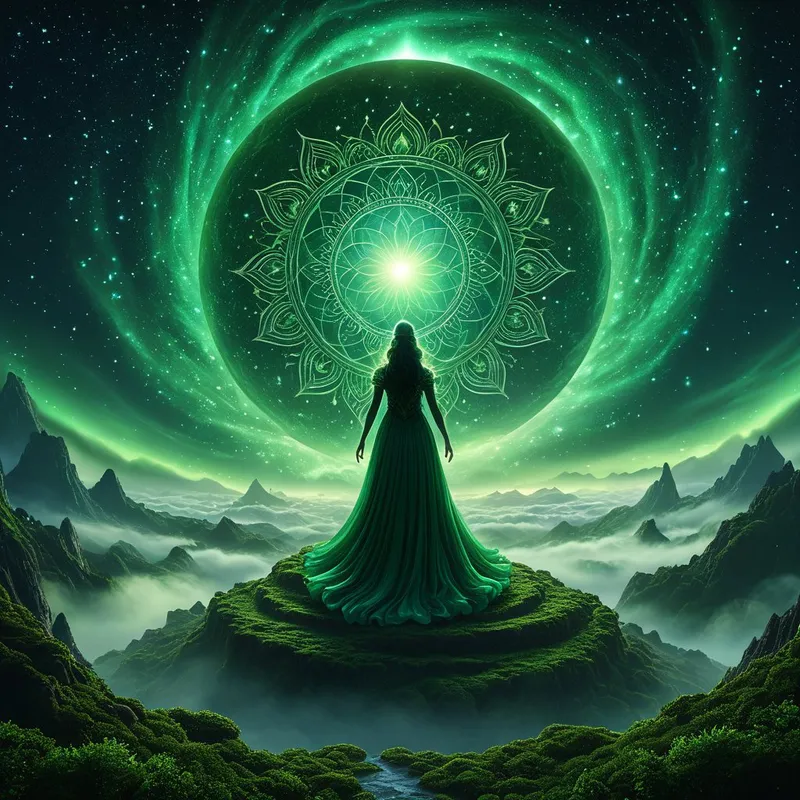
Classical Elements Myth Meaning & Symbolism
A story of order wrested from chaos, where the four fundamental elements—Earth, Water, Air, and Fire—are born from the void, forming the world's foundation.
The Tale of Classical Elements
Listen. Before the sun knew its path, before the moon learned to wane, there was only Chaos—a yawning, formless, breathless gap. It was not emptiness, but a seething potential, a womb of shadows and whispers. From this abyss, without mother or father, emerged the first great powers. Gaia came, broad-bosomed and steadfast, the forever foundation. From the same dark broth rose Tartarus, the pit of dread, and Eros, the force that makes all things yearn for union.
But Gaia was alone in the dark. So, from her own boundless being, she bore Ouranos. He was vast and glittering, and he covered her completely, a lover and a cage. Their union was fertile, terrifying. They gave birth to the Titans, twelve colossal beings of mountain and ocean. They bore the three Hekatoncheires, whose strength was earthquake and avalanche, and the three Cyclopes, forgers of thunder.
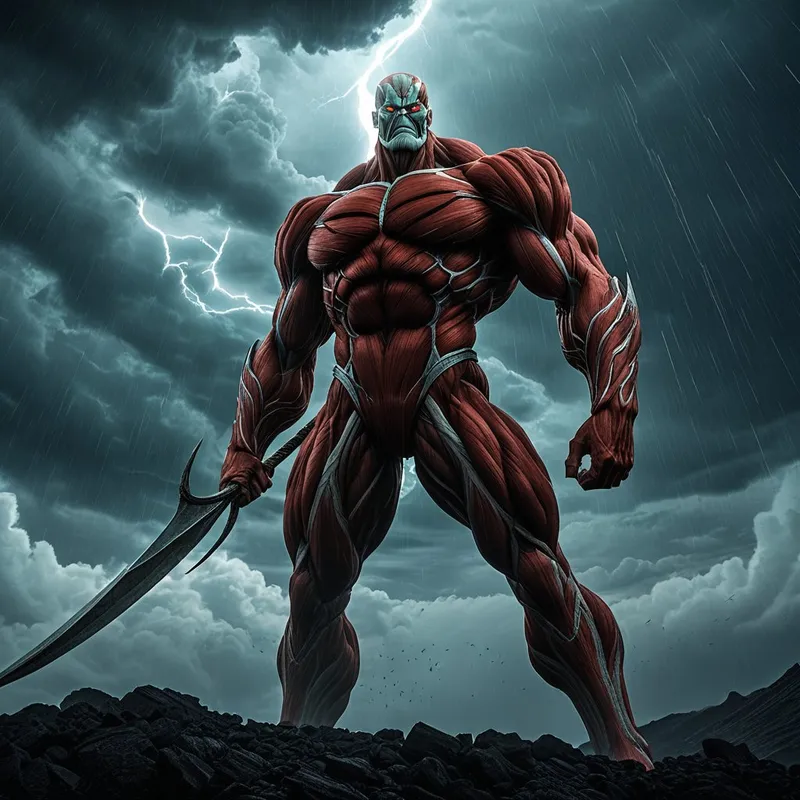
Ouranos looked upon his children, especially the monstrous ones, and felt not pride, but fear. He hated them. As each was born, he pushed them back, deep into the body of Gaia, into her secret, suffocating hollows. The Earth groaned under the weight of this injustice, her children trapped within her. The pain became a plan. From her own stone, she fashioned a great, jagged, grey adamantine sickle.
She offered it to her Titan children. "Who will free me from this torment? Who will check the cruelty of your father?" Only the youngest, Kronos, sharp-witted and ambitious, had the courage. He took the sickle. That night, when Ouranos descended upon Gaia in his starry embrace, Kronos struck. With a terrible, sweeping arc, he severed the Sky from the Earth. Ouranos reeled back, wounded, forever fixed aloft. From the blood that fell upon Gaia, new forms sprang: the fierce Erinyes, the sturdy Meliae, and the race of Giants.
But in that violent separation, a space was made. A cosmos was carved from the chaos. Into this new-born world, the elements found their stations. From Gaia’s body came the solid, enduring Ge. From the bleeding wound of Ouranos, the rains fell, and the seas gathered, forming Hydor. The breath of the gap between them became the rushing, invisible Aer. And from the lightning forged by the Cyclopes, stolen later by Prometheus, came the brilliant, transformative Py. Order was born of a brutal, necessary cut. The world, with its four pillars of being, could now begin.
Cultural Origins & Context
This cosmogonic narrative is not a single story from one scroll, but a tapestry woven from fragments, primarily from Hesiod’s Theogony (c. 700 BCE). Hesiod, a poet claiming the authority of the Muses themselves, systematized the divine genealogies for a Greek world seeking to understand its place in the universe. This myth was not mere entertainment; it was a foundational ontology, a way of explaining how the perceived reality—land, sea, sky, and the sun’s heat—came to be from an incomprehensible nothingness.
It functioned as both a religious doctrine and a philosophical precursor. The tale was passed down through epic poetry, performed at festivals and in the courts of the aristocracy. It served to legitimize the patriarchal Olympian order (Zeus, son of Kronos) by detailing the violent, necessary transitions of power that led to his rule. More deeply, it answered the human need for a beginning, establishing a cosmos where chaos (disorder) was the enemy and cosmos (ordered beauty) was the divine ideal. The elements were not just physical substances but divine principles, the very architecture of a knowable world.
Symbolic Architecture
The myth is a profound allegory for the birth of consciousness and differentiation. Chaos represents the undifferentiated unconscious—the state of the infant, or the psyche before analysis, where all potentials and terrors swim together without boundary.
The first act of creation is not gentle formation, but a violent separation. Consciousness itself is born from a cut that divides the world into knowable pairs: above and below, self and other, solid and void.
Gaia symbolizes the emergent Self, the first solid ground of identity and the physical body. Ouranos is the overwhelming "Other," the encompassing world of ideals, laws, and the collective. Their suffocating union is the primal, unconscious identification where the self has no autonomy. The castrating sickle of Kronos is the necessary, ruthless act of differentiation—the adolescent rebellion, the psychological separation from the parental complex that, while traumatic, creates the psychic space for individual life. The four Classical Elements that arise are the fundamental modes of this new conscious existence: the body (Earth), emotion (Water), thought (Air), and will or spirit (Fire).
The Dreamer's Resonance
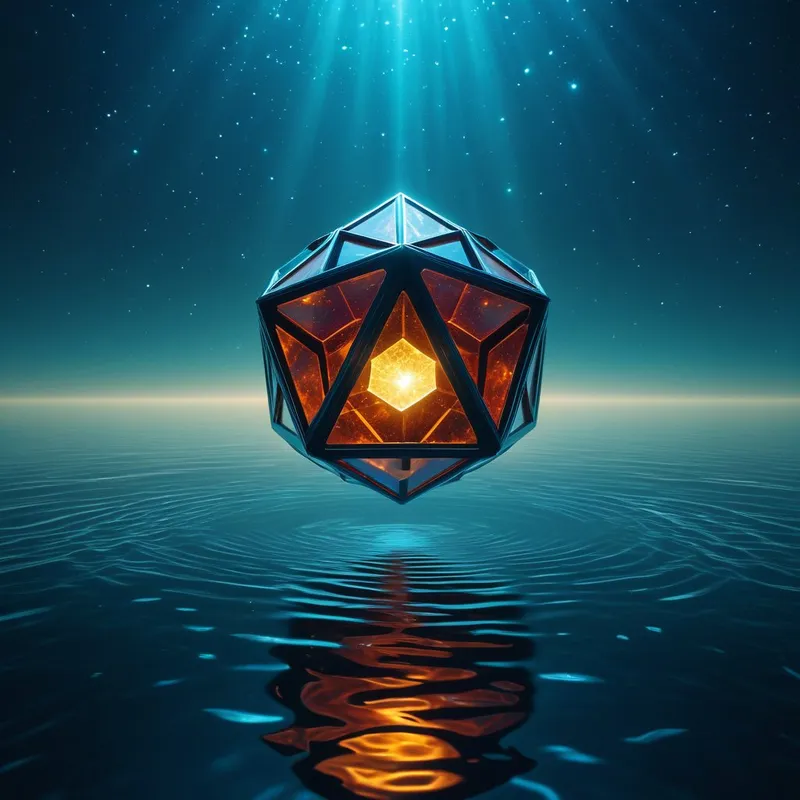
When this myth stirs in the modern unconscious, it often manifests in dreams of foundational upheaval. Dreaming of vast, formless voids or featureless landscapes points to a confrontation with one’s personal Chaos—a life transition, a loss of identity, or a deep creative block where nothing has yet taken shape.
Dreams of being trapped or smothered, perhaps under earth or water, echo Gaia’s burden, reflecting a feeling of being constrained by external expectations (an Ouranos complex) or by one’s own unexpressed potentials. The dream-image of a sharp tool—a blade, a scythe, a shard of glass—can signal the psyche preparing for the “Kronian cut,” a necessary but frightening act of severance from a job, relationship, or outdated self-concept. Finally, dreams where the classical elements appear in pure, distinct forms—standing on unshakeable rock, drinking from a clear spring, breathing impossibly clean air, or tending a small, vital flame—indicate the somatic process of re-establishing inner order. The psyche is actively differentiating its core components, seeking a new, stable equilibrium after a period of dissolution or crisis.
Alchemical Translation
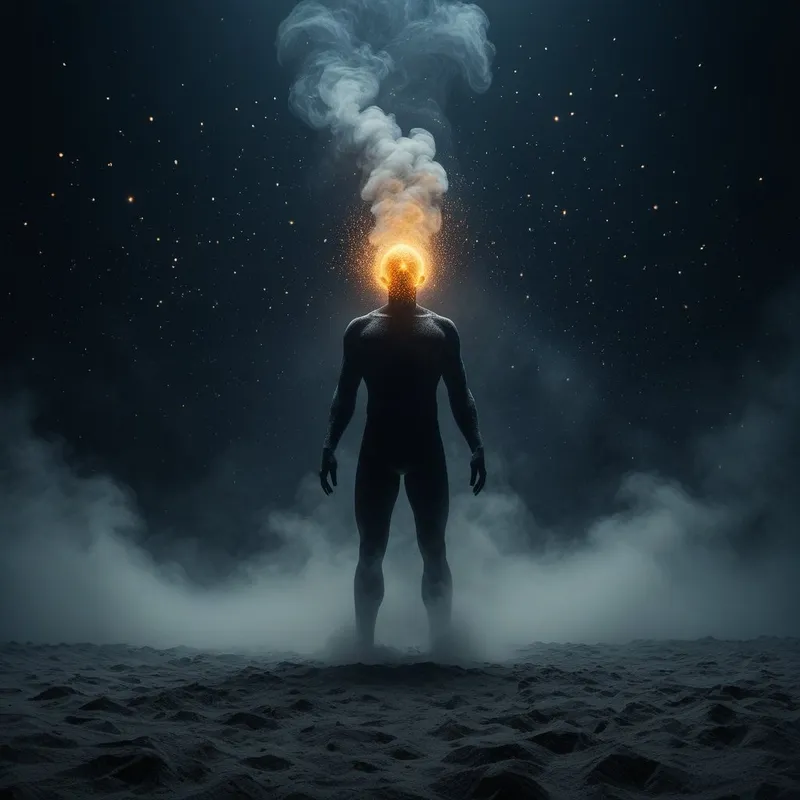
The journey from Chaos to Cosmos is the blueprint for individuation. The alchemical work begins in the massa confusa, the chaotic prima materia of our unlived life and unresolved complexes. The first, terrifying step is to endure this formlessness without fleeing into old, suffocating identities (the Gaia-Ouranos union).
The philosopher’s stone is not found, but forged in the space created by courageous severance. One must become both Gaia and Kronos: the ground that feels the pain and the will that makes the cut.
The “sickle” is the application of conscious analysis—therapy, introspection, artistic expression—that separates what is truly Self from what is internalized Other (parental voices, societal demands). This act feels like a crime against nature, a betrayal, and it carries guilt (the birth of the Erinyes, or our inner critics). Yet, from this wound, the elemental powers of the psyche are liberated. The work of integration is to become the adept who masters all four: to have the stability of Earth (groundedness in the body), the fluidity of Water (access to emotion), the clarity of Air (objective thought), and the transformative power of Fire (passionate will). The goal is not to return to Chaos, but to build a conscious Cosmos within—a personal universe where the elements, once born of conflict, now dance in a balanced, sacred harmony. The myth ends where our inner work begins: with a world now capable of holding life.
Associated Symbols
Explore related symbols from the CaleaDream lexicon: