Chinggis Khan's Origin Myth Meaning & Symbolism
A myth of celestial origin, where a divine wolf and doe descend from the sky to birth a lineage, culminating in the destined world-ruler, Chinggis Khan.
The Tale of Chinggis Khan's Origin
Listen, and let the wind of the high steppe carry you back. Before the thunder of ten thousand hooves, before the empire that stretched from sunrise to sunset, there was a silence. It was the silence of the Tengri, a deep, watchful blue arching over the bare bones of the earth. From this vault, in the time when the world was young and patterns were being set into the stone of fate, came the first ancestors.
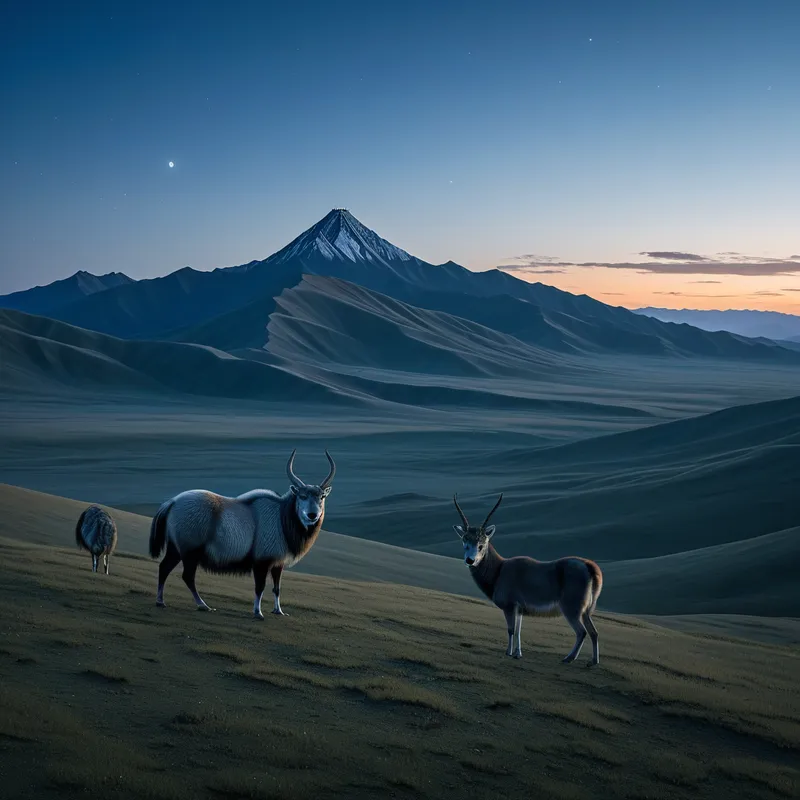
They descended on a beam of light, or perhaps on the last sigh of a dying star—a great blue-grey wolf, his pelt the color of a storm cloud at dusk, his eyes holding the cold fire of the northern star. His name was Börte Chino. Beside him came a fallow doe, as graceful as a sapling in spring, her coat the warm hue of sunlit earth, her gaze gentle yet unyielding as the enduring hills. She was Gua Maral.
They crossed the vast salt waters, not by swimming, but by following a path laid down by destiny itself, arriving at the source of all rivers, the navel of the world: the sacred mountain Burqan Qaldun. Here, in a valley cradled by the mountain’s slopes, where the grass was sweet and the springs ran clear, they made their home. The wolf, embodying the fierce spirit of the hunt, the strategic mind, and the unbreakable will of the pack. The doe, embodying the fertility of the land, the nurturing heart, and the swift, sure-footed wisdom of survival. From their union sprang a people.
Generations flowed like the Onon River. The lineage of the wolf and the doe carried the celestial mandate in their blood. It flowed through chiefs and warriors, sometimes strong, sometimes faint, but never extinguished. Then came a time of scattering, of petty strife, where the wolf’s howl was fractured and the doe’s path was obscured by dust.
Until a child was born, clutching in his tiny fist a clot of blood the size of a knucklebone, dark and glistening like a piece of the night sky made solid. He was named Temüjin. His father, a chieftain of the fading light, was taken by poison. His family was cast out, hunted like game across the steppe, reduced to digging for roots, their nobility a ghost that taunted them. The wolf within him was a starving pup; the doe, a trembling fawn.
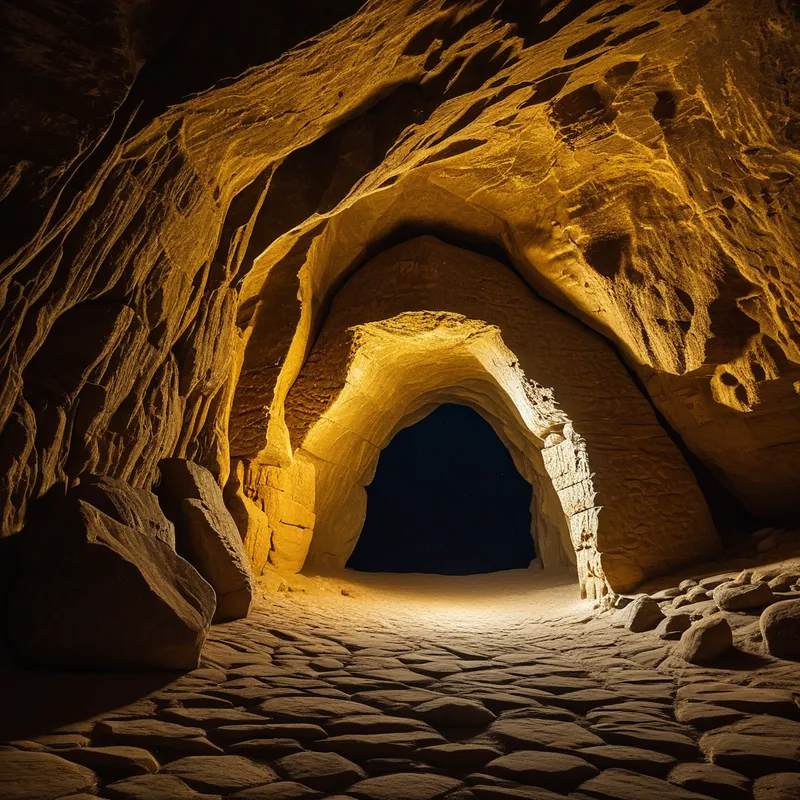
But the mountain, Burqan Qaldun, remembered. When his enemies encircled him, the mountain opened its forests and crags to hide him. When his spirit was broken, the mountain’s enduring silence taught him endurance. He drank from its springs and the memory in his blood stirred. The clot was not a curse, but a seed. The wolf’s cunning and the doe’s resilience, separated in the strife of the world, began to weave themselves back together within him. He did not just unite tribes; he united the severed halves of his own primordial inheritance. From the outcast Temüjin arose Chinggis Khan, not merely a man, but the fulfillment of the ancient descent—the human incarnation of the sky’s command, the wolf’s law, and the doe’s boundless vitality, destined to set the world in order.
Cultural Origins & Context
This origin narrative is the foundational mythos of the Mongol people, primarily preserved in the 13th-century The Secret History of the Mongols. It was not mere folklore for entertainment, but a sacred charter. Recited by shamans (böö) and storytellers at gatherings, before campaigns, and during rituals, its function was multifaceted. It provided a divine sanction for the ruling clan, the Borjigin, directly linking them to the celestial realm of Tengri. In a world defined by kinship and lineage, it answered the profound question of identity: Who are we? The answer: We are the children of the Sky, born from the union of the primal forces of the fierce and the gentle, the predator and the nurturer.
The myth served as a cosmological map, positioning the Mongols at the center of a destined narrative. The specific geography—the journey to Burqan Qaldun—anchored their spiritual identity to the actual landscape, transforming a mountain into a living ancestor and a sanctuary. In times of crisis or fragmentation, the story was a potent rallying cry, a reminder of innate nobility and a collective destiny that transcended individual clan conflicts. It was the psychic and spiritual bedrock upon which the historical empire was built.
Symbolic Architecture
At its heart, this is a myth of individuation projected onto a cosmic scale. The celestial descent represents the influx of the Self—the total, archetypal potential of the psyche—into the realm of time and matter (the steppe).
The clot of blood in the infant’s hand is the ultimate symbol of condensed destiny. It is not inherited wealth or a weapon, but the living, pulsing core of one’s own innate pattern, a piece of the archetypal world made manifest at birth.
The wolf and the doe are not just ancestors but archetypal partners. The wolf (Börte Chino) symbolizes Logos: focused intellect, strategic aggression, territorial law, and the cohesive power of the pack (society). The doe (Gua Maral) symbolizes Eros: connective instinct, nurturing grace, intuitive movement, and a deep bond with the fecundity of the earth. Their union is the primordial marriage of these complementary principles, a state of psychic wholeness that the lineage—and by extension, every individual—carries as potential.
The later trials of Temüjin—betrayal, exile, humiliation—represent the necessary fragmentation of this wholeness in the crucible of life. The proud lineage is reduced to digging for roots; the kingly child becomes the scavenger. This is the ego’s dark night, where identified glory is stripped away. The sacred mountain (Burqan Qaldun) that shelters him is the symbol of the enduring, unchanging Self. It is the internal sanctuary, the connection to the original divine source that remains when all worldly status is lost. His rise is not a conquest of others, but a re-conquest and reintegration of the wolf and doe within himself.
The Dreamer's Resonance
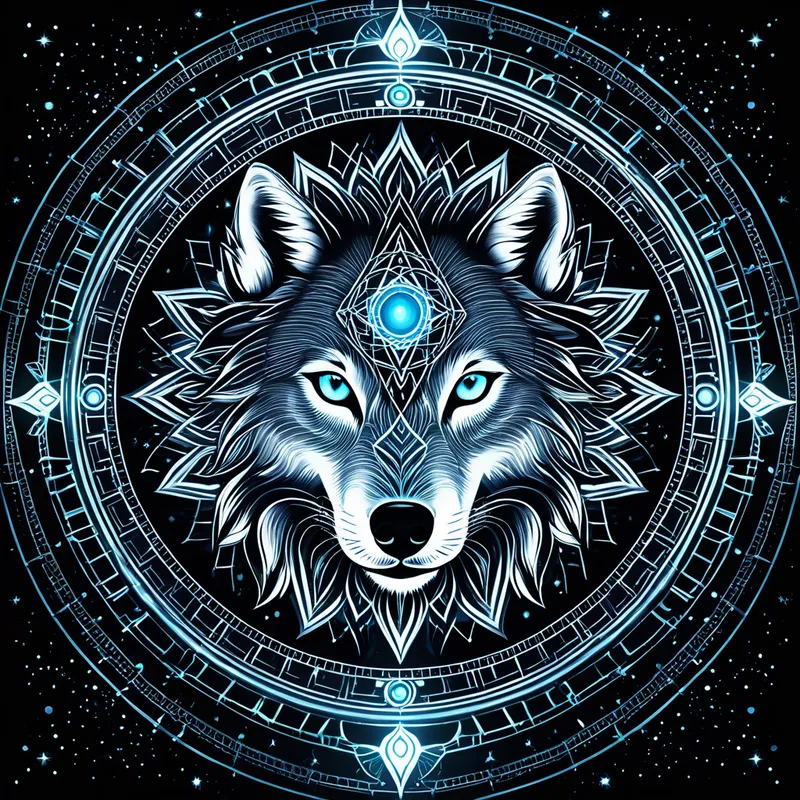
When this mythic pattern stirs in the modern dreamer, it often signals a profound encounter with the question of origin and destiny. Dreaming of a majestic wolf and deer together may point to a nascent feeling of one’s own latent wholeness, a call to unite one’s assertive, strategic side with one’s receptive, nurturing side.
Dreams of being an outcast, stripped of title or family, yet finding refuge in a powerful, numinous natural landscape (a specific mountain, forest, or cave) mirror Temüjin’s exile. Psychologically, this is the somatic experience of ego-death. The persona—the social mask we rely on—has crumbled. The dreamer feels “reduced to roots,” to the bare, essential, and often humiliated self. This is not a pathology, but a brutal initiation. The mountain in the dream is the Self offering shelter, a reminder of an inner core of value and destiny that exists beyond social validation.
A dream of holding a small, potent, and possibly disturbing object (a stone, a gem, a clot) signifies the emergence of one’s unique “seed” of destiny into consciousness. It can feel alien and awe-inspiring. The dream process is asking the dreamer to acknowledge and take responsibility for this core pattern, this original “clot” of potential they were born to manifest in the world.
Alchemical Translation
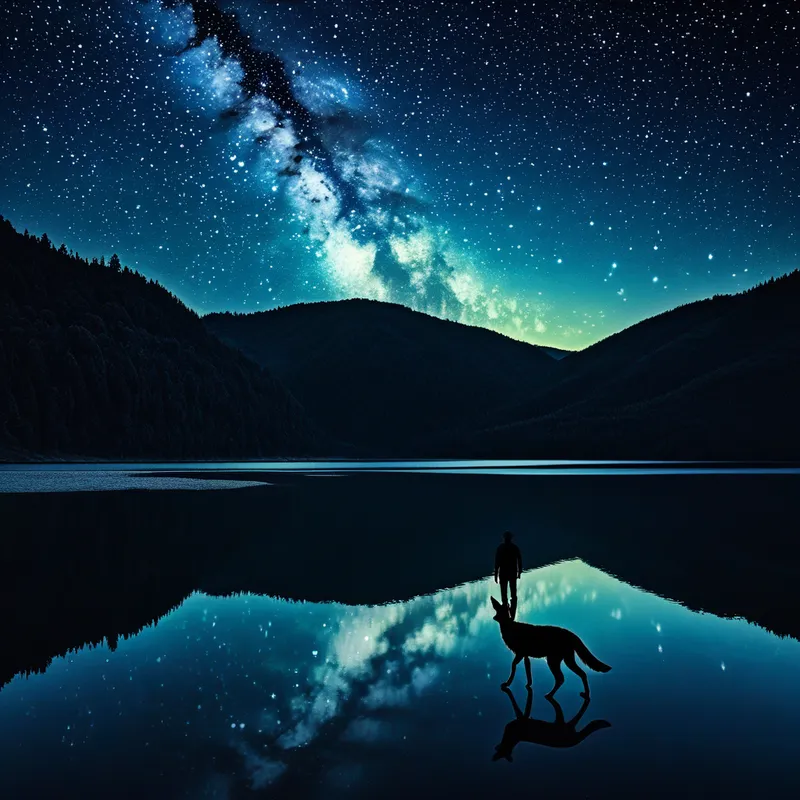
The alchemical journey mirrored in this myth is from massa confusa (the scattered tribes, the fragmented self) to the lapis philosophorum (the Universal Ruler, the integrated Self). The prima materia is the individual born with a divine seed (the blood clot) into a world of conflict and fragmentation.
The first stage, nigredo, is embodied in Temüjin’s exile. It is the blackening, the dissolution of all that was supposed to provide identity and security. The family is gone, status is void. This is a necessary descent into the shadow and the raw, unadorned substance of one’s own being.
The albedo, or whitening, occurs in the sanctuary of the mountain. Here, in isolation and connection with the enduring spirit (the Self), the ego is purified of its attachments to external glory. He learns endurance, patience, and a clarity that comes from having nothing left to lose. The mountain’s silence washes him clean.
The rubedo, the reddening and culmination, is the integration. This is not simply Temüjin becoming a powerful man. It is Temüjin consciously uniting the wolf (the strategic, ordering principle) and the doe (the life-giving, connective principle) within his own psyche and then projecting that united force outwardly as Chinggis Khan, the one who brings order (törü) to chaos. The personal destiny (the clot) becomes a world-shaping force. For the modern individual, this translates to the process of moving from a life driven by external pressures and fragmented internal conflicts to a life governed by the integrated Self. It is about discovering one’s own “mountain” (inner sanctuary and truth), acknowledging one’s primal dualities (wolf and doe), and forging them into a singular, purposeful expression that brings order to one’s personal world.
Associated Symbols
Explore related symbols from the CaleaDream lexicon:
- Wolf — The archetypal spirit of fierce intelligence, strategic pack unity, and the raw, ordering will that comes from the celestial realm.
- Doe — The archetypal spirit of graceful fertility, intuitive connection to the land, and the nurturing, life-sustaining principle that complements the wolf's ferocity.
- Mountain — The sacred, unchanging sanctuary of the Self; the internal refuge and source of strength that endures when all worldly identities are stripped away.
- Blood — The condensed seed of destiny and innate potential; the tangible, living connection to one's archetypal origin and future purpose.
- Sky — The realm of the supreme divine (Tengri), source of the celestial mandate and the origin point of the ancestral descent into the world.
- Origin — The foundational mythic point of beginning, which defines identity and carries the full pattern of potential that must be realized through life's journey.
- Hero — The one who is called to reunite the fragmented archetypal inheritance, endure the dissolution of the old self, and manifest the original destiny in the world.
- Destiny — The pre-ordained pattern or mandate woven into the fabric of an individual or lineage, demanding recognition and fulfillment through action and integration.
- Journey — The necessary passage from celestial origin through trials of exile and fragmentation to the ultimate realization and integration of one's purpose.
- Earth — The receptive, fertile ground of manifestation where the celestial seed is planted and must grow, represented by the nurturing steppe and the sacred mountain.
- Shadow — The state of exile, humiliation, and loss that precedes rebirth; the necessary encounter with the denied and stripped-down parts of the self.
- Root — The most basic, essential state of being one is reduced to during initiation; the primal connection to survival and the true source of nourishment beneath the surface.