Cetus Myth Meaning & Symbolism
A monstrous sea serpent sent to devour a princess, defeated by a hero, embodying the primal chaos that must be confronted to restore cosmic and psychic order.
The Tale of Cetus
Hear now a tale of the salt and the stone, of a beauty bound and a beast from the bone-deep dark. It begins not with a hero, but with a mother’s pride—a fatal, glittering boast.
In the sun-baked kingdom of Aethiopia, Queen Cassiopeia dared to utter the unspeakable. She declared her daughter, the princess Andromeda, more beautiful than the Nereids themselves. The sea-nymphs, hearing this insult whispered on the wind, wept tears of brine that stirred the wrath of their lord, Poseidon. The Earth-Shaker’s fury is a slow, tectonic thing. He did not send a mere storm. He sent a curse from the abyss.
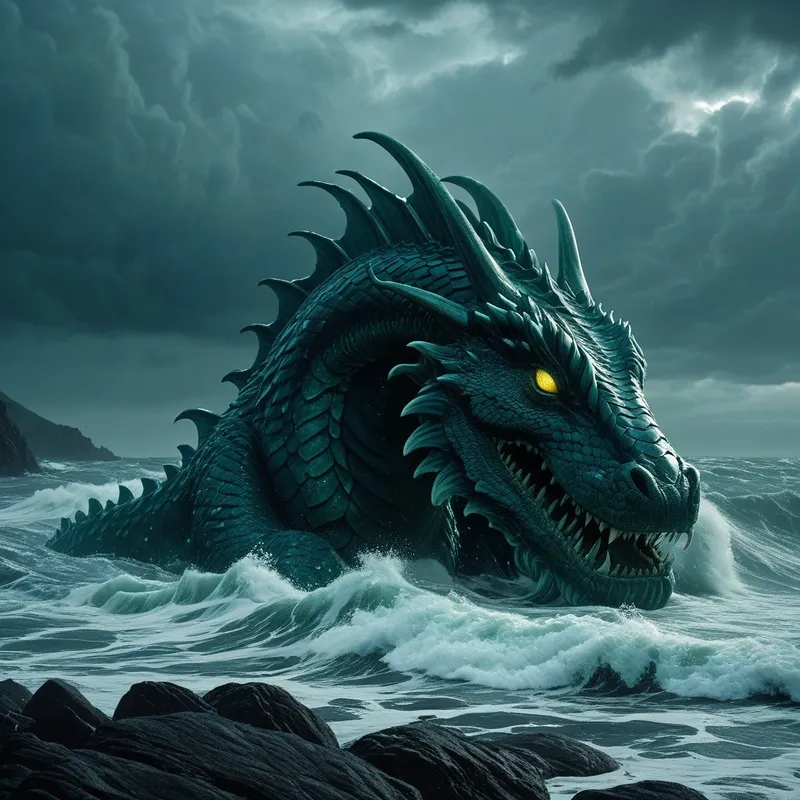
From the wine-dark depths, he summoned Cetus. It was not a creature of scales and fin as fishermen know, but a leviathan of nightmare, a serpent of the primal sea. Its approach was a rising tide of ruin—ships splintered, harbors choked, and the very coastlands trembled. The oracle’s voice, thin and terrible, pierced the palace’s despair: only the sacrifice of the princess, chained naked to the coastal rocks, could appease the god and spare the kingdom.
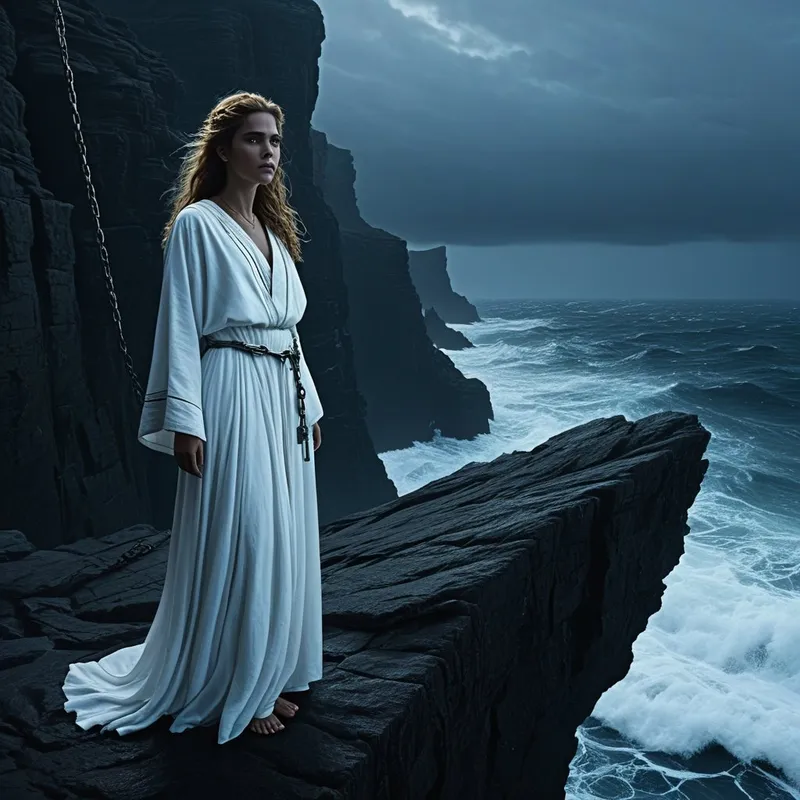
So they led Andromeda to the edge of the world. The iron was cold against her skin, the stone sharper than grief. The salt spray stung her eyes as she watched the horizon churn. The waiting was a prayer and a scream held in the throat. Then, the water parted. A mountain of living shadow breached the waves—Cetus, all coiled muscle and gaping maw, a void of teeth and hunger moving with the inevitability of fate itself.
But fate has two hands. As the monster drew near, a speck appeared in the high, clear air—a man with wings on his sandals. Perseus, fresh from his grim victory over the Gorgon, saw the tableau of terror from the heavens. He saw the beast, he saw the bound maiden, and in that instant, the hero’s path was written. He dove, a falling star, the weight of the Gorgon’s severed head heavy in his kibisis bag.
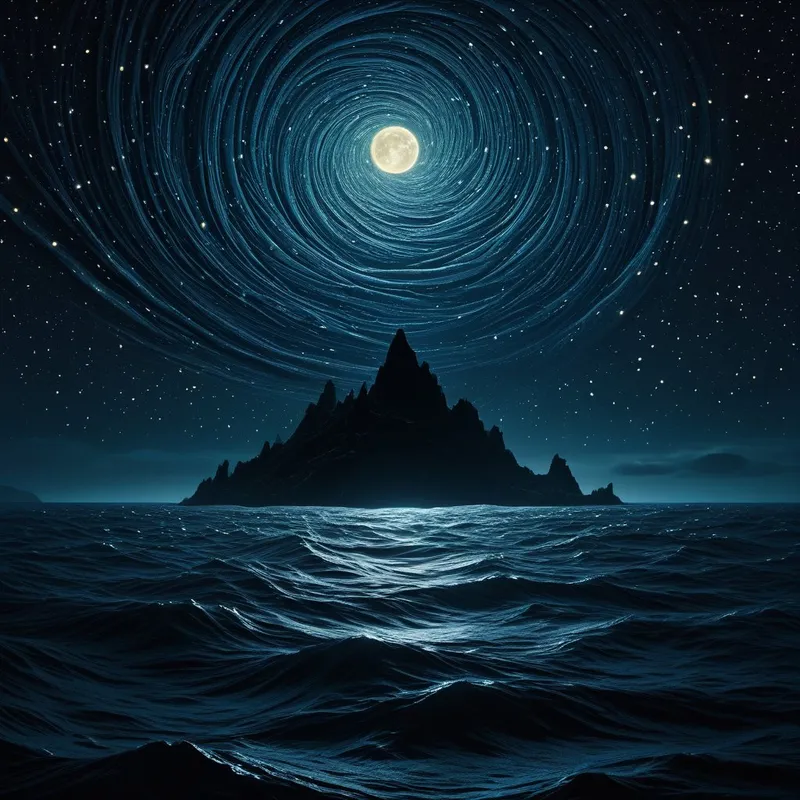
The battle was not of brute strength, but of cunning and cursed artifact. As Cetus reared to strike, Perseus soared before its monstrous face. He did not draw a sword. From the bag, he unveiled the head of Medusa. The sea monster’s roar died in its throat. The seething flesh stilled, the frenzy of hunger froze mid-action. The living terror became a monument of terror—a jagged island of stone rising from the surf, a permanent warning etched in rock and memory. The chains fell away, not by key, but by the shattering of a curse.
Cultural Origins & Context
This myth, most famously recounted in the pages of Apollodorus and the star-maps of Ptolemy, served as a foundational narrative for the Hellenic world-view. It was a story told to explain not just the constellations of Cetus, Andromeda, Perseus, Cepheus, and Cassiopeia eternally circling the pole, but also the precarious relationship between human order and cosmic chaos.
The Greeks, a people of the rocky coast and the treacherous sea, understood the ocean as the ultimate symbol of the unknown, the Chaos that existed before the ordered Cosmos. Cetus was the embodiment of that untamed, devouring force. The myth functioned as a societal lesson on hubris and its consequences—Cassiopeia’s boast disrupted the natural (and divine) order, requiring a drastic, communal rebalancing through sacrifice. It reinforced the idea that safety and civilization (the kingdom) are maintained only through respect for the gods and the terrifying powers they command, and through the willingness to confront the monsters those powers can unleash.
Symbolic Architecture
At its heart, the myth of Cetus is a profound map of the psyche confronting its own depths. The monster is not merely an external threat; it is the projected form of internal, unacknowledged chaos.
The monster from the deep is always summoned by a voice from the shore—the unintegrated pride, the unspoken guilt, the repressed shadow that disturbs the cosmic balance.
Andromeda, chained to the rock, represents the conscious ego, the identified "self," made vulnerable and sacrificial by the complexes and boasts (Cassiopeia) of the personal and collective unconscious. She is the part of us bound by circumstance, awaiting devourment by the very anxieties we have, through our actions or inactions, called forth.
Perseus is the archetypal hero function of the psyche. He does not fight the monster with conventional means (the sword), but with a weapon forged in a previous encounter with the ultimate terror—the petrifying gaze of Medusa. This signifies that the power to integrate one deep unconscious content (the paralyzing, monstrous feminine) becomes the very tool to integrate another (the devouring, chaotic force). The hero’s journey is cumulative; each integration provides the means for the next.
The Dreamer's Resonance
When the pattern of the Cetus myth stirs in modern dreams, the dreamer is often in a state of profound psychological siege. Dreaming of a vast, approaching sea creature or an unstoppable tidal wave speaks to a feeling of being overwhelmed by emotions, responsibilities, or a life situation that feels monstrous and impersonal. The "rock" one is chained to may appear as a job, a relationship, a health issue, or a familial obligation—something that feels immovable and sacrificial.
The somatic experience is one of paralysis and dread, a tightening in the chest, a literal feeling of being "bound." This is the psyche’s way of dramatizing a state of ego-constriction, where the individual feels their identity and agency are about to be consumed by a force they cannot control. The dream is not a prophecy of doom, but a stark presentation of the inner landscape. It asks: What boast of the ego (overconfidence, denial, inflation) has summoned this? What part of you feels sacrificed? And where is your Perseus—the insightful, resourceful, and transcendent function that can see the situation from a higher perspective and wield a transformative "gaze"?
Alchemical Translation
The alchemical process modeled here is the solve et coagula—dissolve and coagulate—applied to the psyche. Cassiopeia’s hubris dissolves the fragile peace of the kingdom, forcing a crisis. Andromeda’s sacrifice is the ego’s dissolution, its willingness to be rendered vulnerable and exposed to the chaotic, transformative waters.
The petrification of the monster is the ultimate coagula: the fluid, terrifying chaos of the unconscious is given form, fixed, and made part of the landscape of the self. It is not slain and discarded; it is transformed into a landmark.
For the modern individual, the "Cetus-work" involves several stages. First, one must identify the "Cassiopeian boast"—the inflated attitude, the denied shadow, the complex that is polluting one’s inner kingdom. Second, one must consent to the "Andromeda moment," the uncomfortable binding to the rock of self-examination, accepting temporary helplessness to see the true nature of the approaching problem. Finally, one must call upon the "Perseus resource"—the hard-won wisdom from past battles with one’s own "Gorgons" (deep-seated fears, traumas). This isn’t brute force, but the application of a transformative perspective, the "Medusa’s head," which can freeze the chaotic, devouring anxiety into a manageable, integrated form. The monster becomes a stone, a lesson, a part of the soul’s enduring geography. The sea remains, but its most terrifying inhabitant now serves as a warning and a testament to the heroism of conscious integration.
Associated Symbols
Explore related symbols from the CaleaDream lexicon: