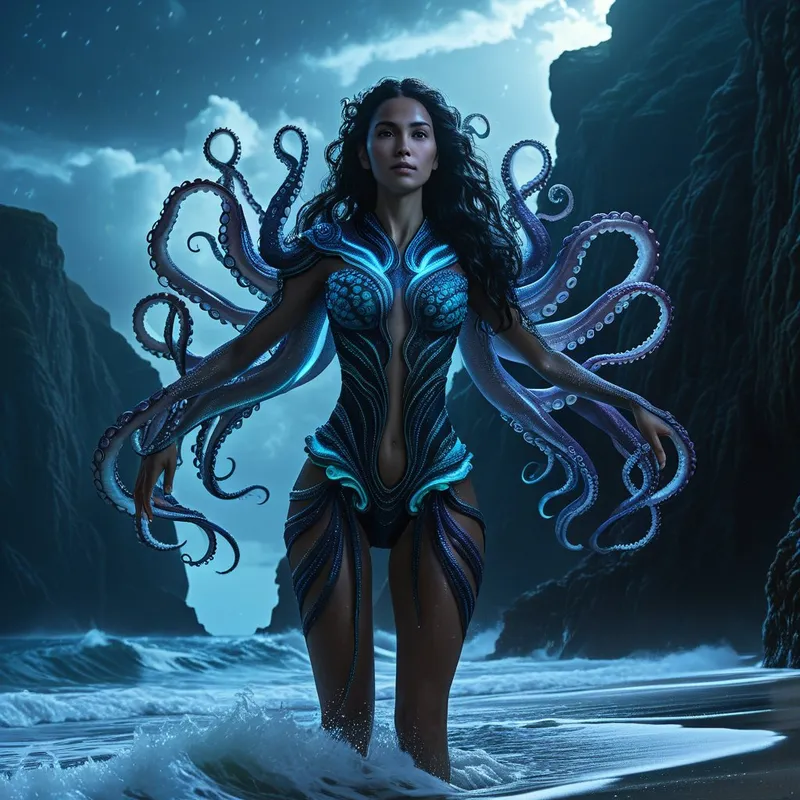
Cecaelia Myth Meaning & Symbolism
A modern myth of a woman fused with an octopus, embodying the psyche's fluid intelligence and the primal call to reclaim one's wild, submerged nature.
The Tale of Cecaelia
Listen, and hear the tale that the salt-wind whispers and the deep currents hum. It is not carved on temple stone nor sung in royal courts. It is a story born in the space between the lighthouse beam and the drowning dark, a truth told on the skin by the chill of a rogue wave.
Once, there was a woman of the shore. She was not a queen, nor a goddess, but a woman of profound craft—a weaver of nets so fine they could catch moonlight, a singer of tides. She knew the language of gulls and the patience of barnacles. Yet, her heart was a divided kingdom. By day, she walked the solid earth, bound by its paths and its people. But by night, in her dreams, she swam. She knew the crushing, comforting pressure of the abyss, the silent ballet of creatures without names, the cold fire of bioluminescent gardens in trenches no sun ever touched. The land felt like a cage; the sea, a forgotten home.
One night, under a black moon that drank the starlight, a storm of impossible fury rose. It was not a weather of clouds and wind, but a tempest from the world’s soul. The sea did not merely rage; it remembered. It reached for her with waves shaped like hands. Drawn not by fear, but by a longing deeper than marrow, she walked into the surf. The water did not feel cold. It felt like recognition.
The waves took her down, past the realm of fish and kelp, into the utter black. Here, there was no up or down. Here, in the primordial silence, she met the Tehom. It was not a monster. It was the Deep itself—conscious, ancient, and utterly indifferent to the concepts of "human" or "beast." It had no form, yet in its presence, she perceived the ghostly impression of endless, coiling limbs, of beaks that could crack continents, of eyes that witnessed the birth of water.
There was no battle. There was a choice, offered in the language of pure being. To return to the brittle, divided self on the shore, or to be remade. To integrate the dream with the waking. She opened her mouth, not to scream, but to drink the blackness. And the Deep breathed into her.
Her legs fused, melted, and erupted into eight powerful, sinuous arms. Her skin learned to speak in waves of color and texture. Her mind fractured and multiplied, not into madness, but into a vast, parallel consciousness—a single "I" that could think in eight directions at once, that could feel the taste of shapes and the texture of currents. The woman of the shore was gone. In her place was Cecaelia, the one who is both.
She did not return to the village. She became a myth of the liminal zone. Fishermen would glimpse her in the predawn fog, a silhouette of impossible grace, her human eyes holding an intelligence that was terrifyingly familiar and utterly alien. She was the genius of the reef, the protector of the drowned secrets, the embodied truth that the most profound creativity is born from the marriage of the structured and the fluid.
Cultural Origins & Context
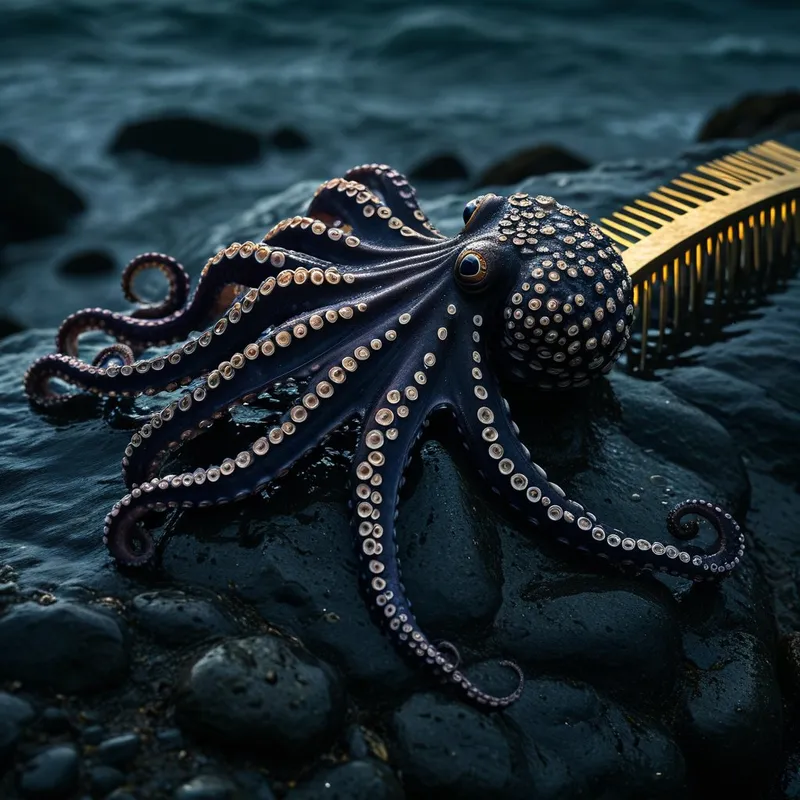
The Cecaelia is a quintessential "modern myth," a folklore entity born not from ancient oral tradition but from the collective digital unconscious of the 21st century. Her primary habitat is the internet—forums, digital art platforms, fantasy literature, and video games. She is a syncretic creation, a fusion of older archetypes like the Siren and the Rusalka, with the contemporary scientific awe for cephalopod intelligence.
This myth is passed down not by village elders, but by creators and consumers of niche media. Its societal function is profoundly modern: to provide a container for our anxieties and fascinations about consciousness, identity, and ecology. In an age of artificial intelligence and neural networks, the octopus’s distributed, alien mind becomes a powerful metaphor. The Cecaelia myth allows us to projectively explore what it means to be a "self" when the very definition of mind is expanding. She is a folklore response to the Anthropocene, a symbol of the deep, non-human intelligence we are only beginning to recognize in the world’s oceans.
Symbolic Architecture
Psychologically, the Cecaelia is an archetype of radical integration. Her form is the ultimate symbol of the psyche’s attempt to reconcile irreconcilable opposites: human and animal, intellect and instinct, individual and distributed consciousness, land (ego-structure) and sea (unconscious depth).
The octopus arm is not a tool the self uses; it is a self, with its own will and knowing, yet part of a greater whole. This is the mythic image of a decentralized psyche.
Her human torso represents the seat of ego, identity, and human yearning—the part that feels loneliness, curiosity, and artistic impulse. The octopus lower body embodies the unconscious in its most primal, intelligent, and adaptive form. It is the Shadow, not as a dark enemy, but as a vast, resourceful, and fundamentally different way of being. The myth suggests that true power and creativity emerge not from conquering this "other," but from fusing with it, becoming a hybrid entity that can navigate both the structured world and the formless deep.
The Dreamer's Resonance
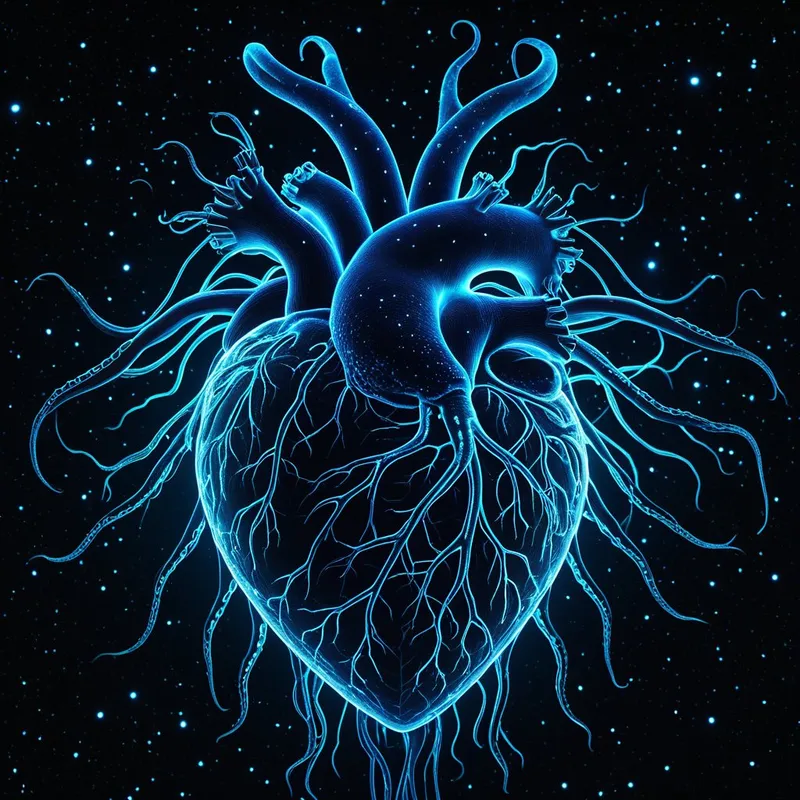
To dream of the Cecaelia, or to find oneself transforming into her, signals a profound somatic and psychological process underway. It is the psyche’s declaration that a purely "human" or land-based identity is no longer sufficient.
Somatically, this may manifest as a fascination with fluidity—a desire to swim, a sensitivity to water, or a feeling of being "slick" or formless. Psychologically, the dreamer is likely grappling with an overwhelming influx of complexity—perhaps multitasking to an extreme, feeling pulled in multiple directions (the eight arms), or developing a new, more fluid kind of intelligence to solve problems. The dream is an initiatory call. The "storm" that precedes the transformation in the myth represents the internal crisis that makes the old, divided self untenable. The dreamer is at the shore, choosing between retreating to a familiar but inadequate self, or surrendering to a terrifying, deeper integration.
Alchemical Translation
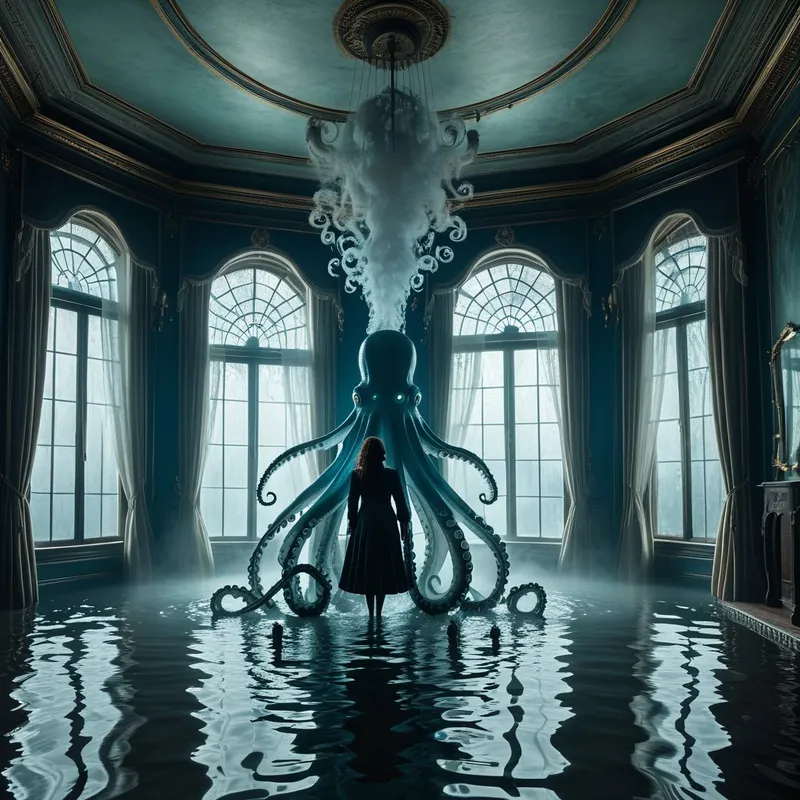
The myth of Cecaelia models the alchemical stage of Coniunctio, specifically the marriage of the spiritus (air, intellect, human form) with the hydor (water, the unconscious, the primal). For the modern individual, the path of "becoming Cecaelia" is the path of individuation through embracing one’s distributed, non-linear intelligence.
The goal is not to think like an octopus, but to realize you already are one—a conscious center connected to a network of autonomous, intelligent processes.
The first step is the "Call of the Deep"—the honest acknowledgment of the parts of oneself that feel alien, instinctual, and uncontrollable (the octopus nature). The second is the "Storm Surrender"—the willing dissolution of the rigid ego-boundaries that keep these parts compartmentalized. The final, ongoing stage is "Living the Hybrid"—learning to operate from this new, integrated form. This means allowing solutions to emerge from the "arms" of intuition and somatic intelligence, not just from the "head" of rational analysis. It is to become a creator in the truest sense, weaving one’s reality from the threads of multiple, simultaneous ways of knowing. The Cecaelia does not choose between land and sea; she becomes the living bridge, the embodied truth that our greatest power lies in our fluent ability to inhabit both.
Associated Symbols
Explore related symbols from the CaleaDream lexicon: