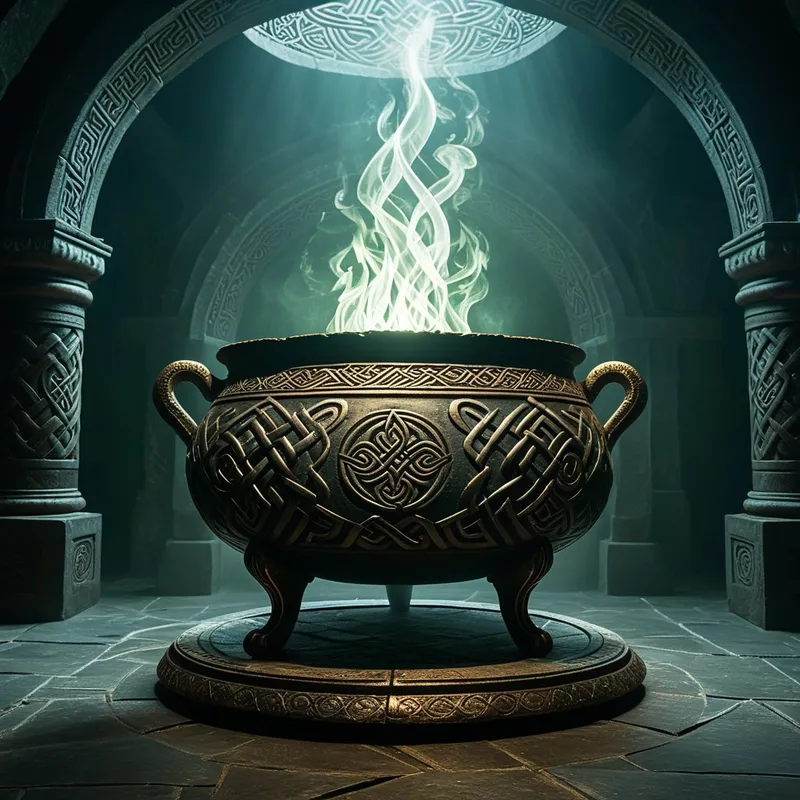
Cauldron of Rebirth Myth Meaning & Symbolism
A magical cauldron restores the dead to life, embodying the Celtic belief in cyclical renewal and the transformative power of the Otherworld.
The Tale of Cauldron of Rebirth
Hear now the tale of the vessel that defies the final sleep, the Cauldron of Rebirth. It is not a story of the sunlit world, but one whispered from the Otherworld, where the rules of bone and breath unravel.
Our path leads to a land of perpetual mist and sorrow: the kingdom of Bran the Blessed. His sister, Branwen, "White Raven," was given in marriage across the sea to Matholwch of Ireland, a union meant to weave peace. But peace is a fragile thread. An insult, born of a brother's rash act, snapped it. War descended, a great and terrible war that spilled the blood of two nations onto the soil and into the sea.
Bran the Blessed, a giant of a man, led his people from the Island of the Mighty to rescue his beloved sister. The battles were fierce, a cacophony of clashing swords and dying cries. In Ireland, the defenders possessed a secret weapon, a treasure beyond price: the Cauldron. It was given to them by Efnisien, in a twist of fate and malice. This was no cooking pot. Fashioned in the forges of the Children of Dôn, its bronze sides were cold to the touch, its interior a mouth of absolute darkness.
When an Irish warrior fell, his comrades would carry his body from the field, broken and still. They would lay him in the cold embrace of the Cauldron. No fire was lit beneath it. Yet, from that profound dark, the warrior would emerge. He would stand again, whole in body. But his eyes… his eyes held the void he had visited. He could speak no word, for his voice had been left in the land of silence. He was a perfect, mute fighter, returned to battle with a cold, relentless purpose. The tide of war turned, not by valor, but by this dreadful, silent recycling of the dead.
The horror of it seeped into the soul of the conflict. How can you fight an enemy that does not stay dead? The very concept of sacrifice, of heroic end, was stolen. The Cauldron made a mockery of mortality. It was Efnisien himself, the architect of so much sorrow, who saw the monstrous truth. Hidden among the Irish dead, he was cast into the Cauldron with the fallen. And in that final, transformative moment, he did not submit to its magic. With a last, tremendous effort of will and fury, he stretched his heart against the cold bronze and burst it asunder.
The Cauldron shattered with a sound like a mountain cracking. In that rupture, the spell was broken. The silent, reborn warriors fell, truly and finally dead. But the cost was absolute. Efnisien was consumed. Bran the Blessed was struck by a poisoned spear, a mortal wound. He commanded his seven surviving followers to cut off his head and carry it back to the White Mount in Llundain. For seven years, his head lived on, speaking prophecy and poetry, a guide and a companion, before it too was laid to rest to watch over the land. The Cauldron was no more, its pieces lost, but its legend—a legend of a rebirth that was not life—echoed forever.
Cultural Origins & Context
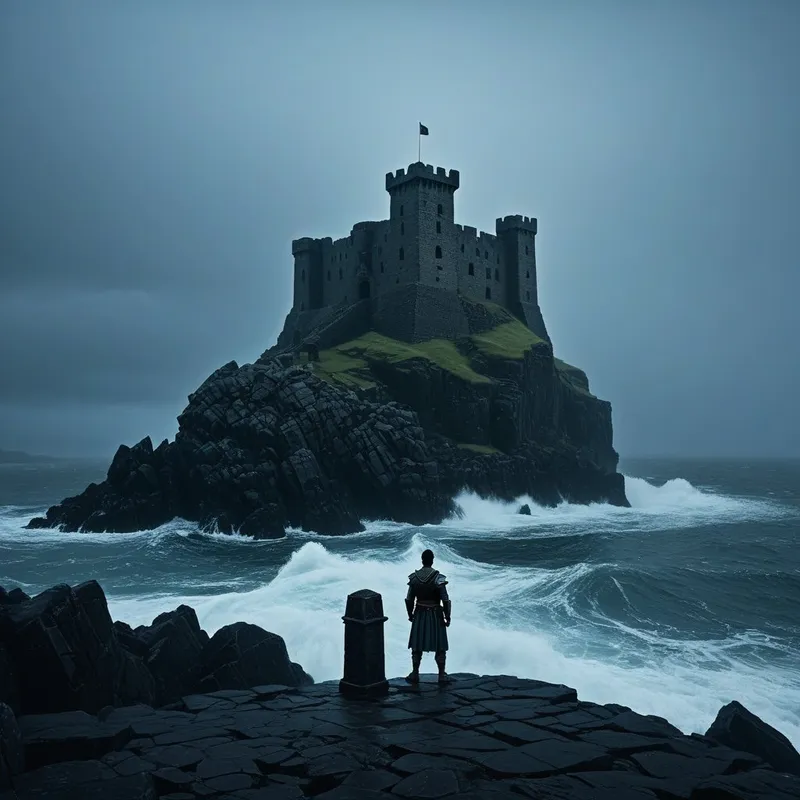
This potent narrative is preserved primarily in the Mabinogion, specifically in the branch of Branwen ferch Llŷr. It is a late, literary recording of a mythic tradition that is undoubtedly far older, passed down through generations of bards and storytellers. The Celts held a complex, non-linear view of death, seeing it as a transition to the Otherworld, which coexisted with our own. The Cauldron myth dramatizes this belief, but also interrogates it.
The story functioned on multiple levels. On a societal level, it was a foundational epic explaining tragedy, the cost of war, and the sacred duty of kinship. On a spiritual level, it explored the permissible boundaries of power. The Cauldron represents a divine or magical technology, but its use by mortals in warfare creates a profound imbalance, a violation of the natural order. The myth served as a warning: some powers, even those of regeneration, are too terrible to wield without catastrophic consequence. It underscores a core Celtic value—that true sovereignty requires wisdom and responsibility, not just possession of a magical object.
Symbolic Architecture
The Cauldron of Rebirth is not a symbol of life, but of reanimation. This is its crucial, chilling distinction. It returns the form but not the essence, the body but not the soul's fire.
The Cauldron is the womb that does not love, the forge that repairs the sword but forgets the hand that wielded it.
Psychologically, it represents a forced, artificial renewal that bypasses the necessary psychic work. It is the ego’s attempt to "fix" a trauma or a complex without descending into the feeling, without the nigredo—the blackening, putrefying stage of alchemy where true dissolution occurs. The reborn warriors are the perfect image of a person who has undergone a superficial change: they look functional, they move forward, but they are hollow, disconnected from their own voice and vitality. They are the walking repressed, acting out a pattern without consciousness.
Bran’s journey—from giant king to speaking head to eternal guardian—models a different, more integrated process. His "death" is accepted and ritualized. His consciousness is preserved, guiding his companions, before achieving a rest that is also a protective watchfulness. He becomes part of the land’s psyche, a memory in the collective unconscious. Efnisien’s final act is the eruption of the repressed shadow itself, destroying the mechanism of avoidance. His self-sacrifice, though born of chaos, is the necessary catalyst that shatters the cycle of meaningless repetition.
The Dreamer's Resonance
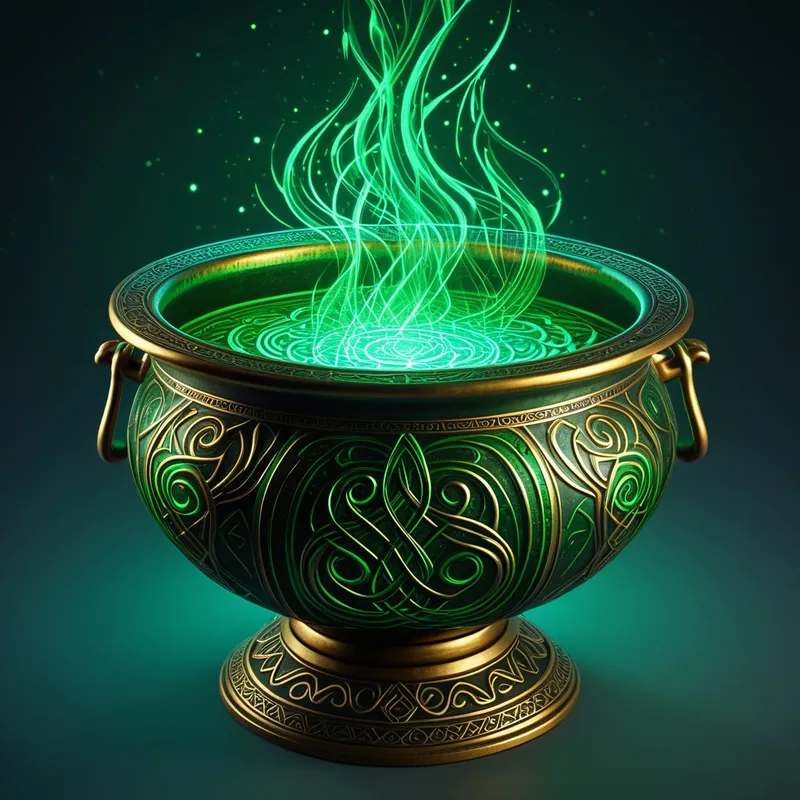
When this myth stirs in modern dreams, it often signals a profound encounter with a psychic pattern of sterile renewal. The dreamer may find themselves in a sterile hospital where patients are "repaired" but leave as automatons, or in a factory that endlessly produces identical, soulless objects.
Somatically, this can correlate with a feeling of being "going through the motions"—a life that looks correct on the outside but feels numb, mute, and disconnected internally. The body may feel heavy, mechanical, or cold. The psychological process at work is the ego's collision with its own defenses. The dream is highlighting an area where the dreamer is using immense energy to maintain a state of functional reanimation, avoiding a necessary psychological death. The shattered Cauldron in the dream is a positive sign, however traumatic; it means the defensive structure is breaking down, creating an opening for true feeling, however painful, to return.
Alchemical Translation
The myth of the Cauldron provides a stark map for the journey of individuation, the process of becoming psychologically whole. It warns against the temptation of a quick, magical fix for the soul's wounds. The modern individual seeks their own Cauldron of Rebirth in numbing substances, relentless productivity, idealized self-help, or any system that promises renewal without the descent.
True rebirth is not reanimation. It is the dissolution of the old form in the vessel of the self, followed by a conscious, agonizing reconstitution.
The alchemical work requires one to become both the warrior placed in the Cauldron and the Efnisien who destroys it. One must consent to be broken down—to feel the grief, the rage, the shame fully (the immersion in the Cauldron's dark waters). But one must also retain a fierce, irreducible spark of consciousness (Efnisien's bursting heart) that refuses to be reassembled into the old, mute pattern. This spark is the voice of the individual spirit that will not be silenced.
The triumph is not in avoiding death, but in undergoing a transformation that integrates the experience of dissolution. Like Bran’s head, a part of us becomes a detached, witnessing consciousness that can guide us through the aftermath. The goal is not to return to the battlefield of old conflicts, but to achieve a new state of being—guardian of one's own depths, silently watching over the buried treasures and wounds, having faced the darkness of the Cauldron and chosen, painfully, to be reborn with a voice.
Associated Symbols
Explore related symbols from the CaleaDream lexicon: