Catacombs Myth Meaning & Symbolism
A story of a hidden community descending into the earth to preserve their faith, finding life, community, and ultimate liberation in the realm of the dead.
The Tale of the Catacombs
Listen. The story does not begin in the sun, but in the silence beneath the stone. Above, the world of Rome roared—chariots on cobbles, the cries of the market, the iron tread of legions. And in that world, a new and dangerous whisper moved through the crowds: a whisper of a crucified god and a kingdom not of this earth. To speak it aloud was to invite the lion’s maw, the flame, the scorn of the crowd.
So, they went down.
They were not heroes of legend, but mothers, bakers, slaves, and scribes. By night, they slipped from the city’s skin, following secret paths to the quarries on the outskirts. There, in the hillsides, were mouths of darkness—the arenaria, old pits where the soft tufa stone had been gouged out to build the world above. Into these mouths they descended, carrying not swords, but oil lamps whose light trembled against the consuming dark.
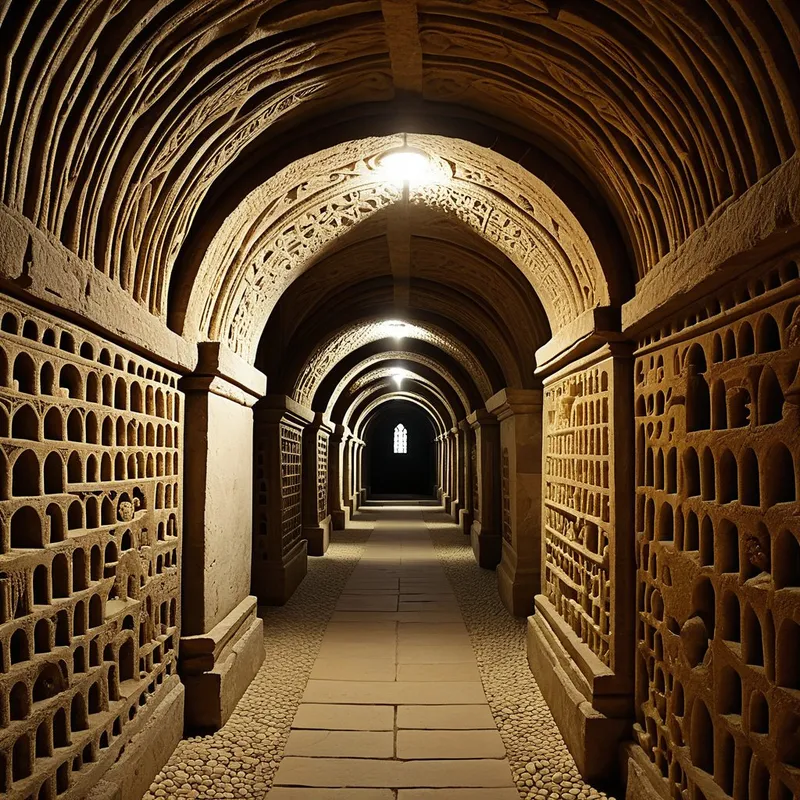
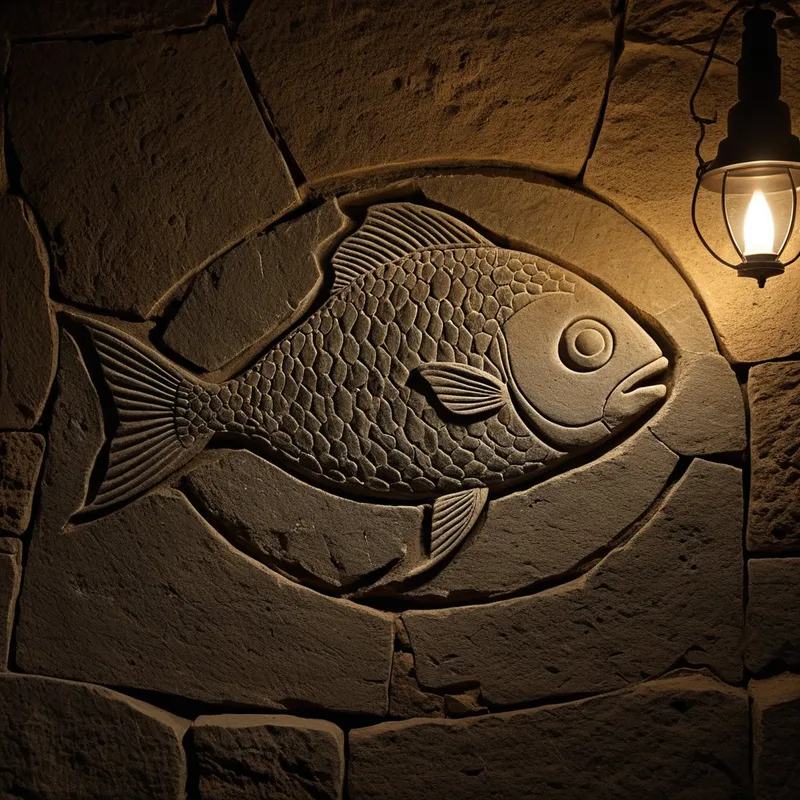
They carved. With simple tools, they expanded the silence, creating a hidden, inverted city. Mile upon mile of narrow galleries branched like the roots of a great, unseen tree. Into the walls, they cut shelf upon shelf—the loculi—and laid their dead to rest, wrapped in simple linen. But this was no city of the dead alone. In the hollowed-out chambers, the cubicula, the living gathered. Here, in the womb of the earth, they dared to speak the forbidden words. They broke bread and shared the cup, their hymns a soft echo against the bones of generations. They painted on the rough stone: the Ichthys, the Good Shepherd, Daniel serene among beasts. Their art was a map of hope drawn in the heart of despair.
For years, for generations, this hidden kingdom thrived in the dark. The world above hunted them, but the earth protected them. The very dust they breathed was the dust of their ancestors; the walls that sheltered them were also their tombs. They lived cheek-by-jowl with mortality, and in that intimacy, they found a ferocious, quiet vitality. The catacomb was a secret, a refuge, a womb. But every womb has a season. When the storm above passed, when the whisper became a shout that could be heard in the sun, they emerged. They climbed back into the light, leaving the silent galleries behind, a sacred labyrinth holding the memory of their fragile, enduring faith.
Cultural Origins & Context
This is not a myth from a single scroll, but a story written in stone, bone, and collective memory. Its origins are historical, rooted in the 2nd to 5th centuries AD, primarily in Rome but also in Naples, Sicily, and other parts of the early Christian world. Facing periodic persecution from Roman authorities, Christian communities needed secure places to bury their dead according to their rites, as Roman law protected burial sites. The soft, volcanic tufa rock outside cities was perfect for excavation.
The “myth” was woven not by a single bard, but by the community itself through ritual practice. It was passed down by the act of descent—the procession of a funeral into the cool dark, the gathering for the agape feast beside a loved one’s rest. The story was told in the frescoes on the walls: images of resurrection like Lazarus unwrapped, or Jonah cast forth, which served as visual sermons of hope. The catacombs functioned as more than cemeteries; they were clandestine churches, archives of identity, and physical proof of a faith that persisted under pressure. They symbolized the paradoxical early Christian identity: socially marginal, yet spiritually centered; persecuted, yet defiantly alive.
Symbolic Architecture
The catacomb is a master symbol of the psyche under duress. It represents the necessary descent, the retreat from the conscious, sunlit world of acceptable persona and societal approval into the subterranean realms of the soul.
The most vital truths are often those we must first bury to keep alive.
The labyrinthine tunnels symbolize the complex, often confusing journey of inner exploration. The loculi holding the dead are not symbols of finality, but of sacred storage—the aspects of our history, our trauma, our past selves that we inter with respect, knowing they are part of our structure. The gathering of the living among the dead signifies the profound psychological truth that we must commune with our own history, our own mortality, to find authentic life. The catacomb is the ultimate temenos—a sacred, protected space where the fragile, nascent self (the early Christian community within the individual) can develop away from the hostile scrutiny of the outer world or the critical superego.
The Dreamer's Resonance
To dream of catacombs is to dream of the psyche’s own archaeology. It signals a process of deep, introverted investigation. The dreamer may be consciously or unconsciously navigating a period of isolation, persecution (real or felt), or a need to conceal a vulnerable part of the self for its own protection.
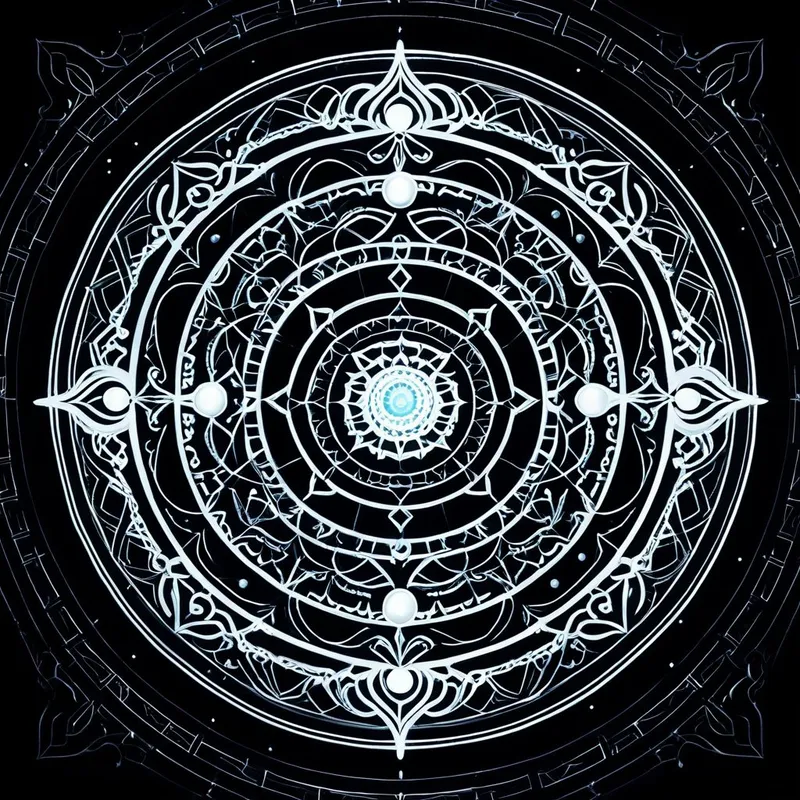
Somatically, this can feel like a pressure in the chest, a sense of being buried or confined, yet simultaneously a curious, pulling sensation downward—a gravitational pull toward the root of a matter. Psychologically, it is the process of navigating the shadow. The galleries represent forgotten memories, repressed emotions, and inherited familial patterns stored in the personal and collective unconscious. Finding a fresco or symbol in the dream (a familiar face in a carving, a glowing symbol) points to a core, enduring truth or identity preserved within the darkness. The dream is an invitation to walk among one’s own buried things, not to resurrect them all chaotically, but to acknowledge their presence and understand their place in the architecture of the self.
Alchemical Translation
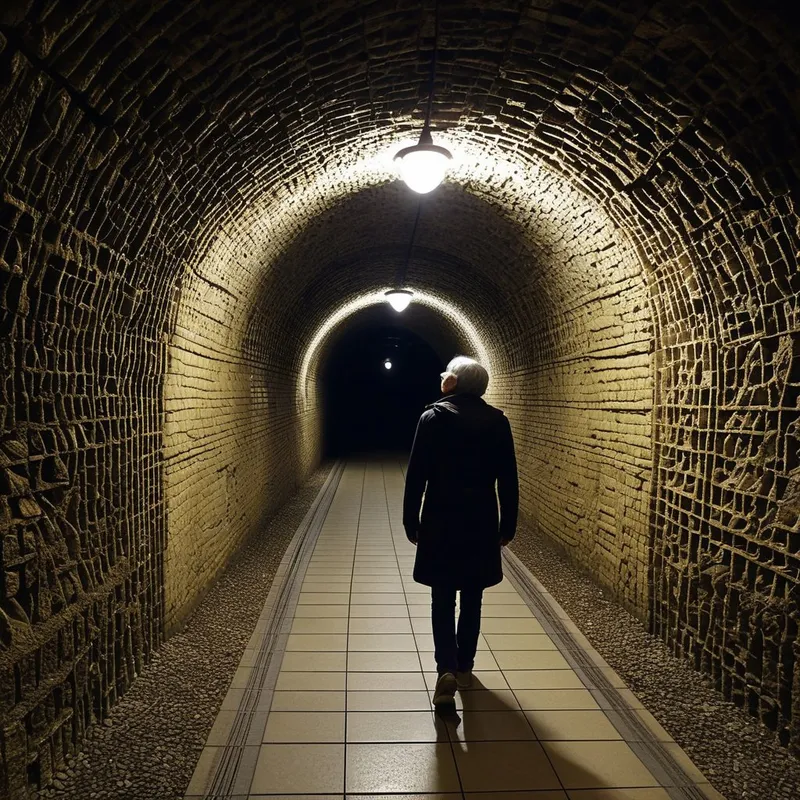
The myth of the Catacombs is a precise map of the alchemical nigredo, the dark night of the soul that is essential for individuation. The conscious ego’s bright, above-ground world becomes untenable (persecution/social pressure). The soul’s imperative is descent (into the catacombs), into the prima materia of the unconscious.
The transmutation begins not in the light of analysis, but in the respectful preservation of what is hidden.
The work in the dark is not initially one of brilliant insight, but of faithful, quiet maintenance: carving out a little more space (solutio), honoring the dead (separatio), gathering the community of inner parts (coniunctio), and painting images of hope—the symbolic visions that guide the process. The catacomb period is the long, necessary incubation. The eventual emergence is not a rejection of the dark, but its integration. The individual who completes this cycle does not simply return to the old world; they transform it. They bring the depth, resilience, and grounded faith forged in the dark up into the light of day. The self is no longer a fugitive on the surface, but a being rooted in both worlds, with a lived understanding that life and death, light and dark, are chambers in the same sacred, subterranean cathedral of the soul.
Associated Symbols
Explore related symbols from the CaleaDream lexicon: