Castor and Pollux Myth Meaning & Symbolism
The myth of twin brothers, one mortal and one divine, whose bond of love was so profound it transcended death, earning them a place among the eternal stars.
The Tale of Castor and Pollux
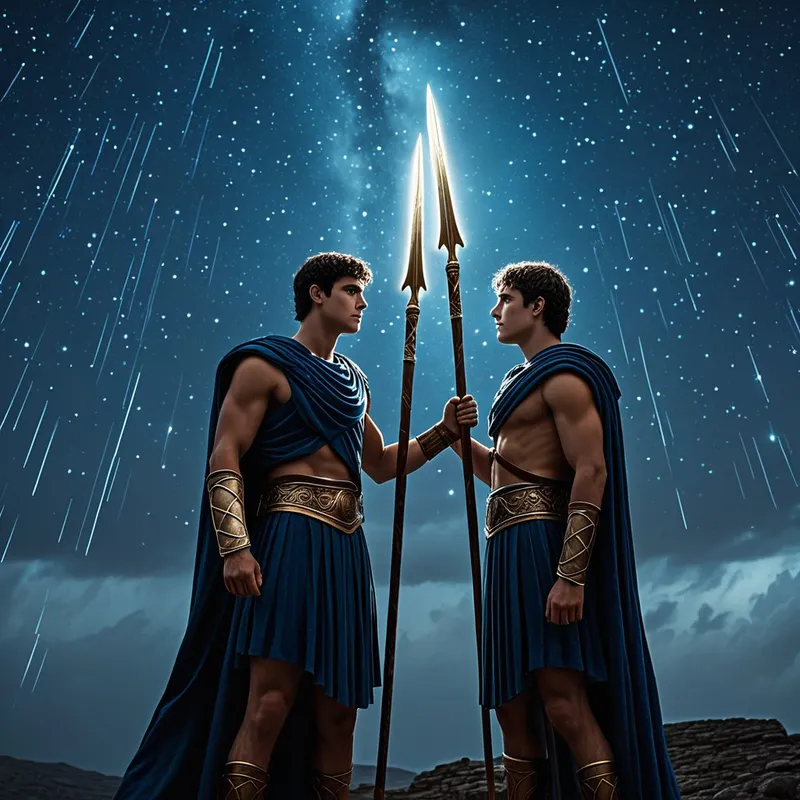
Hear now the song of the Dioscuri, the sons of Zeus, whose story is written not in ink but in starlight. In the age when gods walked the earth in disguise, the great king of Olympus took the form of a magnificent swan and lay with the beautiful queen Leda. From that divine union, two eggs were born. From one hatched the radiant Helen, whose face would launch a thousand ships, and the god-like Polydeuces. From the other came the mortal Clytemnestra and the noble Castor.
Thus were the twins Castor and Pollux forged: one, Pollux, immortal, his blood singing with the ichor of his father; the other, Castor, fully human, bound to the earth and its fate of dust. Yet no force in heaven or earth could cleave them. They grew as one soul in two bodies, princes of Sparta, masters of the chariot and the boxing ring. Together they sailed with Jason on the Argo, their strength and loyalty a bulwark against the terrors of the deep. They were the protectors of sailors, a flash of light on the crest of a wave, the calm in the heart of the storm.
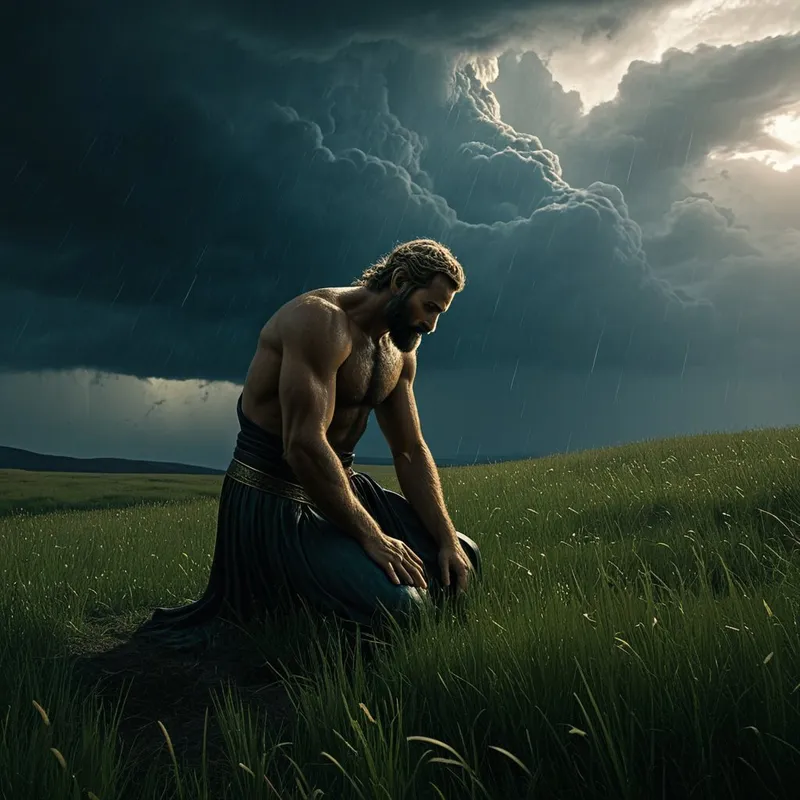
But mortality is a shadow that even the brightest light must cast. A feud arose with their cousins, Idas and Lynceus. In the heat of a quarrel over divided spoils—a herd of cattle—blades were drawn. Castor, the mortal brother, fell to the spear of Idas. The earth drank his blood.
Pollux, standing over his brother’s broken form, felt a rending in the cosmos more terrible than any wound. His immortal heart, which knew no end, shattered at this finite conclusion. He roared his grief to the heavens where his father dwelled. “Take this gift back!” he cried to Zeus. “What use is eternity without him? Let me follow my brother into the dark house of Hades, or grant him a share of my light!”
His lament echoed in the halls of Olympus. Moved by this ultimate fidelity, Zeus offered a choice no god had ever conceived: a shared destiny. Pollux could descend forever into the gloom, or Castor could be raised to the heights, but they could not both dwell wholly in one realm. So the king of gods wove a new pattern in the tapestry of fate. The brothers would alternate their dwelling, spending one day together in the sunlit world of the living, and the next in the shadowy underworld, trading places for all time.
And so that no generation would forget the price of such love, Zeus set their images in the vault of the night sky. There they shine as the constellation Gemini, eternal companions, forever chasing and forever caught, a beacon of brotherhood that never sets.
Cultural Origins & Context
The myth of the Dioscuri is fundamentally a Greek story, with its deepest roots in the warrior culture of Sparta, where they were worshipped not merely as heroes but as gods. They were the archetypal patrons of the agoge, the brutal Spartan training system, embodying the ideals of military brotherhood, physical excellence, and absolute loyalty unto death. Their cult spread rapidly across the Greek world and was enthusiastically adopted by the Romans, who knew them as Castor and Pollux and credited them with decisive aid in battle. Their temple in the Roman Forum stands as a testament to their state importance.
The myth functioned on multiple societal levels. For the soldier, they modeled the comrade-in-arms whose bond is stronger than fear. For the sailor, they were the St. Elmo's Fire, a literal guiding light in peril. For the polis, they represented the reconciliation of dualities: mortal and divine, Spartan and universal, death and life. They were gods who knew mortality intimately, making them uniquely accessible intercessors. Their story was passed down through epic poetry, choral odes, and temple rites, a living doctrine of sacred partnership.
Symbolic Architecture
At its core, the myth is a profound exploration of the psyche’s fundamental duality. Castor and Pollux represent the inseparable yet often conflicting parts of the self.
The mortal and the immortal are not two brothers, but two chambers of the same heart.
Castor symbolizes the earthly, temporal, and perishable aspects of our being: the body, the personal history, the ego that is born and will die. Pollux represents the eternal, the divine spark, the transcendent consciousness or Self that perceives beyond the individual lifespan. Their conflict is not with each other, but with a world that insists on separating these realms.
The shared destiny—alternating between Olympus and Hades—is the ultimate symbol of integration. It rejects the fantasy of pure transcendence (Pollux abandoning his brother for heaven) and the tragedy of pure materialism (Castor’s unmitigated death). Instead, it proposes a rhythmic, conscious participation in both realms. We are not meant to resolve our duality, but to orchestrate it.
The Dreamer's Resonance
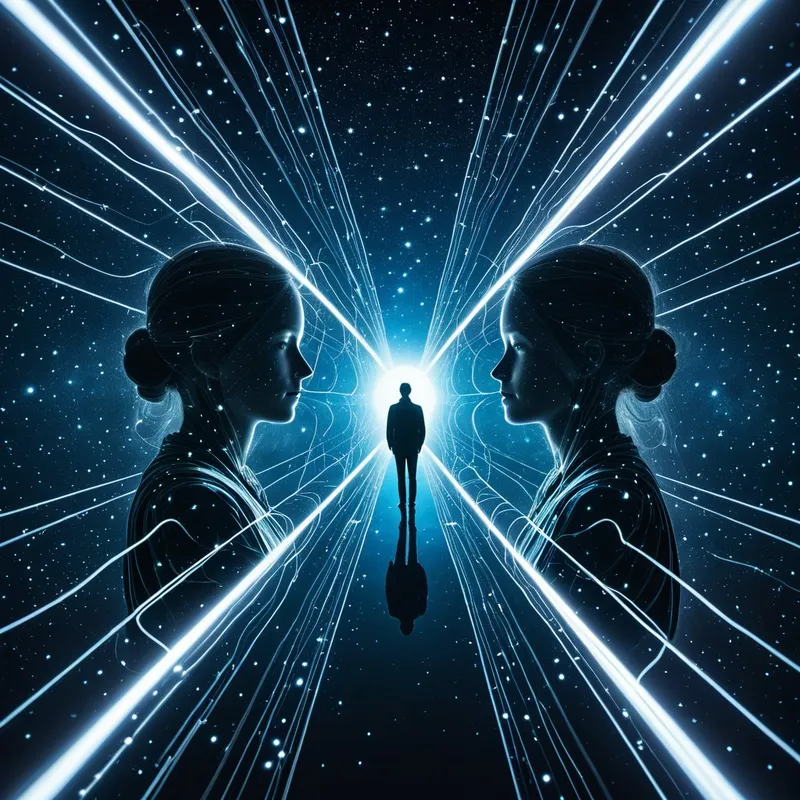
When this myth stirs in the modern unconscious, it often manifests in dreams of twins, mirrors, or inseparable pairs facing a crisis. One may be injured, lost, or fading. The dreamer might feel a profound, somatic sense of being split—a vital part of oneself feeling deadened or absent, while another part feels restless and ungrounded.
This is the psyche signaling a rupture in the dialogue between the mortal and immortal dimensions of the dreamer’s life. The “Castor” complex may be the embodied self, neglected through overwork, illness, or disassociation, crying out for recognition. The “Pollux” complex may be the spiritual or creative self, feeling trapped and suffocated by mundane obligations, longing for expression. The dream is an enactment of Pollux’s lament: a part of you is willing to let everything die if it cannot live in connection with its other half. The emotional tone is one of profound grief and urgent longing for wholeness.
Alchemical Translation
The individuation process modeled here is not one of heroic conquest, but of sacred negotiation and sacrificial love. The “gold” to be produced is not a unified, monolithic self, but a conscious, living relationship between opposites.
The first stage is the crisis of differentiation: recognizing that within us lies both the mortal (our flaws, limits, and animal nature) and the immortal (our ideals, boundless potential, and connection to the transpersonal). Like the quarrel over the cattle, our inner conflict often arises from a petty struggle for resources—time, energy, attention—between these sides.
The crucible is the experience of mortal wounding. Something precious—an identity, a relationship, a hope—must “die.” This is Castor’s fate. The key alchemical operation is Pollux’s response: the refusal to abandon the wounded part to the underworld. This is the ego’s sacrifice of its selfish immortality project to attend to the dying inner other.
Transcendence is not an ascent from the body, but a descent of spirit into matter to redeem it.
The final coniunctio (sacred marriage) is the alternating rhythm. For the modern individual, this translates to a practice of conscious oscillation. It is the artist who must also care for their physical health. The executive who must make space for soulful reflection. It is the commitment to honor both the need for rooted, earthly life (Hades) and the need for aspiration, meaning, and connection to the infinite (Olympus). We become whole not by choosing one brother over the other, but by holding the tension of their bond, becoming the vessel in which both can consciously, lovingly, and eternally reside. We become the constellation that contains both stars.
Associated Symbols
Explore related symbols from the CaleaDream lexicon: