Caste System Myth Meaning & Symbolism
A mythic tale of cosmic sacrifice and divine dismemberment, explaining the origin of social order and the inherent unity within apparent division.
The Tale of Caste System
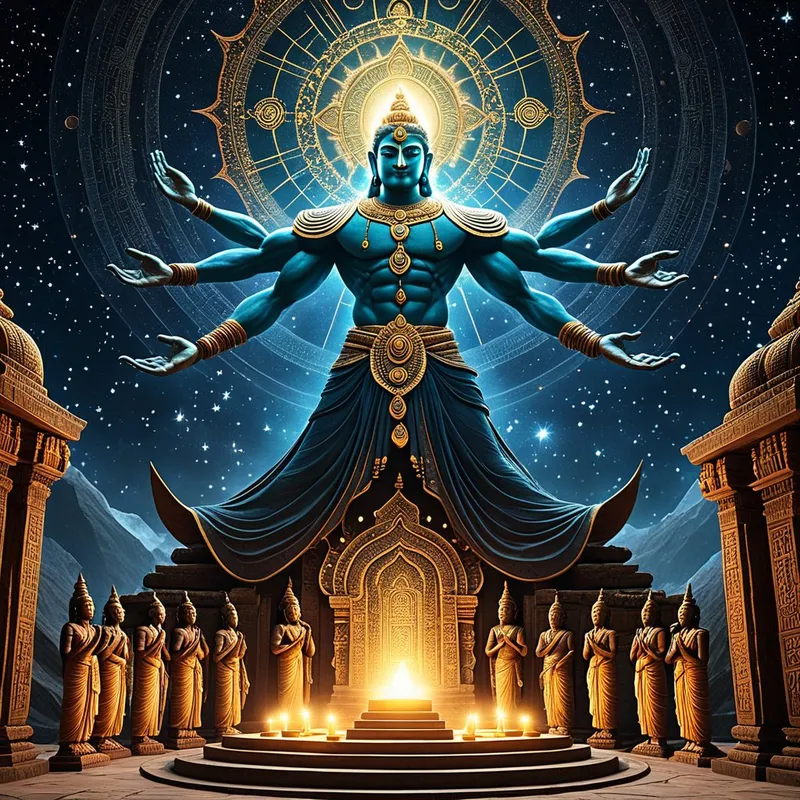
Listen. Before time was counted, before the first sunrise split the darkness, there existed only the One. Not a god as we know gods, but the Purusha, the Cosmic Person. A being of such immensity that a thousand heads could not contain his thoughts, a thousand eyes could not see his entirety, a thousand feet could not measure his stride. He was the universe in potential, a sleeping giant of star-stuff and silence.
Yet within that silence hummed a need, a sacred imperative. The void yearned for form, the potential for manifestation. So the gods themselves—Brahma, Vishnu, Shiva, and the host of devas—gathered in the boundless arena of non-being. With reverence and terrible purpose, they bound the great Purusha upon the altar of sacrifice. This was no act of malice, but the ultimate act of love—the sacrifice of the One for the sake of the Many.
The ritual fire was kindled from the first spark of consciousness. As the sacred chants, the mantras, rose like incense, the blades of divine intention descended. From the Purusha's mouth, pure and articulate, flowed not blood, but a radiant, singing light. This light cooled and solidified into beings of wisdom and sacred sound—the Brahmins, whose domain would be the word, the ritual, the bridge to the divine.
From the mighty arms, the seat of strength and action, sprang forth beings of power and protection, clad in the sheen of duty and polished bronze—the Kshatriyas, defenders of order, wielders of the scepter and the sword.
From the robust thighs, the pillars that support and enable movement, emerged beings of sustenance and exchange, their hands holding scales and measures—the Vaishyas, tenders of flocks, masters of craft, facilitators of life’s nourishment.
And from the steadfast feet, which bear the weight of the whole, arose beings of foundation and support, connected to the soil and the rhythm of toil—the Shudras, whose service would uphold the entire body of society.
His mind became the moon. His eye became the sun. From his breath, the wind was born. From his navel, the middle atmosphere; from his head, the sky. The world, in all its bewildering diversity—animals, plants, seasons, and realms—sprang forth from the offering of his boundless form. The One was dismembered so that the cosmos could live. The sacrifice was complete. Order, Dharma, was established from the very flesh of the primordial unity.
Cultural Origins & Context
This profound narrative is not a folktale but a foundational hymn, the Purusha Sukta, found in the ancient Rig Veda (circa 1500-1000 BCE). It was recited by Vedic priests, the very Brahmins whose origin it describes, during elaborate sacrificial rituals (yajnas). Its function was cosmological and sociological. It provided a divine, unchallengeable blueprint for the structure of early Vedic society, explaining not just how social classes came to be, but why they were inherently interconnected and sacred. The myth served as the ultimate justification for varna, framing it not as human invention but as cosmic anatomy. It was a story told to maintain order, to assign divine purpose to social function, and to root the hierarchy of the human world in the very act of creation itself. For millennia, this narrative was the bedrock upon which the complex, and later rigidified, caste system was built.
Symbolic Architecture
At its core, this is not a myth about social stratification, but a symbolic map of a primordial psychic and cosmic reality. The Purusha represents the undifferentiated Self, the unified field of consciousness before the psyche is structured into different functions and complexes.
The One must become Many for creation to occur. Individuation begins with a sacred dismemberment.
The four varnas symbolize the four essential, interdependent functions of a complete psyche and a healthy society:
- The Brahmin (Mouth): The cognitive, spiritual, and ethical function. It relates, thinks, and seeks meaning.
- The Kshatriya (Arms): The executive, protective, and willful function. It acts, defends, and imposes order.
- The Vaishya (Thighs): The nurturing, productive, and relational function. It creates, sustains, and exchanges value.
- The Shudra (Feet): The foundational, instinctual, and supportive function. It grounds, contains, and performs the necessary work of being.
The tragedy of history is the literalization and rigidification of this profound symbolism into a hereditary hierarchy. Psychologically, the myth warns that when these internal functions are projected outward, ossified, and ranked against each other in the external world, the living body of the Purusha—both society and the individual soul—is crippled.
The Dreamer's Resonance
When this mythic pattern stirs in the modern unconscious, it often manifests in dreams of fragmentation or rigid categorization. One may dream of being forced into a role that feels too small—a thinker forced to only labor, a caregiver forced to only fight. One might dream of a body divided into sections of different materials (crystal, iron, wood, clay) that are in conflict. There may be dreams of trying to speak (mouth/Brahmin) but being silenced, or trying to act (arms/Kshatriya) but being bound.
These dreams signal a somatic and psychological process of re-evaluating one's own inner caste system. The psyche is confronting where it has internally "enslaved" one function to another—where intuition is sacrificed to logic, where feeling is suppressed by duty, where the body's needs are ignored by spiritual ambition. The dream is a call from the dismembered Purusha within, yearning for reintegration.

Alchemical Translation
The alchemical journey modeled here is the transmutation of literal, projected social hierarchy into an internalized, dynamic harmony. The first, and most difficult, step is the sacrifice—the willing deconstruction of our own identified roles. We must allow our self-concept to be "dismembered" on the altar of self-awareness, to see ourselves not as "a priest" or "a warrior," but as containing all potentials.
The goal is not to become only the head, but to remember that the feet are also sacred, and that the body is one.
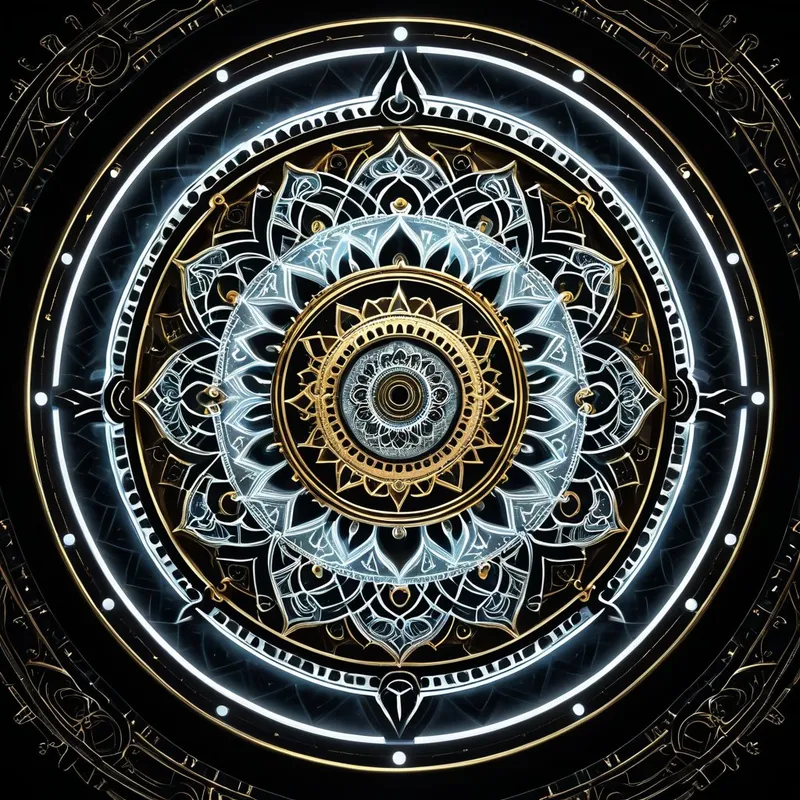
The process then becomes one of re-membering. The Vaishya function (feeling, relating) must nourish the Kshatriya (action). The Brahmin function (insight) must guide the Shudra (instinct). This is the inner Dharma—the right functioning of the whole Self. The oppressive external caste system becomes, in the alchemical vessel of the individuating psyche, a mandala of wholeness. We realize we were never meant to be a single caste, but to integrate the cosmos that the castes represent. The triumph is the realization that the unity of the Purusha was never lost, only forgotten in the necessary fragmentation of incarnation. To know thyself is to perform the ultimate ritual: the sacrifice of the limited ego, and the joyous recognition of the original, unified, and complete Person within.
Associated Symbols
Explore related symbols from the CaleaDream lexicon: