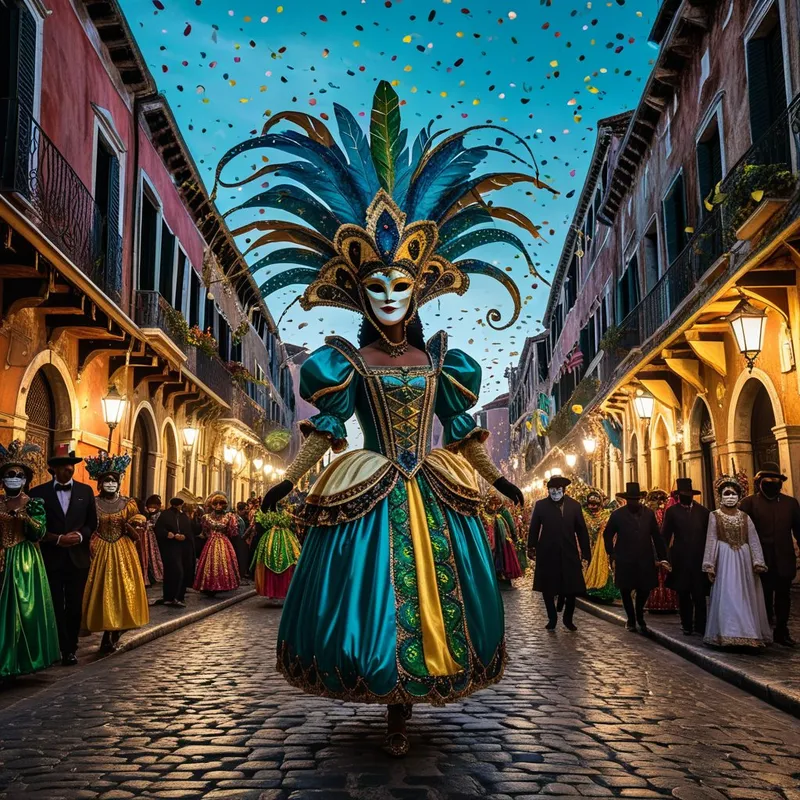
Carnival Myth Meaning & Symbolism
A world where order shatters for a day, masks reveal true faces, and the sacred chaos of Carnival births a renewed, more authentic society.
The Tale of Carnival
Listen, and let the drums pull you back. Before clocks, before steel, when the world was held in the brittle hands of The King of Ashes, there came a time each year when the very axis of reality groaned. It was the time of thin veils, when the sun hung low and weak, and the stored harvest grew meager in the larder. A deep, collective sigh would rise from the people—a sigh of rules followed, of backs bent, of faces kept still and proper under the Crown of Order.
But the sigh contained a seed. And the seed was a laugh, stifled for too long.
On the eve of the turning, a stranger would appear at the edge of the village, the city, the kingdom. No one could say from where. Some called this figure the Lord of Misrule. This entity wore not one face, but a thousand, stacked and shimmering—a mask of masks. It carried no scepter, but a fool’s bauble that tinkled with the sound of breaking glass. It spoke not with commands, but with a question that echoed in the marrow: “What if… the opposite?”
And with that question, the world flipped.
The solemn bells rang in a cacophony of joy. The guards placed their helmets on stray dogs and danced. The beggar was crowned with a paste jewel throne, fed sweets, and his pronouncements, however absurd, were treated as divine law. The rich man donned rags and found, to his shock, a strange freedom in invisibility. Faces were hidden behind leather, porcelain, and feather, and in hiding, the soul dared to show itself. Forbidden desires were sung in the square. Grievances were acted out in riotous, symbolic plays where the powerful were slapped with bloated bladders. The sacred was parodied; the profane was sanctified.
This was not mere revelry. This was a sacred storm. The Lord of Misrule did not bring anarchy, but a necessary chaos. It was the pressure valve of the cosmos. For days, the world existed in glorious, terrifying inversion. The King of Ashes watched, powerless, as his own crown was mimicked in painted paper.
But as the final night reached its fever pitch, as the drums beat like a frantic heart, a change would stir. The laughter would begin to taste like tears. The freedom would feel like vertigo. The masks, once liberating, would begin to feel like prisons of another kind. In the central square, at the zenith of madness, the Lord of Misrule would stand still. And one by one, the revellers would grow quiet.
The figure would then remove its outermost mask, and then another, and another, laying each one gently on the ground. Beneath was not a face, but a void—a calm, dark mirror. Into this mirror, every person saw their own reflection, stripped bare of both social role and carnival disguise. In that moment of profound silence, hung between chaos and order, the truth of the self was glimpsed.
With the first light of the new dawn, the Lord of Misrule was gone. The masks were collected and burned in a great, purifying pyre. The King of Ashes resumed his throne, but his grip was lighter, his eyes wiser. The people returned to their labors, but their steps had a new rhythm. The world had been scoured clean by fire and laughter. It was not the same order, but a renewed one. The Carnival was over. It was memory, and seed.
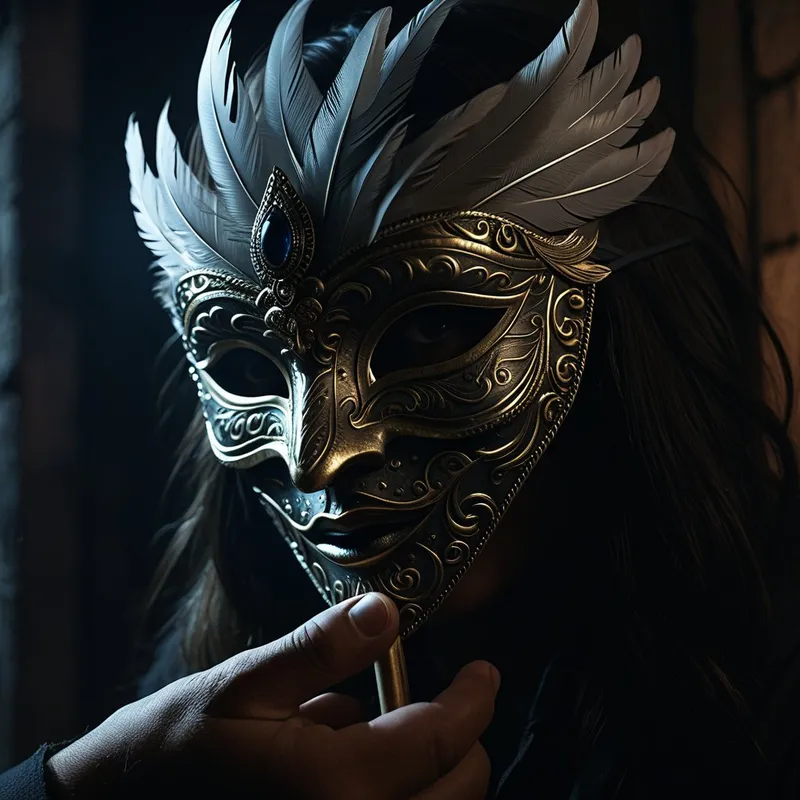
Cultural Origins & Context
The myth of Carnival is not bound to a single sacred text but is written in the collective ritual of humanity. Its roots are prehistoric, entwined with agricultural cycles—the frantic, propitiatory celebrations before the lean weeks of late winter, intended to banish evil spirits and ensure the return of spring. From the Roman Saturnalia to the masked processions of medieval Europe, from the indigenous festivals of the Americas syncretized with Catholic Lenten traditions to the modern global explosions in Rio, Venice, and New Orleans, the pattern is universal.
It was passed down not by bards, but by doing. Parents taught children how to craft masks. Communities collectively remembered the “rules of misrule.” Its societal function was paramount: it was a sanctioned, temporary outlet for repressed social tensions, a steam valve preventing permanent explosion. It reinforced the very social order it seemed to attack by providing a contained, ritualized space for its inversion. The myth was the story told about the ritual, giving cosmic meaning to the human need for periodic, structured madness.
Symbolic Architecture
At its core, Carnival is the myth of enantiodromia—the Jungian principle that an extreme force inevitably generates its opposite. The rigid, conscious Persona of society and the individual, over-exercised, summons forth its shadow twin: the chaotic, unconscious, instinctual Psychic Underworld.
The mask does not hide the self; it reveals the self that the self dares not show.
The Lord of Misrule is the personification of the Trickster Archetype, the divine agent of chaos necessary for renewal. The King of Ashes represents the outworn, desiccated ruling principle of the conscious ego or the collective status quo. The burning of the masks is not destruction, but alchemical calcination—the burning away of the false, both the social mask (persona) and the reactive carnival mask (shadow), to glimpse the bare essence beneath.
The ultimate resolution is not the victory of chaos over order, or order over chaos, but the establishment of a dynamic, living tension between them. The renewed king is one who has integrated the wisdom of the fool.
The Dreamer's Resonance
When this myth stirs in the modern dreamer, it signals a psyche straining under excessive order or repression. Dreaming of chaotic festivals, lost masks, or being a rule-maker suddenly powerless in a world of laughter, points to a critical psychological process.
Somatically, one might feel a build-up of tension, a tightness in the jaw (the effort of keeping a straight face), or restless energy. Psychologically, it is the Self’s demand for shadow integration. The dream Carnival is the unconscious staging its own necessary revolution. To dream of joyfully wearing a mask may indicate a healthy exploration of repressed facets. To dream of a mask fused to the face, or of being unable to remove it, speaks to identification with a role—either the “proper” self or the rebellious “anti-self”—that has become a prison. The burning pyre in a dream is a profound symbol of the psyche’s innate drive toward purification and wholeness, however painful the release may be.
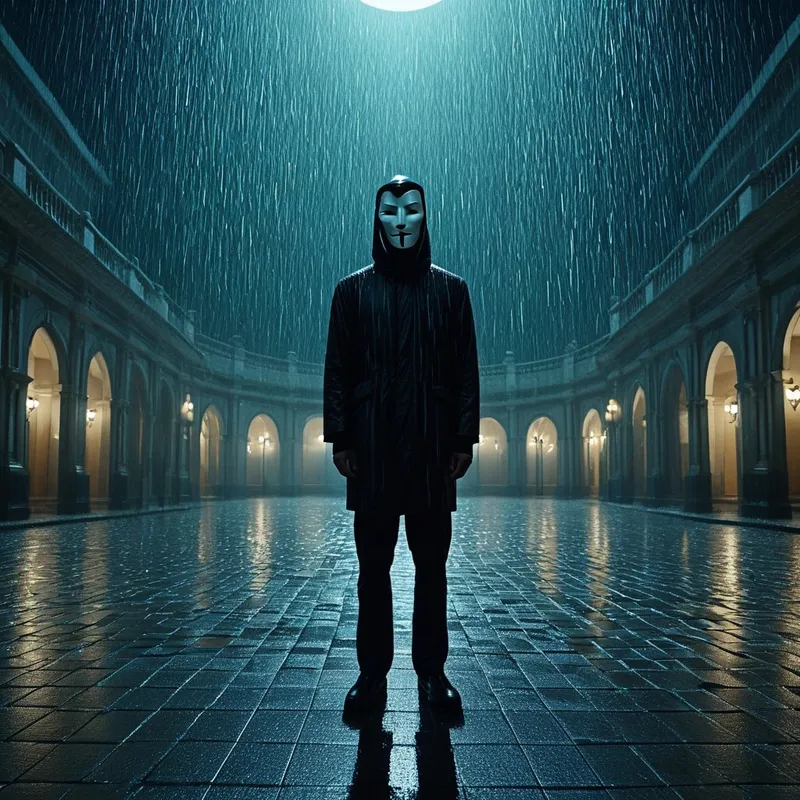
Alchemical Translation
The Carnival myth is a master blueprint for psychic transmutation, mapping the journey from a brittle, one-sided consciousness toward the integrated wholeness of Individuation.
The first stage, Nigredo, is symbolized by the bleak rule of the King of Ashes—the depressive, sterile state of an over-domesticated life. The eruption of the Carnival is the chaotic, often frightening, Solutio—the flooding of the conscious mind by the unconscious. Here, contents long denied (the fool, the beggar, the sensualist, the critic) surge forth.
The ego does not find itself by building higher walls, but by navigating the flood it once feared.
The crucial alchemical work happens in the silent moment of unmasking. This is Coagulatio—the condensation of insight from the chaotic waters. Seeing one’s true face in the void is the confrontation with the Self, distinct from both persona and shadow.
Finally, the burning of the masks and the return to order is Rubedo, the reddening. It is not a return to the beginning, but the creation of a new, more resilient consciousness. The renewed “king” is the integrated ego, now in service to the greater Self. It has made peace with its inner Lord of Misrule, allowing for periodic creative disruptions without fear of total dissolution. The modern individual learns to build “sacred Carnivals” into their life—ritual spaces for play, inversion, and shadow-expression—thus continually renewing their own psychic order, making it alive, flexible, and whole.
Associated Symbols
Explore related symbols from the CaleaDream lexicon: