
Camelot Myth Meaning & Symbolism
A shining kingdom of perfect order and justice, born from a destined king, shattered by human frailty, leaving a promise of return.
The Tale of Camelot
Listen, and I will tell you of a city that was not built of stone and mortar, but of a dream. It began in the mists of Avalon, where a wizard, Merlin, saw a vision in the water. He saw a king who was not yet a king, a boy named Arthur, who would draw a sword from an anvil set in stone, a sword that was not a sword but a covenant. And so it came to pass. From that act of divine right made manifest, the dream took form.
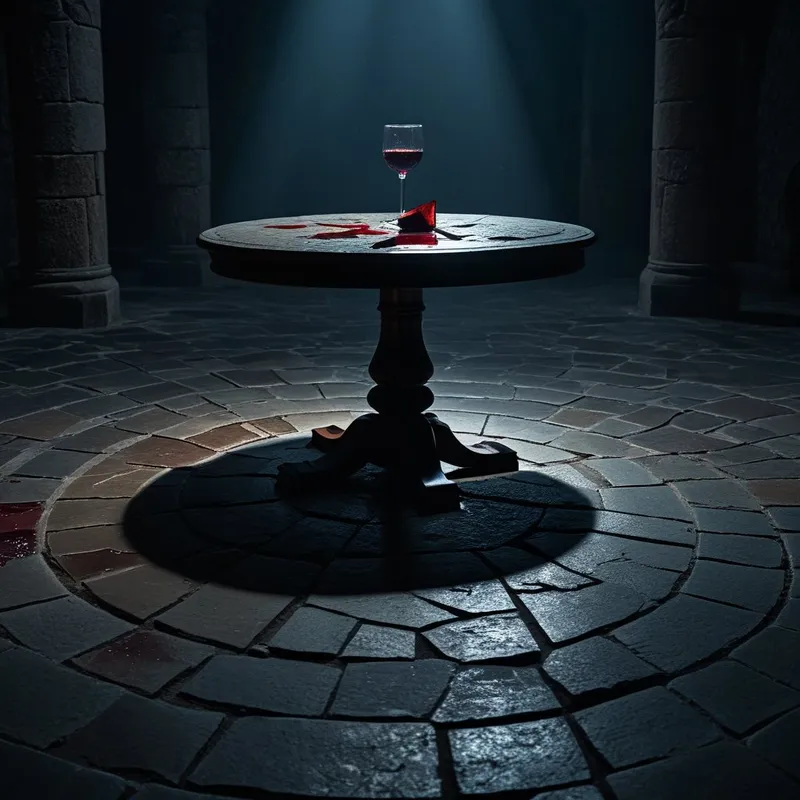
On a hill above a glassy mere, under skies that seemed forever fair, the towers of Camelot rose. They were white as bone and bright as a promise, their banners snapping in a wind that carried the scent of apple blossoms and forge-fire. Here, the king, now crowned, established his rule. He gathered the bravest, the truest, the most noble knights from all corners of the land. He had forged for them a great table, round so that no man sat at its head, and all were peers in purpose. This was the heart of the dream: the Round Table, a circle of fellowship sworn to a code—to protect the weak, to seek justice, to live with honour.
For a season, it was true. The land knew peace. The Grail Quest shone as a holy fire in the hearts of the knights, a search for the ultimate source. The court was a tapestry of vibrant life: the wisdom of Merlin, the fierce love of Guinevere, the peerless prowess of Lancelot. Camelot was not just a place; it was a perfect moment, a suspended breath where the ideal and the real touched.
But a dream is a fragile vessel in a world of flesh. The crack began in the human heart. The love between Lancelot and Guinevere, a love as passionate as it was forbidden, grew in the shadows of the bright towers. The perfect circle was broken by a secret. The king’s own son, the bitter Mordred, nurtured the seed of this betrayal, watering it with envy and ambition. Whispers became accusations, honour clashed with love, and the fellowship splintered.
The final act was not a siege of armies, but a collapse of meaning. The knights, once brothers, faced each other on the bleak field of Camlann. The sky wept. The dream died not with a shout, but with a sigh, as Arthur fell, mortally wounded, and was borne away across the water to Avalon. The towers of Camelot did not crumble; they faded, like a mirage when the heat of belief dissipates. The city of the dream was gone, leaving behind only a story, a haunting melody of what was, and a whisper of what might one day be again.
Cultural Origins & Context
The myth of Camelot is a peculiarly British alchemy, brewed in the cauldron of post-Roman chaos. Its roots are not in a single time, but in a longing for one. Following the collapse of Roman authority in the 5th century, Britain fractured into warring kingdoms. From this historical trauma emerged a folk memory, and later, written histories like the Historia Brittonum, speaking of a war-leader named Arthur who won great battles against the Saxon invaders.
This kernel of a possible historical figure was then transformed by centuries of storytelling. It was woven into the fabric of The Mabinogion, found its definitive shape in Geoffrey of Monmouth’s grand but fanciful Historia Regum Britanniae, and was finally romanticized and codified by French poets like Chrétien de Troyes and later by Sir Thomas Malory in Le Morte d'Arthur. These authors were not historians; they were myth-makers for their own age, using the Arthurian frame to explore contemporary ideals of chivalry, courtly love, and Christian piety. Camelot, as the pinnacle of this world, served a crucial societal function: it was a mirror held up to feudal society, reflecting both its highest aspirations for order and justice, and its deepest fears about betrayal and entropy.
Symbolic Architecture
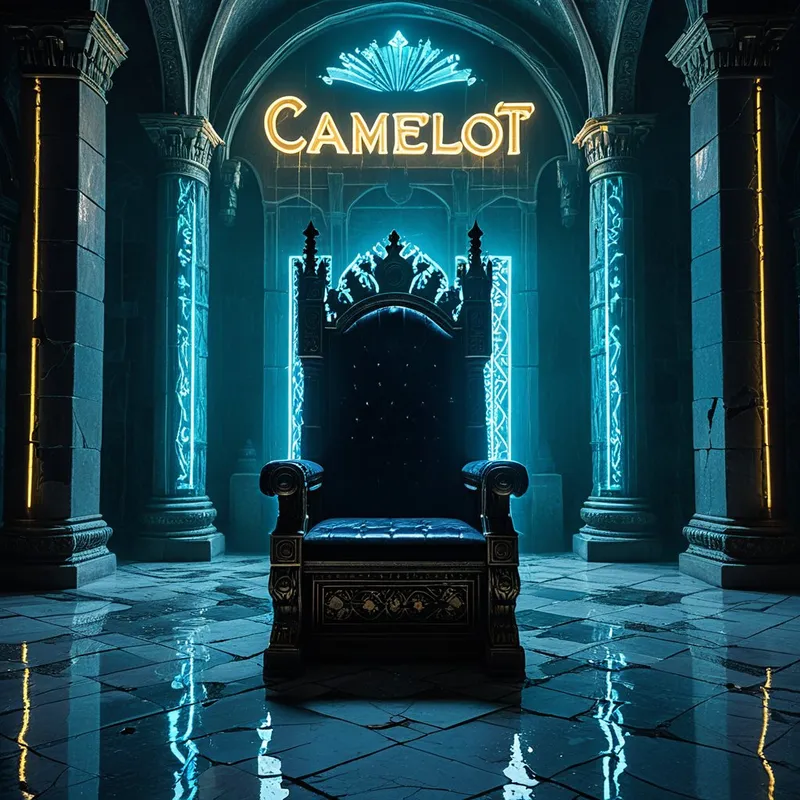
Camelot is the ultimate symbol of the Self achieved. It represents a psychic state where consciousness has organized the inner realm—the diverse "knights" of our impulses, skills, and virtues—into a harmonious, functioning whole under the sovereignty of a central, legitimate authority (the ego, in alignment with the Self).
Camelot is not a place one finds, but a kingdom one builds from the extracted sword of one's own destiny.
The Round Table is the mandala of this wholeness. Its circular form negates hierarchy, symbolizing the equality of all aspects of the psyche in service to the central purpose. The quest for the Holy Grail represents the transcendent function, the pull toward something beyond the perfectly ordered ego, which ultimately destabilizes it. The fall, catalyzed by the Lancelot-Guinevere-Mordred triangle, is not an accident but an inevitability. It symbolizes the irruption of the personal shadow (forbidden passion), the archetypal shadow (Mordred’s nihilistic envy), and the anima/animus dynamics (the queen as soul-image) into the conscious structure. The perfect order cannot withstand the full, messy reality of the unconscious.

The Dreamer's Resonance
To dream of Camelot is to dream of a psychic potential. Finding oneself in its shining halls often coincides with a period of hard-won inner order, perhaps after a successful "quest" or integration. The dreamer may feel a profound sense of rightness, purpose, and belonging.
But more commonly, and more potently, we dream of Camelot in decay, under siege, or already empty. These are dreams of a crumbling Self. They signal that a previously successful psychological structure—a career identity, a belief system, a relationship that defined one's world—is being undermined by repressed elements. The dream Mordred is often a neglected aspect of the self, rising in rebellion. The dream Lancelot is a prized virtue (like loyalty or passion) now in conflict with the ruling principle. Such dreams are somatic alarms; they create a feeling of profound loss, anxiety, and groundlessness, mirroring the psyche's painful but necessary dismantling of an old order to make way for a new, more inclusive one.
Alchemical Translation
The myth of Camelot models the full, tragic cycle of psychic transmutation, far beyond the initial heroic triumph. The drawing of the sword from the stone is the nigredo—the claiming of one's unique fate from the unconscious, heavy and dark. The building of Camelot is the albedo—the purification and ordering into a brilliant, conscious structure. This is often mistaken for the final goal of individuation.
The true alchemy begins not with the building of the golden city, but with its willing dissolution in the waters of Avalon.
The Grail Quest initiates the citrinitas, the yellowing, a spiritual call that lures the psyche beyond its own perfect walls. The fatal betrayal and battle represent the rubedo, the reddening. This is the most critical and painful phase: the conscious structure must be sacrificed, burned in the fires of conflict and broken loyalty. The king—the ruling consciousness—must be wounded unto death. This is not failure, but a sacred surrender. The final journey to Avalon is the return to the primal, nurturing unconscious, not in defeat, but for transformation. The promise of Arthur's return is the myth’s great psychological truth: the Self achieved is not a permanent state, but a pattern that must die and be reborn, each time more comprehensive. We do not live in Camelot. We are forever building it, losing it, and holding the faith for its impossible, necessary return.
Associated Symbols
Explore related symbols from the CaleaDream lexicon: