The Alchemy of the Perfect World: Decoding Idealism in Dreams
The Somatic Echo
It begins not as a thought, but as a sensation: a subtle, magnetic pull in the center of the chest, a feeling of uplift. The breath feels cleaner, the spine straighter, as if an invisible thread is drawing you toward a horizon of pure potential. There is a lightness, almost a buoyancy, that can feel like hope but carries a distinct, crystalline fragility. It is the body remembering a blueprint for a world that should be—a world of perfect symmetry, unbroken justice, and seamless beauty. This is the somatic signature of idealism before it becomes an idea; it is the ghost of a wholeness we have never known, yet feel we were promised. The tension lies in the contrast: this upward lift in the heart, suspended above the familiar, grounding weight of the mundane world in the gut.
The Dreamer's Log
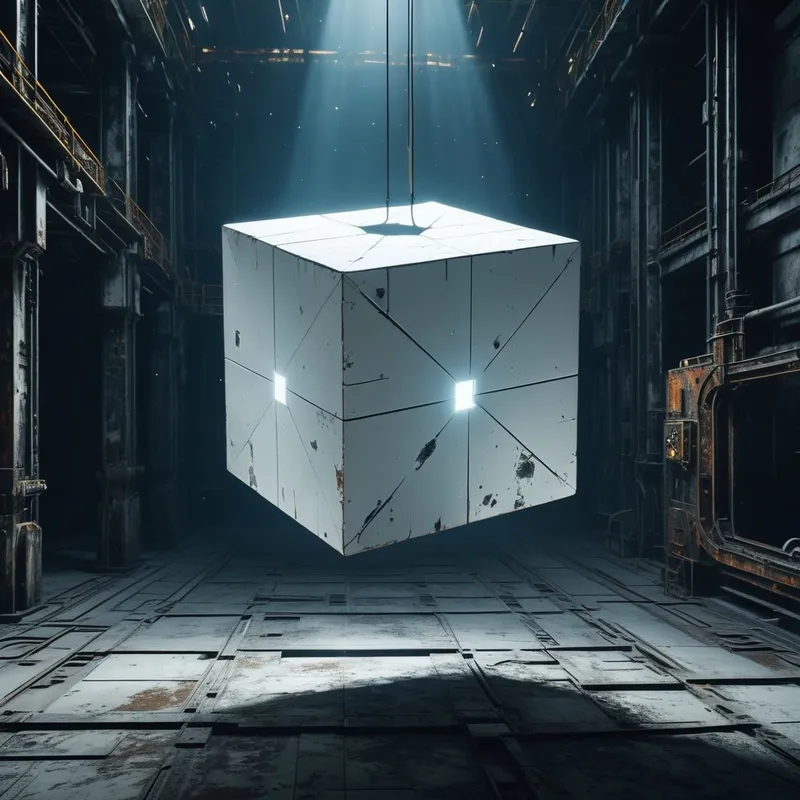
I stand in the heart of a derelict power station, all rusted iron and shattered concrete. In the center of the cavernous space, hovering a few feet above the debris-strewn floor, is a perfect, seamless white cube. It emits a soft, unwavering light and a low, resonant hum. I know, with absolute certainty, that if I can just connect this cube to the ancient, broken machinery around me, the entire facility—and by extension, the world outside—will be restored to a state of flawless, silent operation. But there are no ports, no wires, no interfaces. Only the cube, the ruins, and the hum.
Alchemical Interpretation: The dream presents the pristine, abstract ideal (the cube) as fundamentally incompatible with the complex, decayed reality of the existing system, demanding not a simple connection, but a total re-imagining of the machinery of the self.
The False Lead
Idealism in dreams is not mere optimism or positive thinking. It is not the cheerful denial of the Shadow Innocent, painting over cracks with bright colors. To mistake it for simple hope is to misunderstand its profound and often brutal function. The dream of idealism is not a forecast of future happiness; it is a diagnostic tool, a high-resolution scan of the gap between your soul’s deepest blueprint and your life’s current architecture. Its pain does not signal failure, but precision. The grief you feel when the ideal shatters is not a sign you were wrong to dream, but a measure of how deeply you dared to envision.
Psychological Architecture
The psychological work of idealism is the most delicate and demanding of excavations. It requires you to hold two opposing truths in your psyche’s crucible without allowing either to annihilate the other. The first truth is the vision itself—the pure, uncorrupted image of justice, love, or creation. The second is the raw, unvarnished truth of the present reality, in all its compromise, limitation, and brokenness.
The shadow work here is to discover which internal voices have co-opted the ideal. Is it the inner perfectionist, using the ideal as a weapon for self-flagellation? Is it the wounded child, clinging to the ideal as a fantasy of rescue? Or is it the righteous critic, wielding the ideal to judge the world and everyone in it? True individuation in the face of idealism occurs when you can separate the pure, archetypal longing from these personal, historical complexes. You must grieve the ideal as a literal possibility, not to become cynical, but to liberate its essence. This is the alchemy: the perfect, abstract cube must dissolve into a liquid state of principles and values, which can then flow into and reform the very structure of your being—the rusty, personal machinery of your habits, relationships, and choices.
Mythic Resonance
We see this eternal process in the myth of the Tower of Babel. Humanity’s collective ideal was to build a structure so perfect, so unified, it would reach heaven itself—a sublime vision of connection and transcendence. Its shattering, through the confusion of languages, was not a punishment for ambition, but a necessary fracturing. The ideal of a single, monolithic tower could not sustain the burgeoning, diverse complexity of human experience. The true integration of that ideal did not die with the tower; it was redistributed. It became the drive behind ten thousand different cultures, languages, and arts—the ideal of reaching for the divine, fragmented and made incarnate in a million different, grounded forms. The dream of a single perfect language transmuted into the profound beauty of all languages.
Symbolic Nodes
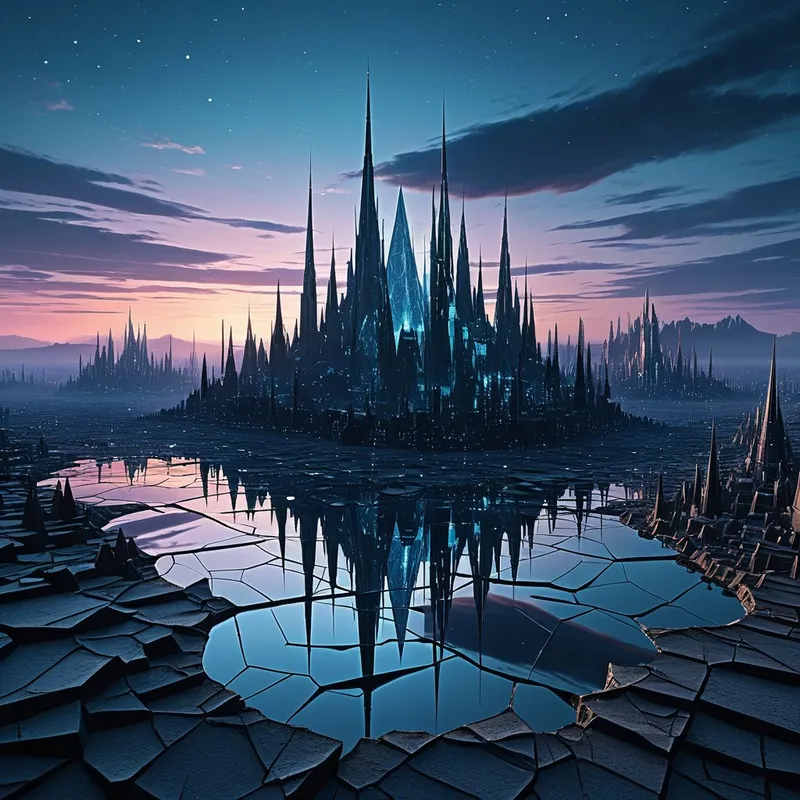
- Impossible Architecture: Floating cities, crystalline structures, buildings of impossible geometry or luminous purity.
- Pristine, Isolated Objects: A single perfect rose in a wasteland, an unblemished artifact among ruins, a source of pure light in darkness.
- Broken or Incompatible Systems: Trying to plug a modern device into an ancient socket, attempting to read a language of light on a page of stone.
- The Unreachable Center: A glowing core visible through layers of obstruction, a destination that remains perpetually the same distance away.
- Ineffective Tools: Brushes that cannot hold paint, keys that do not fit pristine locks, transparent walls that cannot be breached.
Archetypal Resonance
The energy at the core of the idealism dream is that of The Creator Archetype. The Creator is the architect of worlds, the bearer of the vision that precedes form. Its somatic echo is that chest-pull of inspiration, the urge to make the internal blueprint external. Its shadow, however, is the peril of this theme: the Mad Scientist or Self-Centered Artist, who becomes so enamored with the purity of the idea that they reject the messy, collaborative, and imperfect process of real-world manifestation. The alchemical potential lies in the Creator’s journey from the tyranny of the perfect idea to the sovereignty of the resilient, adaptable, and living creation—a creation that can include flaws, history, and shadow, and thus become truly whole.
The Alchemical Process
The transmutation of idealism is a process of sacred dissolution. The intense heat is applied by the conscious, heartbreaking acknowledgment that the ideal, in its pristine, imagined form, cannot and will not manifest. This is the nigredo, the blackening, where the perfect cube seems to dim. The pressure is the sustained willingness to dwell in the grief of that realization without retreating into cynicism (the shadow orphan) or forceful imposition (the shadow ruler).
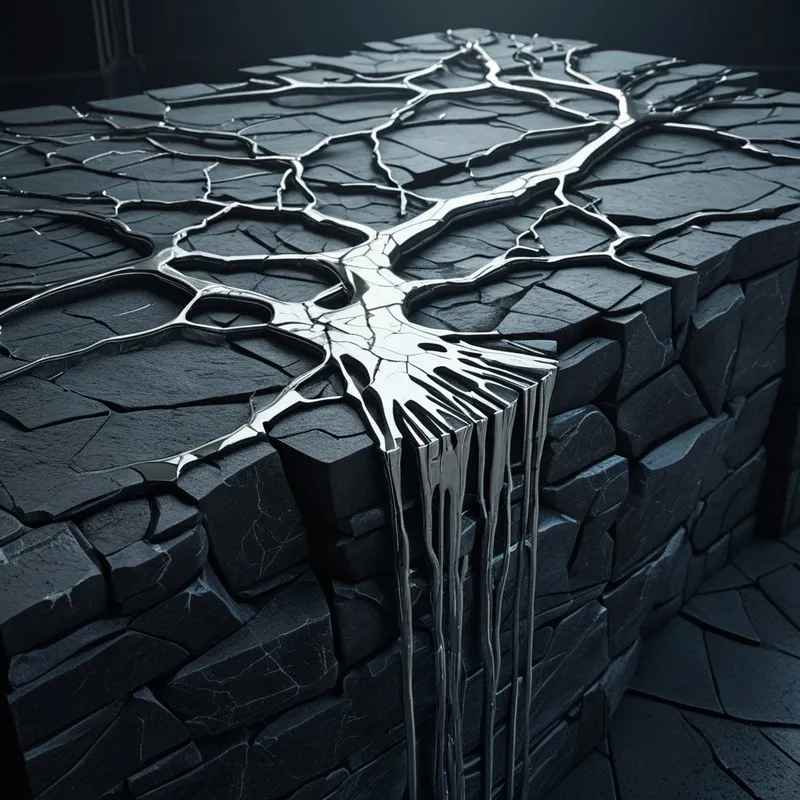
In this liminal state, the solid, brittle structure of the ideal begins to soften. Its absolute, geometric certainty melts into a pool of core values—beauty, justice, connection, integrity. This liquid state is the albedo, the whitening. Now, in its fluid form, the essence of the ideal can finally interact with the base matter of your reality. It seeps into the cracks of your personal history, your relationships, your daily choices. It alloys with your courage, your patience, your compassion. It does not build a floating crystal city; it teaches you how to lay one better brick, how to have one more honest conversation, how to create a small pocket of unexpected grace in a flawed world. This is the rubedo, the reddening: the birth of a grounded, embodied, and resilient wisdom where a brittle fantasy once stood.
The Integration Protocol
Question 1: Where in my life right now am I holding an ideal so tightly that its brittleness is causing me pain? Can I name the specific, perfect image I am clinging to?
Question 2: If this ideal were to magically manifest in its perfect form, what deeper need or value of mine would it actually satisfy? (e.g., safety, recognition, freedom, belonging).
Question 3: What is one small, imperfect, but tangible action I could take today that would move 1% in the direction of that deeper value, while fully accepting the messiness of the attempt?
Action 1 (The Grounding Contrast): For five minutes, sit quietly and visualize your ideal scene (the perfect relationship, career, self) in vivid detail. Then, immediately shift to visualize your current reality in the same area, with the same sensory detail. Hold both images without judgment. Feel the gap not as failure, but as a sacred, creative space.
Action 2 (Manifestation Sketch): Using any medium—pencil, digital art, collage—create an image that combines a symbol of your ideal with a symbol of your current reality. Do not make it pretty or resolved. Let the cube be half-submerged in soil. Let the pristine rose grow from a crack in concrete. The art is in the forced marriage of the two.
Action 3 (The Imperfect Ritual): Choose a principle from your ideal (e.g., "clean communication"). For one week, practice enacting it in a low-stakes, "imperfect" way. Send a slightly vulnerable text. Voice a small preference you usually suppress. The goal is not the perfect outcome, but the embodied practice of the value, in real time, with real people.
Final Validation
It is a profound and lonely ache, to carry a vision of a more beautiful world within a self and a society that seem built of lesser stuff. That ache is not your naivete; it is your integrity calling to you from a future it is your task to build, not from pristine materials, but from the very rubble of your disillusionment. The ideal did not fail you. It initiated you. It showed you the true north of your soul so that you could learn the sacred, patient, and merciful art of navigation through the real. Your sovereignty is not born from achieving the perfect vision, but from consenting to be the humble, flawed, and courageous architect of the next, better, and living world.