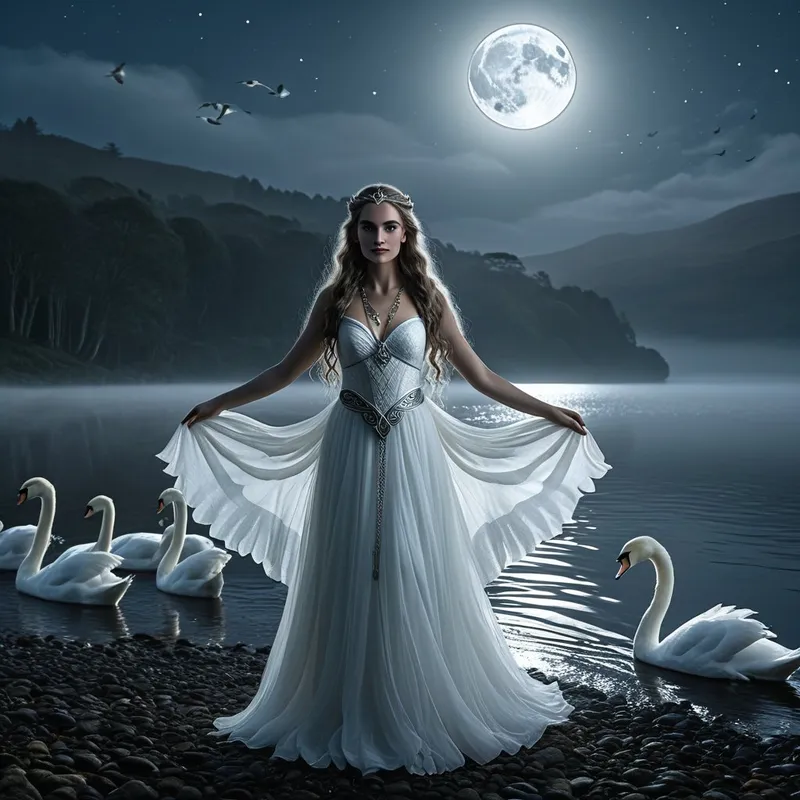
Caer Ibormeith Myth Meaning & Symbolism
A prince must recognize his destined love, Caer, among a flock of identical swans, or lose her forever to the cycles of dream and form.
The Tale of Caer Ibormeith
Listen. The story begins not with a waking world, but with a dream that would not release its dreamer.
In the great hall of the Dagda, his son, Aengus Óg, was wasting away. No sickness of body plagued him, but a sickness of spirit. For a year, a vision had visited his sleep: a woman of such beauty that her memory poisoned all waking joy. She stood by a lake, her hair like spilled moonlight, and when she sang, even the stones wept. But upon waking, she vanished, leaving only a hollow ache and her name, whispered by the dream-wind: Caer Ibormeith.
Driven to the edge of madness, Aengus enlisted his kin. For three years they scoured Ireland, until at last, at the lake of the Dragon’s Mouth, they found her. And the sight broke Aengus’s heart anew. For Caer lived under a cruel enchantment. One year she was in human form; the next, she took the shape of a swan. And she was not alone. One hundred and fifty maidens, bound to the same fate, swam with her, all transformed, all identical.
Her father, a king of the Sídhe, was cold and unyielding. “You may have her,” he said, his voice like winter earth, “but you must ask her yourself. And you may only ask on the eve of Samhain, when she and her companions take their swan-shapes at the lake.”
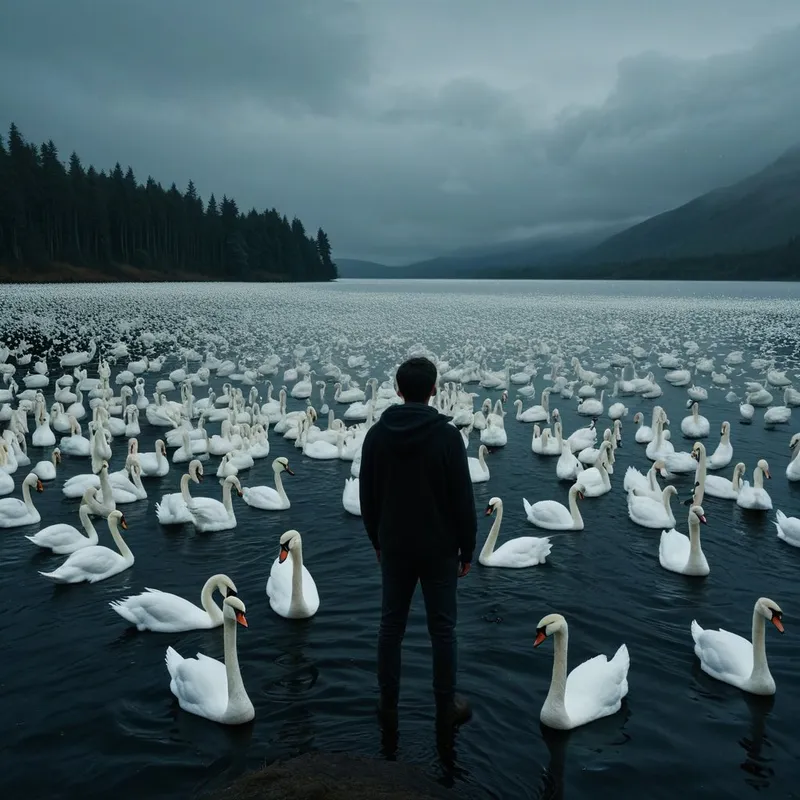
Hope, thin and desperate, was all Aengus had. He waited through the turning seasons. Finally, on that sacred, thin-veiled night, he stood at the shore of the lake. The air crackled with the magic of the threshold. The water, black as obsidian, began to churn. And from its depths, they emerged: one hundred and fifty swans, glorious and terrifying in their perfect sameness, each clad in a silver chain. Their wings beat the mist into spirals, their calls a single, haunting chord.
The challenge was absolute. To call to the wrong swan was to fail forever. To not recognize his own dream-soul was to be unworthy of her. Aengus’s eyes, sharpened by longing and poetic sight, scanned the flock. And there—amidst the blinding, beautiful chaos—he saw it. Not a difference in form, but a subtle knowing. A presence. He looked upon one specific swan and saw not a bird, but the woman from his dream, the essence he had carried for years. He called her true name: “Caer Ibormeith.”
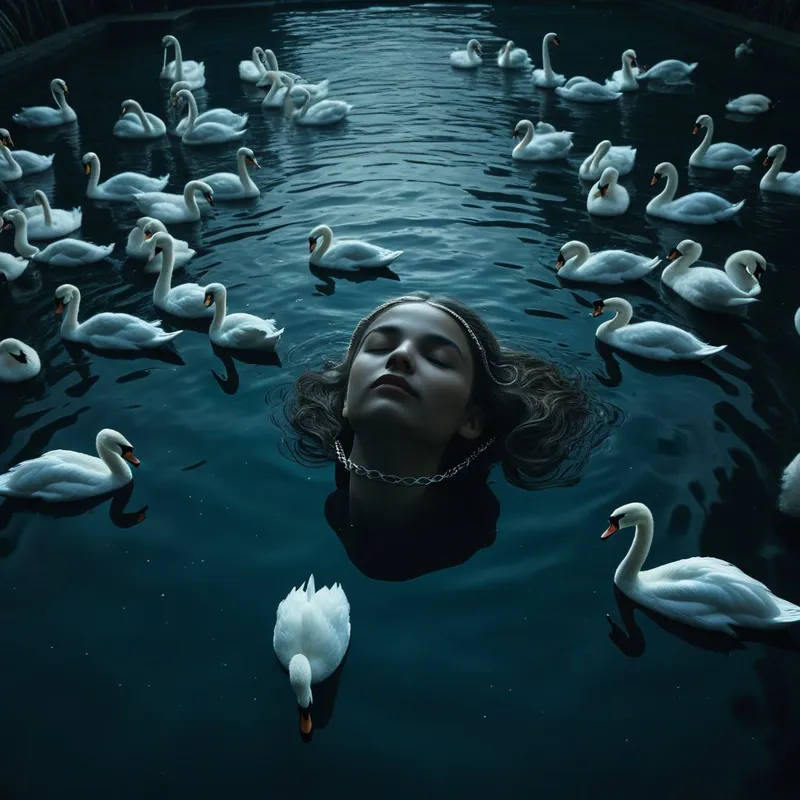
At the sound of his voice speaking her truth, the chosen swan glided to him. He reached out, and as his hands touched her feathered form, the enchantment shattered not with a break, but with a transformation. His own shape flowed into that of a swan. Together, they took flight, two swans now, linked by the silver chains of their shared fate. They circled the lake three times, their song so heartbreakingly beautiful that all who heard it fell into a peaceful sleep for three days and three nights. Then, they flew on to Brug na Bóinne, where they resumed human form, united at last, their song the bond between the dream-world and the waking one.
Cultural Origins & Context
This myth comes to us from the medieval Irish text, The Dream of Aengus (Aislinge Óenguso), part of the wider cycle of tales concerning the Tuatha Dé Danann. It is crucial to understand that these narratives were not mere entertainment; they were maps of reality. Preserved and recited by the filid (poet-seers), these stories encoded laws of sovereignty, cosmology, and the nature of the soul.
The setting at Samhain is not incidental. This was the time when the boundaries between this world and the Otherworld dissolved. Encounters with the Sídhe, transformations, and profound tests were not only possible but expected. The myth of Caer Ibormeith functions as a teaching story about the nature of destiny (geis) and true sovereignty. It illustrates that what is most deeply destined is not simply given; it must be recognized and claimed through a perilous act of discernment, often at the most liminal of times and in the most deceptive of forms.
Symbolic Architecture
At its core, this is a myth of anam ċara (soul friend) and the ordeal of recognition. Caer Ibormeith is not a passive prize but an autonomous being of dual nature, embodying the unity of human and animal, waking and dreaming, individual and collective.
The soul’s true counterpart is often found not in broad daylight, but in the shape-shifting twilight, disguised among a hundred replicas of itself.
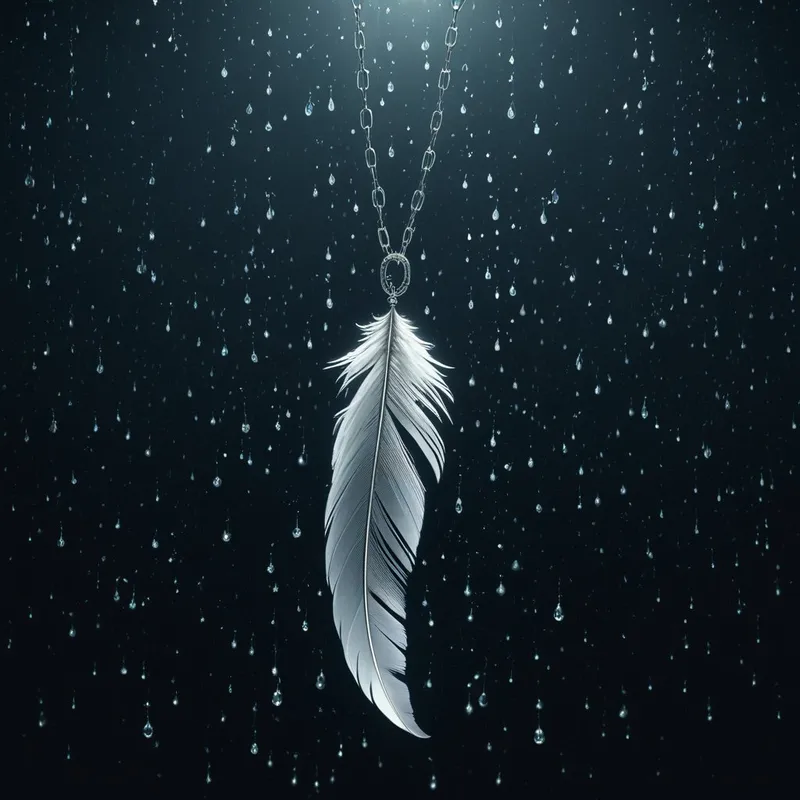
The swan is a potent symbol of the soul’s journey, of elegance, fidelity, and transformative passage between realms (water, earth, air). The silver chain signifies the enchantment—the binding condition of her existence—but also the tangible connection between forms, a tether of destiny. The one hundred and fifty identical swans represent the overwhelming power of the collective, the myriad possibilities and false images that obscure the unique essence of the true self or the true other. Aengus’s dream is the initial call from the unconscious, the psychic fact that precedes and demands physical manifestation. His wasting away is the sickness of the un-lived life, the soul starving for its missing half.
The triumphant act is not a battle of strength, but one of seeing. Aengus must differentiate the essential Caer from the identical flock. This is the supreme psychological task: to recognize the unique signature of one’s own destiny, one’s own soul-image (anima), amidst the clamor of internal complexes and societal expectations.
The Dreamer's Resonance
When this myth stirs in the modern psyche, it often surfaces in dreams of searching or tests of recognition. You may dream of trying to find a specific person in a vast, identical crowd, or of needing to identify a unique object among many copies. There is a somatic quality of anxiety mixed with acute focus—a feeling that everything hinges on this one act of perception.
Psychologically, this signals a critical phase of individuation. The dream-ego is confronted with the need to differentiate the authentic core of the Self from the “flock” of personas, internalized voices, and ancestral patterns (the 150 swans) that we all carry. The “Caer” in the dream could represent a genuine calling, a creative impulse, a aspect of one’s own soul, or the essence of a real relationship. The dream is staging the ordeal: can you, from a place of deep, intuitive knowing (Aengus’s poetic sight), recognize and name what is truly yours? The anxiety in the dream mirrors the risk of psychic loss—the fear that if we choose wrongly, our true destiny will recede back into the cyclical enchantment of unconscious repetition.
Alchemical Translation
The alchemical process modeled here is the conjunctio (sacred marriage), but one achieved through the preliminary and essential stage of separatio and discriminatio.
First, the raw material (Aengus’s longing) is activated by the prima materia of the dream (the vision of Caer). This sets the opus (the work) in motion. The long search represents the necessary period of fermentation and contemplation. The crisis at the lake is the nigredo—the blackening, the moment of maximum despair and confusion facing the undifferentiated mass.
The transmutation occurs not in the claiming, but in the seeing. The leaden confusion of the identical flock is turned to the gold of recognition by the philosopher’s stone of true attention.
Aengus’s act of recognition is the albedo—the whitening, the dawning of lucid consciousness that separates the essential from the non-essential. When he calls her name and touches her, and is himself transformed, this is the rubedo—the reddening, the culmination. The two become one, but only by first becoming the same in kind (both as swans). This is the alchemical secret: to unite with the Other, one must first undergo the same transformation, must join them in their medium. For the modern individual, this translates to the process of engaging with a deep inner other (like the anima/animus) or a profound life calling. One cannot integrate it from a distance, in one’s old form. One must be willing to be shaped by it, to don its “feathers,” to learn its “song.”
Their flight and their song that puts the land to sleep is the final stage: the creation of the lapis philosophorum (philosopher’s stone). The united entity produces an effect—a harmonious, enchanting influence that temporarily suspends ordinary consciousness (sleep) in others. In psychological terms, the successfully integrated Self achieves a state of inner unity that radiates a calming, transformative presence into the world. The struggle of recognition ends not in mere possession, but in the creation of a new, transcendent song that bridges all realms.
Associated Symbols
Explore related symbols from the CaleaDream lexicon: