Burnt Offering Myth Meaning & Symbolism
A sacred ritual of total surrender, where smoke becomes a bridge between the human and the divine, consuming the tangible to release the intangible.
The Tale of Burnt Offering
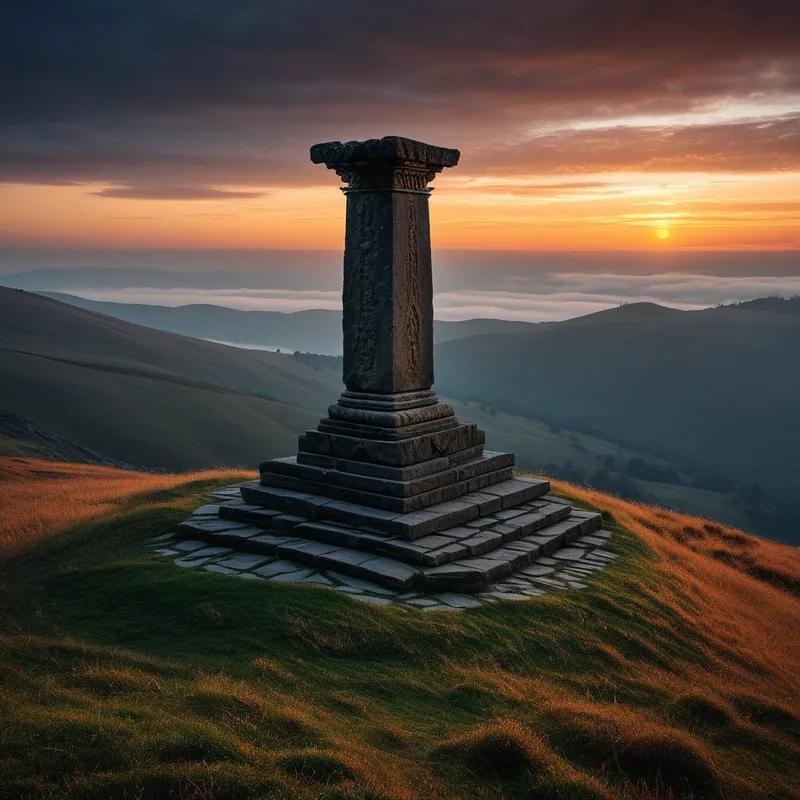
The air on the mountain is thin, sharp with the scent of crushed herbs and ancient stone. It is the hour between darkness and light, when shadows cling to the valleys and the first blade of sun cuts the eastern ridge. Here, at the meeting place of earth and sky, a figure stands before an altar of unhewn rock. His breath plumes in the chill, his heart a drum against his ribs.
He is not alone. Beside him, breathing softly, is a yearling lamb, its fleece white as cloud, its eyes pools of trusting darkness. It knows the hand that feeds it, the voice that calls it. The man’s hand rests on the animal’s head, a weight that is both caress and covenant. This is the chosen one, the without blemish. It has eaten the last of the sweet grass from his field.
With a flint struck on steel, a spark leaps. Tinder catches, then dry wood. The fire awakens with a crackle, hungry tongues of orange and gold licking the morning air. The ritual is a silent ballet of necessity: the laying of the wood, the binding of the lamb. There is no malice here, only a terrible, focused gravity. The knife, a sliver of polished bronze, flashes once in the nascent light.
The offering is made. The flesh is arranged upon the wood, the whole of it given over to the consuming fire. This is no meal for man or priest. This fire eats for God alone. The flames roar, embracing their sacred fuel. Fat sizzles and pops, a hissing libation. The smoke begins to rise—not a wispy, wandering thing, but a thick, purposeful column, dense with the scent of roasting meat, of cedar, of myrrh.
It climbs, straight and true, a pillar connecting the realm of dust and toil to the realm of spirit and law. The man watches, his face illuminated, then shadowed by the blaze. He stands in the heat of total loss, in the aroma of complete surrender. He gives what is most precious, what is whole, what represents his labor and his hope. He gives it all, holding back no portion for himself.
And then, a shift in the wind, a deepening of the silence within the roar. The smoke, now pure and sweet, seems to be drawn upward, accepted. A presence settles on the mountain, not seen, but known—a weight of attention, a breath of peace. The transaction is complete. The tangible has been transmuted into the intangible, the solid animal into ascending vapor, a message written on the air. The man bows his head. The fire burns down to embers, and the first full light of day washes over the ash-strewn stone.
Cultural Origins & Context
The ritual of the burnt offering (Olah) was the bedrock of ancient Israelite sacrificial worship, codified in the intricate legal and liturgical texts of the Torah. It was not a singular mythic event but a repeated, foundational practice that gave structure to the relationship between the community and YHWH.
This practice was passed down not as a mere story, but as precise, performative law—detailed instructions on the type of animal (bull, ram, goat, dove), its condition (unblemished), the ritual actions (laying on of hands, slaughter, blood manipulation, dismemberment), and the role of the Aaronic priesthood. Its primary societal function was one of atonement and dedication. It served as a mechanism for restoring relational equilibrium (kapparah) after transgression, and as a vehicle for voluntary devotion or thanksgiving. It was the community’s primary language for expressing ultimate commitment, a somatic grammar where actions, not just words, articulated submission, gratitude, and the desire for proximity to the Divine.
Symbolic Architecture
At its core, the burnt offering is a profound symbol of total, irreversible surrender. Unlike other sacrifices where portions were shared with priests or offerers, the Olah was consumed in its entirety. It represents the giving over of one’s substance, one’s “best self” or livelihood, without expectation of material return. The animal, often a prime specimen from one’s flock, is a stand-in for the offerer—their labor, their wealth, their identity.
The altar is the threshold where possession is transformed into essence, where having is relinquished so that being may be clarified.
The fire is the active, transforming agent. It does not merely destroy; it transmutes. The solid, bloody, earthly reality of the offering is vaporized into smoke (reyach nichoach—a pleasing aroma). This ascending smoke symbolizes the movement from the concrete to the abstract, from the earthly to the heavenly, from the personal petition to the universal realm. The ritual enacts a bridge. The blood, representing life, is dashed against the altar’s base—the grounding of the sacred in the mortal plane. The smoke rises—the mortal aspiration reaching toward the infinite.
Psychologically, the figure making the offering embodies the orphan archetype. They stand in a state of perceived separation, seeking reconciliation and reconnection with a greater, ordering Source. The act of sacrifice is the orphan’s plea and proof of faith—a costly gift to mend a broken relationship.
The Dreamer's Resonance
When this mythic pattern stirs in the modern unconscious, it rarely appears as a literal biblical scene. Instead, the dreamer may encounter potent symbols of voluntary, painful relinquishment. They might dream of burning their own cherished possessions—a house, a book of life’s work, a symbol of a relationship. They may stand before a great furnace or incinerator, compelled to feed something precious into it, feeling a paradoxical mix of grief and grim necessity.
Somatically, this dream process often correlates with a psychological state of preparing for a major life transition—the end of a career, the conscious dissolution of an old identity, the letting go of a long-held grievance or ambition. The rising smoke in the dream can translate to a feeling of psychic “lightness” or relief upon waking, even if the dream itself was fraught. The conflict is between the ego, which clings to its forms and achievements, and the Self, which demands a sacrifice of those very attachments to make room for a new, more integrated state of being. The dream is the psyche’s ritual altar, staging the necessary burning.
Alchemical Translation
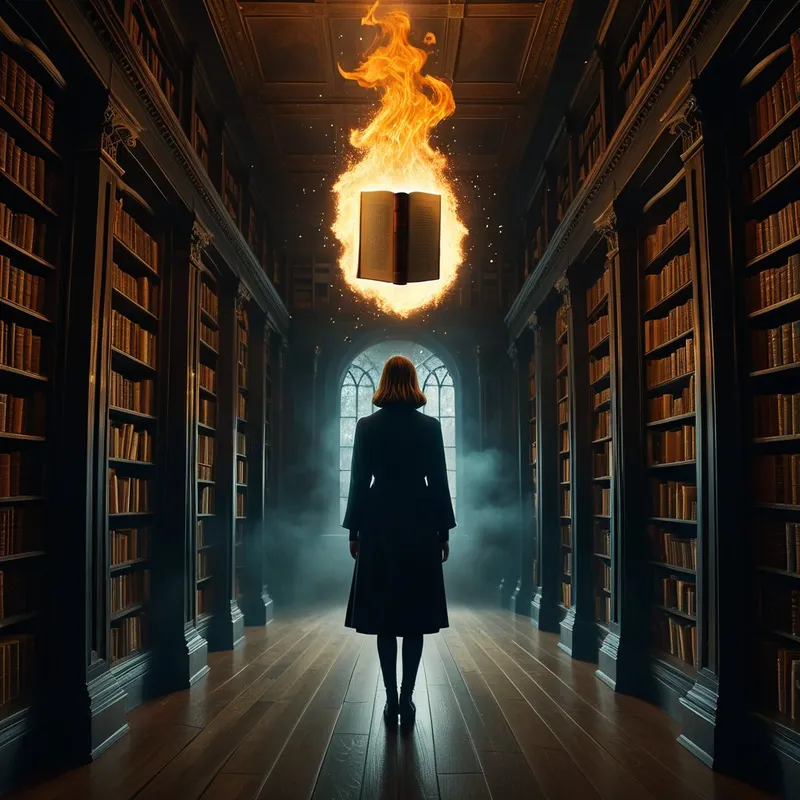
In the alchemical journey of individuation, the burnt offering models the crucial stage of nigredo and albedo. The nigredo is the burning itself—the confrontation with shadow, the destruction of outmoded complexes, the “death” of a persona that has served its purpose. It is a voluntary descent into the fire of analysis, grief, or painful self-honesty.
The psyche, like the altar, requires a fire that leaves nothing untouched. What survives is not the form, but the essence that the form contained.
The offering—the unblemished animal—represents the most valued possession of the conscious ego: a prized self-image, a foundational belief, a source of security. To place this on the pyre is the ultimate act of trust in the transformative process. The alchemical fire is not nihilistic destruction; it is the ignis divinus that separates the essential from the accidental.
The rising smoke is the albedo—the purification and sublimation. The dense, chaotic material of one’s life and suffering is distilled into its essential meaning. The psychic energy that was locked in rigid identification (with a role, a trauma, a success) is released and made available to the broader Self. The ego, having made its sacrifice, does not vanish. It is, instead, reconfigured. It moves from being the sole ruler of the psyche to being the faithful steward at the altar, mediating between the inner divine (the Self) and the outer world. The burnt offering thus becomes an internalized ritual of continuous renewal, where we learn to surrender what we are to become what we might be.
Associated Symbols
Explore related symbols from the CaleaDream lexicon: