Burkhan Khaldun Sacred Mountain Myth Meaning & Symbolism
A sacred mountain offers divine sanctuary to a fugitive, forging a covenant that births an empire and binds a people to the spirit of the land.
The Tale of Burkhan Khaldun Sacred Mountain
Listen, and let the wind carry you back to a time when the world was woven from horsehair and sky. The steppe was a sea of endless grass, and upon it, tribes clashed like thunderheads. Among them was a young man named Temüjin, his name a spark of iron. His father, poisoned. His family, cast out. His life, a quarry for rival clans who saw in his lineage a threat to be hunted.
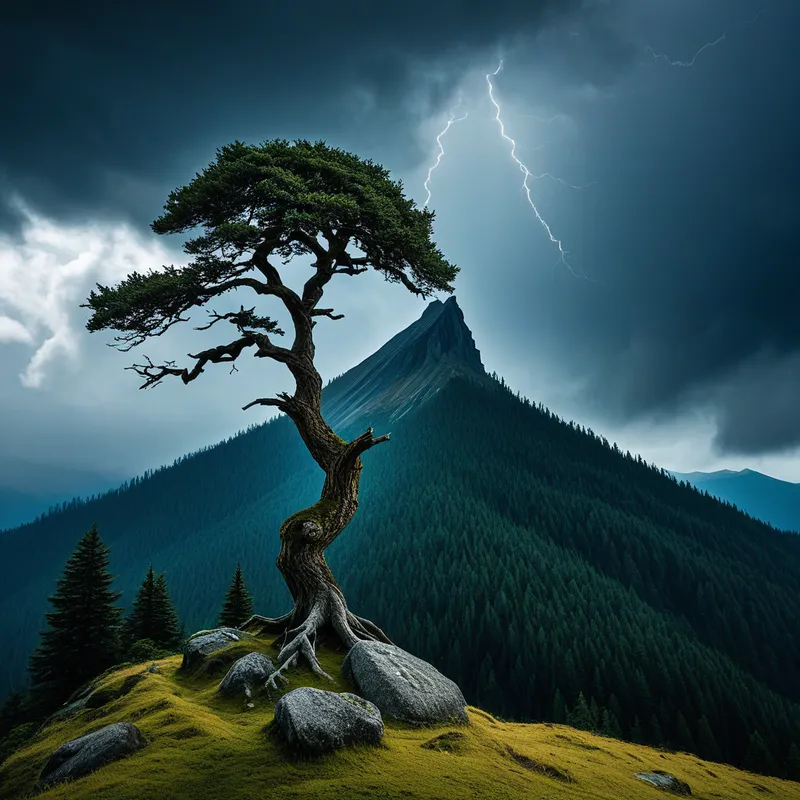
He was a fugitive, a shadow fleeing across the breast of the earth. His pursuers were many, their hearts hard as flint. In this desperate flight, the world itself seemed to conspire against him, until his eyes fell upon the great, brooding mass of Burkhan Khaldun. It was not like other mountains. It stood apart, a sovereign of stone and forest, its peaks sheathed in cloud like a crown of secrets. It did not invite; it presided.
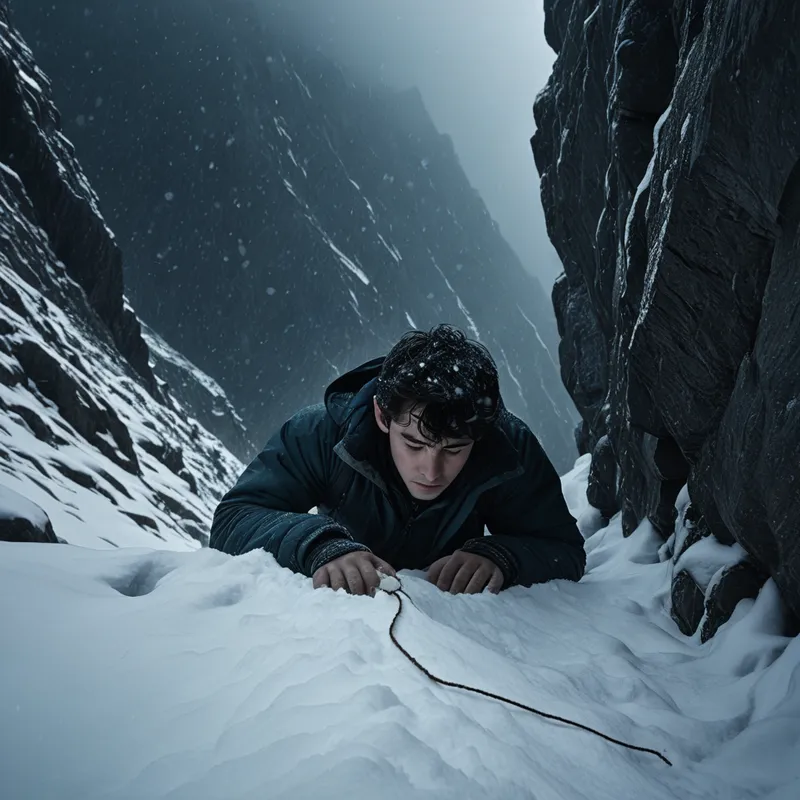
With his last strength, Temüjin drove his horse into the mountain’s embrace. He climbed beyond the treeline, where the air grew thin and the voices of his enemies faded into the sigh of the pines. He found a hidden cleft, a sanctuary offered by the living rock itself, and there he collapsed. For three days and three nights, a fierce blizzard descended, a white fury that sealed the mountain passes. His pursuers, confounded by the storm, were forced to turn back, muttering of mountain spirits. The mountain had drawn a veil of ice and wind around the fugitive.
When the storm passed, and Temüjin emerged from his stony womb, the world was transformed. The silence was profound. He saw not just a landscape, but a living protector. In gratitude, he made an offering. He removed his belt, placing it around his neck in a gesture of humility, and knelt. He poured a libation of mare’s milk upon the earth. He spoke vows to the mountain, not as a man to a pile of stone, but as a soul to a divine witness. He pledged that he and his descendants would forever honor Burkhan Khaldun, that they would make offerings to its spirit, and that they would teach their children to do the same.
This was the covenant. The mountain, the ejen of that place, had chosen to shelter the spark. From that sanctuary, Temüjin would rise. He would unite the warring tribes, become Genghis Khan, and forge an empire. But he never forgot. Throughout his life, in times of great trial or before great campaigns, he would return to the slopes of Burkhan Khaldun, to the silence and the whispering trees, to remember the pact that made him.
Cultural Origins & Context
This is not merely a folktale; it is the foundational myth of the Mongol nation, recorded in the 13th-century The Secret History of the Mongols. Its origins are deeply rooted in the Tengrist and shamanic worldview, where the landscape is animate, and specific features—mountains, rivers, springs—are inhabited by powerful, localized spirits (ejen).
The myth was an oral epic, likely recited by court historians and storytellers (tuulich), serving a crucial societal function. It legitimized Genghis Khan’s rule by framing it as divinely sanctioned, a destiny protected by the very genius loci of the Mongol homeland. More profoundly, it encoded an ecological and spiritual ethic: humanity exists in a reciprocal relationship with the land. The mountain’s protection was not unconditional; it demanded reverence, offerings, and the transmission of that reverence. The myth thus bound identity to place, creating a sacred geography where political authority and spiritual duty were inseparable.
Symbolic Architecture
At its core, the myth of Burkhan Khaldun is a profound map of the relationship between the individual and the transcendent Self, between the ego and the deeper, guiding structures of the psyche.
The mountain is not a place one conquers, but a presence one petitions. It represents the immutable, enduring aspect of the Self—the inner sanctuary that exists beyond the turmoil of personal history and tribal conflict.
Temüjin, the fugitive, embodies the nascent ego, orphaned and persecuted by the outer world (rival clans, fate). His flight is the desperate search for psychic cohesion. The mountain represents the archetypal Temenos, the sacred precinct within the psyche. His entry into the mountain’s cleft is a symbolic descent, a voluntary regression into the protective womb of the unconscious to weather the storm of a psychic crisis (the blizzard). The storm itself is a purifying chaos that separates the old life from the new, forcing a necessary isolation where transformation can occur.
The covenant is the critical act. It is the moment the ego, having received grace (sanctuary), consciously acknowledges its debt to and alignment with the greater Self (the mountain spirit). The offering—the belt, the milk—symbolizes the surrender of personal will (the belt that girds) and the gift of life-energy (the milk). This establishes a lifelong dialogue between the conscious personality and its archetypal ground.

The Dreamer's Resonance
When this mythic pattern stirs in the modern dreamer, it often signals a profound process of seeking refuge and renegotiating one’s covenant with the deeper Self. One might dream of being relentlessly pursued, only to find a hidden path leading up a formidable, silent mountain. The feeling is not of conquest, but of being allowed entry.
Somatically, this can correlate with a felt need for deep rest, a withdrawal from the "pursuits" of daily life—social demands, career pressures, internal critics. The mountain in the dream offers a somatic anchor: a feeling of solidity, of being held, of breath deepening. Psychologically, the dreamer is in a state where the old identity structures (the "tribe" one belonged to) have become hostile or untenable. The psyche is orchestrating a retreat to its own Burkhan Khaldun, a core, indestructible place of identity beyond roles and traumas, to weather an inner blizzard of change, grief, or overwhelm. The dream is an invitation to stop fleeing outwardly and to turn inward, to find the cleft in the rock and wait out the storm.

Alchemical Translation
The alchemical process modeled here is that of Nigredo leading to a sacred Coniunctio—not of opposites, but of the mortal individual with the immortal, spatial soul of the psyche.
The fugitive stage is the nigredo: the blackening, the dissolution of all former social standing and safety. Everything is stripped away. The ascent into the mountain is the beginning of albedo (whitening), a purification by isolation and elemental exposure (the blizzard). The critical, transformative fire is the act of making the covenant. This is the rubedo (reddening), not achieved through battle, but through humble gratitude and conscious pledge.
Individuation is not a heroic march to a summit you plant your flag upon. It is the discovery of the inner mountain that has always been there, and the solemn vow to honor its spirit, thereby allowing its strength to flow into your life.
For the modern individual, the "mountain" may be a core value, a creative calling, or a spiritual practice that feels ancient and personal. The "pursuers" are the internalized demands, fears, and loyalties that conflict with this core. The alchemical work is to courageously flee those pressures, to seek sanctuary in that inner truth, and to formally acknowledge it—through ritual, journaling, or dedicated action. One must "pour the libation" by dedicating time, energy, and respect to this inner sanctum. From this covenant, a new, more authentic and resilient authority—one's own "khanate"—can be organized and led into the world.
Associated Symbols
Explore related symbols from the CaleaDream lexicon:
- Mountain — The archetypal symbol of the enduring Self, a spiritual axis mundi connecting earth and sky, offering sanctuary and demanding reverence.
- Refuge — The core action of the myth; the granting of safety by a greater power, representing the psyche's capacity to provide shelter during ego collapse.
- Storm — The purifying chaos, both external and internal, that isolates the hero and creates the necessary conditions for transformation and covenant.
- Covenant — The sacred pact between the individual and the transcendent, the foundational act that transforms rescue into a reciprocal, life-guiding relationship.
- Sanctuary — The protected psychic space, the temenos, where the old self can dissolve and the new self can be conceived in safety.
- Hero — Not as conqueror, but as the one who receives grace and has the humility to formally acknowledge it, binding personal destiny to a greater order.
- Fate — The destiny protected and facilitated by the mountain, suggesting that true fate is not a predetermined path, but a potential unlocked through alignment with the sacred.
- Spirit — The ejen of the mountain, representing the numinous, conscious intelligence inherent in the deep structures of the psyche and the natural world.
- Ritual — The acts of offering—the belt, the milk, the prayer—which formalize the relationship and make the intangible covenant tangible and enduring.
- Destiny — The empire that springs from the sanctuary; the full expression of individual potential that becomes possible only after the covenant with the Self is made.
- Earth — The receptive, grounding element that bears the mountain and receives the libation, symbolizing the tangible, manifest world where the spiritual pact must be lived.