Bulgasari Iron Eating Monster Myth Meaning & Symbolism
A creature born from a doll, consuming iron to grow invincible, becomes the unlikely defender of the people against a corrupt and tyrannical ruler.
The Tale of Bulgasari Iron Eating Monster
Listen, and hear the tale that rustles in the wind through the Silla pines, a story whispered by grandmothers to chase away the shadows of tyranny. It begins not with a roar, but with a sigh—the sigh of a father, a humble artisan, whose hands were skilled but whose heart was heavy with dread. A cruel and greedy magistrate ruled their land, his tax collectors as relentless as winter frost, stripping the people bare until their bones ached with hunger and their spirits withered with fear.
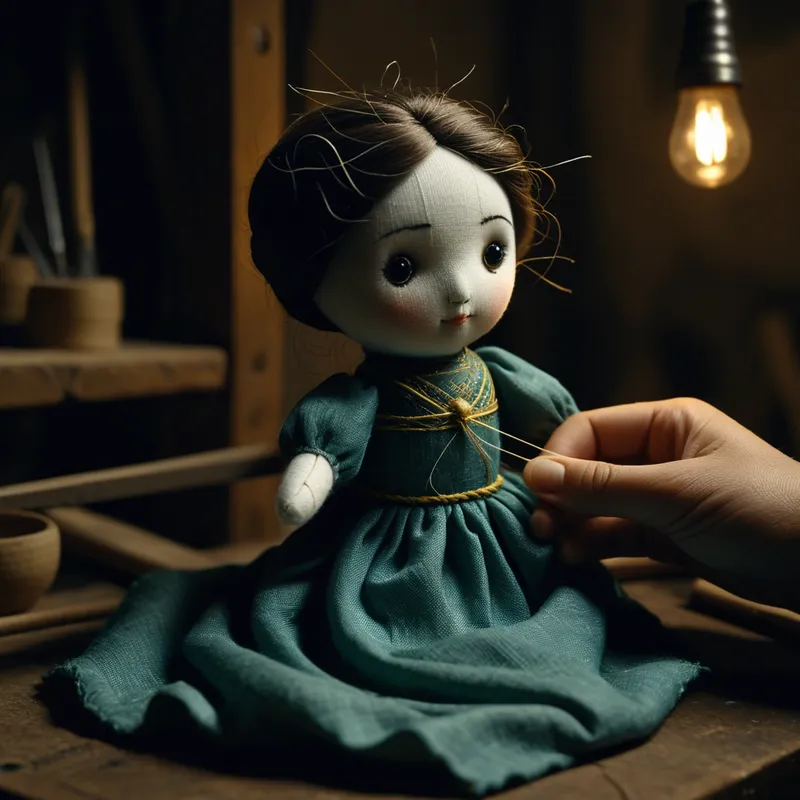
This father, seeing no hope in blade or plea, turned to the last magic he possessed: creation. In the deep of night, by the guttering light of a single candle, he took scraps of cloth and thread. He stitched not a toy, but a vessel. Into its form—a strange fusion of bear, elephant, and rhinoceros—he poured his fury, his love for his family, and his desperate wish for a protector. With the final stitch, he breathed upon it a name: Bulgasari. “Grow,” he whispered to the silent doll. “Grow strong. Protect us.” Then he placed it in the care of his beloved daughter.
The girl, innocent and trusting, cherished the strange doll. She fed it her daily spoonful of rice, a ritual of hope. And one night, as she slept, the doll stirred. It twitched. It crawled from her side and found, in the dark corner of the kitchen, a forgotten iron sewing needle. It consumed it. The next night, a pair of iron scissors. With each meal of metal, it grew—from a palm-sized oddity to a household terror, its hide becoming hard, its form swelling with impossible strength. The family, terrified of the monster they had birthed, cast it out into the wilderness.
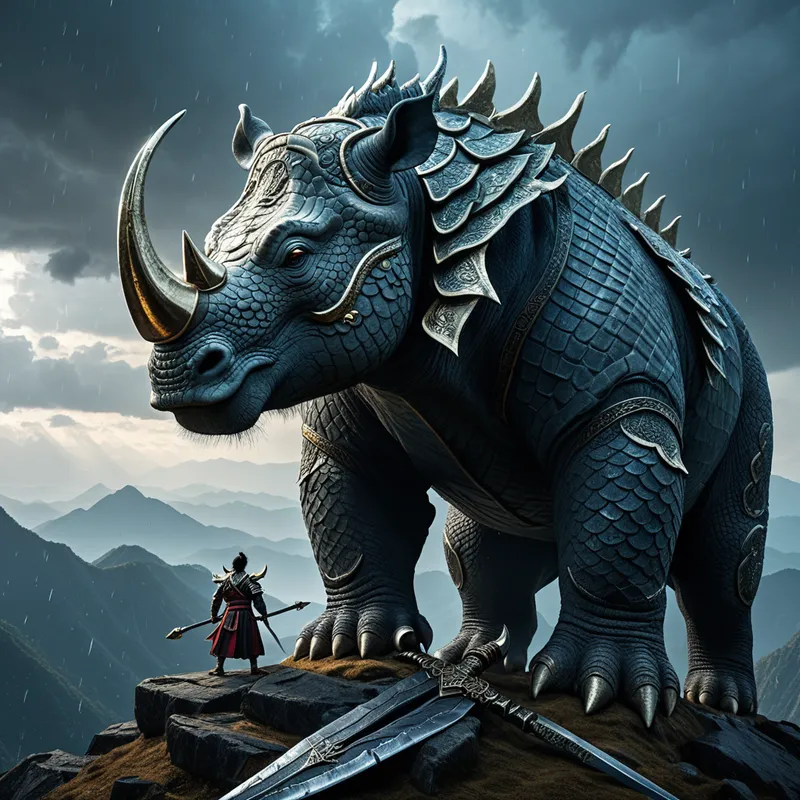
But Bulgasari was now a force of nature, a hunger given shape. It roamed the hills, devouring every piece of iron it found: plows left in fields, swords from abandoned guard posts, the very nails from temple gates. Each ingestion made it larger, denser, more impervious. Its legend spread like wildfire—a terror to the magistrates who relied on iron weapons, but a secret, kindling hope to the oppressed.
When the corrupt magistrate, in his towering arrogance, heard of this beast, he saw only a challenge to his power. He sent his armies. Arrows rattled harmlessly off its metallic hide. Spears bent against its sides. Swords shattered on its back. Bulgasari consumed the very instruments of oppression, growing ever more colossal with each failed assault, until it stood before the magistrate’s fortress like a living mountain of wrath.
The ruler, in a final act of cunning, tried to burn it. But fire only tempered it. He tried to drown it, but it stood firm in the raging river. Defeated and desperate, the tyrant fled, his power broken not by a rival army, but by a creature born from the people’s own silenced anguish and crafted hope. With its purpose fulfilled, the great monster, sated on the iron of injustice, is said to have turned to stone or vanished into the mist, leaving behind a land where the people could breathe freely once more, remembering the protector that rose from a stitch and a prayer.
Cultural Origins & Context
The myth of Bulgasari is a classic Korean folktale, a mindam passed down orally through generations. Its roots are deeply embedded in the yangban society of the Joseon era, a time marked by rigid social hierarchies, heavy taxation, and frequent corruption among local magistrates. The story functioned as a folkloric pressure valve, a narrative of wish-fulfillment for the peasant class who had little recourse against authoritarian abuse. It gave voice to a universal longing: for a power born from the common folk that could literally consume the tools of their subjugation—iron representing weapons, chains, and the hard, unyielding face of authority.
The tale was not confined to a single region but flourished in various local adaptations, often told by mothers and grandmothers as a bedtime story that carried a subtle, subversive lesson. It taught resilience and the idea that help could come from the most unexpected, even homemade, sources. The narrative also intersects with shamanic and animistic undercurrents in Korean folk belief, where objects can be imbued with spirit (hon) and intention, transforming into agents of supernatural justice.
Symbolic Architecture
At its heart, Bulgasari is the embodied Shadow of the oppressed. It is the unexpressed rage, the swallowed grievances, and the latent power of a community given monstrous, tangible form.
The monster is not what we fear from the outside, but what we have been forced to lock away inside. Its hunger is the hunger of the soul for justice, and its chosen food is the very substance of its chains.
The creature begins as a doll—a poppet of focused intention. This represents the first, crucial act of psychic rebellion: giving form to formless suffering. Its consumption of iron is a profound alchemical metaphor. Iron, the metal of war, law (manacles), and infrastructure (tools of labor), is transformed from an instrument of control into the raw material for a body of invincible resistance. The monster does not reject the harsh reality (iron); it metabolizes it, turning the energy of oppression into the substance of its own indestructible Self.
The corrupt magistrate symbolizes the tyrannical aspect of the Senex—old order, rigid law devoid of compassion. Bulgasari, in contrast, is a manifestation of the Trickster-Rebel archetype, a chaotic force that dismantles a stagnant and cruel system by following its own incomprehensible, instinctual logic: to eat that which seeks to destroy it.
The Dreamer's Resonance
When this myth stirs in the modern dreamscape, it often signals a profound somatic and psychological process of integration. To dream of a small, ignored object (a toy, a tool, a piece of art) coming to life and growing uncontrollably points to a long-dormant complex or a repressed strength beginning to awaken. The dreamer may be in a life situation—a job, a relationship, an internal belief system—that feels oppressive, where they have been “swallowing iron”: biting back words, enduring harsh treatment, feeling the weight of rigid expectations.
The monstrous growth in the dream can feel terrifying, a loss of control. This mirrors the psyche’s necessary, if chaotic, mobilization of resources for survival and self-assertion. The somatic sensation might be one of density, heaviness, or a metallic taste in the mouth—a literal feeling of having ingested something hard and indigestible that is now becoming part of one’s structure. The dream is the psyche’s announcement: the time for silent endurance is over. The material of your suffering is now being forged into your armor.
Alchemical Translation
The journey of Bulgasari is a perfect map for the process of individuation, specifically the integration of the Shadow. The first stage (nigredo) is the darkness of oppression—the artisan’s despair, the people’s fear. The creative act of making the doll is the prima materia, the initial, focused acknowledgment of this darkness and the intention to transform it.
Individuation does not ask us to flee from what wounds us, but to learn the art of sacred consumption—to take in the hard, metallic facts of our pain and transmute them into the unassailable substance of our character.
Feeding the doll rice represents the initial, conscious effort to nurture this nascent Self, even when it seems foolish. The monster’s banishment mirrors our own fear and rejection of the powerful, ugly, or unconventional aspects that emerge from our unconscious.
The core alchemy (albedo and rubedo) is the consumption of iron. This is the active, often painful, work of therapy, reflection, or life crisis. We are asked to “eat” our experiences—the betrayals, the failures, the harsh criticisms—not to be poisoned by them, but to digest and integrate their essence. Each ingested hardship makes the psychic structure more resilient, less vulnerable to external attack. The final confrontation is not about destroying the outer magistrate (which may symbolize an outer situation), but about rendering his weapons—doubt, shame, fear—utterly useless against the now-complete, self-defined individual. The monster’s subsequent disappearance signifies that once the integrated Self is established, the monstrous, reactive form is no longer needed; it returns to the earth of the psyche as wisdom, leaving the individual standing free and whole.
Associated Symbols
Explore related symbols from the CaleaDream lexicon:
- Monster — The embodied, often terrifying form of repressed power or trauma that must be integrated, not slain, to achieve wholeness.
- Iron — The hard, unyielding substance of reality, law, oppression, and strength, which must be consumed and transformed from a weapon into armor.
- Creating — The primal, magical act of giving form to formless emotion or intention, the first step in manifesting change from within.
- Eating — The fundamental process of psychic metabolism; the act of taking in experience, especially difficult experience, and digesting it to fuel growth and resilience.
- Shadow — The unconscious repository of rejected traits, rage, and power that, when integrated, becomes a source of immense strength and authenticity.
- Rebirth — The ultimate outcome of the myth; the death of an oppressive old order and the emergence of a new, freer state of being for the individual or community.
- Fear — The initial response to the emerging monster, representing resistance to one's own latent power and the terrifying process of transformation.
- Trickster — The archetype embodied by Bulgasari, which operates outside established rules, using appetite and chaos to dismantle rigid, corrupt systems.
- Warrior — The protective, defensive aspect of the integrated Self that stands firm against external tyranny, forged through internal struggle.
- Grief — The raw material of the doll; the unspoken sorrow and loss that, when consciously shaped, can become the seed of powerful transformation.
- Rage — The fiery energy that fuels the monster's growth and consumption, the righteous anger that must be acknowledged and directed to break chains.
- Destiny — The inescapable calling of the created entity to fulfill its purpose, mirroring the individual's journey toward self-realization against all odds.