Bodhi Seat Myth Meaning & Symbolism
The mythic story of the Buddha's unshakable resolve beneath the Bodhi tree, where he confronted the ultimate illusions to attain perfect awakening.
The Tale of Bodhi Seat
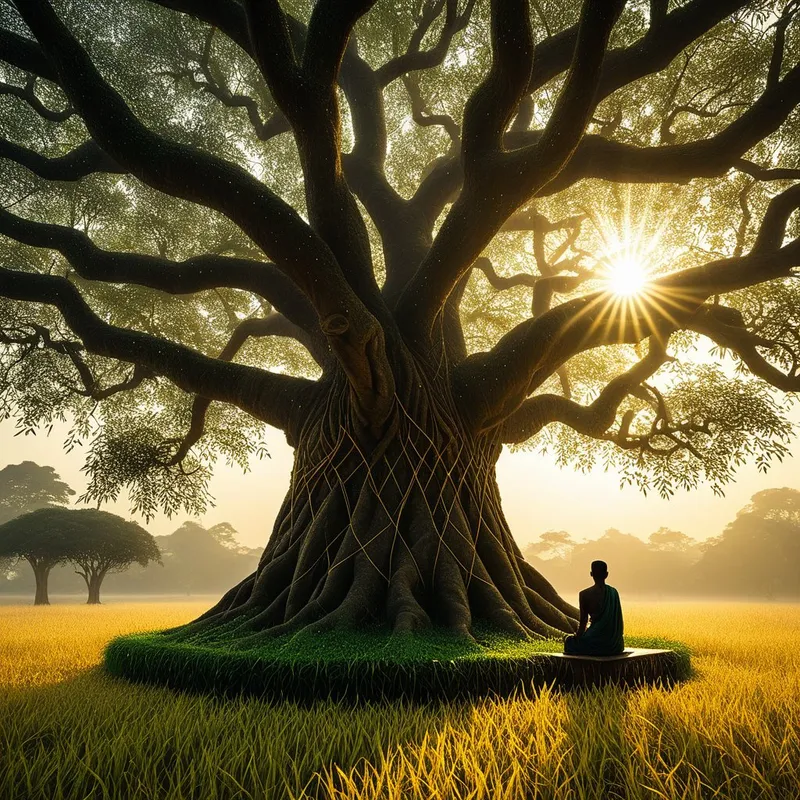
[The world](/myths/the-world “Myth from Tarot culture.”/) was heavy with sleep, draped in [the veil](/myths/the-veil “Myth from Various culture.”/) of [Samsara](/myths/samsara “Myth from Buddhist culture.”/). In the deep, pre-dawn darkness of a full moon, a man walked to the edge of a silent forest. His name was Siddhartha, but the old names were falling away like dried leaves. Before him stood an ancient [Bodhi Tree](/myths/bodhi-tree “Myth from Buddhist culture.”/), its vast canopy a promise against [the star](/myths/the-star “Myth from Tarot culture.”/)-strewn sky. His body, honed by years of ascetic struggle, was weary, but his spirit was a honed blade. He knew this was the place. Not a palace, not a mountain peak, but this unassuming patch of earth.
He gathered kusha grass, its blades cool and sharp in his hands. With a resolve that quieted the very wind, he fashioned a simple seat. Not a throne of gold, but a mat of humble green. As he sat, crossing his legs, he made a vow that shook the foundations of the unseen worlds: “Though my skin, my nerves, my bones should wither, though my life’s blood should dry up, I will not move from this seat until I have attained the supreme and final knowledge.” [The earth](/myths/the-earth “Myth from Hindu culture.”/) itself, it is said, trembled in witness.
Then came the assault. Not from armies, but from within and without. Mara, the lord of illusion and desire, rode forth on his great elephant, his army of demons darkening [the horizon](/myths/the-horizon “Myth from Various culture.”/). They were fear, clad in shrieking forms. They were doubt, whispering of futility. They were memory, parading every pleasure forsaken, every love left behind. Arrows of lust, spears of hatred, and the crushing weight of nihilism were hurled at the seated figure. Yet, as they neared him, they fell like withered flowers. His stillness was an adamantine wall.
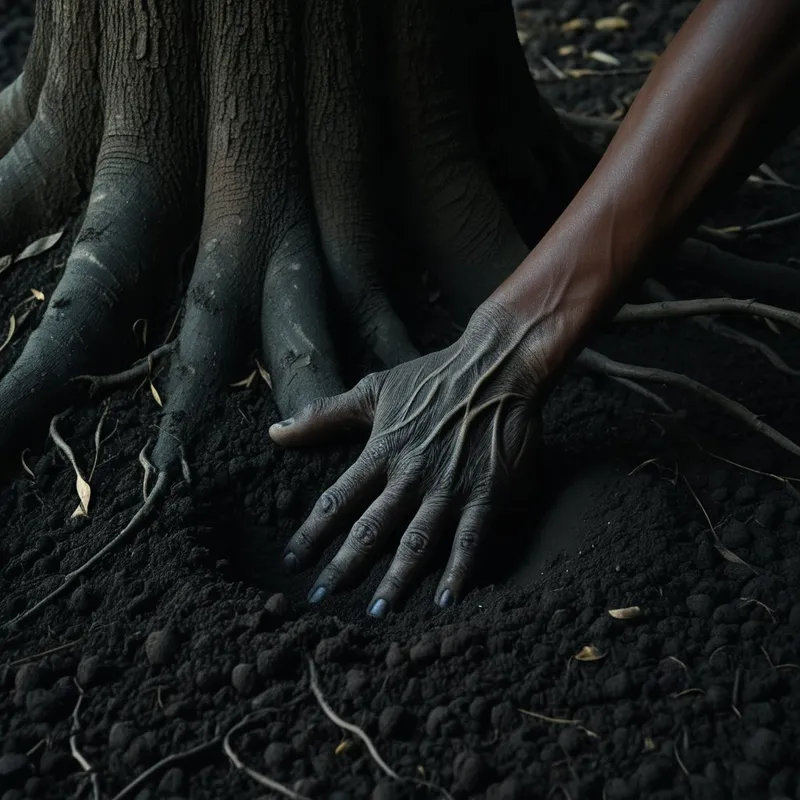
Enraged, Mara claimed the seat of enlightenment for himself. “Who will bear witness for you?” he thundered, his demonic horde roaring in agreement. Silently, Siddhartha reached down and touched the earth with his right hand. The goddess Bhumi arose from the ground, her form vast and serene, and she wrung from her hair a torrent of [water](/myths/water “Myth from Chinese culture.”/)—the accumulated merit of [the Buddha](/myths/the-buddha “Myth from Buddhist culture.”/)’s countless compassionate acts. It flooded the plain, sweeping Mara’s army away. The earth had borne witness.
With the illusions scattered, the true work began. Through the long night, the man delved into the depths of his own being. He saw the endless chain of his own past lives, the rise and fall of worlds. He perceived the precise machinery of suffering—the Twelve Nidanas—and with the clarity of a surgeon, he severed its links. As [the morning star](/myths/the-morning-star “Myth from Astrological culture.”/) glittered in the paling sky, the last veil dissolved. Ignorance shattered. He was awake. The [Bodhi](/myths/bodhi “Myth from Buddhist culture.”/) Seat, that patch of grass, was now [the axis mundi](/myths/the-axis-mundi “Myth from Chinese culture.”/), the still point around which a sleeping world could now turn toward dawn. He was no longer Siddhartha. He was the [Buddha](/myths/buddha “Myth from Buddhist culture.”/).
Cultural Origins & Context
The story of the Bodhi Seat is not a singular, frozen text but a living narrative core within the Pali Canon, particularly in the Mahasaccaka Sutta and the Ariyapariyesana Sutta. It emerged from an oral tradition, recited by monks for centuries before being committed to writing. Its primary function was paradigmatic: to establish the literal and spiritual location of the Bodhi event. The town of Bodh Gaya, where the historical Bodhi Tree stands, became Buddhism’s most sacred pilgrimage site precisely because of this myth.
Societally, the tale served multiple roles. For monastics, it was a template for perseverance (virya) and a map of the final obstacle course before liberation. For lay followers, it transformed a geographical location into a potent symbol of possibility—awakening was not a vague heaven but an event that happened here, on this earth, to a human being. The myth also functioned as a cosmological drama, depicting the Buddha’s victory not as a physical battle but as a psychological and moral one, establishing the [triumph](/myths/triumph “Myth from Roman culture.”/) of wisdom and compassion over the chaotic forces of the [psyche](/myths/psyche “Myth from Greek culture.”/) and the world.
Symbolic Architecture
The Bodhi Seat is the ultimate [symbol](/symbols/symbol “Symbol: A symbol can represent an idea, concept, or belief, serving as a powerful tool for communication and understanding.”/) of unshakable resolve. It is not a comfortable chair but an intentional, self-created ground of being. Psychologically, it represents the conscious establishment of the observing ego—the part of the psyche that can sit still and witness the storm of complexes, desires, and fears (the army of Mara) without identifying with them.
The Seat is not where you rest from the battle; it is the fortress from which the battle is won by refusing to fight on the enemy’s terms.
The [Bodhi Tree](/symbols/bodhi-tree “Symbol: The sacred fig tree under which Siddhartha Gautama attained enlightenment, symbolizing awakening, wisdom, and the interconnectedness of all life.”/) itself symbolizes the [axis](/symbols/axis “Symbol: A central line or principle around which things revolve, representing stability, orientation, and the fundamental structure of reality or consciousness.”/) mundi—the world [tree](/symbols/tree “Symbol: In dreams, the tree often symbolizes growth, stability, and the interconnectedness of life.”/) connecting [heaven](/symbols/heaven “Symbol: A symbolic journey toward ultimate fulfillment, spiritual transcendence, or connection with the divine, often representing life’s highest aspirations.”/), [earth](/symbols/earth “Symbol: The symbol of Earth often represents grounding, stability, and the physical realm, embodying a connection to nature and the innate support it provides.”/), and the [underworld](/symbols/underworld “Symbol: A symbolic journey into the unconscious, representing exploration of hidden aspects of self, transformation, or confronting repressed material.”/). It is the psychic [structure](/symbols/structure “Symbol: Structure in dreams often symbolizes stability, organization, and the framework of one’s life, reflecting how one perceives their environment and personal life.”/), the supportive unconscious that nourishes the conscious [quest](/symbols/quest “Symbol: A quest symbolizes a journey or search for purpose, fulfillment, or knowledge, often representing life’s challenges and adventures.”/). The touching of the [earth](/symbols/earth “Symbol: The symbol of Earth often represents grounding, stability, and the physical realm, embodying a connection to nature and the innate support it provides.”/) (Bhumisparsha [Mudra](/symbols/mudra “Symbol: A symbolic hand gesture used in Hindu and Buddhist traditions to channel spiritual energy, express teachings, and focus meditation.”/)) is perhaps the most profound [gesture](/symbols/gesture “Symbol: A non-verbal bodily movement conveying meaning, emotion, or intention, often symbolic in communication and artistic expression.”/) in the myth. It signifies grounding, embodiment, and a call to [reality](/symbols/reality “Symbol: Reality signifies the state of existence and perception, often reflecting one’s understanding of truth and life experiences.”/) as the final witness. It rejects abstract arguments and roots [truth](/symbols/truth “Symbol: Truth represents authenticity, honesty, and the quest for knowledge beyond mere appearances.”/) in the tangible, lived experience of cause and effect ([karma](/myths/karma “Myth from Hindu culture.”/)). The [earth](/symbols/earth “Symbol: The symbol of Earth often represents grounding, stability, and the physical realm, embodying a connection to nature and the innate support it provides.”/) [goddess](/symbols/goddess “Symbol: The goddess symbolizes feminine power, divinity, and the nurturing aspects of life, embodying creation and wisdom.”/)’s [response](/symbols/response “Symbol: Response in dreams symbolizes how one reacts to situations, often reflecting the subconscious mind’s processing of events.”/) validates that enlightenment is not an escape from the world but a profound reconciliation with it.
The Dreamer’s Resonance
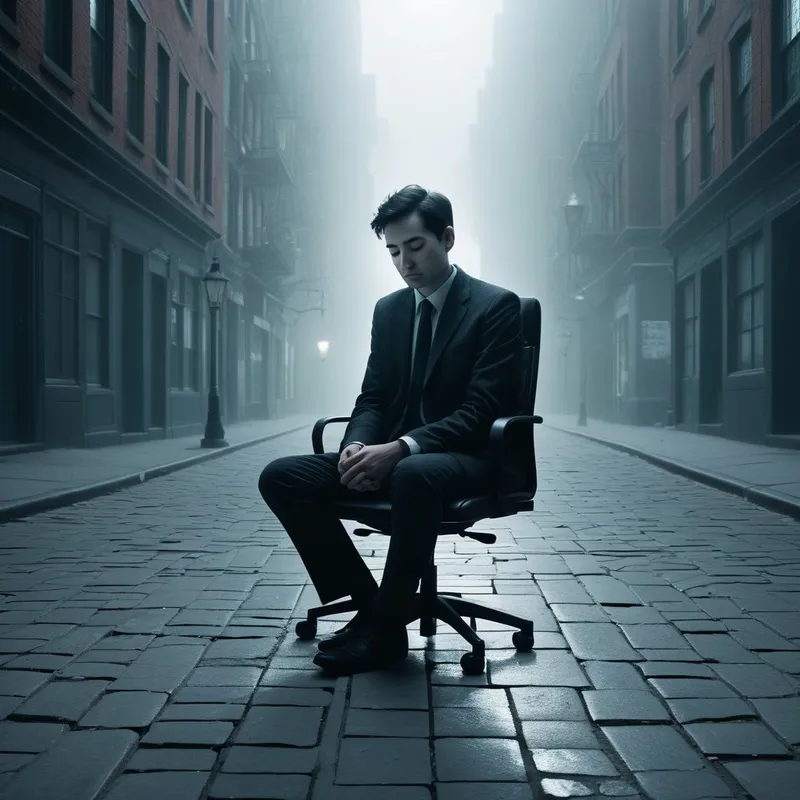
When the motif of the Bodhi Seat arises in modern dreams, it rarely appears as a literal throne under a fig tree. Instead, one might dream of being unable to rise from a chair during a crisis, or of finding a strangely significant spot in a chaotic landscape—a stable rock in a raging river, a single quiet room in a burning house. This is the psyche signaling a critical moment of holding.
Somatically, this can correlate with a felt sense of pressure, weight, or a need for deep, centering breath. Psychologically, the dreamer is likely at a precipice where old patterns (the armies of Mara) are launching a final, desperate assault to prevent a transformation of consciousness. The dream seat represents the need to establish an inner witness, to stop running, negotiating, or fighting in the old ways, and to simply be present to the inner turmoil. The conflict is between [the ego](/myths/the-ego “Myth from Jungian culture.”/)’s desire to flee discomfort and [the Self](/myths/the-self “Myth from Jungian culture.”/)’s imperative to stay and integrate.
Alchemical Translation
The alchemy modeled by this myth is the transmutation of restless seeking into abiding being. The seeker (the [prima materia](/myths/prima-materia “Myth from Alchemical culture.”/)) arrives after a long journey of external exploration and extreme asceticism (the [nigredo](/myths/nigredo “Myth from Alchemical culture.”/), the blackening). The creation of the seat is the moment of fixation—the decision to stop the endless motion and face the interior furnace.
The confrontation with Mara is the [separatio](/myths/separatio “Myth from Alchemical culture.”/) and mortificatio, where the contents of the personal and collective shadow are brought forth, acknowledged, and stripped of their power through non-identification. This is not repression, but a conscious allowing and dissolving.
Enlightenment is not the annihilation of the demons, but the realization that their weapons are made of the same insubstantial thought-stuff as the throne you sit upon.
The earth-touching gesture is the [coniunctio](/myths/coniunctio “Myth from Alchemical culture.”/)—[the sacred marriage](/myths/the-sacred-marriage “Myth from Various culture.”/) of consciousness with the grounded reality of the body and the world. It is the integration of spirit and matter. The final awakening at dawn is the [albedo](/myths/albedo “Myth from Alchemical culture.”/) and [rubedo](/myths/rubedo “Myth from Alchemical culture.”/)—the whitening and reddening—resulting in the Philosopher’s Stone: the fully individuated Self, the Buddha nature, which is both utterly transcendent and completely immanent in the here and now. For the modern individual, the Bodhi Seat is any committed practice of presence—therapy, meditation, art, or deep relationship—where one vows to stay seated through the storm of one’s own psyche, to call upon one’s own lived truth as witness, and in doing so, discovers an unshakable foundation that was within all along.
Associated Symbols
Explore related symbols from the CaleaDream lexicon: