Birth Canal Myth Meaning & Symbolism
A universal motif of a perilous, transformative passage from one state of being to another, embodying the primal ordeal of becoming.
The Tale of Birth Canal
Listen. Before the world was as it is, there was a great and terrible unity. All things were one, a seamless whole of potential, a warm and silent ocean of being. But within that ocean, a longing stirred. A whisper of a different song, a desire for form, for story, for a name.
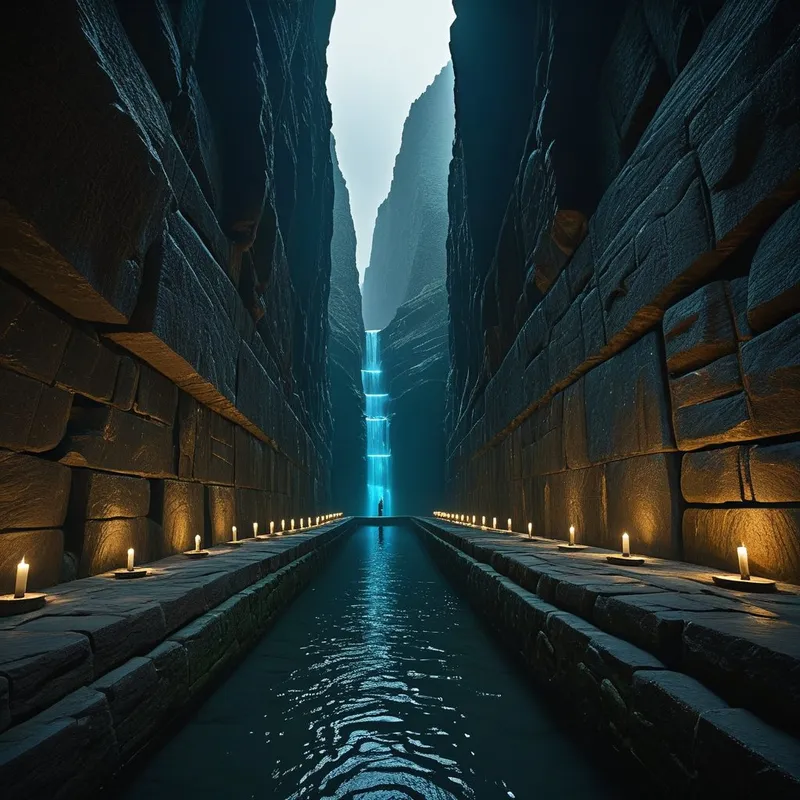
And so, the Unity began to ache. This ache was the first contraction. From its very heart, a passage was torn—not of stone or flesh, but of pure necessity. It was the Birth Canal. It was not a place of comfort, but a threshold of agony and ecstasy, a tunnel of pressure that stretched from the known into the terrifying unknown.
Into this passage, the first spark of consciousness was cast. Some call it a hero, others a soul, a god-child, or simply Life. It was not yet anything, but it was destined to become. The walls of the Canal were alive, pulsating with the rhythm of the dying Unity. They were tight, suffocating, dark as the void between stars. The spark had no limbs, yet it had to push. It had no breath, yet it had to strive. It was a journey of absolute solitude, a battle against the very substance that had conceived it.
The pressure was immense, a crushing weight that sought to dissolve the spark back into the whole. It was a trial of will, a test of the desire to be. To move forward was to tear oneself from the source of all nourishment and safety. The Canal offered no guidance, only relentless, rhythmic force. In that darkness, the spark knew only two things: the memory of the silent ocean behind, and the terrifying promise of a world ahead it could not imagine.
And then, a change. A faint, impossible light, not seen but felt, a different quality of pressure. The walls, once embracing, now began to expel. The final surge was not a choice but a surrender to a force greater than itself. With a cry that was the first sound in creation, the spark was thrust from the tunnel into a blaze of searing, shocking newness. The Unity was forever behind. Before it lay the fragmented, beautiful, and painful world of separate things. The passage was complete. The one had become the many. The Canal, its purpose served, remained—a sacred wound in the heart of reality, a door forever ajar between the world of the unformed and the world of form.
Cultural Origins & Context
The motif of the Birth Canal is not the property of a single culture named "Various," but is rather a foundational archetype that emerges independently across the mythic imagination of humanity. It is the ur-narrative, the template etched into the collective unconscious long before it was ever carved into clay or sung around a fire.
We find its echoes in the dark passages of the Egyptian Duat, through which the sun god Ra must travel each night to be reborn at dawn. It is present in the labyrinthine caves of initiation rites, from the Eleusinian Mysteries to the subterranean kivas of the American Southwest, where neophytes symbolically die to their old selves and emerge reborn. It is the narrow gate, the eye of the needle, the perilous strait between clashing rocks.
This story was never just a story; it was a somatic map. It was passed down not only by bards but by the bodies of women in labor, by shamans in trance states, by anyone who underwent a ritual ordeal. Its societal function was one of profound orientation: it explained the fundamental pain and risk of existence. It taught that to achieve any new state—adulthood, wisdom, spiritual insight—one must willingly enter a period of crushing pressure, darkness, and seeming helplessness, trusting in a process larger than the individual self.
Symbolic Architecture
At its core, the Birth Canal is the archetypal symbol of transition itself. It is not the origin, nor the destination, but the critical, perilous, and transformative process in between. Psychologically, it represents the ego’s journey from one state of consciousness to another.
The Canal is the living paradox: to be born, you must consent to a kind of death. To gain a world, you must lose your womb.
The tight, constricting walls symbolize the necessary limitations and pressures that force differentiation. Without resistance, there is no form. The darkness represents the unknowing, the period where old maps are useless and new sight is not yet granted. The spark or hero within is the nascent consciousness, the fragile but persistent sense of "I" that must endure the ordeal of separation from the unconscious, maternal matrix (the Unity) to become an individual.
The final, expulsive surge is the critical moment of surrender. It is the point where active striving must give way to being acted upon by a greater force—the Self, the destiny, the life process. This is the essence of the heroic journey: not merely conquest, but the ultimate vulnerability that makes new life possible.
The Dreamer's Resonance
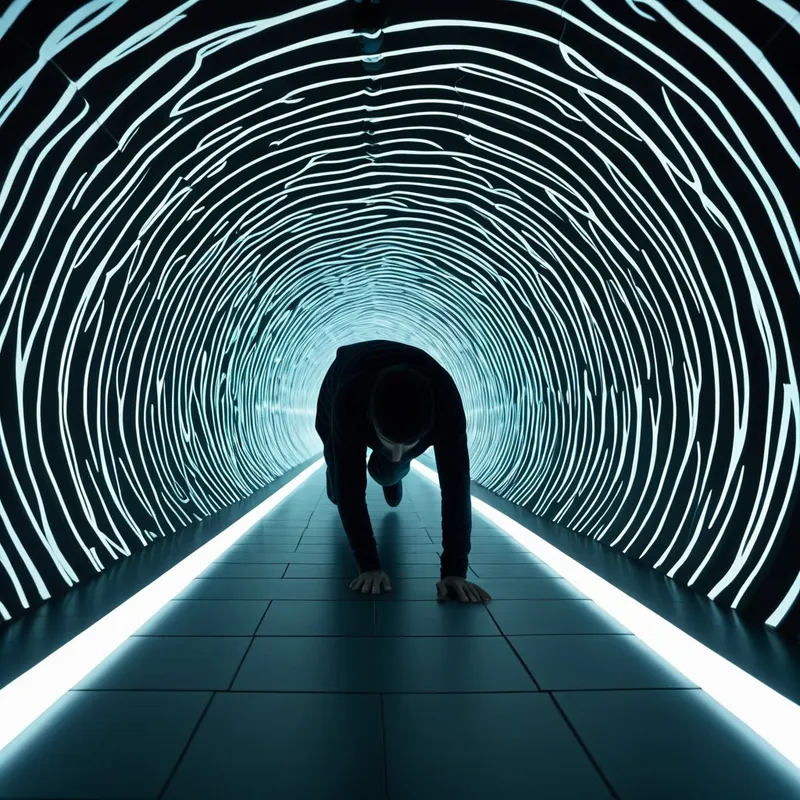
When this myth stirs in the modern dreamer, it signals a profound somatic and psychological initiation underway. To dream of crawling through tight tunnels, being stuck in narrow passages, or struggling to be born is not merely anxiety; it is the psyche enacting its own rites of passage.
Somatically, the dreamer may awaken with a feeling of constriction in the chest, a sense of pressure, or even recall the physical sensation of pushing. Psychologically, they are in the "Canal phase" of a life transition. This could be the end of a relationship, a career change, a spiritual crisis, or the integration of a major trauma. The old identity has broken its waters, but the new self has not yet emerged. The dreamer is in the liminal space, feeling compressed by circumstances, in the dark about the outcome, and terrified of both going back and moving forward.
The dream is a reassurance in the form of an ordeal. It confirms, "You are in the passage. It is supposed to feel this way. The pressure is not a sign of failure, but of profound transformation." The psyche is modeling the necessary containment and pressure required to forge a new way of being.
Alchemical Translation
In the alchemy of individuation, the Birth Canal myth models the process of psychic transmutation. The initial Unity is the state of unconscious identification—with our family, our persona, our outdated beliefs. It is comfortable but ultimately sterile, a potential that refuses to manifest.
Choosing the journey is the first act of the ego aligning with the call of the Self. Entering the Canal is the nigredo, the dark night of the soul. It is the dissolution of old structures in the crucible of suffering, doubt, and confusion. The crushing pressure is the friction between who we were and who we are becoming.
The alchemical vessel is not the comfortable hearth, but the constricting, sealed womb of transformation. We are the ore, the fire, and the vessel all at once.
The movement through the darkness is the slow, often imperceptible work of introspection, shadow-work, and holding the tension of opposites. We are refined not by light, but by the embrace of the dark. The final, expulsive rebirth is the albedo and rubedo—the emergence of the purified, conscious self, now capable of relating to the world not from a fused unity, but from a connected individuality. The hero who emerges is not the same as the spark that entered. They are tempered, specific, and bearing the sacred scar of the passage, which is now their deepest wisdom. They have learned the ultimate alchemical secret: that true selfhood is born not in spite of the ordeal, but because of it. The Canal is forever a part of them, the inner compass pointing the way for the next necessary death and rebirth.
Associated Symbols
Explore related symbols from the CaleaDream lexicon: