
Bennu Bird Myth Meaning & Symbolism
The solitary Bennu Bird, self-created from primordial chaos, heralds the dawn of time and embodies the soul's power for cyclical death and fiery rebirth.
The Tale of Bennu Bird
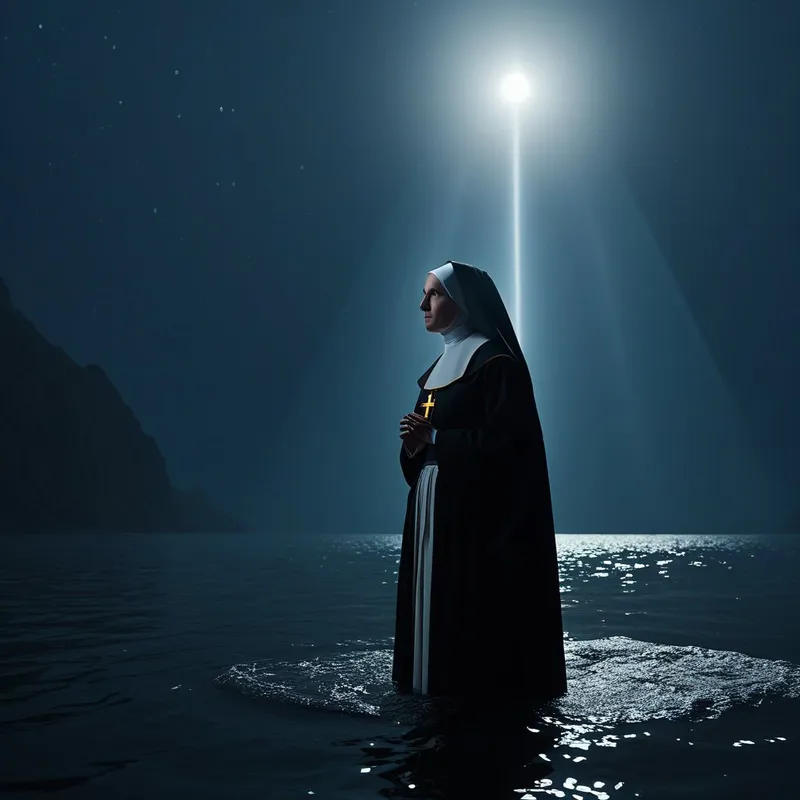
In the beginning, there was only Nun. An endless, silent, dark ocean, without form, without time, without a single voice to break its perfect stillness. From this fathomless depth, a longing stirred. Not a god’s command, not a thought, but a pure, undirected urge toward being. And from that urge, a light was kindled.
It was a solitary light, a single, brilliant point in the infinite black. It pulsed, it grew, and from its heart, a form took shape. It was a bird, vast and magnificent, with feathers the color of the sun at its birth—fiery crimson and molten gold. This was the [Bennu](/myths/bennu “Myth from Egyptian culture.”/). Its first act was not flight, but a cry. A sound that had never been heard before, a piercing, beautiful call that shattered the eternal silence of Nun. That cry was the first sound in the universe, and where it echoed, time began to flow.
Weary from the effort of its own becoming, the Bennu looked for a place to rest. It saw, rising from the receding waters, a single, jagged stone—the ben-ben stone. With a grace that belied its cosmic nature, it alighted upon this first island of all creation. As its feet touched the sacred stone, its light poured into [the earth](/myths/the-earth “Myth from Hindu culture.”/). Life quickened. The mound became the template for all temples, all pyramids, all sacred spaces where the divine touches [the world](/myths/the-world “Myth from Tarot culture.”/).
The Bennu did not rule. It witnessed. It saw Ra sail forth in his barque, bringing the first day. It saw the world bloom from the potency it had unleashed. For ages uncounted, it remained, a silent guardian of the first moment. But a cycle must complete itself. Feeling the weight of eons, the Bennu built a nest of fragrant myrrh and precious cinnamon upon its holy stone. As the sun reached its zenith, the bird settled into its nest, and with a final, radiant look at the world it had heralded, it summoned a sacred flame from its own heart.
The fire consumed the nest, the bird, the very air around it in a blinding pillar of silent, purifying light. For a moment, there was only ash upon the stone, stirred by a wind from the east. Then, from the heart of those ashes, a new form stirred. A worm, at first, then growing, transforming, until the fledgling Bennu—identical to the old, yet utterly new—stretched its wings. With another world-defining cry, it took flight, not into oblivion, but into a new phase of existence, leaving behind the ashes of its former self as a testament to [the law](/myths/the-law “Myth from Biblical culture.”/) it embodied: from an ending, a beginning is always born.
Cultural Origins & Context
The myth of the Bennu is woven into the very fabric of Egyptian cosmology, primarily centered in the cult city of Iunu (Heliopolis). It was not a tale told for mere entertainment, but a sacred narrative explaining the origin of the cosmos and the nature of the soul. Priests and temple scribes were its custodians, linking it directly to the cult of the sun god Ra. The Bennu was seen as his ba, or soul, making its cry the sound of the sun itself breaking over [the horizon](/myths/the-horizon “Myth from Various culture.”/) each dawn.
Its societal function was multifaceted. It provided a divine model for kingship; [the Pharaoh](/myths/the-pharaoh “Myth from Egyptian culture.”/) was often associated with the Bennu, his reign a cyclical renewal of cosmic order ([ma’at](/myths/maat “Myth from Egyptian culture.”/)). For the common people, it offered a powerful metaphor for the afterlife. Just as the Bennu rose from its own ashes, the human soul (ba) could achieve renewal in the Duat. The myth was enacted daily with the sunrise and annually in rituals, embedding the promise of regeneration into the rhythm of Egyptian life.
Symbolic Architecture
The Bennu is not merely a [bird](/symbols/bird “Symbol: Birds symbolize freedom, perspective, and the connection between the earthly and spiritual realms, often representing the soul’s aspirations or personal growth.”/); it is a living [symbol](/symbols/symbol “Symbol: A symbol can represent an idea, concept, or belief, serving as a powerful tool for communication and understanding.”/) of autogenesis—self-creation. It emerges not from a [parent](/symbols/parent “Symbol: The symbol of a parent often represents authority, nurturing, and protection, reflecting one’s inner relationship with figures of authority or their own parental figures.”/), but from the formless potential of the [psyche](/myths/psyche “Myth from Greek culture.”/) itself, representing the initial spark of [consciousness](/symbols/consciousness “Symbol: Consciousness represents the state of awareness and perception, encompassing thoughts, feelings, and experiences.”/) arising from the unconscious Nun.
The first act of the soul is not to find itself, but to create itself from the silence within.
Its association with the sun and the ben-ben [stone](/symbols/stone “Symbol: In dreams, a stone often symbolizes strength, stability, and permanence, but it may also represent emotional burdens or obstacles that need to be acknowledged and processed.”/) grounds this spiritual [event](/symbols/event “Symbol: An event within dreams often signifies significant life changes, transitions, or emotional milestones.”/) in a tangible [reality](/symbols/reality “Symbol: Reality signifies the state of existence and perception, often reflecting one’s understanding of truth and life experiences.”/): the [dawn](/symbols/dawn “Symbol: The first light of day, symbolizing new beginnings, hope, and the transition from darkness to illumination.”/) of a new [idea](/symbols/idea “Symbol: An ‘Idea’ represents a spark of creativity, innovation, or realization, often emerging as a solution to a problem or a new outlook on life.”/), the [solidification](/symbols/solidification “Symbol: The process of becoming solid, firm, or stable, often representing transformation, permanence, or the crystallization of ideas, emotions, or life circumstances.”/) of a [purpose](/symbols/purpose “Symbol: Purpose signifies direction, meaning, and intention in life, often reflecting personal ambitions and core values.”/), the founding of one’s inner sanctuary. The bird’s solitude is critical; the most profound creative and regenerative acts are often performed in the aloneness of [the self](/myths/the-self “Myth from Jungian culture.”/), away from the collective.
The fiery [death](/symbols/death “Symbol: Symbolizes transformation, endings, and new beginnings; often associated with fear of the unknown.”/) and [rebirth](/symbols/rebirth “Symbol: A profound transformation where old aspects of self or life die, making way for new beginnings, growth, and renewal.”/) is the core of its symbolic power. This is not a [death](/symbols/death “Symbol: Symbolizes transformation, endings, and new beginnings; often associated with fear of the unknown.”/) imposed from outside, but a conscious, self-directed immolation. It symbolizes the necessary end of a psychological epoch—a worn-out [identity](/symbols/identity “Symbol: Identity represents the sense of self, encompassing personal beliefs, cultural background, and social roles.”/), a completed project, a outgrown way of being. The fire is the pain of that ending, but also the transformative [energy](/symbols/energy “Symbol: Energy symbolizes vitality, motivation, and the drive that fuels actions and ambitions.”/) that makes renewal possible.

The Dreamer’s Resonance
When the pattern of the Bennu stirs in modern dreams, it signals a profound process of psychic [death](/myths/death “Myth from Tarot culture.”/) and renewal is underway. One might dream of a magnificent, solitary bird; of being consumed by a calm, cleansing fire that does not hurt; of finding a single, significant stone in a vast emptiness; or of witnessing a radiant rebirth from a pile of ashes.
Somatically, this can feel like a period of intense exhaustion (the building of the nest) followed by a feverish or highly energized state (the fire), culminating in a sense of quiet, fragile newness. Psychologically, the dreamer is in the liminal space between identities. The old “I” has served its purpose and is no longer viable, but the new “I” has not yet fully coalesced. This can manifest as depression, listlessness, or a feeling of being “in ashes.” The Bennu dream affirms this state not as failure, but as the sacred, necessary precursor to rebirth. It is the psyche’s way of narrating its own painful, glorious transformation.
Alchemical Translation
The myth of the Bennu is a perfect map for the alchemical process of individuation, specifically the stage of mortificatio and [albedo](/myths/albedo “Myth from Alchemical culture.”/)—the blackening of the old matter and its washing white into a new substance.
The journey begins in the massa confusa of Nun, the undifferentiated state of one’s life or psyche. The emergence of the Bennu is the [cauda pavonis](/myths/cauda-pavonis “Myth from Alchemical culture.”/), [the peacock’s tail](/myths/the-peacocks-tail “Myth from Alchemical culture.”/)—a glimpse of the glorious possibility within. The bird’s long vigil represents the conscious work of building a structure ([the ego](/myths/the-ego “Myth from Jungian culture.”/), a career, a relationship) upon that initial spark (the ben-ben stone).
The crisis comes when that structure becomes a cage. The alchemical fire must be applied. This is the painful, voluntary dissolution of what one has built. In human terms, it is quitting the secure job, ending the stagnant relationship, or abandoning the limiting self-concept.
To become, one must first un-become. The phoenix does not avoid the fire; it is the architect of its own pyre.
From the ashes (mortificatio), the pure, white, new form emerges (albedo). This is the reborn self, carrying the essence of the old but free from its specific, limiting form. For the modern individual, the Bennu myth teaches that true renewal is not about incremental improvement, but about cyclical, revolutionary transformation. It demands the courage to face the creative solitude, to gather the spices of one’s past experiences, and to light the sacrificial fire oneself, trusting—as the ancients trusted the sunrise—that from the ashes, a new dawn is irrevocably born.
Associated Symbols
Explore related symbols from the CaleaDream lexicon: